Published: November 15, 2026
Tanzania is the most fragmented ranking in this series so far. The country has more than 120 ethnic groups, and no census has ever counted them: the 2022 census did not record ethnicity at all. The largest group, the Sukuma, number 12.2 million people in 2026, 16.85 percent of the country, and the next nine groups combined number 20.9 million, so no single group comes close to a majority. The contest that matters in Tanzania is for second place, and it turns on a counting decision explained in full below.
The ranking uses Joshua Project's in-country people-group counts, applied to Tanzania's 2026 population of 72,563,780 from the United Nations World Population Prospects 2024. Tanzania has never published an ethnic breakdown in any census, so there is no official basis to use, and the Methodology explains why Joshua Project is the only itemised count available. This is the eighth entry in our series ranking the tribes of every African country, after Nigeria, Ghana, South Africa, Kenya, DR Congo, Ethiopia and Egypt.
Key Facts
- The Sukuma rank first with 12.2 million people, 16.85 percent of Tanzania, about 3.7 times the Chagga in second place.
- The Sukuma alone are bigger than the next three tribes combined, 12.2 million people against 9.2 million for the Chagga, the Gogo and the Haya together.
- The ten ranked groups together cover 33.1 million people, 45.63 percent of Tanzania. The rest, 39.4 million people, belongs to more than 140 other groups, so no tribe holds a majority.
- The Chagga rank second only because four Joshua Project entries are added back together into one people: Chagga, Machambe, Vunjo and Rombo. Counted as Joshua Project lists them, the Chagga alone would rank thirteenth.
- The bottom of the table is a near-tie band. The Luguru, the Zaramo, the Bena and the Shambala sit within 84,000 people of each other, and the Zaramo miss the list by 69,000 while the Bena sit just 1,000 behind the Zaramo.
| Rank | Tribe | Share of Tanzania | Population (2026) | Main Homeland |
|---|---|---|---|---|
| 1 | Sukuma | 16.85% | 12,228,000 | South of Lake Victoria, Mwanza, Shinyanga, Simiyu and Geita regions |
| 2 | Chagga | 4.60% | 3,335,000 | Southern slopes of Mount Kilimanjaro, Kilimanjaro Region |
| 3 | Gogo | 4.26% | 3,094,000 | Central plateau around Dodoma |
| 4 | Haya | 3.81% | 2,762,000 | Kagera Region, west of Lake Victoria around Bukoba |
| 5 | Ha | 3.21% | 2,326,000 | Kigoma Region, around Kasulu and Kibondo |
| 6 | Makonde | 3.00% | 2,180,000 | Mtwara and Lindi regions, southeast Tanzania |
| 7 | Nyamwezi | 2.93% | 2,128,000 | Tabora Region and western central Tanzania |
| 8 | Nyakyusa | 2.40% | 1,744,000 | Mbeya Region, around Kyela and the northern shore of Lake Malawi |
| 9 | Hehe | 2.39% | 1,731,000 | Iringa Region, southern highlands |
| 10 | Luguru | 2.19% | 1,586,000 | Uluguru Mountains, Morogoro Region |
The shares in this table are Joshua Project's in-country counts divided by Tanzania's 2026 population of 72,563,780. The Chagga row combines four Joshua Project entries, and the Methodology lists every combination. The 2026 figures are estimates, not a census count, and Tanzania has never published an ethnic breakdown.
The first name outside the ranking is the Zaramo, at 1,517,000 people in 2026, just 69,000 behind the Luguru. Behind them, the Bena sit at 1,516,000, only 1,000 behind the Zaramo, and the Shambala at 1,502,000, so four groups sit within 84,000 people of each other around the cut. At Joshua Project's rounding to the nearest thousand, the Zaramo and the Bena are effectively tied, and the order between them could flip on a recount.
1. Sukuma: 12,228,000
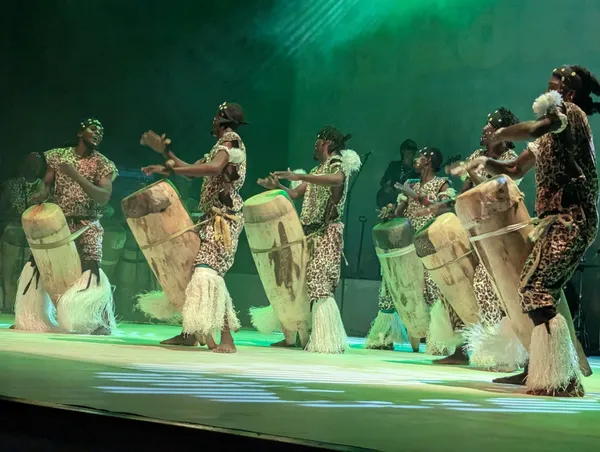
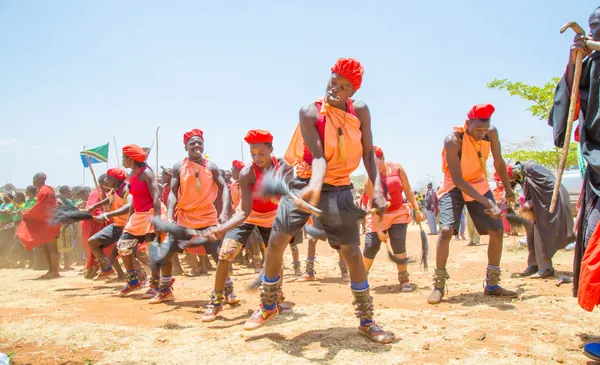
The Sukuma live south of Lake Victoria, around Mwanza, Shinyanga, Simiyu and Geita, and they are farmers and cattle-keepers famous for their dance societies. At 16.85 percent, about one Tanzanian in 5.9 is Sukuma, and they lead the Chagga by 8,893,000 people, the widest lead in this series after Egypt. They are also bigger than the next three tribes combined, by 3,037,000 people, yet they are still smaller than the other nine ranked groups put together.
2. Chagga: 3,335,000
The Chagga live on the southern slopes of Mount Kilimanjaro, Africa's highest mountain, and are known for terraced irrigation, coffee and banana farming. Their total of 3,335,000 adds together four Joshua Project entries: the Chagga at 1,404,000, the Machambe at 857,000, the Vunjo at 826,000 and the Rombo at 248,000. Machame, Vunjo and Rombo were all Chagga divisions on the mountain, and the Methodology explains the merge in full. At 4.60 percent, the Chagga lead the Gogo by 241,000 people.
3. Gogo: 3,094,000
The Gogo live on the central plateau around Dodoma, the capital, and are dryland farmers and cattle-keepers known for their music. At 4.26 percent, they sit 332,000 people ahead of the Haya, and they are the largest group in the centre of the country by a wide margin. Dar es Salaam, the largest city, holds 6,649,000 people, more than the Gogo and the Haya combined.
4. Haya: 2,762,000
The Haya live in Kagera Region in the northwest, west of Lake Victoria around Bukoba, and are known for ancient ironworking. At 3.81 percent, they sit 436,000 people ahead of the Ha. Their count is one of the best corroborated in the table: Wikipedia's Haya figure of 2,773,000 sits within 11,000 of Joshua Project's 2,762,000.
5. Ha: 2,326,000
The Ha live in Kigoma Region in the west, around Kasulu and Kibondo near the Burundian border. At 3.21 percent, they sit 146,000 people ahead of the Makonde, and they are the largest group in Tanzania's far west. Their count has been stable across Joshua Project's own releases, at 2,225,000 in its December 2024 guide and 2,326,000 now.
6. Makonde: 2,180,000
The Makonde live in the southeast, in Mtwara and Lindi regions, and are famous for their woodcarvings. At 3.00 percent, they sit only 52,000 people ahead of the Nyamwezi, one of the closer gaps in the ranking. Their count has also been stable across Joshua Project's releases, at 2,086,000 in December 2024 and 2,180,000 now.
7. Nyamwezi: 2,128,000
The Nyamwezi live in Tabora Region and western central Tanzania, and were the great long-distance traders of the nineteenth century, running caravans to the coast. At 2.93 percent, they sit 384,000 people ahead of the Nyakyusa. Popular sources often call the Nyamwezi the second largest tribe in Tanzania, but on Joshua Project's count they rank seventh, behind the Chagga, the Gogo, the Haya, the Ha and the Makonde as well as the Sukuma.
8. Nyakyusa: 1,744,000
The Nyakyusa live in Mbeya Region in the southwest, around Kyela and the northern shore of Lake Malawi. At 2.40 percent, they sit only 13,000 people ahead of the Hehe, the closest gap inside the top ten. Joshua Project counts them together with the Ngonde, their kin across the border in Malawi.
9. Hehe: 1,731,000
The Hehe live in Iringa Region in the southern highlands, and are known for their warrior traditions as well as farming and herding. At 2.39 percent, they sit 145,000 people ahead of the Luguru, and they are the last group above 1.7 million people in the ranking.
10. Luguru: 1,586,000
The Luguru live in the Uluguru Mountains in Morogoro Region, in the east of the country. At 2.19 percent, they close the ranking just 69,000 people ahead of the Zaramo, and the four groups around the cut sit within 84,000 of each other. Joshua Project counts them together with the Ruguru under one entry.
Frequently Asked Questions
Why is there no census figure for the tribes of Tanzania?
Tanzania's census does not record ethnicity. The 2022 census did not disaggregate for ethnicity or religion, according to the Minority Rights Group, and the 2012 census published no ethnic breakdown either, so there is no official count of any tribe to use. This ranking is therefore built on Joshua Project's in-country people-group counts, the only itemised count that covers every group on the same basis, with shares computed against the United Nations 2026 population of 72,563,780.
Why are the Chagga second when many sources call them third?
Many popular sources call the Chagga the third largest tribe in Tanzania, but that claim does not match Joshua Project's counts on any reading. Joshua Project splits the Chagga by language into four entries: Chagga at 1,404,000, Machambe at 857,000, Vunjo at 826,000 and Rombo at 248,000. This ranking adds those four back together into one people, at 3,335,000, because Machame, Vunjo and Rombo were all Chagga divisions on Kilimanjaro. Counted as Joshua Project lists them, the Chagga alone would rank thirteenth. The same popular sources also call the Nyamwezi the second largest tribe, which Joshua Project contradicts, so the popular ranking is not a reliable check.
Why are the Maasai not in the top ten?
The Maasai are Tanzania's most famous tribe abroad, but they do not make this top ten. Joshua Project lists three Maasai entries: Maasai at 476,000, Maasai Arusha at 476,000 and Maasai Baraguyu at 875,000. The two 476,000 figures are identical, which suggests the same population listed twice, so they are not added together twice. The defensible total is 476,000 plus 875,000, or 1,351,000 people, which sits 235,000 below the Luguru in tenth place. The Methodology states the three entries so a reader can recompute the call.
How close is the cut at the bottom of the list?
Very close. The Luguru close the ranking at 1,586,000, the Zaramo sit just outside at 1,517,000, the Bena at 1,516,000 and the Shambala at 1,502,000, so four groups sit within 84,000 people of each other. The Zaramo miss the list by 69,000 people, and the Bena sit only 1,000 behind the Zaramo, which is effectively a tie at Joshua Project's rounding to the nearest thousand. A recount could flip the Zaramo and the Bena, though neither would pass the Luguru on these figures.
What about the Swahili and the Shirazi of the coast?
Joshua Project lists the Shirazi at 781,000 and the Swahili Zanzibari at 826,000 as separate entries, and this ranking does not add them together. The Shirazi are the Swahili coastal people of Zanzibar, and the overlap between the two entries is unclear. Added together they would total 1,607,000 people, just 21,000 above the Luguru, so the decision matters and it is stated here openly. Swahili is also the national lingua franca, spoken across the country by people of every tribe, rather than a single tribe in the sense of this ranking.
Data Sources
- Joshua Project, Tanzania people groups, languages and religions: joshuaproject.net/countries/TZ
- United Nations, World Population Prospects 2024 (Tanzania population, 2026): population.un.org/wpp
- African Exponent, "Population of Every African Country in 2026": africanexponent.com
- Minority Rights Group, Tanzania (2022 census did not disaggregate for ethnicity or religion): minorityrights.org/country/tanzania
- CIA World Factbook, Tanzania, ethnic groups (mirror, 2023 est.): theodora.com/wfbcurrent/tanzania/tanzania_people.html
- Wikipedia, "Chaga people": en.wikipedia.org/wiki/Chaga_people
- Wikipedia, "Machame": en.wikipedia.org/wiki/machame
- Wikipedia, "Haya people": en.wikipedia.org/wiki/buhaya
- Wikipedia, "Ethnic groups in Tanzania": en.wikipedia.org/wiki/Ethnic_groups_in_Tanzania
- Perlego, "The Chagga and Meru of Tanzania": perlego.com
- Wikimedia Commons, "Sukuma Dance.jpg" (feature image, Imani Selemani Nsamila, CC BY-SA 4.0): commons.wikimedia.org/wiki/File:Sukuma_Dance.jpg
Methodology
Tanzania has never published an ethnic breakdown in any census: the 2022 census did not disaggregate for ethnicity or religion, according to the Minority Rights Group, and the 2012 census published no ethnic breakdown either. This ranking is therefore built on Joshua Project's in-country people-group counts (154 groups, totalling 72,276,000 against the UN World Population Prospects 2024 total of 72,563,780 for 2026, with 288,000 unclassified), the only itemised count available. Shares are each group's Joshua Project count divided by 72,563,780.
Where Joshua Project splits one people by language, the entries are combined and the combination is stated. The Chagga row combines Chagga (1,404,000, primary language Mochi), Machambe (857,000, Machame), Vunjo (826,000, Vunjo) and Rombo (248,000, Rombo), for 3,335,000 people. Machame, Vunjo and Rombo were Chagga chiefdoms and divisions on Mount Kilimanjaro, and the four entries are mutually exclusive on Joshua Project's construction, since each is defined by a different primary language. Counted as Joshua Project lists them, the Chagga alone would rank thirteenth at 1,404,000, and the top ten would run Sukuma, Gogo, Haya, Ha, Makonde, Nyamwezi, Nyakyusa, Hehe, Luguru and Zaramo. The Gweno (4,600) are not added to the Chagga, because they are a people of the North Pare Mountains, not Kilimanjaro, and the Kahe (9,100) are not added, because their identity is ambiguous and the difference is immaterial. The Meru (304,000) and the Pare (1,155,000) are related to the Chagga but distinct peoples, and are not merged.
The Maasai are not summed from Joshua Project's three entries, because two of them carry the identical figure of 476,000 (Maasai, and Maasai Arusha), which suggests the same population listed twice. The defensible total is the Maasai 476,000 plus the Maasai Baraguyu 875,000, or 1,351,000 people, which sits below the Luguru in tenth place. The Shirazi (781,000) and the Swahili Zanzibari (826,000) are likewise not summed, because the overlap between them is unclear; added together they would total 1,607,000, just 21,000 above the Luguru. Deaf Tanzanians (301,000) are excluded because deafness is not an ethnicity, and resident foreign communities are excluded because they are not tribes of Tanzania, including the Gujarati (604,000), the Hutu Rundi (784,000) and the Arab general entry (318,000). None of those exclusions changes the top ten.
The CIA World Factbook gives no per-group shares for Tanzania. Its ethnic entry reads only that mainland Tanzania is African 99 percent, of which 95 percent are Bantu in more than 130 tribes, and the Factbook was retired in 2026. It corroborates only the broad frame, not any table figure. Two points are stated openly. First, the bottom of the table is a near-tie band (Luguru 1,586,000, Zaramo 1,517,000, Bena 1,516,000, Shambala 1,502,000 within 84,000), and the Zaramo and the Bena are effectively tied at Joshua Project's rounding. Second, the Chagga's second place depends on the merge described above, and the unmerged alternative is stated so a reader can recompute it. Figures are estimates, not census results. Every derived claim in the article was recomputed from the final table values by script before publication. That covers the Sukuma at 16.85 percent, the Sukuma leading the Chagga by 8,893,000, the Sukuma outnumbering the next three tribes combined, the top ten covering 45.63 percent, the Zaramo missing the list by 69,000, the Bena sitting 1,000 behind the Zaramo, and Dar es Salaam holding more people than the Gogo and the Haya combined.