Published: November 13, 2026
About one Ethiopian in three is Oromo. The Oromo lead the country with 47.9 million people in 2026, and together with the Amhara they hold more than three in five Ethiopians. Ethiopia counts more than 80 ethnic groups, but the top two alone shape the country's politics, its languages and its culture more than any other fact.
The ranking applies the ethnic shares from Ethiopia's 2007 census to the country's 2026 population of 138,902,185 from the United Nations World Population Prospects 2024. The census is the latest official count of Ethiopia's peoples, and the next one has been delayed for years. This is the sixth entry in our series ranking the tribes of every African country, after Nigeria, Ghana, South Africa, Kenya and DR Congo.
Key Facts
- The Oromo rank first with 47.9 million people, 34.48 percent of Ethiopia, 1.28 times the Amhara in second place.
- The Oromo and Amhara together number 85.2 million people, 61.36 percent of the country, more than three in five Ethiopians.
- The top five groups hold 107.8 million people, 77.64 percent of Ethiopia, more than three in four.
- The ten ranked groups together cover 121.4 million people, 87.43 percent of Ethiopia. The rest is mostly smaller communities, led by the Gedeo at 1.9 million.
- The Oromo alone outnumber the bottom three ranked groups combined nearly seven times over, 47.9 million people against 6.9 million for the Hadiya, Afar and Gamo together.
| Rank | Tribe | Share of Ethiopia | Population (2026) | Main Homeland |
|---|---|---|---|---|
| 1 | Oromo | 34.48% | 47,895,810 | Oromia region, central and southern Ethiopia |
| 2 | Amhara | 26.88% | 37,334,132 | Amhara region, northern highlands |
| 3 | Somali | 6.20% | 8,609,766 | Somali region, east |
| 4 | Tigray | 6.07% | 8,425,580 | Tigray region, far north |
| 5 | Sidama | 4.01% | 5,574,196 | Sidama region, south, around Hawassa |
| 6 | Gurage | 2.53% | 3,508,986 | Gurage Zone, central Ethiopia |
| 7 | Wolayta | 2.31% | 3,207,807 | Wolaita Zone, south, around Sodo |
| 8 | Hadiya | 1.74% | 2,413,486 | Hadiya Zone, south-central, around Hosaena |
| 9 | Afar | 1.73% | 2,398,464 | Afar region, north-east lowlands |
| 10 | Gamo | 1.50% | 2,080,499 | Gamo Zone, south, around Arba Minch |
The shares in this table are the 2007 census shares, applied to the 2026 population. The census records the group each person names, so the totals reflect self-identification. The 2026 figures are estimates that hold the 2007 shares constant, and the Methodology explains the limits.
The first name outside the ranking is the Gedeo, at 1,854,654 people in 2026, just 225,845 behind the Gamo. The Gedeo live in Gedeo Zone in the south, around Dilla, and are known for their coffee and their enset farming. The next group, the Silte, is further behind at 1,767,818 people, so the cut at ten is clean and no group was squeezed out by a rounding call.
1. Oromo: 47,895,810
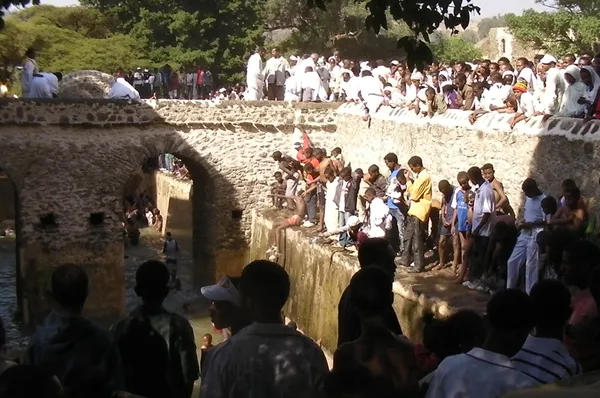
The Oromo are the people of Oromia, the largest region in Ethiopia, which wraps around Addis Ababa and stretches across the centre and south of the country. They speak Afaan Oromo, and their Gadaa system of governance, in which leaders are chosen for eight-year terms, was inscribed by UNESCO as Intangible Cultural Heritage in 2016. Their Irreecha thanksgiving festival draws huge crowds to the lakes of Bishoftu each year. At 34.48 percent, the Oromo are about one Ethiopian in three, and they lead the Amhara by 10,561,678 people.
2. Amhara: 37,334,132
The Amhara are the people of the northern highlands, in Amhara region around Bahir Dar and Gondar. They speak Amharic, the working language of the federal government, and most are Ethiopian Orthodox Christians. The rock-hewn churches of Lalibela and the castles of Gondar stand in Amhara land. At 26.88 percent, the Amhara are the only other group above a quarter of the country, and they number 4.34 times the Somali in third place.
3. Somali: 8,609,766
The Somali live in the east, in Somali region around Jijiga, in the lowlands once known as the Ogaden. Most are Muslim and pastoralist, herding camels, cattle and goats across dry country. At 6.20 percent, the Somali are the first group below ten million people, and they sit just 184,186 people ahead of the Tigray.
4. Tigray: 8,425,580
The Tigray live in the far north, in Tigray region around Mekelle and Aksum. They speak Tigrinya, and Aksum was the capital of one of Africa's great ancient kingdoms, whose stone stelae still stand. At 6.07 percent, the Tigray are the last group above six percent, and together with the Somali they number 17.0 million people, about one Ethiopian in eight.
5. Sidama: 5,574,196
The Sidama live in the south, in Sidama region around Hawassa on Lake Hawassa. They grow some of Ethiopia's best coffee, and their Fichee-Chambalaalla new year festival is one of the country's great celebrations. Sidama became a separate region in 2020, but the 2007 census already counted the Sidama as a distinct people. At 4.01 percent, the Sidama sit 2,065,210 people ahead of the Gurage below them.
6. Gurage: 3,508,986
The Gurage live in central Ethiopia, in the Gurage Zone south-west of Addis Ababa. They farm enset, the false banana that feeds much of the south, and Gurage traders and merchants are known across the country. The census spells the name Guragie. At 2.53 percent, the Gurage sit 301,179 people ahead of the Wolayta below them.
7. Wolayta: 3,207,807
The Wolayta live in the south, in Wolaita Zone around Sodo. They are farmers of enset, maize and coffee, and their kingdom was one of the old states of the southern highlands. The census spells the name Welaita. At 2.31 percent, the Wolayta are the last group above three million people.
8. Hadiya: 2,413,486
The Hadiya live in south-central Ethiopia, in Hadiya Zone around Hosaena. They farm the highland valleys and are known for their enset and their woven cloth. At 1.74 percent, the Hadiya sit only 15,022 people ahead of the Afar, the closest gap in the whole ranking.
9. Afar: 2,398,464
The Afar live in the north-east lowlands, in Afar region around Semera, in the Danakil Depression, one of the hottest places on Earth. They are pastoralists who herd camels and goats, and they mine the salt of the desert lakes. At 1.73 percent, the Afar sit 317,965 people ahead of the Gamo.
10. Gamo: 2,080,499
The Gamo live in the south, in Gamo Zone around Arba Minch, between Lakes Abaya and Chamo. They farm the terraced highlands above the Rift Valley lakes. At 1.50 percent, the Gamo close the ranking just 225,845 people ahead of the Gedeo.
Frequently Asked Questions
How were the 2026 figures worked out?
Each figure applies the group's share from the 2007 census to Ethiopia's 2026 population of 138,902,185 from the United Nations World Population Prospects 2024. The census counted 73,918,505 people in 2007. The method holds the 2007 shares constant, so the 2026 numbers are estimates, not a new count.
Why use a census from 2007? Is there nothing newer?
There is no newer census. Ethiopia has held only three censuses, in 1984, 1994 and 2007, and the next one has been delayed repeatedly. The 2007 census is the latest official count of the country's ethnic groups, and the CIA World Factbook's breakdown of Ethiopia matches it. The Factbook's 2022 estimates differ on some groups, and the Methodology explains why the census is used instead.
Some scholars say the census undercounted the Amhara. Is the ranking wrong?
The 2007 census counts 19,867,817 Amhara, 26.9 percent, down from 30.1 percent in 1994. Some scholars, including Berhanu Abegaz, have argued that millions of Amhara were missed. This ranking uses the official census figures as published, because they are the only complete official count, and it states the dispute openly rather than adjusting the numbers.
Are the Gurage counted with the Silte, or separately?
Separately. In the 1994 census the Silte were counted inside the Gurage total, but in 2007 they were counted on their own, at 940,766 people, or 1.27 percent. The Gurage total used here, 1,867,350 people, does not include them, so nothing is double counted. The Silte rank twelfth, behind the Gedeo.
What about the Gedeo, who just miss the list?
The Gedeo number 1,854,654 people in 2026, or 1.34 percent, just 225,845 behind the Gamo. They live in Gedeo Zone in the south, around Dilla, and grow coffee and enset. The next group, the Silte, is further behind at 1,767,818 people, so the cut at ten is clean.
Data Sources
- Central Statistical Agency of Ethiopia, Summary and Statistical Report of the 2007 Population and Housing Census Results, Table 2.2 (Percentage Distribution of Major Ethnic Groups) and Table 5 (Population by Ethnic Group): web.archive.org (CSA PDF)
- CIA World Factbook, Ethiopia, ethnic groups (2007 Census): cia.gov/the-world-factbook
- United Nations, Demographic Yearbook, Population by national and/or ethnic group, Ethiopia 2007 (UNdata record of the same census counts): data.un.org
- United Nations, World Population Prospects 2024 (Ethiopia population, 2026): population.un.org/wpp
- African Exponent, "Population of Every African Country in 2026": africanexponent.com
Methodology
Every figure in the table applies an ethnic share from the Central Statistical Agency's 2007 census, Summary and Statistical Report, Table 2.2, to Ethiopia's 2026 population of 138,902,185 (UN World Population Prospects 2024). The census was taken in May and November 2007 and counted 73,918,505 people. It records the group each person names, so the shares reflect self-identification. The shares were corroborated against the CIA World Factbook's Ethiopia ethnic breakdown, which matches the census shares to one decimal place for every ranked group, and against the same census counts as carried in the United Nations Demographic Yearbook. The Factbook has since been retired by the CIA, but its published Ethiopia breakdown is the 2007 census breakdown used here. The 2026 figures are estimates that hold the 2007 shares constant; no newer official ethnic count exists, because the next census has been delayed repeatedly.
No Joshua Project figures are used: the census itemises more than 80 groups, and its ten groups above one million people are exactly the ten ranked here, so there is no gap for a second source to fill. No sub-group count has been added on top of a family total. The Silte were counted separately from the Gurage in 2007, at 940,766 people, and are not inside the Gurage total. The ten ranked groups sum cleanly to 87.43 percent of Ethiopia. Two points are stated openly. First, the Factbook's 2022 estimates differ from the census on some groups, notably the Amhara at 24.1 percent against the census 26.9 percent, but they are estimates, not a count, so the census is used. Second, some scholars argue the 2007 census undercounted the Amhara by millions; the census figures are used as published and the dispute is stated in the FAQ. Spellings follow common use: the census spells the groups Tigrie, Guragie and Welaita, rendered here as Tigray, Gurage and Wolayta. Every derived claim in the article (the top two at 61.36 percent, the Oromo lead of 10,561,678, the Oromo outnumbering the bottom three combined nearly seven times over, the Hadiya lead over the Afar of 15,022) was recomputed from the final table values by script before publication.