Published: November 14, 2026
Egypt is the most one-sided ranking in this series so far. The Egyptians number 103.5 million people in 2026, 86.21 percent of the country, and the other nine groups in this top ten combined number barely 4 million. No other country in the series has a single group this dominant, and the contest that matters in Egypt starts at second place.
The ranking uses Joshua Project's in-country people-group counts, applied to Egypt's 2026 population of 120,101,175 from the United Nations World Population Prospects 2024. Egypt has never published an ethnic breakdown in any census, so the 2006 census figure of 99.6 percent Egyptian is the anchor, and the Methodology explains the gap between that figure and the 86.21 percent used here. This is the seventh entry in our series ranking the tribes of every African country, after Nigeria, Ghana, South Africa, Kenya, DR Congo and Ethiopia.
Key Facts
- The Egyptians rank first with 103.5 million people, 86.21 percent of Egypt, more than 84 times the Nubians in second place.
- The Egyptians alone outnumber the other nine ranked groups combined about 26 times over, 103.5 million people against 4.0 million for the rest together.
- The ten ranked groups together cover 107.6 million people, 89.55 percent of Egypt. The rest is mostly resident foreign communities, led by the Sudanese at about 4.2 million.
- The Nubians and the Halebi are effectively tied for second at about 1.2 million and 1.1 million people, and other estimates put both groups higher, so the order between them depends on the source.
- The smallest ranked group, the Siwi Berbers of Siwa Oasis, number 27,000 people, about one Egyptian in 4,400.
| Rank | Tribe | Share of Egypt | Population (2026) | Main Homeland |
|---|---|---|---|---|
| 1 | Egyptians | 86.21% | 103,543,000 | Nile Valley and Delta, from Cairo to Aswan |
| 2 | Nubians | 1.02% | 1,228,000 | Aswan Governorate, around Aswan, Kom Ombo and Nasr al-Nuba |
| 3 | Halebi (Romani) | 0.89% | 1,066,000 | Nile Delta, in four tribes |
| 4 | Bedouin | 0.79% | 949,000 | Western Desert around Matrouh, and Sinai |
| 5 | Libyan Arabs | 0.42% | 505,000 | Western Desert, Matrouh Governorate |
| 6 | Beja (Bisharin) | 0.10% | 126,000 | Eastern Desert, Red Sea Hills |
| 7 | Kharga-Selima | 0.03% | 40,000 | Kharga Oasis, New Valley Governorate |
| 8 | Tuareg | 0.03% | 37,000 | Western Desert, around Siwa Oasis |
| 9 | Baharia (Wahati) | 0.03% | 35,000 | Bahariya Oasis, Giza Governorate |
| 10 | Siwi Berbers | 0.02% | 27,000 | Siwa and Qara oases, Western Desert |
The shares in this table are Joshua Project's in-country counts divided by Egypt's 2026 population of 120,101,175. The Egyptians row combines four Joshua Project entries, and the Nubians and Bedouin rows combine three and two entries; the Methodology lists every combination. The 2026 figures are estimates, not a census count, and Egypt has never published an ethnic breakdown.
The first name outside the ranking is the Domari, at 10,000 people in 2026, just 17,000 behind the Siwi Berbers. The Domari are a Dom people who live across Egypt, and Joshua Project counts them separately from the Halebi, though both are Dom or Romani peoples. No other native Egyptian community is counted above 10,000 by Joshua Project, so the cut at ten is clean and no group was squeezed out by a rounding call.
1. Egyptians: 103,543,000
The Egyptians are the people of the Nile Valley and the Delta, from Cairo to Aswan, and they are more than six in seven Egyptians. Inside that total, the Copts number 11,174,000 people, 9.30 percent of the country, and the Sa'idi of Upper Egypt number 27,953,000, 23.27 percent. Cairo governorate alone holds 12,256,000 people, about ten times the Nubians. At 86.21 percent, the Egyptians lead the Nubians by 102,315,000 people, the widest lead in this series.
2. Nubians: 1,228,000
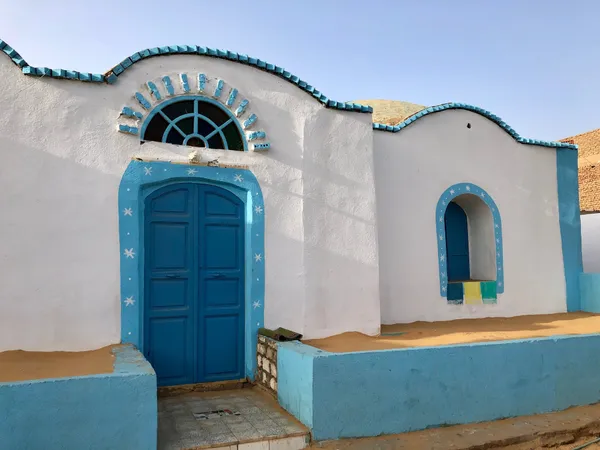
The Nubians live in the south, in Aswan Governorate around Aswan, Kom Ombo and Nasr al-Nuba, on both banks of the Nile near the Sudanese border. They speak Nobiin and Kenzi, and their villages around Aswan, including Nagaa Suhayl, were settled from the 1960s, when the Aswan High Dam flooded their old homes. At 1.02 percent, the Nubians sit only 162,000 people ahead of the Halebi, the closest gap at the top of any ranking in this series, and other estimates put the Nubian population as high as 3 to 4 million.
3. Halebi (Romani): 1,066,000
The Halebi live in the Nile Delta, in four tribes, and are one of Egypt's Romani peoples, alongside the Nawar and the Ghagar. They are a long-settled community with low status and mostly low-income work. At 0.89 percent, the Halebi sit 117,000 people ahead of the Bedouin, and some estimates of the Dom people in Egypt run far higher, at 2.4 million.
4. Bedouin: 949,000
The Bedouin are the desert Arabs of Egypt, in two great blocs. The Awlad Ali, 609,000 people, live in the Western Desert around Matrouh, divided into five tribes, and hold an absolute majority of Matrouh governorate. The Sinai Bedouin, 340,000 people, live across the Sinai Peninsula. At 0.79 percent, the Bedouin sit 444,000 people ahead of the Libyan Arabs.
5. Libyan Arabs: 505,000
The Libyan Arabs live in the Western Desert, in Matrouh Governorate near the Libyan border. Joshua Project counts them separately from the Awlad Ali Bedouin, and the two Libyan-origin entries together, 1,114,000 people, are close to the International Organization for Migration's figure of 1 million Libyans in Egypt. At 0.42 percent, the Libyan Arabs sit 379,000 people ahead of the Beja.
6. Beja (Bisharin): 126,000
The Beja live in the Eastern Desert, in the Red Sea Hills between the Nile and the Red Sea coast. They are pastoralists who herd camels and goats across dry country, and the Bisharin are the Beja group Joshua Project counts in Egypt. At 0.10 percent, the Beja sit 86,000 people ahead of the Kharga-Selima, and they are the last group above one hundred thousand people.
7. Kharga-Selima: 40,000
The Kharga-Selima live in Kharga Oasis, the capital oasis of New Valley Governorate in the Western Desert. They are an oasis community rather than a tribe in the classic sense, but Joshua Project counts them as a distinct people. At 0.03 percent, they sit only 3,000 people ahead of the Tuareg, the second-closest gap in the ranking.
8. Tuareg: 37,000
The Tuareg live in the Western Desert around Siwa Oasis, at the far western edge of Egypt. They are the desert people of the Sahara, and the Siwa Tuareg are a small eastern outpost of a people whose heartland lies far to the west. At 0.03 percent, the Tuareg sit only 2,000 people ahead of the Baharia, the closest gap in the whole ranking.
9. Baharia (Wahati): 35,000
The Baharia live in Bahariya Oasis, in Giza Governorate in the Western Desert. They are an oasis farming community, known for their dates and olives, and Joshua Project counts them under the name Wahati. At 0.03 percent, the Baharia sit 8,000 people ahead of the Siwi Berbers.
10. Siwi Berbers: 27,000
The Siwi Berbers live in Siwa and Qara oases in the Western Desert, near the Libyan border. They speak Siwi, a Berber language, and are the easternmost Berbers in Africa. At 0.02 percent, the Siwi close the ranking just 17,000 people ahead of the Domari.
Frequently Asked Questions
Why is one group 86 percent of the country?
Egypt's 2006 census records 99.6 percent of the population as Egyptian, and no Egyptian census has ever published an ethnic breakdown. Joshua Project splits the Egyptian population by region and religion, into Lower Egyptian Muslims, Sa'idi Muslims, Copts and Sa'idi Copts, and this ranking adds those four entries back together into one people, at 103,543,000. The gap between the census 99.6 percent and the 86.21 percent used here is that Joshua Project counts about 16 million residents as diaspora and immigrant groups, while the census counts them as Egyptian. Both figures are stated in the Methodology.
Why are the Sudanese not in the ranking?
About 4 million Sudanese live in Egypt, according to the International Organization for Migration, and Joshua Project counts 4,160,000 Sudanese Arabs in the country. They are not ranked because they are a resident foreign community, not an Egyptian tribe. The same rule excludes the Syrians at about 1.5 million, the Yemenis at about 1 million, and the Algerian, Moroccan and Gulf Arab residents. The ranking covers the tribes of Egypt, not everyone living in Egypt.
Are the Copts a separate tribe?
No. The Copts are ethnic Egyptians who are Christian, and they number 11,174,000 people, 9.30 percent of Egypt. Joshua Project counts them separately from Muslim Egyptians because it splits groups by religion, but this ranking counts them inside the Egyptians, where they belong. The figure matches the CIA World Factbook's estimate that Christians are about 10 percent of Egypt.
Why do Nubian estimates differ so much?
Joshua Project counts 1,228,000 Nubians in Egypt, but the Minority Rights Group says there may be as many as 3 or 4 million, and Wikipedia gives a range of 300,000 to 5 million. No census has ever counted Nubians separately, so every figure is an estimate. This ranking uses Joshua Project because it is the only itemised count that covers every group on the same basis, and it states the higher estimates openly. The same uncertainty applies to the Halebi, which is why the Nubians lead them by only 162,000 people on this count and the order between them depends on the source.
What about the Domari, who just miss the list?
The Domari number 10,000 people in 2026, or 0.01 percent, just 17,000 behind the Siwi Berbers. Joshua Project lists them separately from the Halebi, with a different primary language, Domari rather than Egyptian Arabic, though both are Dom or Romani peoples. Adding them to the Halebi would make a Romani total of 1,076,000 people and would change no rank, so they are kept separate and named here as the near-miss.
Data Sources
- Joshua Project, Egypt people groups, languages and religions: joshuaproject.net/countries/EG
- CIA World Factbook, Egypt, ethnic groups (2006 census: Egyptian 99.6%, other 0.4%): cia.gov/the-world-factbook
- United Nations, World Population Prospects 2024 (Egypt population, 2026): population.un.org/wpp
- African Exponent, "Population of Every African Country in 2026": africanexponent.com
- International Organization for Migration, Egypt migrant assessment (9,012,582 migrants; Sudanese 4 million, Syrians 1.5 million, Yemenis 1 million, Libyans 1 million): english.news.cn
- Minority Rights Group, World Directory of Minorities, "Egypt: Nubians" (updated October 2017): refworld.org
- Wikipedia, "Nubian people": en.wikipedia.org/wiki/Nubian_people
- Wikipedia, "Siwi people": en.wikipedia.org/wiki/Siwis
Methodology
Egypt has never published an ethnic breakdown in any census: the 2006 census records 99.6 percent of the population as Egyptian and 0.4 percent as other. This ranking is therefore built on Joshua Project's in-country people-group counts (46 groups, totalling 119,810,000 against the UN World Population Prospects 2024 total of 120,101,175 for 2026), the only itemised count available. Where Joshua Project splits one people by region or religion, the entries are combined and the combination is stated: Egyptians combine Egyptian Muslim (68,322,000), Sa'idi Muslim (24,047,000), Egyptian Coptic (7,268,000) and Sa'idi Coptic (3,906,000); Nubians combine Nubian Arabized (637,000), Nubian Fedicca-Mohas (527,000) and Nubian Kunuz (64,000); Bedouin combine Bedouin Ali Awlad (609,000) and Bedouin Sinai (340,000).
Resident foreign and diaspora communities are not ranked, because they are not tribes of Egypt: that excludes the Sudanese (4,160,000 on Joshua Project; about 4 million per the International Organization for Migration), Syrians (about 1.5 million per IOM), Yemenis, Algerians, Moroccans and Gulf Arabs, among others. Joshua Project's diaspora counts for Egypt also conflict with the IOM's composition of the migrant population, so they are not used. Deaf Egyptians (509,000) are excluded because deafness is not an ethnicity. Libyan Arabs (505,000) are counted separately from the Bedouin Ali Awlad, as Joshua Project counts them; the two Libyan-origin entries together (1,114,000) are close to the IOM's 1 million Libyans in Egypt. The Domari (10,000) are counted separately from the Halebi, as Joshua Project counts them. Shares are each group's Joshua Project count divided by 120,101,175.
Two points are stated openly. First, the census figure of 99.6 percent Egyptian and the 86.21 percent used here are two different counts of the same population: the census counts resident foreign communities as Egyptian, while Joshua Project counts them separately, so the 86.21 percent is a share of the whole population on Joshua Project's partition, not a census figure. Second, the Nubians and the Halebi are close at the top of the rest (1,228,000 vs 1,066,000), and other estimates put both groups higher (the Minority Rights Group says up to 3 or 4 million Nubians; PrayGlobal says 2.4 million Domari in Egypt), so the order between them depends on the source. Figures are estimates, not census results. Every derived claim in the article (the Egyptians at 86.21 percent, the 102,315,000 lead over the Nubians, the Egyptians outnumbering the other nine combined about 26 times over, the Nubians leading the Halebi by 162,000, the Siwi at about one Egyptian in 4,400) was recomputed from the final table values by script before publication.