Published: November 17, 2026
Key Takeaways
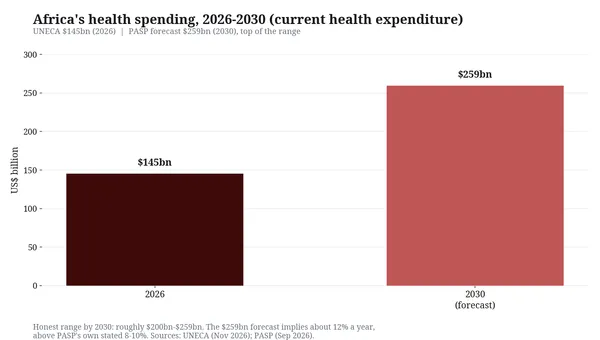
- Africa spends about $145 billion a year on health, according to the United Nations Economic Commission for Africa (UNECA) in November 2026, and the market is forecast to reach $259 billion by 2030. That is about 1.4% of global health spending for a continent carrying about 24% of the global disease burden.
- Most Africans pay at the point of care. Out-of-pocket spending is about 30% of health spending in Sub-Saharan Africa, and over 70% in Nigeria and nearly 60% in Egypt. About 420 million Africans faced health-related financial hardship in 2022, a measure of how thin the protection is.
- Insurance coverage is the great divide. Rwanda covers about 89% of its people through community-based insurance, Morocco registers about 88%, and Ghana counts about 70% as active members. Nigeria covers about 10% and South Africa about 15%, while Kenya has registered 32.2 million people but only about 5 million pay premiums.
- The private hospital market is concentrated and listed. South Africa's three big groups, Netcare, Mediclinic and Life Healthcare, run about 27,500 beds between them, while Morocco's AKDITAL grew revenue 49% in 2025 to 4.4 billion dirhams and Egypt's Cleopatra Hospitals grew revenue 33% to 7.2 billion Egyptian pounds.
- The biggest change underway is the donor exit. United States development assistance for health collapsed in 2025, with global HIV disbursements falling from $6.7 billion to $4.6 billion, and African governments are being forced to fund the gap through mandatory insurance schemes that are still learning to collect premiums.
Market Size & Growth
Start with the definition. This briefing measures the market as current health expenditure, the World Health Organization's term for all spending on health goods and services consumed in a year, whether the payer is a government, a household, an insurer or a donor. On that definition, UNECA put Africa's annual health spending at about $145 billion in November 2026, speaking at the first Africa Health Data Forum in Nairobi. That figure is consistent with World Bank data: current health expenditure per person in Sub-Saharan Africa was $79.30 in 2023, against a world average of $1,317, which puts the region at about 6% of the world average, or about one seventeenth of what the average person worldwide spends on health.
The forecast is larger and less certain. A September 2026 investment thesis from PASP puts the African healthcare market at $259 billion by 2030, growing 8% to 10% a year. That forecast has no published base year or base value, so it cannot be derived from the $145 billion figure. In fact the two numbers imply growth of about 12% a year from 2025 to 2030, above the 8% to 10% the same thesis states. Treat $259 billion as the top of the range, not as an audited projection. The honest range for this briefing is therefore $145 billion of spending today, with a credible path to roughly $200 billion to $259 billion by 2030 depending on how fast insurance enrolment converts into paid premiums and how much of the donor gap governments replace with domestic money.
For scale, global spending on health was $10.6 trillion in 2023, about 10% of global GDP, according to the WHO Global Health Expenditure Database. Africa's $145 billion is about 1.4% of that total. Two other figures circulate and both are wrong on current data: some sources say Africa is under 1% of global health spending, and a peer-reviewed paper published in October 2026 says 3%. The 1.4% figure is the one that reproduces from the newest totals, and this briefing uses it. The disease burden side is not disputed: Africa carries about 24% of the global disease burden with about 17% of the world's people.
The sub-markets are smaller and better measured. Africa's health insurance market is forecast to reach $50.3 billion by 2030, growing 5.26% a year from 2023 according to Grand View Research, which implies a market of about $35 billion in 2023. Digital health was $3.8 billion in 2023 and is forecast to reach $16.6 billion by 2030, growth of 23.4% a year, also according to Grand View Research. Pharmaceuticals, covered in Deep Dive #1, were about $29.3 billion in 2025. These are segments of the $145 billion, not additions to it, and the briefing never adds them together.
Per person, the gap between African countries is wide. South Africa spent $537 per person on health in 2023, Morocco $232, Egypt $141 and Kenya $85. Nigeria's per-person figure was not retrieved in this research pass and is not stated here. As a share of GDP, South Africa spent 8.9% on health in 2023, Morocco 6.1%, Egypt 4.9%, Kenya 4.4% and Nigeria 4.2%.
How the Market Is Structured
Four layers make up the market, and confusing them is the most common error in writing about African health. The first layer is public provision: government hospitals, clinics and community health workers, funded from budgets and donor money, free or nearly free at the point of use in most countries. The second is private provision: for-profit hospital groups, mission and faith-based hospitals, and the small clinics and pharmacies where most urban Africans actually get care. The third is insurance and pooling: social health insurance schemes, private medical schemes, community-based insurance and health maintenance organisations, which collect premiums and pay providers. The fourth is health technology and services: electronic records, pharmacy supply chains, diagnostics and telemedicine, which sit across the other three layers.
The defining structural fact is who pays. In Sub-Saharan Africa, governments fund about 28% of current health expenditure and donors about 18% on a median country basis, while households pay about 42% out of pocket, according to a 2026 analysis of WHO data covering 2000 to 2023. The population-weighted aggregate for the region is lower, about 30% out of pocket in 2023, because the bigger economies pool more. Either way, the African health market is mostly a cash market, and that shapes everything else: hospitals chase insured and corporate patients, insurers chase formal-sector workers, and the informal majority pays cash or goes without.
A second structural fact is the split between a small insured population and a large uninsured one. South Africa's private system serves about 9 million medical scheme members, about 15% of the population, with world-class hospitals, while the public system serves the other 85%. Kenya's new Social Health Authority has registered 32.2 million people but collects premiums from only about 5 million. Nigeria's mandatory insurance law covers about 23 million of more than 240 million people. The market's growth story is the conversion of registration into paying membership, not the building of more beds alone.
The Country Map
Seven markets account for most of the continent's health spending and nearly all of its investable private capacity. The table below uses the latest common year, 2023, for spending shares, and the latest enrolment figures as of November 2026.
| Country | Current health expenditure (% of GDP, 2023) | Out-of-pocket share of health spending (2023) | Insurance coverage (latest, Nov 2026) | Defining feature |
|---|---|---|---|---|
| South Africa | 8.9% | 6.7% | ~15% (9.17m medical scheme members) | Largest private hospital market; NHI law signed but not in force |
| Egypt | 4.9% | 57.2% | ~5% (UHI Phase 1, ~6m beneficiaries, Jul 2026) | Universal health insurance rolling out governorate by governorate |
| Nigeria | 4.2% | 71.9% | ~10% (23.1m NHIA enrollees, Oct 2026) | Biggest population prize; mandatory insurance law from 2022 |
| Kenya | 4.4% | 24.2% | 32.2m registered, ~5m paying | SHA replaced NHIF in Oct 2024; registration far ahead of contributions |
| Morocco | 6.1% | 37.3% | 88% registered, 78% with active rights | Coverage expanded from 42% to 88% since 2022 |
| Ghana | (not retrieved) | (not retrieved) | ~70% active NHIS members | Oldest scheme in West Africa; levy uncapped in 2025 |
| Rwanda | (not retrieved) | 10.4% (2020) | ~89% (CBHI) | Highest coverage in Africa; premiums now income-based |
South Africa is the continent's biggest health market by spending and its most developed private system. Current health expenditure is 8.9% of GDP, the highest of the seven, and households pay only 6.7% out of pocket, the lowest, because the state funds most public care and medical schemes cover the insured. The private hospital market is dominated by three listed groups, and the medical scheme market by Discovery Health. The defining event is the National Health Insurance Act, signed in May 2024 but not in force, with implementation frozen since February 2026 while the Constitutional Court hears challenges.
Egypt is one of the continent's largest markets and the one with the most state-led change. Households pay 57.2% of health spending out of pocket, among the highest rates in the world, and the government's Universal Health Insurance system is designed to replace that with pooled funding. Phase 1 covers six governorates with more than 6 million beneficiaries as of July 2026, and Phase 2 will add five more governorates and about 12 to 13 million people. The private hospital market is growing fast in nominal terms: Cleopatra Hospitals, the leading private group, grew revenue 33% in 2025.
Nigeria is the largest population prize and the thinnest coverage. Health spending is 4.2% of GDP, and households pay 71.9% of it out of pocket, the highest share among major African economies. The National Health Insurance Authority Act of 2022 made insurance mandatory, and enrolment has risen 42% since late 2023 to about 23.1 million in October 2026, but that is still only about 10% of the population. A second, undated report puts enrolment at 24.1 million in the third quarter of 2026; this briefing uses the dated figure. Lagos has a large private hospital cluster, led by Evercare, Lagoon and Reddington.
Kenya is the live experiment in mandatory social health insurance. The Social Health Authority replaced the National Health Insurance Fund on 1 October 2024, and by August 2026 it had registered 32.2 million people, roughly double the old fund's peak. The problem is collection: only about 5 million of those registered pay premiums, and the authority collected about 90 billion shillings a year against far larger benefit promises. Kenya's private hospital market is anchored by the Aga Khan University Hospital and The Nairobi Hospital, both in Nairobi.
Morocco has the steepest coverage expansion of the seven markets in this briefing. Mandatory health insurance covered 42% of the population before the reform began; by the end of 2025 it covered about 88%, more than 32 million people, with the state paying about 9.5 billion dirhams a year for 11 million low-income beneficiaries under AMO-Tadamoun. The gap between registration and effective coverage is the story to watch: in October 2026 the finance minister said 8.2 million people lacked effective coverage, 4.1 million because their contributions were suspended for non-payment and 4.1 million because they were not registered. AKDITAL, the leading private hospital group, now runs 41 facilities with 4,505 beds.
Ghana runs West Africa's oldest national scheme, introduced in 2003 to replace cash-and-carry payment. Active membership rose from 56.3% in 2024 to about 70% by August 2026, according to the health minister, after the government uncapped the National Health Insurance Levy and funding rose from 6.5 billion cedis in 2024 to 9.8 billion cedis in 2025. The administrative count is lower than the minister's figure: the authority counted 18.5 million active members in the fourth quarter of 2025, while total enrolment including free primary healthcare auto-enrolment reached 26 million in July 2026. The difference is definitional, and this briefing uses the active-membership figure as its anchor.
Rwanda is the coverage outlier. Community-based health insurance, known as Mutuelle de Sante, covers about 89% of the population, and total insurance coverage including formal-sector schemes reaches about 97% on census figures. Out-of-pocket spending fell from 26.6% of health spending in 2000 to 10.4% in 2020. In February 2026 the government replaced flat premiums with income-based contributions, from free for the poorest to 20,000 Rwandan francs a year for the wealthiest, and expanded benefits to include cancer care, kidney transplants and neurosurgery.
The Value Chain
The value chain runs from training and buildings to the bedside, and the money pools at different points in different countries. At the start are inputs: doctors, nurses and pharmacists trained in public universities and teaching hospitals; buildings and equipment, much of it imported; and medicines, of which Africa imports more than 70% of what it consumes. The pharmaceuticals deep dive in this series covers the drug side in full; for delivery, the binding input is people. Africa had 5.72 million health workers in 2024 but only 46% of the workers it needs, and the projected shortfall is about 6.1 million by 2030 on the 2024 BMJ Global Health needs-based model. The World Health Organization's 2026 update puts the shortfall at 5.85 million, and the difference is noted in the Methodology.
Next comes care delivery: primary care at clinics and health centres, secondary care at district and general hospitals, and tertiary care at referral and teaching hospitals. Primary care is mostly public and mostly free. Secondary and tertiary care is where the private market lives, and where the money is. In South Africa, surgical cases account for more than 70% of Netcare's hospital revenue. In Nigeria, the most profitable private hospitals tend to be the ones that can do cardiac catheterisation, dialysis and advanced imaging, because those are the services wealthy patients would otherwise travel abroad for.
Financing and pooling sits in the middle of the chain and decides who can afford the care. Schemes collect premiums or taxes, contract providers, and pay claims. Where pooling works, as in Rwanda and Morocco, providers get paid and patients use services. Where it does not, as in Kenya's SHA, providers wait months for claims and threaten to suspend services. Kenya's private hospitals threatened suspension in February 2025 over about 30 billion shillings in unpaid arrears, and the legacy NHIF left about 33 billion shillings in unpaid provider claims when it was dissolved.
Distribution and last-mile delivery is the final step. In cities it is pharmacies, diagnostic labs and ambulance services. In rural areas it is community health workers, mission hospitals and, increasingly, drones: Zipline has delivered blood, vaccines and emergency medicines by drone in Rwanda since 2016 and in Ghana since 2019, and a 2025 mixed-method study in Ghana's Ashanti Region found maternal deaths fell 56% at facilities served by its drones. The chain's weakest link differs by country: in Nigeria it is financing, in Kenya it is claims payment, in South Africa it is the two-tier split between public and private, and in most of the continent it is simply the shortage of trained staff.
Key Players by Country
The tables below list the players that actually operate in each market, with what they do there and a link to the company's official website. Only official sites are linked. Where a website could not be verified live by curl on 17 November 2026, the link is still the company's official domain, and the fact is noted in the run's research notes. No player is listed without a verifiable fact attached.
South Africa
| Player | What it does in South Africa | Position | Official website |
|---|---|---|---|
| Netcare | Largest private hospital group; acute hospitals, emergency services (Netcare 911), primary care, mental health (Akeso) | 51 private hospitals + 2 PPP hospitals; 10,605 beds; revenue R26.3bn FY2025 | www.netcare.co.za |
| Mediclinic Southern Africa | Private hospitals, day clinics, subacute and mental health; part of Mediclinic Group | 50 hospitals, about 8,900 beds; Remgro to take full control in a ~$950m deal announced Mar 2026 | www.mediclinic.com |
| Life Healthcare | Acute hospitals, complementary services (mental health, rehab, renal, oncology, diagnostics) | 42 hospitals, 8,085 beds; revenue R25.1bn FY2025 | www.lifehealthcare.co.za |
| Discovery Health Medical Scheme | Largest open medical scheme; administered by Discovery Health | 2.73m beneficiaries at Dec 2025; 57.7% of the open-scheme market; R89.4bn claims paid in 2025 | www.discovery.co.za |
| Government Employees Medical Scheme (GEMS) | Largest restricted medical scheme, for public servants | About 2.4m beneficiaries | www.gems.gov.za |
| Momentum Medical Scheme | Open medical scheme | One of the larger open schemes | www.momentum.co.za |
Egypt
| Player | What it does in Egypt | Position | Official website |
|---|---|---|---|
| Cleopatra Hospitals Group | Largest private hospital group; 7 hospitals in Greater Cairo, polyclinics, IVF | EGX-listed; revenue EGP 7,227m in FY2025 (+33%); launched El Tagamoa flagship Dec 2025 | www.cleopatrahospitals.com |
| Andalusia Hospitals | Private hospitals in Cairo (Maadi) and Alexandria (Smouha, El-Shallalat, Roushdy), plus clinics | Group manages $1bn assets under management; October Hospital under construction (EGP 3bn plus $35m, 225 beds) | andalusiaegypt.com |
| Saudi German Hospitals, Cairo | Tertiary hospital in El Nozha, Cairo; first in Egypt to join the Mayo Clinic Care Network (2019) | About 300 beds; JCI-accredited | saudigermanhealth.com |
| Egypt Healthcare Authority (EHA) | State provider arm of the Universal Health Insurance system; runs public hospitals in UHI governorates | Operates the Phase 1 hospital network; no official standalone site verified, listed without a link | No official website verified |
Nigeria
| Player | What it does in Nigeria | Position | Official website |
|---|---|---|---|
| Evercare Hospital Lekki | 165-bed multispecialty tertiary hospital, Lekki, Lagos; cardiac, neuro, orthopaedics, critical care | Opened 2021; part of TPG's $1bn Evercare Health Fund | www.evercare.ng |
| Lagoon Hospitals | Private tertiary hospitals and clinics across Lagos; first in Sub-Saharan Africa to earn JCI Gold Seal (2011) | Founded 1986; 6 locations; acquired by Iwosan Investments in 2021 | www.lagoonhospitals.com |
| Reddington Hospital | Private multispecialty tertiary hospital, Victoria Island, Lagos; parent of Duchess International Hospital | Founded 2006 | reddingtonhospital.com |
| Duchess International Hospital | Multispecialty hospital, Ikeja GRA, Lagos; cardiac cath lab, ICUs | 72 beds commissioned in Phase 1 (100-bed design); commissioned Oct 2021 | duchesshospital.com |
| National Health Insurance Authority (NHIA) | Regulator and operator of mandatory health insurance; runs the Vulnerable Group Fund | 23.1m enrolled, Oct 2026; state schemes hold 9.74m (end-2025) | www.nhia.gov.ng |
| AXA Mansard Health | Health insurance arm of AXA Mansard; retail and corporate plans | One of Nigeria's larger health insurers | axamansard.com |
| Hygeia HMO | One of Nigeria's oldest HMOs; national network | Operating since 1986; 1,200+ partner hospitals | www.hygeiahmo.com |
| Avon HMO | National HMO, subsidiary of Heirs Holdings; first HMO in Nigeria to sell plans online | 100,000+ active enrollees; 2,000+ providers (company site, 2026) | avonhealthcare.com |
Kenya
| Player | What it does in Kenya | Position | Official website |
|---|---|---|---|
| Social Health Authority (SHA) | State authority running SHIF, the Primary Healthcare Fund and the Emergency, Chronic and Critical Illness Fund | 32.2m registered (Aug 2026); only ~5m paying premiums | www.sha.go.ke |
| Aga Khan University Hospital, Nairobi | Private not-for-profit teaching and referral hospital | 300 beds; JCI-accredited; founded 1958 | hospitals.aku.edu |
| The Nairobi Hospital | Private not-for-profit Level 5 referral hospital, Upper Hill, Nairobi | About 355 beds; founded 1954 | www.nairobihospital.org |
| Kenyatta National Hospital | Largest public referral and teaching hospital | 1,800 beds | www.knh.or.ke |
| Gertrude's Children's Hospital | Not-for-profit paediatric hospital, Muthaiga, Nairobi | 120 beds; largest paediatric hospital in East and Central Africa | www.gerties.org |
| Jubilee Health Insurance | Health insurance arm of Jubilee Holdings | One of East Africa's larger health insurers | jubileeinsurance.com |
| M-TIBA | Mobile health wallet (Safaricom, CarePay, PharmAccess); ring-fenced savings for healthcare, not insurance itself | Launched 2016; scale figures from 2017-2022 only, no current count verified | m-tiba.co.ke |
Morocco
| Player | What it does in Morocco | Position | Official website |
|---|---|---|---|
| AKDITAL | Leading private hospital group; multidisciplinary hospitals, oncology, cardiology | 41 facilities, about 4,500 beds at end-2025; revenue MAD 4,413m in 2025 (+49%); listed on the Casablanca Stock Exchange | www.akdital.ma |
| National Social Security Fund (CNSS) | Manages all basic health insurance schemes under Law 02-24, including AMO-Tadamoun | 32.7m registered (89%); 28.6m with active rights (78%) | www.cnss.ma |
Ghana
| Player | What it does in Ghana | Position | Official website |
|---|---|---|---|
| National Health Insurance Authority (NHIA) | Runs the National Health Insurance Scheme; collects the National Health Insurance Levy | 18.5m active members Q4 2025; funding GH¢9.8bn in 2025 | www.nhis.gov.gh |
| Nyaho Medical Centre | Private multispecialty hospital, Accra; Ghana's oldest group medical practice | Founded 1970; 54 beds (2020 figure) | nyahomedical.com |
| Euracare | Multispecialty hospital and diagnostics, Accra; cardiology and interventional radiology focus | 60-bed flagship hospital at Adjiringanor; subsidiary of Eurapharma (CFAO) | www.euracarehealth.com |
Rwanda
| Player | What it does in Rwanda | Position | Official website |
|---|---|---|---|
| Rwanda Social Security Board (RSSB) | Manages community-based health insurance (Mutuelle de Sante) | 11m CBHI beneficiaries; 89.06% population coverage | rssb.rw |
| King Faisal Hospital | Largest referral hospital; tertiary and quaternary care, teaching hospital | 160 beds; expansion to about 557-600 beds planned | www.kfh.rw |
Regulation and Policy
The regulators differ by country, but the direction of travel is the same: mandatory insurance, consolidated purchasing, and digital claims. The table below is the short version; the paragraphs that follow carry the changes of the last 24 months.
| Country | Main regulator(s) | Core law | What changed in the last 24 months |
|---|---|---|---|
| South Africa | Council for Medical Schemes; National Department of Health | Medical Schemes Act 1998; NHI Act 2023 | NHI signed May 2024, not in force; implementation frozen Feb 2026 pending Constitutional Court judgment; certificate-of-need sections struck down May 2026 |
| Egypt | Universal Health Insurance Authority; Egypt Healthcare Authority; GAHAR | Universal Health Insurance Law No. 2 of 2018 | Phase 1 completed with Aswan (Jul 2025); Phase 2 trial in Minya (Jun 2026); AFD EUR 150m loan (Jun 2026) |
| Nigeria | National Health Insurance Authority | NHIA Act 2022 | Mandatory enforcement ordered Sep 2025; enrolment 16.2m to 23.1m; first tariff review in a decade (Apr 2025) |
| Kenya | Social Health Authority | Social Health Insurance Act 2023 | NHIF replaced by SHA (Oct 2024); 2.75% uncapped contribution; claims and fraud crisis |
| Morocco | National Social Security Fund (CNSS) | Framework Law 09-21 (2021); Law 02-24 (2025) | AMO generalisation effectively complete (88% by end-2025); all schemes consolidated under CNSS |
| Ghana | National Health Insurance Authority | National Health Insurance Act 2012 (Act 852) | Levy uncapped (Apr 2025); tariffs up 50% phased (Aug 2026); Mahama Cares Act (Jul 2025); Free Primary Healthcare (2026) |
| Rwanda | Rwanda Social Security Board | CBHI law 2015 | Premiums switched to five income-based levels (Jul 2026); benefits expanded to cancer, transplants, neurosurgery |
South Africa. The National Health Insurance Act was signed on 15 May 2024, but no section of it is in force, because the Act only takes effect on dates the President proclaims, and no proclamation has been issued. On 24 February 2026 the President agreed to delay proclaiming any section until the Constitutional Court rules on challenges brought by the Board of Healthcare Funders and the Western Cape government, which argue that Parliament's public-participation process was inadequate. The court heard the case on 5 to 7 May 2026 and reserved judgment; as of 1 November 2026 it had not been delivered. Separately, on 18 May 2026 the Constitutional Court struck down the certificate-of-need provisions of the National Health Act, which would have controlled where doctors and hospitals could practise. Until the NHI judgment arrives, medical schemes operate exactly as before under the Medical Schemes Act of 1998, and the February 2026 budget allocated more than 9 billion rand to NHI preparation.
Egypt. Law No. 2 of 2018 split the old system into three bodies: the Universal Health Insurance Authority, which finances and buys care; the Egypt Healthcare Authority, which provides it; and GAHAR, which accredits facilities. Phase 1 covers six governorates and passed 6 million beneficiaries by July 2026, with more than 117 million medical services delivered since launch. Phase 2 covers five more governorates, Minya, Matrouh, Damietta, Kafr El-Sheikh and North Sinai, and is meant to add 12 to 13 million beneficiaries by 2030, backed by 115 billion Egyptian pounds of investment. The original schedule aimed for nationwide coverage by 2032; presidential directives have pulled the ambition forward, with officials variously citing 2027 and 2027 to 2030, and this briefing does not pick between those statements. No independent evaluation of Phase 1 had been published as of August 2026.
Nigeria. The NHIA Act of 2022 repealed the 2004 scheme, made insurance mandatory for all Nigerians and legal residents, and created the Vulnerable Group Fund for children under five, pregnant women, older people, people with disabilities and the indigent. Enforcement began in earnest on 3 September 2025, when the President directed all ministries, departments and agencies to enrol their employees and made a valid NHIA certificate a condition for public procurement and licensing. In April 2025 the authority completed its first tariff review in more than a decade, raising capitation by 93% and fee-for-service rates by 378%. State schemes hold 9.74 million of the 21.7 million enrollees counted at the end of 2025.
Kenya. The Social Health Insurance Act of 2023 created the Social Health Authority and three funds: the Social Health Insurance Fund, the Primary Healthcare Fund, and the Emergency, Chronic and Critical Illness Fund. The transition from the National Health Insurance Fund took effect on 1 October 2024. Contributions are 2.75% of gross income with a minimum of 300 shillings a month and no upper cap, replacing the old fund's fixed bands of 150 to 1,700 shillings. The rollout has been troubled: private hospitals threatened suspension in February 2025 over about 30 billion shillings in unpaid arrears, and the legacy NHIF left about 33 billion shillings in unpaid provider claims when it was dissolved. A High Court judgment in July 2024 held that the 2023 health laws were enacted without adequate public participation; the outcome of the government's appeal had not been found as of late October 2026.
Morocco. Framework Law 09-21 of 2021 set the path to universal coverage, and the RAMED scheme for the poor was folded into AMO-Tadamoun, with the state paying contributions of about 9.5 billion dirhams a year for 11 million beneficiaries. Law 02-24, adopted in 2025, consolidates all basic health insurance schemes under the National Social Security Fund. The World Bank approved $600 million in 2025 for the next phase of the human-capital programme that supports the reform.
Ghana. The National Health Insurance Act of 2012 makes membership mandatory for every resident. The scheme is funded mainly by a 2.5% levy on selected goods and services, which was capped from 2017 until the Earmarked Funds Capping and Realignment Amendment Act of 2025 uncapped it on 2 April 2025. The health minister announced a 120% average tariff increase for 2026, with a 50% increase phased in from August 2026; whether the full 120% was ever implemented was not verified. The Ghana Medical Trust Fund, known as Mahama Cares, was created by Act 1144 in July 2025 to fund specialist care for chronic diseases not fully covered by the scheme, and a December 2025 amendment allocates 20% of National Health Insurance Levy revenue to it. Free Primary Healthcare, offering essential primary services regardless of insurance status, rolled out in 2026.
Rwanda. Community-based health insurance is governed by a 2015 law and managed by the Rwanda Social Security Board. The February 2026 reform replaced flat premiums with five income-based levels effective 1 July 2026, standardised co-payments at 200 francs per health-centre visit and 10% of hospital bills, and expanded the benefits package to include cancer care, kidney transplants and neurosurgery.
Continental. The African Medicines Agency became operational in October 2025, when its first director general, Dr Delese Mimi Darko, took office in Kigali; 33 of 55 African Union member states had ratified its treaty as of October 2026. Tanzania's Universal Health Insurance Act of 2023 took effect on 26 January 2026, with a second phase launched in November 2026 targeting 625,000 additional vulnerable households.
Demand: Who Buys, and Who Pays
Demand for healthcare in Africa is driven by population growth, urbanisation and a rising burden of non-communicable disease. Non-communicable diseases caused 74% of deaths worldwide in 2023, up from 58% in 2000, according to World Health Organization estimates published in October 2026, and African cities are following the same path: diabetes, hypertension and cancer are the fastest-growing therapy areas, while infectious disease still accounts for the largest share of treatment volumes.
Who pays is the more important question. Four payers split the bill. Households pay the most in most countries: 71.9% of health spending in Nigeria, 57.2% in Egypt, 37.3% in Morocco, 24.2% in Kenya and 6.7% in South Africa, all 2023 figures. Governments pay the most in South Africa, where public financing is 5.5% of GDP, and the least in Egypt, at 1.6% of GDP. Donors pay a large share in the poorest countries: external sources financed 57.7% of health spending in Mozambique and 65.5% in Malawi in 2023, against 2.1% in South Africa. Insurers are the smallest payer almost everywhere except South Africa, where medical schemes paid 259.3 billion rand in benefits in the year covered by the Council for Medical Schemes' 2025/26 annual report.
The consequence of household payment is financial hardship. About 420 million Africans faced health-related financial hardship in 2022, according to UNECA, and the World Bank has estimated that 11 million Africans fall into poverty each year because of out-of-pocket payments. The demand that matters for this market is therefore not the demand for care, which is effectively unlimited, but the demand for paid care: insured patients, corporate clients, and the growing urban middle class. PASP put that middle class at about 350 million people in September 2026. The public system absorbs the rest, mostly at primary level, mostly free, and mostly underfunded.
Supply: Local vs Imported
Africa's health system is supplied mostly from abroad and staffed mostly at home, and both facts constrain it. On medicines, the continent imports more than 70% of what it consumes, and the pharmaceuticals deep dive in this series covers that dependence in detail. On equipment, the dependence is similar: diagnostic imaging, dialysis machines, surgical equipment and hospital beds are overwhelmingly imported, and the currency swings of 2024 and 2025 pushed up their local cost sharply.
On beds, supply is thin and uneven. Hospital bed density is 11 per 10,000 people in Egypt (2021), 13 in Kenya (2019), 8 in Rwanda (2023) and 5 in Nigeria, though the Nigerian figure dates from 2004 and should not be quoted as current. South Africa's public sector had 106,767 beds in March 2023, or 20.3 per 10,000 uninsured people, and the private sector adds roughly 27,500 more through the three big groups. Morocco added 3,168 hospital beds through 29 projects between 2022 and 2025, with 20 more hospitals under construction in 2026.
On people, the constraint is absolute. Africa's health workforce grew from 4.3 million in 2018 to 5.72 million in 2024, but the continent has only 46% of the workers it needs, and the shortfall is projected at about 6.1 million by 2030. At the same time, 943,000 trained health workers were unemployed in 2024, a paradox of training without absorption: governments cannot afford to hire the workers they train, and the workers leave. In one year, 20,966 Nigerian health workers emigrated, including 3,919 doctors, and 4,691 Nigerian-trained doctors joined the United Kingdom's medical register between May 2023 and April 2026. Power is a further constraint: about a quarter of health facilities in Sub-Saharan Africa have no electricity at all, and a further 28% have unreliable power, according to SEforALL and the United Nations Development Programme. Closing the electrification gap for 81,407 facilities needs about $2.67 billion in upfront investment, according to the same report.
Prices & Economics
Four anchor prices show how the market actually charges.
First, the monthly cost of cover. In South Africa, the average medical scheme contribution was 2,086.50 rand per beneficiary per month in 2023, excluding savings, according to the Council for Medical Schemes. Discovery Health, the largest open scheme, charges from 1,278 rand a month for its cheapest 2026 option, KeyCare Start Regional at the lowest income band, and 1,350 rand a month for Active Smart. In Kenya, the Social Health Insurance Fund takes 2.75% of gross monthly income, with a minimum of 300 shillings and no cap: a worker earning 100,000 shillings a month pays 2,750 shillings, against a maximum of 1,700 shillings under the old NHIF. In Ghana, the informal-sector premium is 30 to 50 cedis a year, a widely repeated range rather than a published national tariff, with children, pregnant women, older people and the indigent exempt. In Rwanda, the 2026 reform sets premiums from free for the poorest to 20,000 francs a year for the wealthiest, with a 200-franc co-payment per health-centre visit and 10% of hospital bills.
Second, the daily cost of a hospital bed. Mediclinic Southern Africa's private tariff from 1 January 2026 is 5,202.30 rand a day for a general ward, 12,826.70 rand a day for high care, and 21,786.20 rand a day for intensive care. A hospital-only package for an uncomplicated caesarean section in South Africa costs 45,000 rand in 2026, excluding the doctors' fees.
Third, the cost of giving birth. In Kenya, a caesarean section at a private hospital costs 220,900 to 360,000 shillings, according to a Kenya National Bureau of Statistics survey reported in November 2026, while the SHA package for members is 30,000 to 32,600 shillings. In Nigeria, a caesarean costs 150,000 to 200,000 naira at a public hospital in the South-West, and 400,000 to 1,200,000 naira at a private hospital in Lagos on one estimator's figures, with high-end Lekki and Ikoyi facilities quoted up to 3 million naira. The spread is the point: the price depends on the tier of facility, and the tier depends on who is paying.
Fourth, the cost of staying alive on dialysis. Nigeria cut the subsidised price to 12,000 naira per session in August 2025, down from 50,000 naira, at 11 federal tertiary hospitals. The unsubsidised market rate is 20,000 to 30,000 naira a session, and more at private hospitals. In Kenya a session costs 6,500 to 12,000 shillings at a public hospital and 9,500 to 17,000 shillings at a private one.
The economics behind these prices are simple. Private hospitals earn most of their money from insured and corporate patients and from surgery: surgical cases are more than 70% of Netcare's revenue. Schemes earn from contributions and pay out in claims: Discovery Health Medical Scheme paid more than 89.4 billion rand in claims in 2025 for 2.73 million beneficiaries, about 32,800 rand per beneficiary per year. Public schemes earn from premiums and taxes and pay out in tariffs: Nigeria's NHIA raised its tariffs in April 2025, capitation by 93% and fee-for-service by 378%, because providers had been paid at rates set more than a decade earlier. Ghana phased in a 50% tariff increase in August 2026, part of a 120% increase announced for the year, though full implementation was not verified.
Investment Landscape
Investment in African health delivery is flowing, but it is flowing to a few names and a few countries. The dated deals below are the ones this briefing could verify.
| Deal | Amount | Date | What it is |
|---|---|---|---|
| IFC loan to Lenmed Hospital Group | R200m (~$11m), part of a R2.5bn syndicated package | Jun 2024 | Expand hospitals in South Africa, Botswana, Ghana and Mozambique |
| IFC loan to Avenue Group, Kenya | $12.7m | Apr 2023 | Expand and upgrade clinics in Kenya |
| AfDB loan to Tanzania | $75m | Nov 2024 | 600-bed cardiology teaching hospital at MUHAS, Mloganzila |
| AKDITAL capital increase | MAD 1.0bn | Jul 2024 | Follow-on raise after the Dec 2022 IPO |
| AKDITAL bond issue | MAD 1.2bn (~$130m) | 2025 | Fund expansion toward 62 facilities and 6,200+ beds by 2027 |
| Helium Health Series B | $30m | Jun 2023 | Led by AXA IM Alts |
| Helium Health Google.org grant | $2.5m | Nov 2026 | HeliumMum maternal-health AI |
| mPharma raise | $13.6m | Jan 2024 | Single-source report |
| Alta Semper Growth Fund II commitments | $57.5m (EIB $37.5m, IFC $20m) | Jan 2026 | Fund target $150m |
| IFC loan to GMED Holding | $15m | Feb 2026 | Medical equipment manufacturing and distribution in Egypt and East Africa |
| Mediterrania Capital and CDG Invest, Dislog medical devices, Morocco | MAD 540m (~$59m) | Aug 2025 | Capital increase for Dislog's medical-devices business |
| AfDB grant to Sudan | $26m | Oct 2026 | Restore basic health services; rehabilitate 20 community health centres |
The fund-level picture matters as much as the deals. The Global Fund's eighth replenishment closed in October 2026 at $12.64 billion against an $18 billion target, and its board approved $10.78 billion in country allocations for 2026 to 2028. And in October 2026 the United States and Zambia signed a five-year health cooperation agreement worth $2.49 billion, $1.52 billion of planned United States assistance plus $975 million of new Zambian investment, under the new America First Global Health Strategy.
Two deals that look like health investments are not, and this briefing excludes them. Helios Investment Partners has no dated African healthcare deal in 2023 to 2026, and the Dislog medical-devices deal belongs to Mediterrania Capital and CDG Invest, not to Alterra Capital. Proparco's Diani Beach Hospital deal in Kenya was July 2022, outside the window.
Challenges and Risks
1. The donor exit is the largest single risk. United States official development assistance fell to $29.0 billion in 2025, down 56.9% from 2024, after 5,200 USAID awards, about 83% of programmes, were cancelled in March 2025. Global HIV disbursements fell from $6.7 billion in 2024 to $4.6 billion in 2025. In Mozambique, antiretroviral therapy initiations fell 14% between February and May 2025 compared with the same months of 2024. The Global Fund's replenishment shortfall and the 30% to 40% fall in foreign health funding to Africa in 2025, estimated by the World Health Organization, mean governments must replace donor money with domestic money at exactly the moment their insurance schemes are struggling to collect premiums.
2. Registration is not revenue. Kenya registered 32.2 million people and collects from about 5 million. Morocco registered 32.7 million and 8.2 million lack effective coverage. Nigeria's mandatory law covers about 10% of the population after three years. Every scheme in this briefing has the same gap between the enrolment press release and the premium collection, and the gap is where providers go unpaid and services get suspended.
3. The workforce leaves. Africa trains health workers it cannot afford to hire, and the ones it hires leave: 943,000 trained workers were unemployed in 2024 while systems were understaffed. Nigeria lost 20,966 health workers to emigration in a single year. Correct diagnosis happens in only about 62% of cases and appropriate treatment in only 40%, according to the World Health Organization's 2026 workforce report, so the shortage is also a quality problem.
4. The courts can freeze reform. South Africa's NHI is frozen pending a Constitutional Court judgment that may not arrive until early 2027, and further substantive challenges wait behind it. Kenya's High Court held in July 2024 that the 2023 health laws were enacted without adequate public participation, and the appeal's outcome had not been found as of late October 2026. Reform that depends on a single law is reform that a single judgment can stop.
5. Prices are rising faster than pooling. Nigeria's drug prices rose 300% to 500% over two years to April 2026, according to a parliamentary motion, driven by naira depreciation and import dependence. Egypt's Cleopatra Hospitals grew revenue 33% in 2025 in nominal pounds. Schemes that set tariffs once a decade, as Nigeria did, end up paying providers too little and losing them; schemes that raise tariffs 120%, as Ghana announced, end up paying more than they collect.
6. Power and infrastructure cap the bed supply. A quarter of facilities in Sub-Saharan Africa have no electricity, and a further 28% have unreliable power. Bed density is thin: 11 per 10,000 people in Egypt (2021), 13 in Kenya (2019) and 8 in Rwanda (2023), and South Africa's public sector alone had 106,767 beds in March 2023. Building hospitals is slow and capital-intensive.
Opportunities & White Spaces
The informal-sector premium is the biggest white space in African health. More than 200 million Nigerians, about 27 million registered-but-not-paying Kenyans, and 8.2 million Moroccans without effective coverage are all people the schemes have identified but not yet converted into paying members. The schemes that solve collection, through payroll deduction, mobile money, instalment plans like Kenya's Lipa Pole Pole, or employer mandates, will own the market. M-TIBA showed in Kenya that a mobile wallet can ring-fence health savings; no one has yet scaled that into a continent-wide product.
Hospital capacity in secondary cities is the second white space. AKDITAL's growth came from building outside the Casablanca-Rabat axis; it is now present in all 12 regions of Morocco. Morocco added 3,168 beds through 29 regional hospital projects between 2022 and 2025. The same logic applies in Nigeria, where Lagos has the hospitals and the rest of the country largely does not, and in Kenya, where Nairobi has the referral hospitals and the counties do not.
Digital health is the third. The market was $3.8 billion in 2023 and is forecast to reach $16.6 billion by 2030, the fastest growth rate in this briefing. Helium Health's HeliumCredit arm has lent more than $3.5 million to over 200 facilities in Nigeria, and its $2.5 million Google.org grant in November 2026 funds a maternal-health AI product. The gap is not software but payment: claims processing, fraud detection and provider contracting are where Kenya's SHA is failing, and where a working product would be bought by every scheme on the continent.
Specialised care that stops medical tourism is the fourth. Evercare, Duchess and Lagoon in Lagos, Cleopatra in Cairo and AKDITAL in Casablanca all sell the same proposition: cardiac, oncology, dialysis and advanced surgery at home, at a fraction of the cost of flying to India, Turkey or the United Kingdom. Nigeria's dialysis subsidy, cutting the price from 50,000 to 12,000 naira a session, shows the state now sees this as policy, not just business.
The donor exit itself is the fifth. The United States-Zambia agreement of October 2026, $2.49 billion over five years with Zambia putting in $975 million of its own money, is the template for what replaces USAID: bilateral deals with domestic co-investment. Countries that can show they collect premiums and pay providers will attract that money; countries that cannot will not.
Outlook to 2030
The base case is the $145 billion of spending today growing to roughly $200 billion to $259 billion by 2030. The low end assumes insurance enrolment converts slowly into paid premiums and governments replace only part of the donor gap. The high end is PASP's $259 billion forecast, which implies growth of about 12% a year and should be treated as the optimistic case, not the central one. The health insurance market is the more predictable part: Grand View Research's $50.3 billion by 2030, from about $35 billion in 2023, is a 5.26% annual growth rate on a defined market, and digital health's $16.6 billion by 2030 is the fastest-growing segment.
Three swing factors decide which end of the range the continent lands on. First, collection. If Kenya converts even half of its 32.2 million registered members into paying contributors, if Nigeria's mandatory law reaches 20% coverage, and if Morocco closes its 8.2 million effective-coverage gap, the pooled market would expand sharply. If none of those happen, the schemes stay as registration exercises and providers keep chasing cash patients. Second, the courts and the politics. South Africa's NHI judgment, Kenya's appeal, and Egypt's Phase 2 rollout will each decide whether a whole country's market is pooled or stays fragmented. Third, the workforce. The projected shortfall of about 6.1 million health workers by 2030 will decide whether the beds and clinics being built have staff; if the workers keep leaving, the buildings will stand empty while the workforce shrinks.
By 2030, the most likely picture is a continent with two health markets side by side: a pooled, insured, increasingly digital market serving the formal sector and the urban middle class, and a cash, public and donor-funded market serving everyone else. The first will be worth about $50 billion in insurance premiums and will be dominated by the schemes and hospital groups named in this briefing. The second will still be most of the $145 billion, and its size will depend on whether governments fund it. The briefing's judgment is that the pooled market grows faster than the total, and that the gap between the two is the story to watch.
FAQ
How big is the healthcare delivery and health insurance market in Africa? Africa spends about $145 billion a year on health, according to UNECA in November 2026, measured as current health expenditure. The health insurance market is about $35 billion in 2023 on Grand View Research's figures, forecast to reach $50.3 billion by 2030. The broader healthcare market is forecast at $259 billion by 2030, but that figure has no published base value and should be treated as the top of the range.
Which African country has the highest health insurance coverage? Rwanda, at about 89% through community-based health insurance, with total coverage of about 97% including formal-sector schemes on census figures. Morocco is second on registration at about 88%, though only about 78% of Moroccans have active rights. Ghana is third, at about 70% active membership.
Why do so few Africans have health insurance? Because most work informally and pay cash. The schemes built since then have mostly registered people without collecting premiums: Kenya has 32.2 million registered and about 5 million paying, and Nigeria's mandatory law covers about 10% of the population. Premiums are also unaffordable for many households, and trust is low where providers have gone unpaid.
Which country spends the most on health in Africa? South Africa, at 8.9% of GDP in 2023 and $537 per person, the highest of the major economies in this briefing. Egypt spends 4.9% of GDP, Kenya 4.4% and Nigeria 4.2%. In absolute terms, South Africa's current health expenditure is about $34 billion, derived from $537 per person and a population of 63.1 million (Statistics South Africa mid-year 2025).
Is South Africa's National Health Insurance in force? No. The Act was signed on 15 May 2024, but no section has been brought into force, and in February 2026 the President agreed not to proclaim any section until the Constitutional Court rules on challenges to the way the Act was passed. The court heard the case in May 2026 and reserved judgment. Medical schemes operate as before under the 1998 Act.
Data Sources & Methodology
Definitions. Current health expenditure follows the World Health Organization's System of Health Accounts: all spending on health goods and services consumed in a year, from government, households, insurers and donors. The $145 billion base case is UNECA's figure for that definition. The $259 billion forecast is PASP's undefined "healthcare market" and is not the same definition; the briefing never adds segment figures to the total. Health insurance market figures are Grand View Research's. Out-of-pocket shares and spending as a share of GDP are World Bank World Development Indicators drawn from the WHO Global Health Expenditure Database, 2023 data, updated October 2026.
Where sources disagreed. Nigeria's NHIA enrolment is reported as 23.06 million on 29 October 2026 and as 24.1 million in the third quarter of 2026; this briefing uses the dated figure and flags the other. Ghana's active membership is 18.5 million on the authority's fourth-quarter 2025 count and about 70% on the health minister's October 2026 statement; the briefing reports both and labels them. Morocco's coverage is 88% registered and about 78% with active rights; both are reported. Kenya's SHA registration is 32.2 million with about 5 million paying; registration is never presented as coverage. Rwanda's community-based coverage is 89.06% on the administrator's count and 85.3% on the 2023/24 household survey; the briefing uses the administrator's figure. Africa's share of global health spending is about 1.4% on the newest totals; the under-1% and 3% figures in circulation are noted and not used. The health workforce shortfall is about 6.1 million by 2030 on the 2024 BMJ Global Health needs-based model and 5.85 million on the World Health Organization's 2026 update; the briefing uses the 6.1 million figure in the text and notes the newer one here.
What was not used. No McKinsey or Fitch/BMI Africa-wide healthcare market size was found, so none is cited. The Coherent "Africa hospital investment opportunity" figure of $3.05 billion is an investment-opportunity estimate, not a market size, and is not used. A South Africa hospital market figure from Insights10 exceeds the country's total health expenditure and is internally inconsistent, so it is not used. A "US$4,759 billion Africa acute hospital care" figure is a global figure mislabelled as Africa and is not used.
Vintages. Spending shares are 2023 unless stated. Enrolment and scheme figures are as of November 2026 unless stated. Company results are the latest reported: Netcare and Life Healthcare to 30 September 2025, Cleopatra and AKDITAL to 31 December 2025, Discovery Health Medical Scheme to 31 December 2025. Bed-density figures carry their years: Egypt 2021, Kenya 2019, Rwanda 2023, Nigeria 2004. Currency conversions are the source's own; rand, naira, cedi, dirham and shilling figures are stated in local currency.
Sources. United Nations Economic Commission for Africa (First Africa Health Data Forum, November 2026); World Health Organization Global Health Expenditure Database and World Bank World Development Indicators (2023 data); WHO Global Health Estimates 2026 (non-communicable diseases, 2 October 2026); WHO Regional Office for Africa, State of the Health Workforce in Africa 2026; WHO African Region Health Expenditure Atlas 2023; Council for Medical Schemes Annual Reports 2024/25 and 2025/26 and Industry Reports 2023 and 2024; Discovery Health Medical Scheme Highlights of Results 2025; Netcare summarised audited group results for the year ended 30 September 2025; Life Healthcare summarised group results for the year ended 30 September 2025; Mediclinic Southern Africa (Remgro transaction announcement, March 2026); Cleopatra Hospitals Group FY2025 earnings release (March 2026); AKDITAL annual results 2025 (March 2026) and half-year 2026 results; Grand View Research Africa Health Insurance Market and Africa Digital Health Market reports; PASP, Africa's Healthcare Investment Imperative (September 2026); National Health Insurance Authority of Nigeria (enrolment releases, 2026); Kenya Social Health Authority (premium rates and registration releases, 2026); Ghana National Health Insurance Authority and Ministry of Health (2025-2026); Rwanda Social Security Board (CBHI scheme page); Morocco Ministry of Economy and Finance 2026 Finance Bill; Egypt State Information Service and Enterprise (UHI rollout, 2025-2026); Helium Health (Series B announcement, June 2023); IFC project announcements (Lenmed, Avenue Group, GMED, Alta Semper); African Development Bank (Tanzania, Sudan); ISPI, When Aid Stops (November 2026); Kremer et al., BMC Health Services Research (2025), on Zipline drone logistics and maternal mortality in Ghana's Ashanti Region; SEforALL and UNDP, State of the Market Report for Healthcare Facility Electrification 2026; Statistics South Africa, Mid-Year Population Estimates 2025; and the African Exponent's own Deep Dive #1 on pharmaceuticals and Deep Dive #2 on vaccines and biologics manufacturing, and its ranking of the most mature health insurance markets in Africa in 2025.
Related reading on African Exponent. The pharmaceutical market in Africa: https://www.africanexponent.com/the-pharmaceutical-market-in-africa-size-players-rules-and-outlook-in-2026/ The vaccines and biologics market in Africa: https://www.africanexponent.com/the-vaccines-and-biologics-market-in-africa-size-players-rules-and-outlook-in-2026/ Top 10 most mature health insurance markets in Africa in 2025: https://www.africanexponent.com/top-10-most-mature-health-insurance-markets-in-africa-2025/