Published: November 16, 2026
Sudan has the most one-sided tribal ranking in this series after Egypt. The Sudanese Arabs number 37.3 million people in 2026, 70 percent of the country. They outnumber the other nine groups in this ranking combined more than four times over. The contest that matters in Sudan is not for first place. That was never in doubt. It is for the shape of everything below it, where the official count and the best alternative count disagree sharply on the Nuba.
The ranking uses the CIA World Factbook's ethnic shares, applied to Sudan's 2026 population of 53,282,719 from the United Nations World Population Prospects. Sudan has never published an ethnic breakdown in any census. The Factbook shares are therefore the best official basis available. The Methodology explains the disputes behind them. This is the ninth entry in our series ranking the tribes of every African country, after Nigeria, Ghana, South Africa, Kenya, DR Congo, Ethiopia, Egypt and Tanzania.
Key Facts
- The Sudanese Arabs rank first with 37.3 million people, 70 percent of Sudan, about 11.9 times the Beja in second place and 4.6 times the other nine groups combined.
- The top two groups alone, the Sudanese Arabs and the Beja, cover 40.4 million people, 75.90 percent of Sudan. The ten ranked groups together cover 45.4 million people, 85.19 percent.
- The Beja, at 3.1 million people, are the largest non-Arab group in Sudan, yet they are still under a twelfth of the Sudanese Arab total.
- The Nuba are not one tribe but about 50 peoples of the Nuba Mountains, and the Factbook figure of 1.3 million is disputed: Joshua Project's subgroup counts total about 2.3 million, and a Sudanese government estimate put them at 2.07 million in 2003.
- No Dinka appear in Sudan's ranking. The Dinka homeland is South Sudan, and Joshua Project counts no Dinka in present-day Sudan.
| Rank | Tribe | Share of Sudan | Population (2026) | Main Homeland |
|---|---|---|---|---|
| 1 | Sudanese Arab | 70.00% | 37,297,903 | The Nile Valley and Khartoum, with communities across northern and central Sudan |
| 2 | Beja | 5.90% | 3,143,680 | The Red Sea Hills of eastern Sudan, around Kassala and Port Sudan |
| 3 | Nuba | 2.50% | 1,332,068 | The Nuba Mountains of South Kordofan |
| 4 | Fur | 2.00% | 1,065,654 | Jebel Marra and the highlands of Darfur |
| 5 | Nubians | 1.30% | 692,675 | The Nile Valley between Aswan and Khartoum, around Dongola and Mahas |
| 6 | Masalit | 1.04% | 556,000 | West Darfur, around El Geneina on the Chad border |
| 7 | Berti | 0.77% | 409,000 | North Darfur, around Mellit and El Fasher |
| 8 | Zaghawa | 0.64% | 340,000 | Northern Darfur and the Chad border, around Kutum and Umm Baru |
| 9 | Berta | 0.54% | 289,000 | Blue Nile State, in the Funj region around Roseires |
| 10 | Fulata (Fallata) | 0.50% | 267,000 | Pastoralist communities across Darfur and Kordofan |
The shares in this table come from two sources. Ranks 1 to 5 use the CIA World Factbook's ethnic shares, applied to Sudan's 2026 population of 53,282,719. Ranks 6 to 10 use Joshua Project's in-country counts. The 2026 figures are estimates, not a census count. Sudan has never published an ethnic breakdown.
The first name outside the ranking is the Burun, at 238,000 people in 2026, just 29,000 behind the Fulata. Behind them, the Midob sit at 228,000 and the Kimr at 206,000. The gap at the cut is comfortable, and no near-tie decides the tenth place. The tightest calls in this ranking sit further down, at ranks 11 to 13, and do not affect the top ten.
1. Sudanese Arab: 37,297,903
The Sudanese Arabs live along the Nile Valley and around Khartoum, with Arab communities across northern and central Sudan, and they are the largest group in this series by share of their country after the Egyptians. At 70 percent, seven in ten Sudanese are Sudanese Arab. They lead the Beja by 34,154,223 people, the widest lead in this series. They are also nearly seven times the next three groups combined: the Beja, the Nuba and the Fur together. They outnumber the other nine groups in the ranking combined by 29,202,826 people.
2. Beja: 3,143,680
The Beja live in the Red Sea Hills of eastern Sudan, around Kassala and Port Sudan. They are camel herders, famous for their distinctive hairstyles and swords. At 5.90 percent, they sit 1,811,612 people ahead of the Nuba, and they are the largest non-Arab group in the country by a wide margin. Their count is the first of the disputed figures in this ranking. Joshua Project's four Beja subgroups total 2,688,000 people: the Hadendoa, the Amarar, the Bisharin and the Beni Amer. That is 455,680 below the Factbook figure used here.
3. Nuba: 1,332,068
The Nuba live in the Nuba Mountains of South Kordofan, and they are not one tribe but about 50 peoples who speak many different languages and share a homeland. At 2.50 percent, they sit 266,414 people ahead of the Fur. Their figure is the most disputed in this ranking. Joshua Project's subgroup counts total about 2.3 million. A Sudanese government estimate put them at 2.07 million in 2003. The Factbook figure used here is the lowest of the three. Even on Joshua Project's higher count, the Nuba would still rank third, behind the Beja.
4. Fur: 1,065,654
The Fur live around Jebel Marra, the volcanic highlands of Darfur, and are farmers famous for their terraced hillsides and their sultanate, which ruled Darfur for centuries. At 2.00 percent, they sit 372,979 people ahead of the Nubians. Joshua Project counts the Fur higher, at 1,436,000 people. That is 370,346 above the Factbook figure used here, and the Methodology states both numbers.
5. Nubians: 692,675
The Nubians live along the Nile Valley between Aswan and Khartoum, around Dongola and Mahas, and are the descendants of the ancient kingdoms of Nubia. At 1.30 percent, they sit 136,675 people ahead of the Masalit, and they are the last group above 500,000 people from the official Factbook shares. Joshua Project counts them a little higher, at 768,000 people across two entries. The Fedicca-Mohas number 675,000 and the Dongola 93,000. That is 75,325 above the figure used here.
6. Masalit: 556,000
The Masalit live in West Darfur, around El Geneina on the Chad border, and are farmers whose homeland has been at the centre of the Darfur conflict. At 1.04 percent, they sit 147,000 people ahead of the Berti. Their count carries a warning. Joshua Project puts them at 556,000, but Wikipedia's Ethnologue-based figure is about 297,000 in Sudan. At that lower figure the Masalit would fall to eighth, behind the Berti and the Zaghawa. The Methodology states the sensitivity.
7. Berti: 409,000
The Berti live in North Darfur, around Mellit and El Fasher, and are farmers and herders of the Darfur plains. At 0.77 percent, they sit 69,000 people ahead of the Zaghawa. They are the first group in this ranking that the Factbook does not name at all, and their place rests on Joshua Project's count alone.
8. Zaghawa: 340,000
The Zaghawa live in northern Darfur and across the Chad border, around Kutum and Umm Baru, and are camel herders known for their trading networks. At 0.64 percent, they sit 51,000 people ahead of the Berta. Their total of 340,000 adds together three Joshua Project entries. They are the Zaghawa at 144,000, the Zaghawa, Arabized at 182,000, and the Bideyat at 14,000, who speak Zaghawa and are a Zaghawa clan. Counted without the merge, the Zaghawa alone would rank tenth at 144,000, and the Methodology states the alternative.
9. Berta: 289,000
The Berta live in Blue Nile State, in the Funj region around Roseires, and are farmers of the Ethiopian borderlands. At 0.54 percent, they sit 22,000 people ahead of the Fulata, one of the closer gaps in the ranking. They are the last group above 250,000 people in the top ten.
10. Fulata (Fallata): 267,000
The Fulata, also called the Fallata, are the Sudanese Fulani, pastoralist cattle herders scattered across Darfur and Kordofan. At 0.50 percent, they close the ranking just 29,000 people ahead of the Burun, and they are the smallest group in the top ten. Their name appears in the Factbook's own list of Sudan's peoples. It is one of the few points where the two sources agree on a group below the top five.
Frequently Asked Questions
Why do the Sudanese Arabs count as one group when they are dozens of tribes?
The Sudanese Arabs are an umbrella, not a single tribe, and this ranking says so openly. The Jaalin, the Shaigiya, the Baggara, the Rashaida and dozens of other Arab tribes all sit inside the Factbook's 70 percent figure, and Joshua Project lists them as about 70 separate entries. The check that the umbrella holds together is arithmetic. Adding Joshua Project's Arab subgroup entries gives about 37.28 million people, within 21,000 of the Factbook's 37.3 million. Joshua Project's single "Arab, Sudanese" entry of 16.4 million is only the residual generic entry. It is not the whole Arab population, so it must not be used as the first-place figure.
Why is the Nuba figure disputed?
Three counts disagree on the Nuba, and the article uses the lowest of them. The Factbook gives 2.5 percent, or 1,332,068 people in 2026. Joshua Project's Nuba Mountains subgroup counts total about 2.3 million. A Sudanese government estimate put the Nuba at 2.07 million in 2003. The "Nuba" is also a geographic label, not a single people: about 50 peoples share the Nuba Mountains and speak many different languages. The Factbook figure is used because the series method takes the best official basis first. The dispute is stated here and in the Methodology rather than hidden. Even on Joshua Project's higher count, the Nuba would still rank third, behind the Beja.
Why are the Kanuri not in the top ten?
Joshua Project counts 461,000 Kanuri, Yerwa in Sudan, which would rank seventh, ahead of the Berti. They are excluded because they are a West African migrant community from Borno, flagged non-indigenous by Joshua Project. This ranking covers indigenous tribes of Sudan only. The same scope call excludes the Egyptian Arabs at 865,000, the Hausa at 141,000, and Syrian and other refugee communities. The exclusion is stated here openly because it changes the table, and the Methodology lists every excluded group.
Why are the Rashaida not ranked separately?
The Rashaida are one of Sudan's most famous tribes. They are Bedouin Arabs who came from Arabia and speak Hejazi Arabic. Joshua Project counts 149,000 of them in Sudan. They are not ranked separately because they sit inside the Sudanese Arab 70 percent umbrella. Ranking them on their own would count the same people twice. Wikipedia puts them lower still, at about 68,000 in Sudan. The difference does not matter to the table either way, since they are excluded as Arabs in both counts.
Why are there no Dinka in Sudan's ranking?
The Dinka are the largest group of South Sudan, not Sudan, and their homeland lies south of the 2011 border. Joshua Project lists no Dinka entry for present-day Sudan at all, so the question does not arise from the counts. Older figures that show Dinka among Sudan's largest groups describe the pre-2011 Sudan, a country that no longer exists. They must not be used for the Sudan of today. The same care applies to every group in this ranking: only counts for present-day Sudan were used.
Data Sources
- CIA World Factbook, Sudan, 2022 edition, ethnic shares, via Wikipedia "Demographics of Sudan": en.wikipedia.org/wiki/Demographics_of_Sudan
- CIA World Factbook, Sudan, ethnic groups (2024 mirror): theodora.com/wfbcurrent/sudan/sudan_people.html
- Joshua Project, Sudan people groups: joshuaproject.net/countries/SU
- United Nations, World Population Prospects (Sudan population, 2026): population.un.org/wpp
- African Exponent, "Population of Every African Country in 2026": africanexponent.com
- Minority Rights Group, Sudan: minorityrights.org/country/sudan
- Wikipedia, "Nuba peoples": en.wikipedia.org/wiki/Nuba_peoples
- Wikipedia, "Masalit people": en.wikipedia.org/wiki/Masalit_people
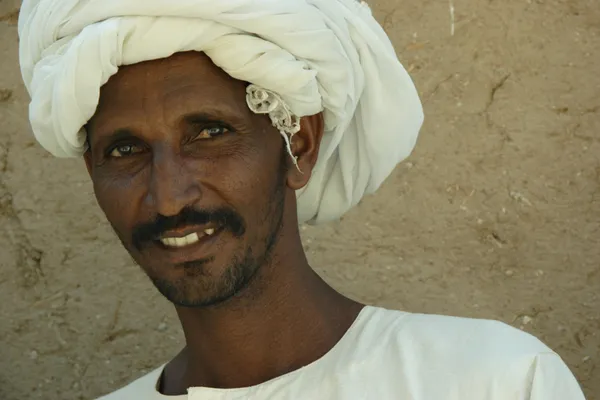
- Wikimedia Commons, "Sudanese arab from manasir tribe.jpg" (feature image, David Haberlah, CC BY-SA 3.0): commons.wikimedia.org/wiki/File:Sudanese_arab_from_manasir_tribe.jpg
Methodology
Sudan has never published an ethnic breakdown in any census. The 2008 census asked nationality, not ethnicity, and its results were disputed. The 1956 census was the only one ever to collect ethnic identity. It came before South Sudan seceded in 2011, so its figures cannot be used for present-day Sudan. The Minority Rights Group states that there is no accurate demographic data in Sudan and that previous censuses are widely regarded as poor quality. This ranking is therefore built on the CIA World Factbook's 2022 edition ethnic shares. They are the best official basis available. The shares are applied to Sudan's 2026 population of 53,282,719 from the United Nations World Population Prospects, as carried in the site's own population article, where Sudan ranks eighth of 54 countries. The Factbook was retired in 2026, so no live Factbook page was used. The shares were taken from Wikipedia's "Demographics of Sudan", which cites the Factbook 2022 edition. They were checked against the 2024 Factbook mirror on theodora.com, which names Sudanese Arab at approximately 70 percent and lists the Fur, the Beja, the Nuba, the Ingessana, the Uduk, the Fallata, the Masalit, the Dajo, the Gimir, the Tunjur and the Berti.
The Factbook itemises only five groups, so ranks 6 to 10 come from Joshua Project's in-country counts, the same seam used for Nigeria and Ghana. Joshua Project lists 198 groups for Sudan. They total 52,823,000 people against the UN 2026 total of 53,282,719, with 460,000 unclassified. The five seam groups sit inside the Factbook's "Others 16.3 percent" bucket of 8,685,083 people. None of them sits inside any of the five Factbook families, so there is no double count. The top ten total of 45,392,980, or 85.19 percent, does not exceed the whole. One gap in the source is stated openly. The Factbook's five named shares plus Others sum to 98.0 percent, not 100 percent, because the 70 percent figure is rounded. The remaining 2 percent is unaccounted rounding in the source. The top ten total is computed from the actual figures and is internally consistent.
Three disagreements between the Factbook and Joshua Project are disclosed rather than resolved silently. First, the Nuba. The Factbook gives 2.5 percent, or 1,332,068 people, while Joshua Project's Nuba Mountains subgroup counts total about 2.3 million. A Sudanese government estimate put the Nuba at 2.07 million in 2003. The Factbook figure is used per the series method, and the Nuba would still rank third on Joshua Project's count. Second, the Beja. Joshua Project's four Beja subgroups total 2,688,000, or 5.04 percent, which is 455,680 below the Factbook figure. Third, the Fur. Joshua Project counts 1,436,000, which is 370,346 above the Factbook figure. It counts the Nubians at 768,000, which is 75,325 above it. The Sudanese Arab umbrella is the one figure the two sources agree on closely. Summing Joshua Project's Arab subgroup entries gives about 37.28 million, within 21,000 of the Factbook's 37,297,903.
Where Joshua Project splits one people, the entries are combined and the combination is stated. The Zaghawa row combines Zaghawa at 144,000, Zaghawa, Arabized at 182,000, and Bideyat at 14,000, for 340,000 people, because the Bideyat speak Zaghawa and are a Zaghawa clan. Counted as Joshua Project lists them, the Zaghawa alone would rank tenth at 144,000, ahead of the Gaahmg, or Ingessana, at 136,000. The top ten would then run Masalit, Berti, Berta, Fulata and Zaghawa in that order. The Burun near-miss is itself a merge: Burun, Arabized at 178,000 and Burun, Lange at 60,000, for 238,000. The Midob at 228,000 merge Midob, Tidda Arabized at 119,000 and Midobi, Tid-n-Aal at 109,000. The Midob speak a Nubian language but are a Darfur people, not Nile Nubians, so they are not counted inside the Factbook's Nubians figure.
Groups inside a ranked family are not ranked separately. Every Joshua Project Arab subgroup entry sits inside the Sudanese Arab 70 percent. That includes the Gaaliin, the Guhayna, the Bederia, the Shaigiya, the Baggara variants, the Rizeigat, the Hamar, the Kababish and the Rashaida at 149,000. None of them appears as its own rank. The Hadendoa, the Amarar, the Bisharin and the Beni Amer sit inside the Beja 5.9 percent. All Nuba Mountains subgroups sit inside the Nuba 2.5 percent. Joshua Project's "Arab, Sudanese" entry of 16,449,000 is only the residual generic entry, not the whole Arab population, and was not used as the first-place figure.
Non-indigenous and diaspora groups are excluded, following the Egypt precedent. The Kanuri, Yerwa at 461,000 would rank seventh if included. They are a West African migrant community from Borno, flagged non-indigenous by Joshua Project. They are excluded with the Egyptian Arabs at 865,000, the Hausa at 141,000, the Tigre, Eritrean at 136,000, the Amhara at 129,000, the Oromo at 127,000, the Syrians at 125,000, and the Tigray at 64,000. Deaf Sudanese at 221,000 are excluded because deafness is not an ethnicity, and Joshua Project's unclassified 460,000 are excluded. The Masalit figure carries a sensitivity. Joshua Project puts them at 556,000, while Wikipedia's Ethnologue-based figure is about 297,000 in Sudan. At that lower figure the Masalit would fall to eighth, behind the Berti and the Zaghawa. Figures are estimates, not census results. Every derived claim in the article was recomputed from the final table values by script before publication. That covers the Sudanese Arabs at 70 percent, the 11.9 times multiple over the Beja, the 4.6 times multiple over the other nine combined, the top two at 75.90 percent, and the top ten at 85.19 percent. It also covers the Arab lead over the Beja of 34,154,223, the Nuba lead over the Fur of 266,414, and the Burun missing the list by 29,000.