Published: November 25, 2026
Egypt and South Africa are the two biggest economies in Africa, and they have argued about who is number one for years. South Africa points to its money. Egypt points to its people, its army and its football trophies. This article settles the version of the argument that can be settled with numbers. It scores the two countries on 10 measures across economy, population and power, using IMF, United Nations, World Bank, Global Firepower, SIPRI and UN Tourism figures for 2026.
Key Facts
- The score is 5-5. Egypt wins five of the 10 scored measures. South Africa wins five. It is a dead heat.
- South Africa's economy is worth $489.08 billion in 2026, against Egypt's $442.89 billion. Together they are worth $931.97 billion.
- Egypt has 120.1 million people at mid-2026, against South Africa's 65.5 million. Egypt has 83.5 percent more people, and its median age is 24.7 years against 28.9.
- Egypt's military ranks 19th in the world on the Global Firepower Index 2026. South Africa ranks 40th. But South Africa spends more on defence, $3.17 billion against Egypt's $2.50 billion.
- The Johannesburg Stock Exchange is worth about $1,330 billion. The Egyptian Exchange is worth $80.3 billion. Johannesburg is 16.6 times bigger, and it is worth three times Egypt's whole economy.
The 10 measures, compared
| Measure | Egypt | South Africa | Leader |
|---|---|---|---|
| Nominal GDP, 2026 | $442.89bn | $489.08bn | South Africa |
| GDP per person, 2026 | $4,024 | $7,659 | South Africa |
| Real GDP growth, 2026 | 5.13% | 1.04% | Egypt |
| Population, mid-2026 | 120.1 million | 65.5 million | Egypt |
| Land area | 995,450 km2 | 1,213,090 km2 | South Africa |
| Military strength, GFP 2026 | 19th in the world | 40th in the world | Egypt |
| Defence spending, 2025 | $2.50bn | $3.17bn | South Africa |
| Tourist arrivals, 2024 | 15.8 million | 8.9 million | Egypt |
| Stock market value, Nov 2026 | $80.3bn | $1,330bn | South Africa |
| AFCON titles, 1957-2025 | 7 | 1 | Egypt |
Put the two together and they are a serious bloc. Combined GDP is $931.97 billion, 2.4 times Nigeria's $386.67 billion, the continent's third largest economy. Combined population is 185.6 million, more than the population of Russia. The verdict is a draw on the numbers. South Africa takes the money measures. Egypt takes the people and power measures. The tiebreaker is what you value most, and that is where the argument starts.
South Africa's economy is bigger, but not by much
South Africa's economy is worth $489.08 billion in 2026, on IMF World Economic Outlook figures for October 2026. Egypt's is worth $442.89 billion. The gap is $46.19 billion. South Africa is 1.10 times bigger. That is the smallest gap between Africa's top two economies in years. In 2023, Egypt's economy was still worth more than South Africa's on IMF figures. The order flipped as South Africa's rand steadied and Egypt's pound slid. South Africa is the largest economy in Africa. Egypt is second. For the wider contest, see our ranking of the largest economies in Africa in 2026.
The average South African earns almost twice as much
Divide the economy by the people and South Africa's lead grows. South Africa's GDP per person is $7,659 in 2026, against Egypt's $4,024. The gap is $3,635. The average South African's share of national output is 1.90 times the average Egyptian's. Egypt's GDP per person is only 52.5 percent of South Africa's. The reason is simple arithmetic. South Africa's economy is 1.10 times Egypt's, but Egypt's population is 1.83 times South Africa's. So the money spreads far thinner in Egypt. This is South Africa's strongest economic card, and it is the one Egyptians hear about most in the argument.
Egypt is growing almost five times faster
Egypt is also growing far faster. The IMF's October 2026 outlook puts Egypt's real growth at 5.13 percent in 2026, against 1.04 percent for South Africa. The gap is 4.09 percentage points. Egypt's growth rate is 4.9 times South Africa's. Growth of 5.13 percent on $442.89 billion adds about $22.7 billion of new output. Growth of 1.04 percent on $489.08 billion adds about $5.1 billion. So Egypt adds about 4.5 times as many dollars of new output this year, even though its economy is smaller. South Africa's 1.04 percent is one of the slowest growth rates among Africa's large economies. Egypt's 5.13 percent is one of the fastest.
Egypt has nearly twice as many people
Egypt has 120,101,175 people at mid-2026, on United Nations World Population Prospects figures. South Africa has 65,453,084. The gap is 54,648,091 people. Egypt has 1.83 times as many people. Egypt's whole population is 83.5 percent larger than South Africa's. Egypt is the 13th most populous country in the world. South Africa ranks 24th. Egypt is also younger. Its median age is 24.7 years, against 28.9 in South Africa. On current trends Egypt will pass 160 million people before 2050, while South Africa will pass 79 million. For the full picture, see the population of every African country in 2026.
South Africa covers more ground
South Africa covers 1,213,090 square kilometres, against Egypt's 995,450, on World Bank land area figures for 2024. The gap is 217,640 square kilometres. South Africa is 1.22 times bigger. Egypt would fit inside South Africa with room to spare. South Africa is the 24th largest country in the world by land. Egypt ranks 29th. But Egypt is far more crowded. It has about 121 people per square kilometre, against about 54 in South Africa. Egypt is 2.2 times as crowded. The reason is the Nile. Almost all of Egypt's 120 million people live on the narrow strip of land along the river and the delta. The rest of the country is desert.
Egypt has Africa's strongest military
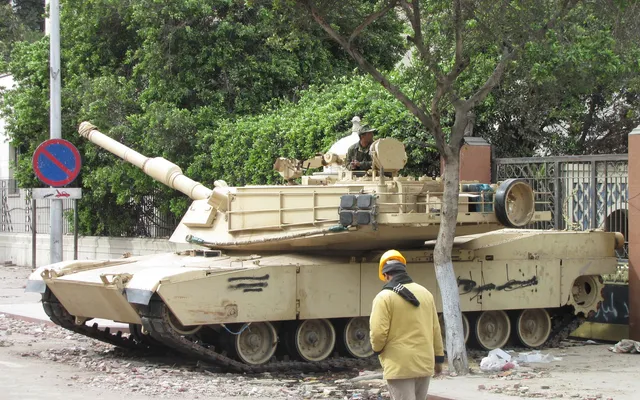
Egypt has Africa's strongest military, and it is not close. Egypt ranks 19th of 145 countries on the Global Firepower Index 2026, with a PowerIndex score of 0.3651. South Africa ranks 40th, with a score of 0.6843. On this index a lower score is better. Egypt's score is 1.87 times stronger. Egypt lists 438,500 active military personnel, against South Africa's 68,731. The ratio is 6.38 to 1. Egypt fields more than six soldiers for every one of South Africa's. Egypt also has 479,000 reservists, 3,620 tanks and 1,088 military aircraft. South Africa's strength is its defence industry, the most developed on the continent, and its professional force. But on the Global Firepower measures, Egypt wins the military contest clearly. For the continental ranking, see Africa's armies by active soldiers.
South Africa spends more on defence anyway
Here is the paradox of this comparison. South Africa spends more on defence than Egypt, even though Egypt has the stronger military. South Africa spent $3.17 billion on its military in 2025, against Egypt's $2.50 billion, on SIPRI figures in current US dollars. The gap is $0.67 billion. South Africa spends 1.27 times as much. The order holds in constant 2024 dollars too, at $3.0 billion against $2.3 billion. The dollar figures flatter South Africa and punish Egypt. Egypt's spending fell 54.3 percent in dollar terms from 2015, mostly because the Egyptian pound lost value against the dollar, not because Egypt cut its military in real terms. A dollar also buys more soldiers, fuel and food in Egypt than in South Africa. So the spending gap says more about exchange rates than about fighting strength. Egypt wins the military measure. South Africa wins the spending measure. Both facts are true at once.
Egypt is the bigger draw for tourists
Egypt welcomes far more visitors than South Africa. Egypt received 15.8 million international tourist arrivals in 2024, against 8.9 million for South Africa, on UN Tourism figures. The gap is 6.9 million. Egypt receives 1.78 times as many visitors. Egypt is the second most visited country in Africa, behind Morocco at 17.4 million. South Africa is fourth, behind Tunisia at 10.3 million. Egypt's draw is the pyramids, the Red Sea resorts and the Nile. South Africa's draw is Cape Town, the safari parks and the wine lands. Both countries are still below their pre-pandemic peaks in some measures, but Egypt's recovery has been faster. In 2022, Egypt had 11.7 million arrivals and South Africa had 5.7 million. Egypt has added 4.1 million visitors since then. South Africa has added 3.2 million. For the continental ranking, see our list of the most visited African countries in 2026.
Johannesburg's stock market is in another league
This is the biggest gap in the whole comparison. The Johannesburg Stock Exchange is worth about $1,330 billion, at 23.3 trillion rand on November 23, 2026. The Egyptian Exchange is worth $80.3 billion in October 2026. The gap is about $1,249.7 billion. Johannesburg is 16.6 times bigger than Cairo. To put it another way, the Johannesburg exchange is worth three times Egypt's whole economy, and 2.72 times South Africa's own economy. The Johannesburg market is the biggest in Africa by a distance. It lists 261 companies, and inward-listed multinationals account for about R16 trillion of its value, roughly two-thirds of the total. The Egyptian Exchange has grown fast, up 27.7 percent since December 2025, and it added more than 550,000 new investors in 2026. But it is still a small market next to Johannesburg. For the continental picture, see our ranking of African stock exchanges by market capitalisation.
Egypt owns African football
Egypt has won the Africa Cup of Nations seven times, more than any other country. Its titles came in 1957, 1959, 1986, 1998, 2006, 2008 and 2010. South Africa has won it once, in 1996, on home soil. Egypt has seven times as many titles. Egypt has also reached 10 finals, against South Africa's two. The two countries met in the 1998 final in Burkina Faso, and Egypt won 2-0. That is the only AFCON final between them. Egypt's run of three titles in a row, in 2006, 2008 and 2010, has never been matched. South Africa's single title came in its first tournament after the end of apartheid, when it beat Tunisia 2-0 in Johannesburg. On football, the argument is not close. Egypt is the king of African football. South Africa is a one-time champion.
So who is Africa's real number one?
On the numbers in this article, neither country wins. The score is 5-5. South Africa takes the money measures: the bigger economy, the higher income per person, the bigger country, the bigger defence budget and the far bigger stock market. Egypt takes the people and power measures: the faster growth, the bigger population, the stronger military, the bigger tourist draw and the football crown. If the crown goes to the richest country, South Africa holds it. If it goes to the biggest, fastest-growing and strongest country, Egypt holds it. The argument will not end here. It never does. But the numbers are now on the table, and both sides have something real to point to.
Frequently Asked Questions
Which country has the bigger economy, Egypt or South Africa?
South Africa, by $46.19 billion. South Africa's economy is worth $489.08 billion in 2026, against Egypt's $442.89 billion, on IMF World Economic Outlook figures for October 2026. South Africa is the largest economy in Africa. Egypt is second.
Which country has more people, Egypt or South Africa?
Egypt, by 54.6 million people. Egypt has 120.1 million people at mid-2026, against South Africa's 65.5 million, on United Nations World Population Prospects figures. Egypt has 83.5 percent more people, and its median age is 24.7 years against 28.9.
Which country has the stronger military, Egypt or South Africa?
Egypt, clearly. It ranks 19th in the world on the Global Firepower Index 2026, against South Africa's 40th. Egypt has 438,500 active soldiers against South Africa's 68,731. But South Africa spends more on defence, $3.17 billion against $2.50 billion in 2025.
Which country has the bigger stock market, Egypt or South Africa?
South Africa, by a distance. The Johannesburg Stock Exchange is worth about $1,330 billion, against $80.3 billion for the Egyptian Exchange. Johannesburg is 16.6 times bigger, and it is worth three times Egypt's whole economy.
Which country has won more AFCON titles, Egypt or South Africa?
Egypt, by seven titles to one. Egypt has won the Africa Cup of Nations in 1957, 1959, 1986, 1998, 2006, 2008 and 2010. South Africa's only title came in 1996, on home soil. Egypt also beat South Africa 2-0 in the 1998 final.
Data Sources
- International Monetary Fund, World Economic Outlook, October 2026 (nominal GDP, GDP per capita, real GDP growth): Worldometer, IMF 2026 nominal GDP by country in Africa and CEOWORLD, global GDP 2026 ranked by the IMF
- United Nations, World Population Prospects 2024, medium variant, population at July 1, 2026 (population, median age): Wikimedia Commons, UN WPP 2024 population at July 1, 2026 and PopulationPyramids, all countries ranked by 2026 population
- World Bank, World Development Indicators (land area 2024, life expectancy 2023): World Bank API, land area in square kilometres and World Bank API, life expectancy at birth
- Global Firepower Index 2026 (military strength rank, PowerIndex score, active personnel): Global Firepower, comparison of Egypt and South Africa military strengths 2026 and Ecofin Agency, Global Firepower Index 2026
- Stockholm International Peace Research Institute, Military Expenditure Database, April 2026 release (defence spending 2025): MilitaryDex, military spending by country (SIPRI data) and DefenseBudget.org, military spending in Africa 2025
- UN Tourism, International Tourism Highlights, 2025 edition (international tourist arrivals 2024): World Tourism rankings (UN Tourism data) and HelloSafe, most visited countries in Africa 2026
- Johannesburg Stock Exchange (market capitalisation, November 2026): JSE, Coca-Cola HBC joins the JSE, November 23, 2026 and BNK News, Coca-Cola HBC makes R370 billion JSE debut
- Egyptian Exchange (market capitalisation, October 2026): Mondovisione, EGX market capitalisation $80.3 billion in October 2026 and Daba Finance, largest African stock exchanges by market capitalisation in 2026
- Africa Cup of Nations (titles by country, 1957-2025): NBC Sports, Africa Cup of Nations winners and Al-Ahram, Africa Cup of Nations winners 1957-2025
Methodology
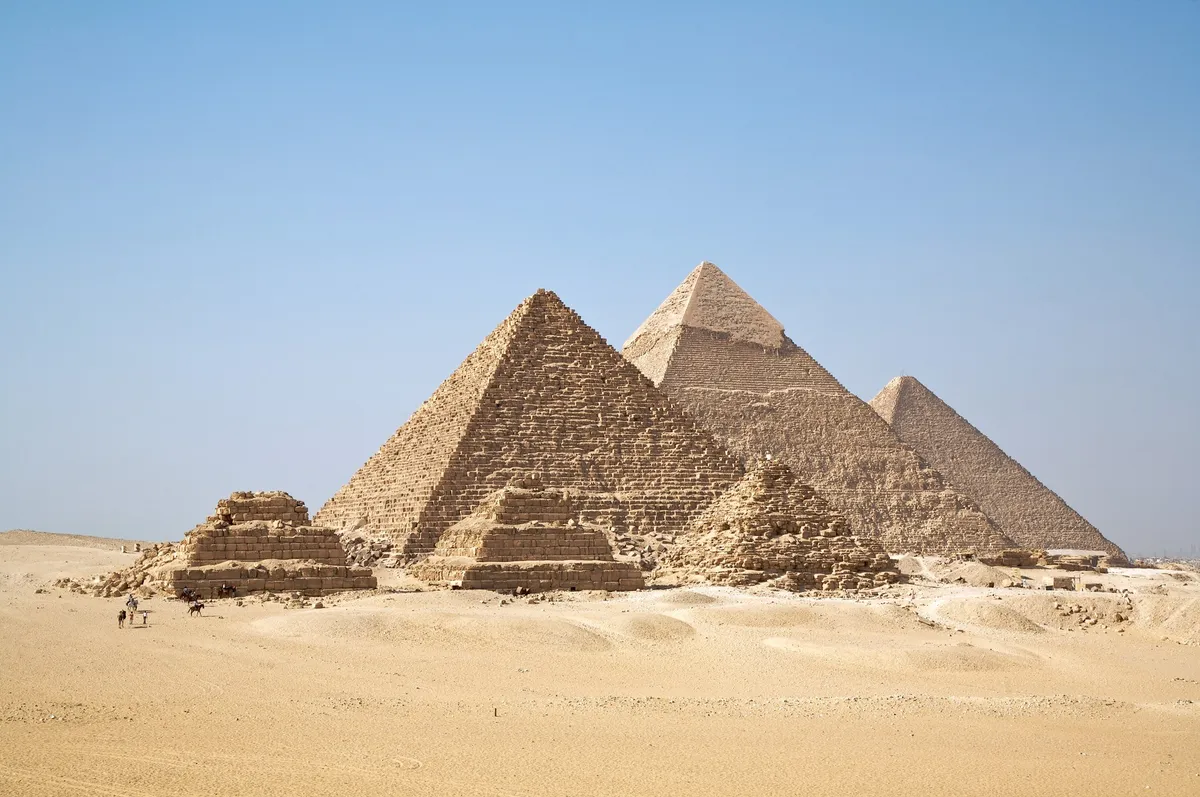
All figures are for 2026 unless stated otherwise. Nominal GDP, GDP per person and real GDP growth come from the IMF World Economic Outlook, October 2026 edition, and are 2026 projections in nominal US dollars. Population and median age are United Nations World Population Prospects 2024 estimates for July 1, 2026. Land area uses World Bank World Development Indicators land area for 2024; total area including inland water is slightly higher for both countries (South Africa 1,219,090 square kilometres, Egypt 1,001,450) and does not change the winner. Life expectancy is World Bank World Development Indicators for 2023, the latest available. Military strength uses the Global Firepower Index 2026, the same definition used in our November 6, 2026 ranking of African armies by active soldiers. Defence spending uses SIPRI military expenditure for 2025, the latest year with a single consistent definition for both countries. Tourist arrivals use UN Tourism figures for 2024, the latest complete year. Stock market values are point-in-time closes: the Johannesburg Stock Exchange at 23.3 trillion rand on November 23, 2026, and the Egyptian Exchange at $80.3 billion in October 2026; both move daily. AFCON titles count every tournament from 1957 to 2025. Six discrepancies are disclosed. First, UN Tourism puts Egypt's 2024 arrivals at 15.8 million, while the Egyptian government reports 15.7 million; the article uses 15.8 million and the rank does not change on either figure. Second, the Egyptian Exchange puts its October 2026 market value at $80.3 billion, while Daba Finance's November 2026 compilation puts it at $73.81 billion; the article uses the exchange's own figure and the multiple is 16.6 times on that figure, 18.0 times on Daba's. Third, the Johannesburg Stock Exchange puts its value at 23.3 trillion rand on November 23, 2026, while a live market board shows 22.73 trillion rand on November 25; the difference is two days of market movement and the multiple stays above 16 times on either figure. Fourth, Global Firepower's own population line for Egypt is 111.2 million, an older estimate below the UN's 120.1 million; the rank rests on more than 60 factors, not population alone. Fifth, SIPRI's dollar figures for Egypt are depressed by the pound's slide, so the spending gap says more about exchange rates than about fighting strength. Sixth, the disputed 2025 AFCON final, in which Senegal won on the pitch, CAF awarded the title to Morocco, and the Court of Arbitration for Sport restored Senegal on November 24, 2026, does not change either country's title count. Market capitalisations use the full market value including inward secondary listings, the same convention as our October 20, 2026 ranking of African stock exchanges. The score counts all 10 rows, one point each, and no row is weighted. The feature image shows the Pyramids of Giza, photographed by Ricardo Liberato (CC BY-SA 2.0, Wikimedia Commons).