Published: November 21, 2026
Rwanda sends more blue helmets than any other African country. It sends more than the 7th to 10th placed African countries combined. At the same time, the United Nations is shrinking its peacekeeping force to the smallest size in 25 years. This ranking counts every African country's deployed uniformed personnel on 31 July 2026.
Key Facts
- Rwanda is Africa's biggest contributor of UN peacekeepers, with 4,016 uniformed personnel on 31 July 2026. It ranks third in the world, behind only Nepal (4,285) and India (4,260).
- The top 10 African countries send 13,269 peacekeepers between them. That is 78.1% of all African contributions and 29.6% of the world total of 44,819.
- Rwanda alone sends more peacekeepers than the 7th to 10th placed African countries combined (4,016 against 3,048). It sends 20.5 times as many as Nigeria (196) and 55 times as many as South Africa (73).
- The world total has fallen sharply. UN uniformed personnel dropped from 59,372 at the end of October 2025 to 44,819 at the end of July 2026, a fall of 24.5%, as missions were cut back over funding shortfalls.
- Women make up 1,692 of the top 10's 13,269 personnel, or 12.8%. Ghana has the highest female share in the top 10 at 17.6%, and Rwanda fields the most women in absolute terms, 531.
| Rank | Country | Uniformed personnel (31 Jul 2026) | World rank | Women | Change since Feb 2026 |
|---|---|---|---|---|---|
| 1 | Rwanda | 4,016 | 3rd | 531 | -389 |
| 2 | Ghana | 1,929 | 7th | 340 | -6 |
| 3 | Morocco | 1,332 | 9th | 80 | -5 |
| 4 | Egypt | 1,019 | 10th | 99 | -149 |
| 5 | Tanzania | 1,004 | 11th | 114 | +91 |
| 6 | Ethiopia | 921 | 12th | 130 | -5 |
| 7 | Senegal | 828 | 14th | 144 | -59 |
| 8 | Cameroon | 783 | 15th | 116 | -151 |
| 9 | Malawi | 761 | 17th | 83 | -2 |
| 10 | Tunisia | 676 | 18th | 55 | -17 |
Figures are uniformed personnel deployed to UN missions on 31 July 2026: troops, formed police units, individual police, military experts and staff officers. Change is measured against the UN ranking of 28 February 2026. Source: UN Peace and Security Data Hub.
The ten countries in this table send 13,269 of Africa's 16,987 uniformed personnel. The other 24 African contributors share the remaining 3,718 between them. Africa provides 37.9% of all UN peacekeepers, even though it hosts most of the missions.
Selected Details
1. Rwanda: 4,016
Rwanda is the story of this ranking. A country of about 14 million people sends the third most peacekeepers on earth. Only Nepal and India send more. Rwanda's troops and police serve mainly in two missions: the Central African Republic (MINUSCA) and South Sudan (UNMISS). More than 2,000 serve in the Central African Republic, and nearly 1,800 serve in South Sudan. Rwanda also fields 880 formed police officers (February 2026). Its total has fallen from 5,880 in October 2025, a drop of 31.7% in nine months, as missions shrank. Even after that fall, Rwanda sends more than twice as many peacekeepers as Ghana in second place.
2. Ghana: 1,929
Ghana has sent peacekeepers since 1960, the year it became independent. Its troops serve in the Central African Republic, DR Congo, Cyprus, Lebanon, the Middle East, South Sudan and Western Sahara. Ghana's total barely moved since February 2026, down just 6. It is the steadiest contributor in the top 10. Ghana also leads the top 10 on women: 340 of its 1,929 personnel are women, a share of 17.6%.
3. Morocco: 1,332
Morocco is the quiet constant of African peacekeeping. Its total fell by only 5 since February 2026. Almost all of its personnel are soldiers: 1,304 of its 1,337 in February were troops, with almost no police. Morocco ranks ninth in the world, ahead of Egypt.
4. Egypt: 1,019
Egypt holds fourth place by just 15 people over Tanzania. That is the tightest race in the top 10. Egypt's contribution is police heavy: 320 of its 1,168 personnel in February 2026 were formed police officers, one of the biggest police contributions in the world. Egypt fell by 149 since February, the third largest drop in the top 10.
5. Tanzania: 1,004
Tanzania is the only country in the top 10 whose total rose since February 2026, up 91, or 10.0%. It serves mainly in DR Congo and South Sudan. Even so, Tanzania is well below its October 2025 level of 1,531, a fall of 34.4% over nine months. Its rise since February looks like a partial recovery, not a new trend.
6. Ethiopia: 921
Ethiopia's fall is the steepest story in this ranking. From 2016 to 2019 it was the largest contributor of UN peacekeepers in the world. It has long provided the backbone of the UN force in Abyei, the disputed border area between Sudan and South Sudan. Now it ranks 12th in the world with 921. That is down 606 from 1,527 in October 2025, a fall of 39.7%. Its total barely moved since February, down just 5, which suggests the sharp cut happened earlier in 2026.
7. Senegal: 828
Senegal is a police power, not a troop power. In February 2026, 655 of its 887 personnel were formed police officers, a share of 73.8%. No other African country sends so much of its contribution as police. Senegal's total fell by 59 since February.
8. Cameroon: 783
Cameroon is mostly a troop contributor: 750 of its 934 personnel in February 2026 were soldiers. It fell by 151 since February, the second largest drop in the top 10 after Rwanda. Cameroon serves mainly in the Central African Republic, its neighbour.
9. Malawi: 761
Malawi is the most stable contributor in the top 10 after Ghana. Its total fell by just 2 since February 2026. Malawi's troops serve in DR Congo and South Sudan, two of the biggest missions. At 761, it sits just 22 behind Cameroon.
10. Tunisia: 676
Tunisia takes the last place in the top 10 by only 29 people. Uganda, in 11th place with 647, is close behind. Tunisia's total fell by 17 since February. Tunisia has been a steady mid-sized contributor for years, and it holds on here while bigger names fall away.
The Two Giants That Barely Show Up
The most surprising numbers in this ranking sit outside the top 10. Nigeria, Africa's most populous country with about 242 million people, sends just 196 peacekeepers. It ranks 39th in the world. Rwanda sends 20.5 times as many. Nigeria's military is heavily committed to security operations at home, and that shows in this table.
South Africa sends even fewer: 73. It ranks 53rd in the world. That is despite being Africa's biggest economy. South Africa's contribution collapsed from 405 in February 2026 to 73 in July, a fall of 82.0%, as the UN mission in DR Congo shrank. Kenya, another country many would expect near the top, sends 436 and ranks 27th in the world. Kenya's much discussed deployment to Haiti does not count here, because that mission is not commanded by the UN.
Read our ranking of Africa's biggest armies by active soldiers and our tank strength ranking to see how peacekeeping contributions compare with raw military size. The overlap is small: Ethiopia leads Africa on soldiers but ranks sixth here, and South Africa ranks ninth on tanks but sends only 73 peacekeepers.
Why the Numbers Are Falling
The world total of UN uniformed personnel fell from 59,372 at the end of October 2025 to 44,819 at the end of July 2026. That is a drop of 14,553 people, or 24.5%, in nine months. The cause is money. The UN peacekeeping budget faced a shortfall of about $2 billion at the start of July 2025, and the budget approved for 2025-26 was cut to $5.38 billion, the lowest in at least a decade. UN officials told member states in November 2026 that missions had repatriated 13,296 troops and 1,212 police, a total of 14,508, almost exactly the fall in the global count.
The cuts are still coming. The UN force in Lebanon, UNIFIL, ends on 31 December 2026. The mission in Western Sahara, MINURSO, ceased operations on 1 November 2026. The Security Council cut the force in the Central African Republic from 14,046 to 12,000 authorised troops in November 2026. The next snapshot will look different again. See our most powerful countries ranking and our defence budgets ranking for the wider military picture.
Frequently Asked Questions
What counts as a UN peacekeeper in this ranking?
Uniformed personnel deployed to UN missions on 31 July 2026. That means troops, formed police units, individual police, military experts on mission and staff officers. Civilian staff are not counted. The figures are a snapshot on one date, not a total for the year.
Why does this ranking use figures from 31 July 2026?
That is the latest per-country snapshot the UN has published. It comes from the UN Peace and Security Data Hub. The UN's public monthly ranking PDFs are indexed only through February 2026, so July is the freshest complete count available on 21 November 2026. Every figure was also checked against the February 2026 ranking, and the order of the top 10 is the same in both.
Why has the world total of peacekeepers fallen so fast?
Funding shortfalls forced the cuts. The UN peacekeeping budget faced a shortfall of about $2 billion in July 2025. Missions repatriated 13,296 troops and 1,212 police during 2026. The force in Lebanon ends on 31 December 2026, the mission in Western Sahara ceased operations on 1 November 2026, and the force in the Central African Republic was cut from 14,046 to 12,000 authorised troops.
Why do Nigeria and South Africa send so few peacekeepers?
Nigeria sends 196 and ranks 39th in the world. Its military is heavily committed to security operations at home. South Africa sends 73 and ranks 53rd. Its contribution collapsed from 405 in February 2026 to 73 in July as the UN mission in DR Congo shrank. Sending peacekeepers is a choice, and both countries have chosen to keep their forces at home.
Which missions host the most African peacekeepers?
The three biggest UN missions are all in Africa: the Central African Republic (MINUSCA), South Sudan (UNMISS) and DR Congo (MONUSCO). At the end of October 2025 they held 18,668, 18,162 and 13,202 personnel. Most African peacekeepers serve in one of these three missions, which is why the cuts to them hit African contributors hardest.
Data Sources
- UN Peace and Security Data Hub, "Latest Uniformed Personnel Contribution by Country", reference date 31 July 2026 (dataset DPO-UCLATEST, via the Humanitarian Data Exchange). data.humdata.org
- UN Peacekeeping, "Uniformed Personnel Contributing Countries by Ranking", as of 28 February 2026. peacekeeping.un.org
- UN Peacekeeping, "Contribution of Uniformed Personnel by Country and Personnel Type", as of 28 February 2026. dppa.un.org
- The Data Visual, "Countries Contributing the Most UN Peacekeepers in 2026", 2 November 2026. thedatavisual.com
- Stockholm International Peace Research Institute, May 2026 report on peace operations, via Defense News. defensenews.com
- The East African, "UN cuts CAR peacekeeping force as transition plan gathers pace", November 2026. theeastafrican.co.ke
- The New Times, "Rwandan peacekeepers in CAR honoured with UN medals", August 2026. newtimes.co.rw
- United Nations, "Service and Sacrifice" (Ghana mission list; Ethiopia's 2016-2019 record). un.org
- UN Economic Commission for Africa, remarks by Claver Gatete, United Nations Day 2026. uneca.org
Methodology
This ranking counts uniformed personnel deployed to UN missions on 31 July 2026. Uniformed personnel means troops, formed police units, individual police, military experts on mission and staff officers. The same definition is used for every row. Civilian staff are not counted. The figures are a snapshot on one date, not a total for the year, and they change as missions rotate troops.
The primary source is the UN Peace and Security Data Hub dataset "Latest Uniformed Personnel Contribution by Country" (DPO-UCLATEST), reference date 31 July 2026. That is the latest per-country snapshot the UN has published as of 21 November 2026. The UN's public monthly ranking PDFs are indexed only through February 2026, so July is the freshest complete count.
Every figure was checked against the UN's official ranking as of 28 February 2026. The order of the top 10 is identical in both snapshots. The largest moves between February and July are Cameroon's fall of 151 and Egypt's fall of 149. Tanzania is the only country in the top 10 whose total rose since February. The "Change since Feb 2026" column is the July figure minus the February figure.
World ranks are the ranks in the Data Hub dataset. Africa's total of 16,987 is the sum of the 34 African contributors in the dataset. The global total of 44,819 is the dataset total across 114 contributing countries. Women counts come from the same dataset. Composition detail (troops against police) comes from the UN's February 2026 by-country-and-post report and is dated as such.
Two things are not counted. Kenya's deployment to Haiti is not included, because that mission is authorised by the Security Council but is not commanded by the UN. Countries with no deployed personnel, such as DR Congo and Angola, are not ranked. The July snapshot predates two closures: the mission in Western Sahara ceased operations on 1 November 2026 and the force in Lebanon ends on 31 December 2026, so later snapshots will be lower still.
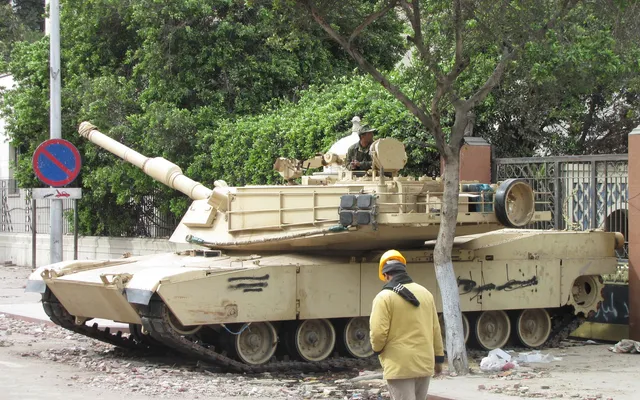
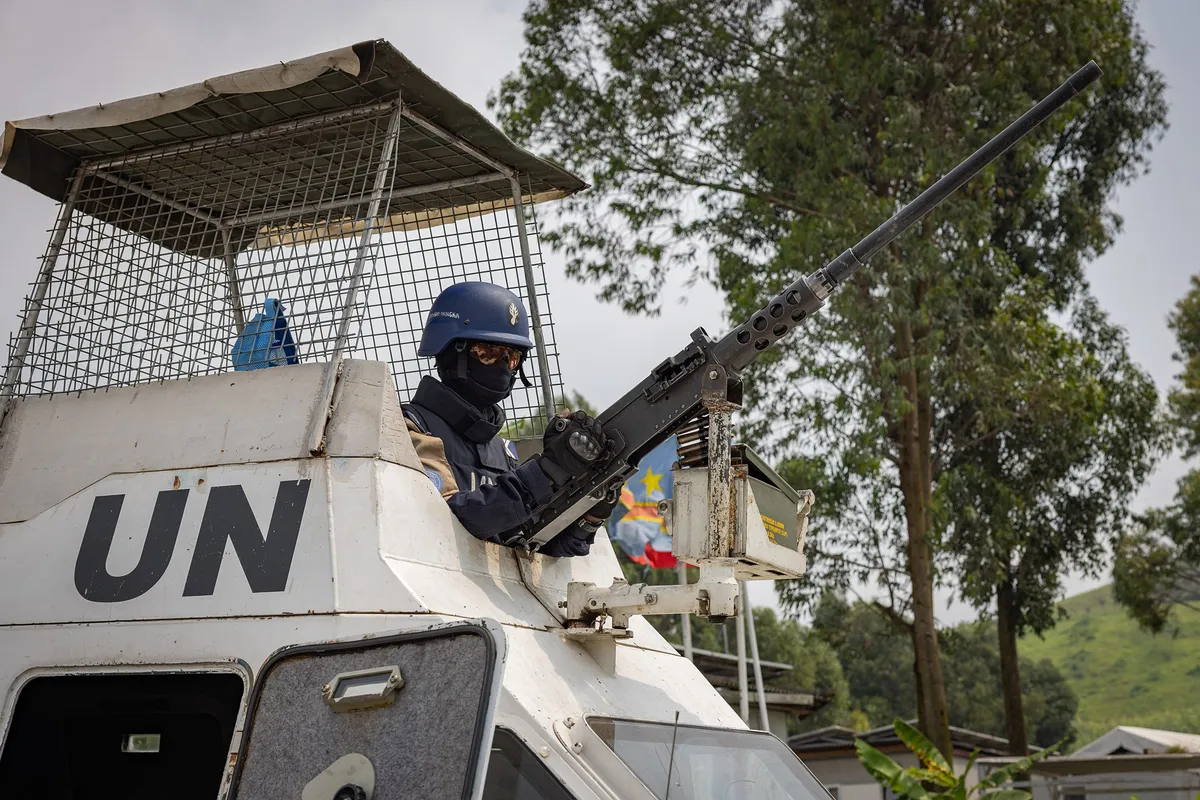
Feature image: a MONUSCO peacekeeper on an armoured vehicle in Goma, DR Congo, 10 January 2025. Photo: MONUSCO/Kevin Jordan, via Wikimedia Commons (CC BY-SA 2.0).