Published: October 20, 2026
5 Key Facts
- The Johannesburg Stock Exchange is worth about $1.43 trillion. That is roughly 12 times the second-ranked exchange, Nigeria's NGX, and about three times the other nine exchanges combined. The JSE alone accounts for roughly 75% of the top ten's total value.
- Dual-listed shares inflate the biggest totals. About 68% of the JSE's headline figure comes from 59 secondary or "inward" listings counted at full issuer value. Botswana's exchange is 94% foreign-domiciled, led by Anglo American. Under strict domestic-only rules, both would rank lower.
- Egypt vs Botswana is effectively a tie. The Egyptian Exchange at $71.5bn edges the Botswana Stock Exchange at $71.0bn, but the gap is within foreign-exchange and vintage noise. Botswana's own August headline, including bonds and ETFs, was higher at roughly $78-80bn.
- One exchange serves eight countries. The BRVM in Abidjan lists companies from eight West African states that share the CFA franc. It ranks sixth at $36.8bn. Malawi's exchange makes the top ten on the back of kwacha devaluation, which inflates its local-currency total without adding real value.
- Mauritius did not make the cut. The Stock Exchange of Mauritius, often named among Africa's leading markets, sits at about $6.5bn, well outside the top ten. Zimbabwe's ZSE is about $4.2bn, and the Victoria Falls exchange reached $7.74bn only after an August methodology change.
The big picture: Africa's listed-equity map is really one giant market plus nine small ones. Johannesburg's exchange has more than $1.4tn in listed value, while the tenth-ranked exchange in Tunis has $15.4bn. Market capitalization moves every trading day, and currency moves can reshuffle the middle of the table fast, so this ranking is a snapshot of 16-20 October 2026 (with Botswana's figure from July-August). The dominance of secondary listings also means "listed in Africa" and "African value" are not the same thing: a large share of the headline totals belongs to foreign-domiciled issuers.
| # | Exchange | Country | Market cap (USD bn) | Figure vintage |
|---|---|---|---|---|
| 1 | Johannesburg Stock Exchange | South Africa | 1,430.0 | 19 Oct 2026 (ZAR 23.5tn) |
| 2 | Nigerian Exchange | Nigeria | 119.0 | 16 Oct 2026 (NGN 160.7tn) |
| 3 | Casablanca Stock Exchange | Morocco | 100.2 | 1-7 Oct 2026 (MAD 1,000.1bn) |
| 4 | Egyptian Exchange | Egypt | 71.5* | 20 Oct 2026 (EGP 3.89tn) |
| 5 | Botswana Stock Exchange | Botswana | 71.0* | 31 Jul 2026 (BWP 974.8bn equity) |
| 6 | Bourse Régionale des Valeurs Mobilières (BRVM) | Regional, 8 WAEMU states (HQ Abidjan) | 36.8 | 19 Oct 2026 (XOF 20.76tn) |
| 7 | Nairobi Securities Exchange | Kenya | 31.1 | 16 Oct 2026 (KSh 4,036.1bn) |
| 8 | Ghana Stock Exchange | Ghana | 22.9 | 19 Oct 2026 (GHS 267.8bn) |
| 9 | Malawi Stock Exchange | Malawi | 15.6 | 19 Oct 2026 (MWK 27.1tn) |
| 10 | Bourse de Tunis | Tunisia | 15.4 | Week ended 16 Oct 2026 (TND 45.8bn) |
* Positions 4 and 5 are effectively tied: $71.5bn vs $71.0bn is within foreign-exchange and vintage noise. Botswana's own August 2026 all-in headline (including bonds and ETFs) was roughly $78-80bn. Figures are equity market capitalization converted at mid-October 2026 exchange rates; see Methodology.
Selected Details
1. Johannesburg Stock Exchange: $1.43tn, in a league of its own
Market capitalization of ZAR 23.5 trillion at the 19 October 2026 close, converted at 16.43 rand per dollar. The JSE's own release of 5 June 2026 put the total at R24.73tn, with 59 inward or secondary listings worth about R16tn, which is 68% of the total. Those listings are counted at the full global value of each issuer, even where the company is domiciled abroad. The JSE is the only African exchange in the trillion-dollar club, and it holds about three quarters of the top ten's combined value. (AFX daily JSE summary; JSE)
2. Nigerian Exchange: $119bn, the clear second
Equities market capitalization of NGN 160.73 trillion as at 16 October 2026, per NGX Group, converted at about 1,339 naira per dollar. The total slipped to NGN 159.3tn on 19 October after a single-day drop of N1.47tn. The NGX has been one of Africa's strongest performers in local-currency terms, but the naira's slide means the dollar figure moves with the exchange rate as much as with share prices. It is the only other African exchange above $100bn. (NGX Group)
3. Casablanca Stock Exchange: $100.2bn, North Africa's leader
Total capitalization of MAD 1,000.1 billion in Bank Al-Maghrib's weekly bulletin for 1-7 October 2026, converted at the central bank's reference rate of 9.977 dirhams per dollar. Daily session reports on 15-16 October put the figure at MAD 999-1,000bn, so the ranking figure is stable across the month. Casablanca anchors Morocco's deep domestic investor base of pension funds and insurers. See our 2026 ranking of Africa's largest economies for the GDP context.
4. Egyptian Exchange: $71.5bn, edging fourth
Total equity capitalization of EGP 3.89 trillion at the 20 October 2026 close (Mansa Markets live terminal), converted at 54.4 Egyptian pounds per dollar. The figure was EGP 4.025tn on 14 October, so the exchange lost about $2.5bn in dollar terms in six days of trading and currency movement. The EGX has benefited from Egypt's IPO pipeline and a recovering pound. (Mansa Markets; Business Today Egypt)
5. Botswana Stock Exchange: $71.0bn, and almost entirely foreign-domiciled
Equity capitalization of P974.8 billion in the BSE's market performance report for the period to 31 July 2026, converted at 13.725 pula per dollar. The catch: 94% of that value is foreign-domiciled, led by Anglo American, and is counted at full global value, the same convention that inflates the JSE. The BSE's own all-in headline for August 2026, including bonds and ETFs, was P1.1tn, about $78-80bn. Its #4 vs #5 position against Egypt is a coin toss that currency moves will settle. (BSE market performance report)
6. BRVM: $36.8bn, the exchange that serves eight countries
Equity capitalization of XOF 20.76 trillion on 19 October 2026 (african-markets.com), converted at about 565 CFA francs per dollar. The BRVM is Africa's only regional exchange, headquartered in Abidjan and serving the eight WAEMU states: Benin, Burkina Faso, Cote d'Ivoire, Guinea-Bissau, Mali, Niger, Senegal and Togo. The CFA franc is pegged to the euro at 655.957, so its dollar conversion is steadier than most African currencies. Weekly reports put the figure at XOF 20.89tn for the week ended 16 October. (african-markets.com; Daba Finance)
7. Nairobi Securities Exchange: $31.1bn, East Africa's hub
Equity capitalization of KSh 4,036.11 billion in the session of 16 October 2026 (Serrari Group daily brief), converted at 129.89 shillings per dollar. The Central Bank of Kenya's weekly bulletin put the rate at 129.81 on 15 October, confirming the conversion. The NSE dominates East African listings and is far ahead of its regional peers in Tanzania, Uganda and Rwanda. See our 2026 ranking of Africa's biggest companies by market capitalization.
8. Ghana Stock Exchange: $22.9bn on a record run
Equity capitalization of GHS 267.8 billion on 19 October 2026 (AFX), converted at about 11.7 cedis per dollar. The GSE's September monthly report put the figure at GHS 270.34bn, and the Bank of Ghana reported GHS 285.6bn at end-August 2026. The exchange has been one of the continent's best performers this year in local-currency terms. (AFX daily GSE summary; Ghanaian Times)
9. Malawi Stock Exchange: $15.6bn, big numbers from a small market
Capitalization of MWK 27.1 trillion on 19 October 2026 (AFX), converted at 1,737 kwacha per dollar. Broker CDH Malawi reported MWK 27.7tn on 11 September and Business Malawi put the end-Q3 figure at K27.2tn, so the number is consistent across sources. The huge kwacha total reflects years of devaluation, not a large real economy: the dollar figure is what matters, and it is what puts Malawi ninth. (AFX daily MSE summary; CDH Malawi)
10. Bourse de Tunis: $15.4bn, North Africa's steady third
Capitalization of TND 45,843 million in the BVMT weekly review for the week ended 16 October 2026 (via IRBE7), converted at 2.98 Tunisian dinars per dollar. The figure was TND 48bn on 23 September and TND 47.15bn on 17 September, so the exchange has drifted slightly lower through the autumn. Tunis rounds out a top ten in which North Africa holds three of the top five slots. (IRBE7 / BVMT weekly review)
Frequently Asked Questions
Which is the biggest stock exchange in Africa in 2026?
The Johannesburg Stock Exchange (JSE) in South Africa. Its market capitalization was about $1.43 trillion (ZAR 23.5tn) at the 19 October 2026 close, roughly 12 times the second-ranked Nigerian Exchange. No other African exchange is above $120bn.
How does the JSE compare to the rest of Africa's stock exchanges?
The JSE is worth about three times the other nine top-ten exchanges combined and holds roughly 75% of the top ten's total listed value of about $1.9tn. One caveat: about 68% of the JSE's headline total comes from 59 secondary or inward listings counted at full issuer value, so the strictly domestic portion is smaller.
Why is Botswana's stock exchange ranked so high?
Botswana's headline figure of $71.0bn (P974.8bn, July 2026) is 94% foreign-domiciled, led by Anglo American, and is counted at the full global value of those issuers. It is the same dual-listed convention that inflates the JSE. On a domestic-only basis, Botswana's exchange would be far smaller. Its all-in August 2026 headline, including bonds and ETFs, was about $78-80bn.
Is Egypt's stock exchange bigger than Botswana's in 2026?
Barely, and only on this snapshot: the Egyptian Exchange at $71.5bn (20 October 2026) edges the Botswana Stock Exchange at $71.0bn (31 July 2026). The gap is within foreign-exchange and vintage noise, so the #4 and #5 positions are effectively tied. Currency and trading moves in either market can flip the order.
Which well-known African stock exchanges missed the top 10?
The Stock Exchange of Mauritius sits at about $6.5bn (September 2026), the Victoria Falls Stock Exchange in Zimbabwe reached $7.74bn in August 2026 only after a methodology change that counts cross-listed issuers at global value, and the Zimbabwe Stock Exchange is about $4.2bn. All three fall well short of Tunisia's $15.4bn at #10.
Data Sources
- AFX, daily JSE trading summary: ZAR 23.5tn (USD 1.43tn), 19 October 2026. Accessed October 20, 2026.
- JSE press release, 5 June 2026: R24.73tn total capitalization, 59 inward listings worth about R16tn. Accessed October 20, 2026.
- NGX Group: equities market capitalization N160.73tn as at 16 October 2026; AFX daily summary N159.3tn, 19 October 2026. Accessed October 20, 2026.
- Bank Al-Maghrib weekly bulletin for 1-7 October 2026 (reported by Bourssole): Casablanca Stock Exchange capitalization MAD 1,000.1bn at the reference rate of 9.977 MAD/USD. Accessed October 20, 2026.
- Mansa Markets, EGX live terminal: market capitalization E£3.89tn, 20 October 2026; Business Today Egypt: EGP 4.025tn, 14 October 2026. Accessed October 20, 2026.
- Botswana Stock Exchange, market performance report for the period to 31 July 2026: equity capitalization P974.8bn; H1 2026 report: P974.6bn of which 94% foreign-domiciled. Accessed October 20, 2026.
- african-markets.com, BRVM daily: XOF 20.76tn, 19 October 2026; Daba Finance: XOF 20.89tn, week ended 16 October 2026. Accessed October 20, 2026.
- Serrari Group, NSE market brief: KSh 4,036.11bn, session of 16 October 2026; Central Bank of Kenya weekly bulletin: 129.81 KES/USD, 15 October 2026. Accessed October 20, 2026.
- AFX, daily GSE summary: GHS 267.8bn, 19 October 2026; Ghanaian Times: GSE September 2026 monthly report, GH¢270.34bn. Accessed October 20, 2026.
- AFX, daily MSE summary: MWK 27.1tn, 19 October 2026; CDH Malawi broker daily: MWK 27.72tn, 11 September 2026; Business Malawi: MWK 27.2tn, end-Q3 2026. Accessed October 20, 2026.
- IRBE7 / BVMT weekly review: TND 45,843m, week ended 16 October 2026; L'Expert Journal: TND 47.15bn, 17 September 2026. Accessed October 20, 2026.
- Exchange-rate benchmarks (all accessed October 20, 2026): 16.43 ZAR/USD, 1,339 NGN/USD, 9.977 MAD/USD (Bank Al-Maghrib reference), 54.4 EGP/USD, 13.725 BWP/USD, about 565 XOF/USD (implied from press equivalents; XOF pegged to the euro at 655.957), 129.89 KES/USD (Serrari; CBK 129.81), 11.7 GHS/USD, 1,737 MWK/USD, 2.98 TND/USD (mid-October 2026 market rates).
Methodology
This ranking uses equity market capitalization: the total stock-market value of all listed shares, which is each company's share price multiplied by its shares outstanding, added up across the exchange. Every figure is an exchange-published or broker-published total converted to US dollars at mid-October 2026 market exchange rates. The vintage of each figure is stated in the table; most are from 16-20 October 2026, while Botswana's equity figure is from 31 July 2026 and Casablanca's from the week of 1-7 October 2026. Vintage differences are disclosed rather than smoothed over.
Three conventions shape the numbers. First, dual-listed shares: the JSE and the Botswana Stock Exchange count secondary or "inward" listings at the full global value of the issuer. About 68% of the JSE's headline total (59 listings, about R16tn) and 94% of the BSE's equity value (led by Anglo American) are foreign-domiciled. Strictly domestic-only figures would be materially lower. Second, the BRVM is one regional exchange for eight WAEMU countries and is ranked once, not once per country. Third, positions 4 and 5 (Egypt $71.5bn, Botswana $71.0bn) are within foreign-exchange and vintage noise: effectively tied. Botswana's own all-in August 2026 headline, including bonds and ETFs, was about $78-80bn.
Exchanges that missed the top ten are noted for context: the Stock Exchange of Mauritius at about $6.5bn (MCB Securities, 11 September 2026), the Victoria Falls Stock Exchange at $7.74bn (13 August 2026, after it adopted the same global-shares convention for cross-listed issuers), and the Zimbabwe Stock Exchange at about $4.2bn (ZWG 112.34bn at 26.6 per dollar, 19 October 2026). Market capitalizations move every trading day, so this ranking is a snapshot of the third week of October 2026. For the companies behind the listings, see our 2026 ranking of Africa's biggest companies by market cap and our 2026 ranking of Africa's biggest banks by total assets.
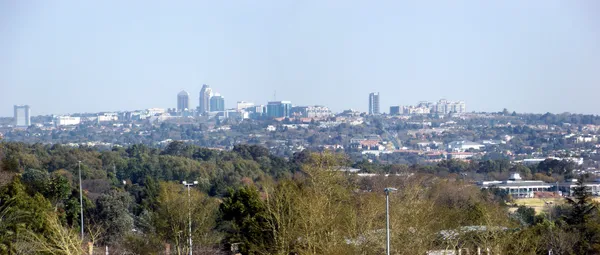
Cover image: Sandton skyline, Johannesburg, South Africa. Sandton is the financial district that houses the Johannesburg Stock Exchange. Photograph by Andres de Wet, licensed CC BY-SA 3.0, via Wikimedia Commons.