Published: October 17, 2026
5 Key Facts
- Standard Bank Group of South Africa is Africa's biggest bank. It held $232.5 billion in total assets at the end of June 2026.
- South African lenders take four of the top five places. Egypt places two banks in the top 10, and Morocco places three.
- The 10 biggest banks hold about $1.18 trillion in combined assets. The top five alone control roughly two-thirds of that total.
- No Nigerian bank makes the top 10. Access Bank, Nigeria's largest lender, sits around 12th to 14th place with roughly $30 to $39 billion in assets.
- This ranking uses total assets at end-June 2026, converted to US dollars. Every figure is checked against bank-published results or a published banking survey.
Top 10 Biggest Banks in Africa 2026: the full ranking
| Rank | Bank | Country | Total Assets (USD bn) |
|---|---|---|---|
| 1 | Standard Bank Group | South Africa | $232.5 |
| 2 | National Bank of Egypt | Egypt | $198.0 |
| 3 | Absa Group | South Africa | $139.2 |
| 4 | FirstRand | South Africa | $135.8 |
| 5 | Nedbank | South Africa | $98.2 |
| 6 | Banque Misr | Egypt | $95.0 |
| 7 | Attijariwafa Bank | Morocco | $87.9 |
| 8 | Investec | South Africa | $84.7 |
| 9 | Banque Centrale Populaire | Morocco | $60.6 |
| 10 | Bank of Africa | Morocco | $51.0 |
Standard Bank's balance sheet is more than twice the size of fifth-placed Nedbank's. The gap between first and tenth is greater than four to one. Only three countries appear in the top 10: South Africa, Egypt and Morocco.
10 Selected Details
1. Standard Bank Group: $232.5 billion
Standard Bank reported total assets of 3.8 trillion rand at end-June 2026. That converts to $232.5 billion. The group earned headline profit of 26.1 billion rand in the first half of 2026, up 10 percent from a year earlier. It serves 20 million clients across 21 African countries. Operations outside South Africa produced 40 percent of its profit.
2. National Bank of Egypt: $198.0 billion
NBE is Egypt's largest bank by a wide margin. It holds about 35 percent of all banking assets in the country. Its assets reached roughly 10 trillion Egyptian pounds by mid-2026. The state-owned giant serves 21.7 million customers. It earned a record net profit of 175.5 billion pounds in 2025.
3. Absa Group: $139.2 billion
Absa reported total assets of 2.28 trillion rand at end-June 2026. The group operates in 12 African markets. Headline profit rose 8 percent to 12.8 billion rand in the first half of 2026. Its return on equity was 15 percent. Absa edges out FirstRand for third place on published balance sheets.
4. FirstRand: $135.8 billion
FirstRand owns First National Bank, Rand Merchant Bank and WesBank. Its audited balance sheet shows total assets of 2.23 trillion rand at end-June 2026. That converts to about $135.8 billion. Some published surveys rank it above Absa, but the two banks' own balance sheets put them within 3 percent of each other.
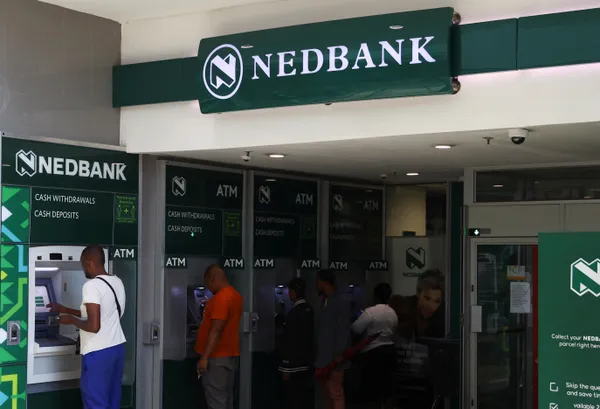
5. Nedbank: $98.2 billion
Nedbank reported total assets of 1.61 trillion rand at end-June 2026. Customer deposits stood at 1.35 trillion rand. Headline profit was 8.4 billion rand for the half year. It is one of South Africa's big four lenders, and the fourth South African bank in Africa's top five.
6. Banque Misr: $95.0 billion
Banque Misr is Egypt's second-largest bank. It holds about 16 percent of the country's banking assets. Like NBE, it is state-owned. Its balance sheet sits just below Nedbank's, which shows how tight the middle of this ranking is.
7. Attijariwafa Bank: $87.9 billion
Attijariwafa is Morocco's largest bank. Total assets reached 825.3 billion dirhams at end-June 2026, up nearly 12 percent in a year. It operates in 27 countries and serves more than 12 million customers. In October 2026 it agreed to buy Societe Generale's Ghana unit. Its main shareholder is Al Mada, which holds 46.5 percent.
8. Investec: $84.7 billion
Investec is a dual-listed bank and wealth manager focused on South Africa and the United Kingdom. Core loans stood at 35.5 billion pounds at end-March 2026. Customer deposits were 44.7 billion pounds. It also holds a large stake in the British wealth manager Rathbones.
9. Banque Centrale Populaire: $60.6 billion
BCP is Morocco's cooperative banking group, owned by its regional cooperative banks. It is the second of Morocco's three banks in the top 10. Its balance sheet of about $60.6 billion puts it ninth by assets. It also ranks among Africa's top banks by capital strength.
10. Bank of Africa: $51.0 billion
Bank of Africa completes the top 10 with about $51.0 billion in assets. It is controlled by Moroccan businessman Othman Benjelloun. The bank operates across Africa and the group keeps expanding its footprint. It climbed into Africa's top 10 lenders by capital in the 2026 rankings.
Frequently Asked Questions
Which is the biggest bank in Africa in 2026?
Standard Bank Group of South Africa. It held $232.5 billion in total assets at end-June 2026. That is more than double the assets of fifth-placed Nedbank.
What does "total assets" mean?
Total assets are everything a bank owns or controls. This includes loans to customers, cash, and investments in securities. It is the standard way to measure a bank's size. It is different from market value, which is what investors think the bank is worth on the stock market.
Why is Capitec not on this list if its share price is higher?
Capitec has the highest stock market value of any African bank, about $30 billion. But market value and assets are different things. Capitec's balance sheet is only about $16 billion. This ranking measures assets, not share price.
Why are there no Nigerian banks in the top 10?
The naira's sharp devaluation shrinks Nigerian balance sheets when converted to dollars. Access Bank, Nigeria's largest lender, holds roughly $30 to $39 billion in assets. That puts it around 12th to 14th in Africa. Nigeria's banks are growing fast in naira terms but remain mid-table in dollars.
How often does this ranking change?
Bank balance sheets are published every six months. Exchange rates also move the dollar figures between editions. This ranking uses end-June 2026 balance sheets. The next full update will follow the banks' 2026 full-year results.
Data Sources
- Standard Bank Group 2026 interim results fact sheet: total assets of 3.8 trillion rand ($232.5 billion) at 30 June 2026.
- First Bank, "Africa's 10 largest banks at end-June 2026" (September 24, 2026): compiled top-10 ranking by reported total assets converted to US dollars.
- FirstRand analysis of financial results, year ended 30 June 2026: total assets of 2,227,792 million rand.
- Absa Group interim results, six months ended 30 June 2026: total assets of 2,282,386 million rand.
- Nedbank Group interim results, six months ended 30 June 2026: total assets of 1,609,997 million rand.
- Attijariwafa Bank H1 2026 earnings summary (via Quartr): total assets of 825.3 billion dirhams.
- First Bank, "NBE, Banque Misr and CIB rank as Egypt's largest banks at end-March 2026": NBE about 35.2 percent of sector assets, Banque Misr about 16.3 percent.
- Egypt Local Newsletter (October 6, 2026): NBE total assets of 9.2 trillion pounds at end-2025, about 10.6 trillion by end-August 2026.
- Africa Trade Finance Company ranking (via dmarketforces): Nigerian banks' positions, with Access Bank at about $30.4 billion.
- Proshare, "Africa's 50 largest banks by assets": independent cross-check of the top positions.
- African Business Top 100 African Banks 2026 (via Mwenendo): combined top-100 assets of $1.8 trillion.
- Investec Limited FY2026 presentation: group scale and balance sheet features.
Methodology
This ranking measures total assets at end-June 2026, converted to US dollars at end-June 2026 central-bank exchange rates (about 16.4 South African rand, 50 Egyptian pounds and 9.4 Moroccan dirhams per dollar). Figures come from the banks' published interim or annual financial statements where available. Egyptian state-bank figures are compiled from banking industry surveys, since those banks publish limited English-language interim disclosures. Where a published survey figure conflicted with a bank's own audited balance sheet, the bank's published figure was used. The data reflects balance sheets reported for the first half of 2026.