Table of Contents
10. Bassirou Diomaye Faye and Ousmane Sonko (Senegal)
Unlike every other entry on this list, President Bassirou Diomaye Faye and Prime Minister Ousmane Sonko remain tightly unified. However, political analysts across the continent continue to monitor the pairing closely. History shows that power-sharing arrangements between strong mentors and their elected protégés face tremendous institutional friction over time.
9. Andry Rajoelina and Marc Ravalomanana (Madagascar)
Rajoelina’s political entry was defined by a direct, fierce battle against incumbent Marc Ravalomanana during Madagascar’s 2009 crisis. After eventually winning formal elections, Rajoelina established complete political dominance, closing the door on any future power-sharing agreements.
8. Nana Akufo-Addo and John Agyekum Kufuor (Ghana)
Benefiting from the institutional party machine constructed under former President John Kufuor, Nana Akufo-Addo eventually led the New Patriotic Party to victory. Once at the helm, Akufo-Addo reshaped the party's internal hierarchy around his own inner circle, steering national policy independent of the old guard.
7. Umaro Sissoco Embaló and José Mário Vaz (Guinea-Bissau)
In the high-stress political arena of Guinea-Bissau, Embaló leveraged existing party networks to claim the presidency. Once in office, he moved swiftly to centralize executive authority, breaking away from traditional power brokers to build a newly aligned coalition.
6. Hakainde Hichilema and Edgar Lungu (Zambia)
While Hichilema was never Lungu’s protégé, his presidency marked a complete purge of the former administration’s footprint. After a decisive 2021 election victory, Hichilema launched extensive reviews of public finances and opened corruption investigations targeting key figures from Lungu's regime, completely resetting the country's political trajectory.
5. Mohamed Ould Ghazouani and Mohamed Ould Abdel Aziz (Mauritania)
Former general Mohamed Ould Abdel Aziz stepped down in 2019 and actively backed his close ally, Mohamed Ould Ghazouani, believing he would still pull the strings behind the scenes. Instead, Ghazouani asserted his total independence, allowing judicial authorities to investigate and eventually prosecute Abdel Aziz over grand corruption charges.
4. Cyril Ramaphosa and Jacob Zuma (South Africa)
Jacob Zuma helped pave the way for Cyril Ramaphosa's ascent within the African National Congress (ANC). However, once Ramaphosa took power, his administration empowered anti-corruption commissions to investigate the widespread "state capture" scandals tied to the Zuma era. Their political relationship quickly dissolved into high-stakes court battles and public broadsides.
3. João Lourenço and José Eduardo dos Santos (Angola)
José Eduardo dos Santos ruled Angola with an iron grip for 38 years before selecting João Lourenço as his trusted successor. The elite expected business as usual. Instead, Lourenço launched a sweeping anti-corruption campaign that dismantled the dos Santos patronage network and targeted the former president’s own family members.
2. William Ruto and Uhuru Kenyatta (Kenya)
They were once dubbed the "dynamic duo," wearing matching ties and winning back-to-back elections. But after Uhuru Kenyatta reconciled with opposition leader Raila Odinga in the famous 2018 "Handshake," William Ruto was effectively iced out. Ruto turned the betrayal into a campaign narrative, running as a political outsider and defeating Kenyatta’s handpicked candidate in 2022.
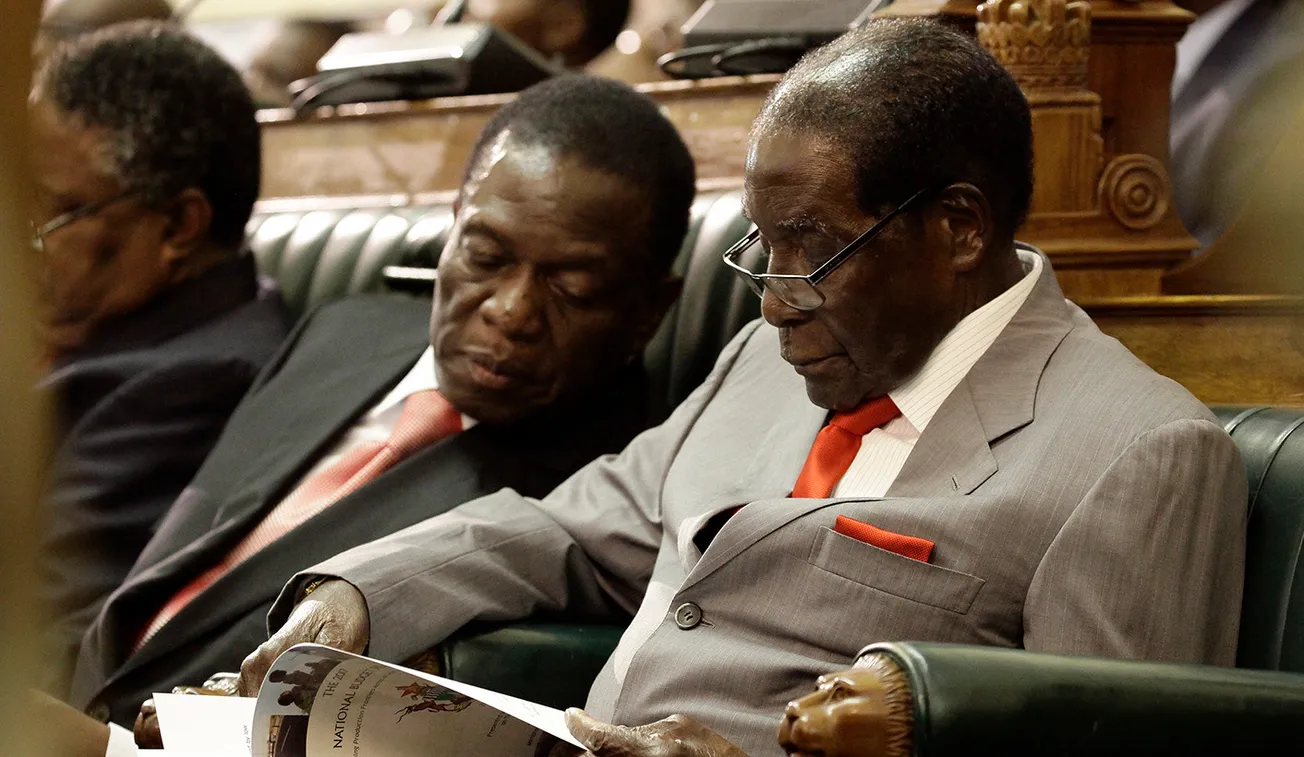
1. Emmerson Mnangagwa and Robert Mugabe (Zimbabwe)
For over four decades, Emmerson "The Crocodile" Mnangagwa stood as Robert Mugabe’s ultimate political enforcer. Everything fractured during Zimbabwe's 2017 political transition when the military stepped in, forcing Mugabe to step down. Taking the top seat, Mnangagwa systematically sidelined Mugabe's legacy and built his own power base within ZANU-PF.
The Big Takeaway
In African executive politics, the battle between political godfathers and their handpicked successors rarely ends in a quiet compromise. Incoming leaders are forced to choose between remaining in their predecessor's shadow or tearing down the very ladder that brought them to power.