Published: November 3, 2026
Key Facts
- The Yoruba rank first on the African Exponent Scholarly Achievement Index with 86 points out of 100, two points ahead of the Igbo on 84.
- Intelligence is not inherited from any ethnic group, and no honest index can rank it. This index ranks documented learning and achievement instead: traditions, schooling, scholars and scientists.
- The Songhai score a perfect 25 out of 25 for learning tradition, the joint highest mark given, yet finish 16th of the 20 groups scored.
- The Hausa hold the widest split in the table. They score 24 for learning tradition and only 11 for education today, a gap of 13 points.
- Three groups centred in Nigeria make the top 10: the Yoruba, the Igbo and the Hausa. The Luo place tenth with the smallest population in the top 10, about 5.1 million people.
| Rank | Tribe / Ethnic group | Achievement Index (/100) | Population (est.) | Heartland |
|---|---|---|---|---|
| 1 | Yoruba | 86 | ~53M | South west Nigeria |
| 2 | Igbo | 84 | ~38M | South east Nigeria |
| 3 | Amhara | 78 | ~36M | Ethiopian highlands |
| 4 | Kikuyu | 77 | ~8.1M | Central Kenya |
| 5 | Akan | 76 | ~25M | Southern Ghana |
| 6 | Shona | 73 | ~15M | Zimbabwe |
| 7 | Hausa | 69 | ~86M | Northern Nigeria and Niger |
| 8 | Baganda | 69 | ~5.6M | Central Uganda |
| 9 | Fulani | 68 | ~39M | The Sahel belt, Senegal to Sudan |
| 10 | Luo | 68 | ~5.1M | Western Kenya |
The average score across the top 10 is 74.8, and the 10 groups have a combined estimated population of about 311 million people. Two ties had to be broken: the Hausa and the Baganda both score 69, and the Fulani and the Luo both score 68. The scholars score settles both ties. Read our ranking of the largest tribes in Africa to see how this list changes when only population counts.
Selected Details
1. Yoruba (86/100)
The Yoruba take first place on the strength of one unmatched card. Wole Soyinka, born into a Yoruba family in Abeokuta, won the Nobel Prize in Literature in 1986. He was the first sub-Saharan African to win that prize. No other group in this ranking holds a Nobel Prize in Literature, and the Yoruba scholars score is a perfect 25.
The depth behind him matters as much. The philosopher Sophie Oluwole taught generations of students to take African philosophy seriously as philosophy. The Ifa corpus, the vast oral library of Yoruba divination verses, is recognised by UNESCO as a masterpiece of the oral heritage of humanity.
Schooling today backs the history up. Nigeria's National Bureau of Statistics has long placed the south west, the Yoruba heartland, at or near the top for literacy in any language. Tradition, scholars and modern classrooms point the same way, and that is why the Yoruba finish first.
2. Igbo (84/100)
The Igbo finish two points behind, and their case starts with the most read African novel ever written. Chinua Achebe, born in the Igbo town of Ogidi, published Things Fall Apart in 1958. The book has been translated into more than 50 languages and anchors literature courses on every continent. Achebe also edited the African Writers Series, which carried a generation of African authors to the world.
The line did not end with him. Chimamanda Ngozi Adichie, raised in the university town of Nsukka, is among the most studied living novelists in the world. Long before print, the Cross River world the Igbo share with their neighbours produced Nsibidi, an ideographic script used to record law, ritual and trade.
Modern schooling is the Igbo trump card. The south east records the highest literacy rate in English of any Nigerian zone in National Bureau of Statistics data. The education score of 23 is the highest in this top 10. Only the Yoruba Nobel keeps the Igbo in second place.
3. Amhara (78/100)
The Amhara hold the oldest written tradition in sub-Saharan Africa that never died. Ge'ez, the classical language of Ethiopia, was written in its own script by the Aksumite era. The Garima Gospels are among the oldest illustrated Christian manuscripts in the world. Church schools kept literacy alive in the highlands for well over a thousand years.
The tradition produced real philosophy, not only devotion. Zara Yaqob, the 17th century Ethiopian thinker, wrote the Hatata, or Inquiry, in a cave while hiding from religious persecution. The work argues from reason about God, morality and religion. Scholars still compare it with the early European Enlightenment.
What holds the Amhara back is the present day. Ethiopia's national schooling and literacy figures sit mid-table in Africa, and the education score of 16 reflects that proxy. A golden past earns third place, not first.
4. Kikuyu (77/100)
The Kikuyu are the modern climbers of this list. They have no ancient script, so their tradition score is a modest 12. Everything else is earned in the last hundred years. Central Kenya took to mission and government schools early and never let go.
The scholars score rests on two giants. Ngugi wa Thiong'o, born into a Kikuyu family in Limuru, became East Africa's leading novelist and its boldest language thinker. His book Decolonising the Mind argues that a people's language carries their whole view of the world. Jomo Kenyatta wrote Facing Mount Kenya as a scholarly defence of Kikuyu society.
The science score of 21 is the highest in the top 10. Wangari Maathai, born at Ihithe in Nyeri, became the first Kenyan woman to earn a doctorate. She then won the Nobel Peace Prize in 2004 for linking trees, democracy and peace.
5. Akan (76/100)
The Akan of southern Ghana place fifth on the strength of thinkers the whole world uses. Kwame Anthony Appiah, raised in Kumasi in an Asante family, is one of the most cited living philosophers. His books on identity and cosmopolitanism are set texts worldwide.
The statesman on the list is also Akan. Kofi Annan, born in Kumasi to a Fante family, led the United Nations for a decade and shared the Nobel Peace Prize in 2001. The novelist Ama Ata Aidoo gave Ghanaian women a voice that still shapes African feminism.
The science card is real too. Francis Allotey, the mathematical physicist, gave his name to the Allotey Formalism in X-ray spectroscopy. Ghana's southern schooling rates are among the strongest in West Africa, which lifts the education score to 20. The Akan lose marks only on tradition: adinkra symbols carry deep ideas, but they are not a manuscript literature.
6. Shona (73/100)
The Shona built the greatest stone city of precolonial southern Africa. Great Zimbabwe, with its dry stone walls and carved soapstone birds, was a royal and trading capital for centuries. A civilisation that organises labour at that scale has a learning culture, even when it writes on stone rather than paper.
The modern Shona story is schooling. Zimbabwe has long recorded one of the highest adult literacy rates in Africa. The Shona are about four fifths of Zimbabwe's people, so that national strength is largely a Shona strength. The education score of 22 matches the Yoruba.
The writers keep the score honest. Tsitsi Dangarembga, born in Mutoko, wrote Nervous Conditions, the first novel in English by a Black Zimbabwean woman to reach a global audience. Charles Mungoshi wrote major work in both Shona and English. The Shona finish sixth, and their literacy record suggests they should climb.
7. Hausa (69/100)
No result in this table will start more arguments. The Hausa score 24 out of 25 for learning tradition. Kano was a centre of Islamic scholarship for centuries, and Hausa scholars wrote poetry, law and history in Ajami, the Arabic script adapted to their language. The Sokoto scholarly world wrote in Hausa as well as Arabic and Fulfulde.
Then the present day pulls them down to seventh. The north west of Nigeria records the lowest literacy rate in English of any zone in National Bureau of Statistics data. The education score of 11 is the lowest in the top 10, and the 13 point gap between tradition and education is the widest split we recorded.
The scholars score of 21 keeps the Hausa in the table at all. It rests on the Sokoto tradition in the Hausa language and on modern Hausa letters, led by Abubakar Imam, whose Magana Jari Ce is a classic of Hausa prose. The Hausa tie with the Baganda on 69 and take seventh place on that scholars score.
8. Baganda (69/100)
The Baganda punch far above their size. Buganda, their kingdom in central Uganda, built one of precolonial Africa's most organised states. Its court kept records, titles and histories with unusual care, and its chiefs sent their sons to school early and eagerly.
The Baganda also wrote their own history. Apolo Kaggwa, prime minister of Buganda, published detailed histories of the kingdom's kings and customs in the Luganda language. Ham Mukasa, his contemporary, wrote biography and history of the same standard. Makerere University, founded in Kampala in the Baganda heartland, became the great university of colonial East Africa.
Central Uganda still records Uganda's strongest schooling outcomes, which supports an education score of 20. What the Baganda lack is a name of Soyinka or Appiah level. The scholars score of 17 loses the tie with the Hausa. Even so, eighth place from about 5.6 million people is a fine return.
9. Fulani (68/100)
The Fulani built the greatest scholarly dynasty in West African history. Usman dan Fodio, a Fulani scholar, founded the Sokoto Caliphate in 1804 and wrote more than a hundred works on law, government and education. His son Muhammad Bello wrote history and poetry of the first rank.
His daughter may be the most remarkable of all. Nana Asma'u, a Fulani poet and teacher, wrote more than 60 works in Arabic, Fulfulde and Hausa. She built the Yan Taru network, which carried education to rural women across the caliphate. She did this in the 19th century, long before most of the world educated its girls at all.
So why only ninth? About 39 million Fulani live across the whole Sahel, many in pastoralist communities far from classrooms. The education score of 12 uses Sahel heartland proxies, and it drags a golden past down the table. The Fulani tie with the Luo on 68 and take ninth on the scholars score.
10. Luo (68/100)
The Luo take the last place in the top 10, and they take it on science. Thomas Risley Odhiambo, born at Alego in the Luo heartland of Nyanza, founded the International Centre of Insect Physiology and Ecology in Nairobi in 1970. The centre, known as ICIPE, became one of Africa's premier research institutes. He also helped found the African Academy of Sciences and served as its first president.
The literary side is strong as well. Grace Ogot, from Nyanza, was among the first Kenyan women to publish fiction in English. The historian Bethwell Ogot built East African history into a modern discipline. Luo oratory and debate culture is famous across Kenya, and Nyanza families invest heavily in schooling.
The Luo count used here is Kenya's 2019 census figure of about 5.1 million. Their tradition score is modest, because Luo learning was carried in speech and memory rather than manuscripts. Modern achievement carries them into the table, one point ahead of the Wolof.
Just missed: the Wolof score 67, a single point outside the top 10. Cheikh Anta Diop, born into a Wolof family at Thieytou, built a radiocarbon laboratory in Dakar and rewrote the debate about ancient Egypt. The Berber and Amazigh peoples score 66 on the strength of Tifinagh, an alphabet with ancient roots that is still written today. The Ewe score 64, led by the poet and scholar Kofi Awoonor, who translated the dirge songs of his own people. The Swahili peoples also score 64, on centuries of Ajami poetry and manuscripts along the coast. The Tigrinya score 64 as well: the Ge'ez inheritance of Aksum is theirs too, and this index credits that shared heritage in both the Amhara and Tigrinya tradition scores.
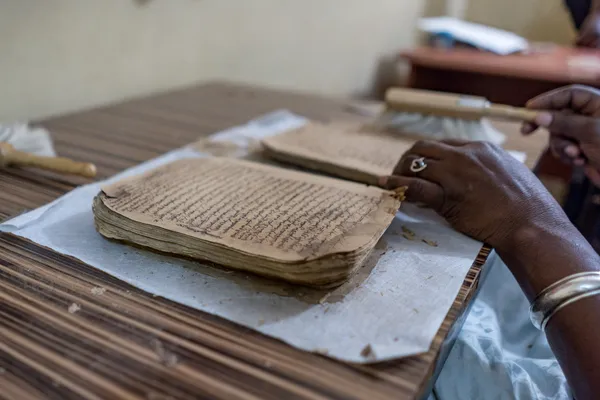
The hard cases sit below them. The Songhai score 62 and finish 16th, despite a perfect 25 for tradition. Timbuktu and its Sankore scholars, led by Ahmed Baba, built perhaps the greatest book culture in African history. But schooling in the Songhai heartland today is among the weakest in this study. The Serer score 60 on the legacy of Leopold Sedar Senghor, the poet philosopher who founded Negritude. The Somali score 58 and finish 18th: Nuruddin Farah is a novelist of world standing, but war destroyed Somali schooling for a generation. The Zulu also score 58, and the Oromo score 54. Compare this list with our ranking of the most powerful tribes in Africa and our ranking of the African tribes with the most beautiful women.
Frequently Asked Questions
Which African tribe is the most intelligent in 2026?
Intelligence is not a property of ethnic groups, and no scientific method can rank peoples by inherited ability. What can be ranked is documented achievement. On the African Exponent Scholarly Achievement Index, the Yoruba finish first with 86 points, followed by the Igbo on 84 and the Amhara on 78.
How is the Scholarly Achievement Index calculated?
Each group is scored out of 100 across four equal parts worth 25 points each. They are learning tradition and literacy heritage, educational attainment today, scholars, writers and thinkers of world standing, and science, innovation and professional distinction. The full method, including the proxy basis for education scores and the tie-break rule, is set out in the Methodology section below.
Why are the Songhai not in the top 10 when they built Timbuktu?
The Songhai score a perfect 25 out of 25 for learning tradition, a mark shared only with the Amhara. But tradition is only one quarter of this index. Schooling in the modern Songhai heartland of Mali and Niger is weak, and the Songhai produced no modern scholar or scientist of the first global rank. Their total of 62 places them 16th of the 20 groups scored.
Why do the Hausa rank only seventh despite their scholarly history?
The Hausa score 24 for learning tradition and 21 for scholars, marks that would place them near the top on history alone. Their education score is 11. Nigeria's north west records the lowest literacy in English of the country's six zones, and that present day weakness costs the Hausa six places. The 13 point gap between their tradition and education scores is the widest in the study.
Are the population and education figures exact?
No. Most African states do not publish a current ethnic census, so population figures are estimates. They match our October 2026 largest tribes ranking for the groups it covered. Education scores use heartland region or national data as a proxy where ethnic data does not exist. Kenya's census gives the Luo figure of about 5.1 million and a Kikuyu figure of about 8.1 million.
Data Sources
- African Exponent, Top 10 Largest Tribes in Africa in 2026 (population basis for the ten largest groups).
- African Exponent, Top 10 Most Powerful Tribes in Africa in 2026 (index precedent and internal reference).
- Nobel Prize records and biographies for Wole Soyinka (Literature, 1986), Wangari Maathai (Peace, 2004) and Kofi Annan (Peace, 2001).
- Nigeria National Bureau of Statistics literacy reporting by geopolitical zone, as summarised in national press and education studies (south east highest in English, south west highest in any language, north west lowest in English).
- Kenya National Bureau of Statistics, 2019 Population and Housing Census (Luo count of 5,066,966; Kikuyu count of about 8.1 million).
- UNESCO recognition of the Ifa divination system as a Masterpiece of the Oral and Intangible Heritage of Humanity, and UNESCO Memory of the World material on the Timbuktu manuscripts.
- Google Arts and Culture, Timbuktu's Written Heritage, and the Sankore Madrasa reference entry.
- Nature, obituary of Thomas Risley Odhiambo (2003), and The Scientist, profile of Odhiambo and ICIPE.
- Yaqeen Institute and SOAS, University of London, studies of Nana Asma'u and the Sokoto scholarly tradition.
- Wikipedia reference entries for Wole Soyinka, Chinua Achebe, Ngugi wa Thiong'o, Kwame Anthony Appiah, Cheikh Anta Diop, Leopold Sedar Senghor, Nana Asma'u, Usman dan Fodio, Ahmed Baba, Kofi Awoonor and Nuruddin Farah, each cross checked against a second source listed in our research notes.
Methodology
This ranking uses the African Exponent Scholarly Achievement Index, an editorial composite index built for this article. It is not a measure of innate intelligence, and it is not an official statistic. There is no scientific basis for ranking ethnic groups by inherited ability, and this index does not attempt it. The index ranks something narrower and checkable: the documented record of learning and achievement associated with each group. Twenty candidate groups were scored, and the 10 highest scores are ranked above. The near misses, in order, are the Wolof (67), the Berber and Amazigh peoples (66), the Ewe (64), the Swahili peoples (64), the Tigrinya (64), the Songhai (62), the Serer (60), the Somali (58), the Zulu (58) and the Oromo (54).
Learning tradition and literacy heritage (25 points) judges historic literacy, scripts, manuscript and scholarly traditions, and historic centres of learning tied to the group's heartland. Educational attainment today (25 points) judges modern schooling and literacy strength. Scholars, writers and thinkers of world standing (25 points) counts verified figures of global standing, including Nobel laureates, canonical authors and major philosophers and historians. Science, innovation and professional distinction (25 points) counts verified scientists, inventors, physicians, technologists and professionals of notable distinction. Tied totals are broken by the scholars score, then by the tradition score. That is how the Hausa (69, scholars 21) place above the Baganda (69, scholars 17), and the Fulani (68, scholars 20) above the Luo (68, scholars 18).
Two honesty rules shaped the scoring. First, education scores rest on proxies. Most states publish schooling data by region or nation, not by ethnic group, so each education score uses the group's heartland region or its national figures, and the score is a judgement on that proxy basis. Second, a person was credited to a group only where two credible sources confirm their heritage. On that standard, several famous names were left out rather than guessed at. Ibn Khaldun was not credited to the Berber and Amazigh peoples, because his family background is Arab and Andalusian, not Amazigh. Okot p'Bitek was not credited to the Luo, because he was Acholi. The Songhai tradition score also needs a note: Timbuktu was a multi-ethnic city, and its heritage is credited here to the Songhai heartland that ruled it at its height. The Ge'ez heritage of Aksum is credited in both the Amhara and the Tigrinya tradition scores, because Aksum spans both modern heartlands. The Sokoto heritage appears in both the Hausa score, for scholarship in the Hausa language and heartland, and the Fulani score, for the Fulani scholars who created it.
Three caveats apply. First, ethnic population figures are estimates, because most states do not publish ethnic census data. Second, the component scores are judgement calls, and a different weighting would produce a different order. Third, every derived figure in this article, including the top 10 average of 74.8 and the combined population of about 311 million, was recomputed from the final table by script before publication.