Published: November 1, 2026
Key Facts
- The Somali rank first on the African Exponent Global Recognition Index with 91 points out of 100, eight points ahead of the Dinka on 83.
- Beauty itself cannot be measured. This index ranks global recognition instead: the famous women the world knows, and the aesthetics the world celebrates.
- The Dinka finish second with the smallest population in the top 10, about 4.5 million people.
- Three Nigerian groups make the top 10: the Igbo, the Yoruba and the Hausa. Two South African groups, the Xhosa and the Zulu, also place.
- The Fulani score a perfect 20 out of 20 for celebrated aesthetic, a score matched only by the Maasai, who miss the top 10.
| Rank | Tribe / Ethnic group | Recognition Index (/100) | Population (est.) | Heartland |
|---|---|---|---|---|
| 1 | Somali | 91 | ~28M | Somalia and the Horn of Africa |
| 2 | Dinka | 83 | ~4.5M | South Sudan |
| 3 | Amhara | 82 | ~36M | Ethiopian highlands |
| 4 | Igbo | 80 | ~38M | South east Nigeria |
| 5 | Yoruba | 80 | ~53M | South west Nigeria |
| 6 | Xhosa | 72 | ~10M | Eastern Cape, South Africa |
| 7 | Luo | 70 | ~5.1M | Western Kenya |
| 8 | Zulu | 66 | ~15M | KwaZulu-Natal, South Africa |
| 9 | Fulani | 63 | ~39M | The Sahel belt, Senegal to Sudan |
| 10 | Hausa | 59 | ~86M | Northern Nigeria and Niger |
The average score across the top 10 is 74.6, and the 10 groups have a combined estimated population of about 315 million people. The Igbo and the Yoruba tie on 80 points. The Igbo take fourth place on the tie-break, a higher score for famous faces. Read our earlier ranking of the largest tribes in Africa to see how different this list looks when only population counts.
Selected Details
1. Somali (91/100)
Three generations of modelling royalty carry the Somali to first place. Iman, born in Mogadishu in 1955, became a muse to Yves Saint Laurent, who built an "African Queen" collection around her, and to Versace, Calvin Klein and Donna Karan. In 1994 she founded IMAN Cosmetics, a makeup brand built for women of colour long before the wider industry caught up. The Council of Fashion Designers of America gave her its Lifetime Achievement Award in 2010.
Waris Dirie came from a nomadic Somali family and reached the Pirelli Calendar, the runways of Paris and Milan, and a role in the Bond film The Living Daylights. Her memoir Desert Flower has sold more than 11 million copies. Halima Aden, born in the Kakuma refugee camp in Kenya to a Somali family, became the first hijab wearing contestant at Miss Minnesota USA in 2016. In 2019 she was the first model to wear a hijab and burkini in the Sports Illustrated Swimsuit Issue.
The aesthetic behind the faces is an elegance of drape and detail: flowing dirac dresses, fine henna work and gold jewellery. Somali style has travelled with a large global diaspora. On faces and footprint combined, the Somali score 61 points from a possible 65, the strongest double score in this ranking.
2. Dinka (83/100)
The Dinka finish second with the smallest population in the top 10, about 4.5 million people in South Sudan. Their case rests on two era defining models. Alek Wek, born in Wau in 1977, became the first African model on the cover of Elle in 1997. She was named MTV's Model of the Year in the same year.
Anok Yai, born in Cairo to a Dinka family, followed a generation later. In 2018 she became the second Black model, after Naomi Campbell, to open a Prada show, and she has stayed at the very top of the industry since. The Dinka influence also runs through this list itself. Lupita Nyong'o, at number 7 below, has said that seeing Alek Wek on magazine covers changed how she saw her own beauty as a girl.
The celebrated Dinka aesthetic pairs natural stature with adornment: closely cropped and patterned hairstyles, and fine beadwork worn in layers. Fashion photographers have returned to that look for three decades, from Wek's first covers to Yai's campaigns today.
3. Amhara (82/100)
One face built most of this score. Liya Kebede, an ethnic Amhara born and raised in Addis Ababa, has appeared on about 20 Vogue covers worldwide. In 2003 she became the first Black spokesmodel for Estée Lauder, and Forbes ranked her among the world's top earning models in 2007. She has served as a World Health Organization ambassador since 2005.
Kebede also exported the aesthetic itself. Her label lemlem, founded in 2007, sells Ethiopian handwoven cotton around the world. The tibeb, the woven coloured border that finishes the white habesha kemis dress, reached global retailers largely because of her.
The Habesha look is one of the most refined traditional styles on the continent: kemis dresses, netela shawls and fine braided hairstyles. A population of about 36 million and a large diaspora keep it visible far beyond the Ethiopian highlands.
4. Igbo (80/100)
The Igbo case is Nollywood at its most decorated. Genevieve Nnaji, born in Mbaise in Imo State to an Igbo family, was the first winner of the Africa Movie Academy Award for Best Actress in a Leading Role, in 2005. In 2018 she directed Lionheart, Nigeria's first Netflix original film and the country's first ever submission for the Academy Awards.
The runway side belongs to Oluchi Onweagba, whose first name is an Igbo name. She won the first Face of Africa contest in 1998, then walked for Victoria's Secret and appeared in the Sports Illustrated Swimsuit Issue four times between 2005 and 2008. Between Nnaji and Onweagba, the Igbo hold both a screen queen and a supermodel, which is why they win the tie-break against the Yoruba.
Igbo celebration style is rich and sculpted: coral bead regalia, the isiagu tunic, and bridal hairstyles built like crowns. With about 38 million people and Africa's biggest film industry centred partly in the south east, the Igbo footprint keeps growing.
5. Yoruba (80/100)
The Yoruba tie with the Igbo on 80 points and lose the tie-break on famous faces. Their best known screen figure is Omotola Jalade Ekeinde, of Ondo descent, whom TIME named to its TIME 100 list of the world's most influential people in 2013. She is credited with more than 300 film appearances across three decades.
What the Yoruba own outright is celebration fashion. The gele, the sculpted headtie Yoruba women have worn for generations, is now a fixture at weddings from Houston to London. Aso oke woven cloth and the aso ebi tradition of coordinated outfits have shaped how West Africa dresses for its biggest days.
With about 53 million people, the Yoruba have the largest base in the top five, and Lagos works as a cultural capital for the whole region. They score the maximum 15 for reach. One more global face at the very top level would move them up this list.
6. Xhosa (72/100)
Zozibini Tunzi put the Xhosa on the world's biggest pageant stage. Born in Tsolo in the Eastern Cape and a native isiXhosa speaker, she won Miss South Africa in 2019 and then Miss Universe 2019 in Atlanta. She was the first Black South African to win that crown, and she won it wearing her natural hair.
Her winning message travelled as far as the crown did. She told the world that young women should be taught to take up space and lead. The moment reset pageant beauty standards well beyond South Africa, and it anchors the Xhosa footprint score.
Xhosa adornment is precise and graphic: beadwork in white, red and black, the isicholo hat worn by married women, and the umbhaco dress. About 10.1 million people speak isiXhosa as a home language, according to South Africa's 2022 census.
7. Luo (70/100)
The Luo score is the power of one extraordinary career. Lupita Nyong'o, whose parents are both of Luo descent, was raised in Kenya and won the Academy Award for Best Supporting Actress for 12 Years a Slave. In 2014, People magazine named her its Most Beautiful Person in the world, and she became a face of Lancôme.
Nyong'o has been open about the journey behind that title. As a girl she prayed for lighter skin, and she has said that seeing Alek Wek helped her see herself differently. It is rare for one ranking to hold both the icon and the star she inspired, but this one does, at numbers 2 and 7.
The Luo number about 5.1 million in Kenya, according to the 2019 census, concentrated around Lake Victoria. A single face carries this score, which is why the Luo sit below groups with whole industries behind them.
8. Zulu (66/100)
Nomzamo Mbatha, of Zulu ethnicity and born in KwaMashu, carries the Zulu entry. She played Queen Nandi, the mother of Shaka, in the hit series Shaka iLembe, and she appeared in Hollywood's Coming 2 America. She is also a goodwill ambassador for UNHCR, the UN refugee agency.
Zulu beadwork is a language of its own, where colours and patterns carry messages. The craft appears in bridal dress, in the isidwaba skirt and in the isicholo hat. The umabo traditional wedding, with its singing, dancing and full regalia, is a national spectacle in South Africa.
About 15 million Zulu form the largest single group in South Africa. Their screen and music presence at home is deep. What this index rewards is global name recognition, and that is where the Zulu score leaves room to grow.
9. Fulani (63/100)
The Fulani are the honest test of this index, and the article says so plainly. No Fulani born supermodel could be verified to our two source standard, and the faces score of 12 reflects that gap. The Fulani place ninth almost entirely on an aesthetic that the whole world wears.
Fulani braids, the centre parted style finished with beads and ornaments, carry the group's name in salons on every continent. Cicely Tyson wore them on a JET magazine cover decades ago. Alicia Keys wore them on the cover of her debut album, Songs in A Minor, and Beyoncé has worn them since. One Muslim women's platform calls the style one of the most celebrated symbols of African identity in the diaspora.
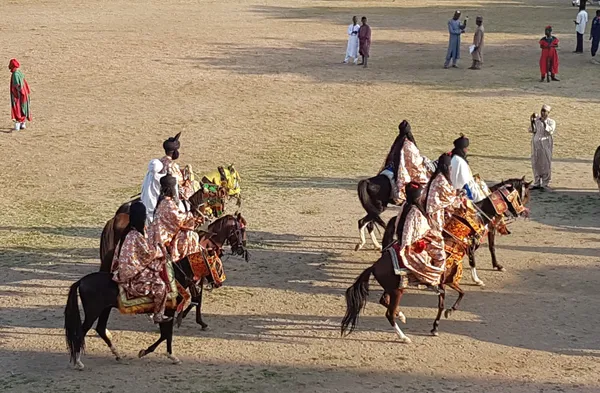
Traditional Fulani adornment also runs to gold. The bhoylé, large solid gold earrings, signal wealth and standing. With about 39 million people spread from Senegal to Sudan, the Fulani take a perfect 20 for aesthetic, a score matched only by the Maasai among all 15 groups scored.
10. Hausa (59/100)
The Hausa are the largest group in this ranking, at about 86 million people, and that reach carries them into the top 10. Their screen industry is Kannywood, the Hausa language film business centred on Kano, and its biggest female star is Rahama Sadau.
Sadau, born and raised in Kaduna, won Best Actress for Kannywood at the City People Awards in 2014 and 2015. She was then named Best African Actress at the 19th African Film Awards in 2015. Kannywood's audience across northern Nigeria and Niger is enormous, even if its stars are less known outside the region.
Hausa celebration style is colour and craft: embroidered gowns, fine turbans and the lalle henna artistry of Hausa weddings, among the most elaborate on the continent. What the Hausa lack, for now, is a face the whole world knows. The first Hausa global star would lift this score fast.
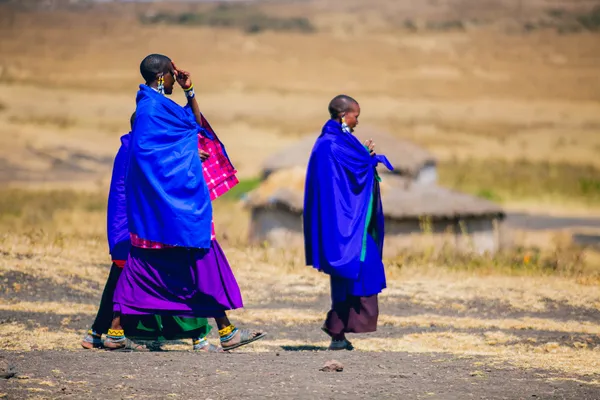
Just missed: the Wolof score 57. Khoudia Diop of Senegal, who describes her own heritage as Wolof in interviews, built a global following as the "Melanin Goddess" and fronted a major Make Up For Ever campaign. The Tutsi and the Akan tie on 51. Sonia Rolland, born in Kigali to a Tutsi mother, was crowned Miss France in 2000, while the Akan own kente, perhaps the most famous cloth on earth, without one verified global face to score. The Maasai score 41: a perfect 20 for aesthetic, matched only by the Fulani, but no Maasai model or actress holds global name recognition, and this index weighs faces and footprint at 65 of its 100 points. The Himba score 32, with 19 points for the otjize aesthetic of Namibia and the same faces problem.
One famous crown sits outside the table entirely. Agbani Darego, a Kalabari Ijaw woman from Abonnema in Nigeria's Niger Delta, became the first Black African to win Miss World, in 2001. The Ijaw were not scored as a group: one historic winner is a headline, not yet a footprint. Compare this list with our ranking of the most powerful tribes in Africa and our largest tribes ranking.
Frequently Asked Questions
Which African tribe has the most beautiful women in 2026?
Beauty cannot be measured, and no ranking can settle that question honestly. What can be ranked is recognition. On the African Exponent Global Recognition Index, which scores the famous women the world knows and the aesthetics the world celebrates, the Somali finish first with 91 points, followed by the Dinka on 83 and the Amhara on 82.
How is the Global Recognition Index calculated?
Each group is scored out of 100 across four parts. Famous faces are worth 35 points, fashion, pageant and screen footprint 30, celebrated aesthetic 20 and reach 15. The full method, including the population bands and the tie-break rule, is set out in the Methodology section below.
Why are the Maasai not in the top 10?
The Maasai score a perfect 20 out of 20 for celebrated aesthetic, the joint highest score given to any group. But this index weighs famous faces and industry footprint at 65 of its 100 points, and no Maasai model or actress holds global name recognition. The Maasai finish 14th of the 15 groups scored, on 41 points.
Why is the group of Agbani Darego, the first Black African Miss World, not ranked?
Agbani Darego is a Kalabari Ijaw woman from Abonnema, and she won Miss World in 2001, a genuine first for Black Africa. The index scores groups, not single crowns. One winner, however historic, does not yet amount to a fashion, pageant and screen footprint for a whole group, so the Ijaw were recorded in the research notes rather than scored.
Are the population figures exact?
No. Most African states do not publish a current ethnic census, so the figures are estimates. They match our October 2026 largest tribes ranking for the groups it covered. Where censuses exist, we used them: the Luo figure is Kenya's 2019 census count, the Xhosa figure is isiXhosa home language speakers in South Africa's 2022 census, and the Dinka estimate rests on the 2008 Sudan census.
Data Sources
- African Exponent, Top 10 Largest Tribes in Africa in 2026 (population basis for the ten largest groups).
- African Exponent, Top 10 Most Powerful Tribes in Africa in 2026 (index precedent and internal reference).
- Encyclopedia.com, Waris Dirie profile, and Crest Africa, Waris Dirie profile.
- Grantland, Lupita Nyong'o named People's Most Beautiful Person, 2014, and OkayAfrica, on Nyong'o and her beauty icon Alek Wek.
- Alchetron and IMDb biographies of Oluchi Onweagba (Face of Africa 1998, Sports Illustrated Swimsuit Issue appearances).
- Kenya National Bureau of Statistics, 2019 Population and Housing Census (Luo count of 5,066,966).
- Statistics South Africa, Census 2022 (isiXhosa home language speakers, 10.1 million).
- Wikipedia reference entries for Iman, Halima Aden, Alek Wek, Anok Yai, Liya Kebede, Zozibini Tunzi, Genevieve Nnaji, Omotola Jalade Ekeinde, Nomzamo Mbatha, Rahama Sadau, Sonia Rolland, Khoudia Diop, the Dinka people and the Maasai people, each cross checked against a second source listed in our research notes.
Methodology
This ranking uses the African Exponent Global Recognition Index, an editorial composite index built for this article. It is not a measure of beauty, and it is not an official statistic. Beauty is subjective, and no score can rank it honestly. The index ranks something narrower and checkable: how strongly each group's celebrated women and aesthetics register with the wider world. Fifteen candidate groups were scored, and the 10 highest scores are ranked above. The five near misses, in order, are the Wolof (57), the Tutsi (51), the Akan (51), the Maasai (41) and the Himba (32).
Famous faces (35 points) counts world famous women verified as members of the group: supermodels, A-list actresses and major pageant winners. Fashion, pageant and screen footprint (30 points) judges the depth and staying power of the group's presence in those industries. Celebrated aesthetic (20 points) judges how distinctive and globally celebrated the group's traditional styling is, from Fulani braids to Maasai beadwork. Reach (15 points) uses fixed population bands: 50 million or more scores 15; 25 to 49 million scores 13; 10 to 24 million scores 11; 5 to 9 million scores 9; 2 to 4.9 million scores 7; 0.5 to 1.9 million scores 5; under 0.5 million scores 3. Tied totals are broken by the famous faces score, which is how the Igbo (80, faces 26) place above the Yoruba (80, faces 23).
A woman was credited to a group only where two credible sources confirm her heritage. On that standard, Adut Akech was left out rather than guessed at: she is South Sudanese, but no two sources state her Dinka heritage explicitly, while Alek Wek and Anok Yai are both documented as Dinka. Agbani Darego was likewise credited correctly, to the Kalabari Ijaw, and not to any larger Nigerian group. Population figures match our largest tribes ranking for the 10 groups it covered. Other figures are census anchored where possible: the Luo count is Kenya's 2019 census, the Xhosa figure counts isiXhosa home language speakers in South Africa's 2022 census, and the Dinka estimate of about 4.5 million rests on the 2008 Sudan census.
Three caveats apply. First, ethnic population figures are estimates, because most states do not publish ethnic census data. Second, the component scores are judgement calls made against the criteria above, and a different weighting would produce a different order. Third, every derived figure in this article, including the top 10 average of 74.6 and the combined population of about 315 million, was recomputed from the final table before publication.