Published: November 3, 2026
Dar es Salaam is the cheaper city overall, but the full answer is more interesting than that. Nairobi wins on pay and loses on daily prices, while Dar es Salaam wins on daily prices and loses on rent and childcare. This comparison ranks the 10 biggest price gaps between the two cities, using Numbeo contributor prices updated on October 31, 2026, checked against Numbeo's 2026 city index.
Key Facts
- Dar es Salaam is cheaper overall. Numbeo's 2026 cost of living index puts Dar es Salaam at 28.8 and Nairobi at 32.0, so Nairobi is 11.1 percent more expensive (New York = 100).
- The biggest gap is eating out. An inexpensive restaurant meal costs TSh5,000 in Dar es Salaam and TSh17,295 in Nairobi, nearly 3.5 times as much.
- Getting around costs far more in Nairobi. A monthly public transport pass costs TSh39,000 in Dar es Salaam and TSh122,081 in Nairobi, 3.13 times as much.
- Dar es Salaam is not cheaper everywhere. A one-bedroom flat in the city centre costs TSh1,395,833 a month in Dar es Salaam and TSh1,189,839 in Nairobi, 17.3 percent more.
- Childcare flips the story hardest. Full-day preschool costs TSh1,501,010 a month per child in Dar es Salaam and TSh727,400 in Nairobi, 2.06 times as much.
The 10 Biggest Price Gaps, Ranked
All prices are in Tanzanian shillings, converted by Numbeo from local prices. The premium column shows how much more the item costs in Nairobi than in Dar es Salaam.
| Rank | Price gap | Dar es Salaam | Nairobi | Nairobi premium |
|---|---|---|---|---|
| 1 | Inexpensive restaurant meal | TSh5,000 | TSh17,295 | +245.9% |
| 2 | One-way local transport ticket | TSh650 | TSh2,136 | +228.7% |
| 3 | Monthly public transport pass | TSh39,000 | TSh122,081 | +213.0% |
| 4 | Bottled water (0.33 litre) | TSh560 | TSh1,700 | +203.6% |
| 5 | Domestic beer (0.5 litre bottle) | TSh2,375 | TSh5,913 | +148.9% |
| 6 | Domestic draft beer (0.5 litre) | TSh2,500 | TSh6,104 | +144.2% |
| 7 | Oranges (1 kg) | TSh2,786 | TSh5,456 | +95.8% |
| 8 | Bottled water (1.5 litres) | TSh1,067 | TSh2,060 | +93.1% |
| 9 | Soft drink (0.33 litre bottle) | TSh940 | TSh1,780 | +89.4% |
| 10 | White rice (1 kg) | TSh2,850 | TSh5,264 | +84.7% |
Across these 10 gaps, Nairobi prices average 154.7 percent above Dar es Salaam. But the overall cost of living gap is far smaller, just 11.1 percent, because rent and childcare pull the other way. That is the real story of this comparison: Nairobi punishes your daily spending, Dar es Salaam punishes your rent and your school fees.
1. Inexpensive restaurant meal: nearly 3.5 times more in Nairobi
A meal at an inexpensive restaurant costs TSh5,000 in Dar es Salaam and KSh850 in Nairobi, which Numbeo converts to TSh17,295. The gap is 245.9 percent, the largest in this comparison. It also matches the broader index: Numbeo's 2026 restaurant price index is 23.0 for Dar es Salaam and 30.3 for Nairobi. Eating out is where Nairobi residents feel the difference every single day.
2. One-way local transport ticket: 3.29 times more in Nairobi
A one-way ticket on local transport costs TSh650 in Dar es Salaam and KSh105 in Nairobi, converted to TSh2,136. That is 228.7 percent more. Dar es Salaam's daladala minibuses are famously cheap, and the numbers back up the reputation.
3. Monthly public transport pass: 3.13 times more in Nairobi
A regular monthly pass costs TSh39,000 in Dar es Salaam and KSh6,000 in Nairobi, converted to TSh122,081. The premium is 213.0 percent. For a commuter, this is the gap that adds up fastest: the monthly pass alone costs more than three times as much in Nairobi.
4. Bottled water (0.33 litre): 3.04 times more in Nairobi
A small bottle of water costs TSh560 in Dar es Salaam and KSh83.57 in Nairobi, converted to TSh1,700. The premium is 203.6 percent. It is a small item with a big gap, and a good test of how far apart everyday prices run in the two cities.
5. Domestic beer (0.5 litre bottle): 2.49 times more in Nairobi
A bottle of domestic beer from a shop costs TSh2,375 in Dar es Salaam and KSh290.59 in Nairobi, converted to TSh5,913. The premium is 148.9 percent. Kenya's higher alcohol taxes are part of the story, but the gap is far wider than tax alone would explain.
6. Domestic draft beer (0.5 litre): 2.44 times more in Nairobi
A draft beer in a bar costs TSh2,500 in Dar es Salaam and KSh300 in Nairobi, converted to TSh6,104. The premium is 144.2 percent. Whether you drink at home or out, beer costs roughly two and a half times as much in Nairobi.
7. Oranges (1 kg): nearly double in Nairobi
A kilo of oranges costs TSh2,786 in Dar es Salaam and KSh268.12 in Nairobi, converted to TSh5,456. The premium is 95.8 percent. Fruit is one of the grocery items where Dar es Salaam's advantage is widest, and it lines up with the grocery index: 28.0 for Dar es Salaam against 33.5 for Nairobi.
8. Bottled water (1.5 litres): 93.1 percent more in Nairobi
A large bottle of water costs TSh1,067 in Dar es Salaam and KSh101.25 in Nairobi, converted to TSh2,060. The premium is 93.1 percent. The small bottle gap is even wider, which suggests Nairobi's markup is steepest on the smallest, most everyday purchases.
9. Soft drink (0.33 litre bottle): 89.4 percent more in Nairobi
A small bottle of soft drink costs TSh940 in Dar es Salaam and KSh87.50 in Nairobi, converted to TSh1,780. The premium is 89.4 percent. Like water, this is a daily purchase where Nairobi costs nearly twice as much.
10. White rice (1 kg): 84.7 percent more in Nairobi
A kilo of white rice costs TSh2,850 in Dar es Salaam and KSh258.69 in Nairobi, converted to TSh5,264. The premium is 84.7 percent. Rice is a staple in both cities, so this gap hits household budgets directly, and it closes the top 10.
Where Dar es Salaam costs more
The table above only shows gaps where Nairobi is dearer. Three big costs run the other way, and any honest comparison must say so. A one-bedroom flat in the city centre costs TSh1,395,833 a month in Dar es Salaam against TSh1,189,839 in Nairobi, 17.3 percent more. Buying a flat in the city centre costs TSh4,050,961 per square metre in Dar es Salaam against TSh3,203,505 in Nairobi, 26.5 percent more. And full-day preschool costs TSh1,501,010 a month per child in Dar es Salaam against TSh727,400 in Nairobi, 2.06 times as much. Outside the city centre, though, rent flips back: a one-bedroom flat outside the centre costs TSh516,121 in Dar es Salaam against TSh621,710 in Nairobi. Dar es Salaam is cheaper for daily life, but its centre and its classrooms are the exceptions.
Pay: Nairobi earns more, and that changes the picture
Cost alone does not settle which city is better to live in, because Nairobi pays more. The average monthly net salary is TSh739,926 in Dar es Salaam and TSh1,262,032 in Nairobi, 70.6 percent higher. Local purchasing power, which measures how much a salary buys, is 25.0 in Dar es Salaam and 35.3 in Nairobi on Numbeo's 2026 index, a 41.2 percent advantage for Nairobi. So Nairobi residents face higher prices with fatter pay packets, while Dar es Salaam residents face lower prices on lower pay. For a visitor or a remote worker paid from abroad, Dar es Salaam is the cheaper city. For a local jobseeker, the pay gap matters as much as the price gap.
Frequently Asked Questions
Is Dar es Salaam cheaper than Nairobi?
Yes, overall. Numbeo's 2026 cost of living index is 28.8 for Dar es Salaam and 32.0 for Nairobi, making Nairobi 11.1 percent more expensive. With rent included, the gap narrows to 3.7 percent, because city-centre rent is higher in Dar es Salaam.
What is the single biggest price difference between the two cities?
An inexpensive restaurant meal. It costs TSh5,000 in Dar es Salaam and TSh17,295 in Nairobi, a premium of 245.9 percent. The next biggest gaps are local transport tickets and monthly transport passes.
Is rent cheaper in Dar es Salaam?
It depends where you live. A one-bedroom flat in the city centre costs more in Dar es Salaam, TSh1,395,833 against TSh1,189,839 in Nairobi. Outside the centre, Dar es Salaam is cheaper, TSh516,121 against TSh621,710 for a one-bedroom flat.
Which city pays better?
Nairobi, by a wide margin. The average monthly net salary is TSh1,262,032 in Nairobi against TSh739,926 in Dar es Salaam, 70.6 percent higher, and local purchasing power is 41.2 percent higher in Nairobi.
Which city should I choose on cost alone?
If your income comes from outside either city, Dar es Salaam stretches it further on food, transport and daily spending. If you need local work, or you have children in preschool, Nairobi's higher pay and cheaper childcare can outweigh its higher daily prices. For more on African city costs, see our ranking of the most expensive African cities to live in and the cheapest African cities to live in.
Data Sources
- Numbeo, Africa: Cost of Living Index by City 2026: numbeo.com/cost-of-living/region_rankings.jsp?title=2026
- Numbeo, Cost of Living Comparison Between Dar es Salaam and Nairobi (updated October 31, 2026): numbeo.com cost of living comparison
- MyLifeElsewhere, Cost of living in Dar es Salaam compared to Nairobi (Numbeo-derived, independent weighting): mylifeelsewhere.com Dar es Salaam vs Nairobi
Methodology
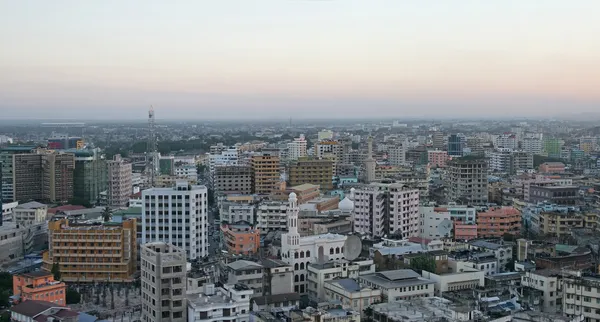
Numbeo's cost of living index measures prices against New York City, which scores 100. Index figures come from Numbeo's 2026 Africa city ranking, accessed November 3, 2026. Item prices come from Numbeo's Dar es Salaam vs Nairobi comparison page, last updated October 31, 2026, and are contributor-reported averages, not official statistics. Nairobi prices were converted to Tanzanian shillings by Numbeo; the original Kenyan shilling prices are given in each detail section. Numbeo recorded 30 contributors for Dar es Salaam and 89 for Nairobi in the past 12 months, so Dar es Salaam's figures rest on a thinner sample and should be read as indicative. MyLifeElsewhere, which re-weights the same underlying Numbeo data, puts Nairobi 16.5 percent more expensive overall, against 11.1 percent on Numbeo's own 2026 index. The two differ because of basket weighting and update timing, but they agree on the direction, on restaurants and transport being the biggest gaps, and on rent and childcare running the other way. Feature image: Dar es Salaam at dusk, Muhammad Mahdi Karim, Wikimedia Commons (GFDL 1.2).