Table of Contents
1. Faye launches his own party and makes the war with Sonko official
President Bassirou Diomaye Faye formally launched his Republican Patriots party yesterday, cementing his fall-out with Ousmane Sonko, head of the ruling Pastef party, and setting up a power struggle in the middle of a major debt crisis. Pastef regional leaders and youth-wing members have defected to Faye's camp in recent weeks, along with figures from the opposition Alliance for the Republic. A new cabinet formed in June contains no Pastef ministers after Sonko pulled his party from government, and the promises the two men rose on in 2024 have grown harder to keep as the debt burden worsened following revelations that the previous administration underreported billions in borrowing.
Why it matters: The men who won as one ticket now command rival machines, and the fight will be settled by defection arithmetic before any ballot is cast. Faye holds the state and its appointments while Sonko holds Pastef's street organisation, which is a contest between patronage and mobilisation. Watch the IMF file, since whichever man owns the debt restructuring owns the blame for its austerity, and each is manoeuvring to hang it on the other.
Source: AP via ABC News / Bloomberg / Africanews
2. Tanzania's opposition says 51 of its officials now face terrorism charges
According to reports, 51 opposition officials in Tanzania have been arrested and charged with terrorism over planned July 7 protests that never materialised because of a heavy police presence, with deputy chairperson John Heche accusing the government of using law enforcement to intimidate critics. The protests were called to demand democratic reforms after the disputed October election in which President Samia Suluhu Hassan was declared winner with 98 percent of the vote, and Heche said chairman Tundu Lissu faces the same non-bailable charges. Twenty-three of the accused appeared before the Mwanza Resident Magistrate's Court on July 23, charged with participating in meetings allegedly linked to terrorism, a day after the Legal and Human Rights Centre said people across the country were being held in prolonged detention on bailable offences without being brought to court.
Why it matters: Read against the previous story, the region's two ruling projects are moving in opposite directions, with Senegal's power struggle running through party competition while Tanzania's runs through the criminal code. The mechanism to watch is charge selection, since terrorism counts are non-bailable, which converts pre-trial detention into indefinite punishment without a conviction. Protests that never happened producing 51 terrorism cases tells investors precisely how Dodoma prices dissent ahead of the 2027 local polls.
Source: AP via The Washington Post / The Citizen / The Chanzo
3. Congo's Ebola caseload passes 3,000 in the fastest outbreak ever documented
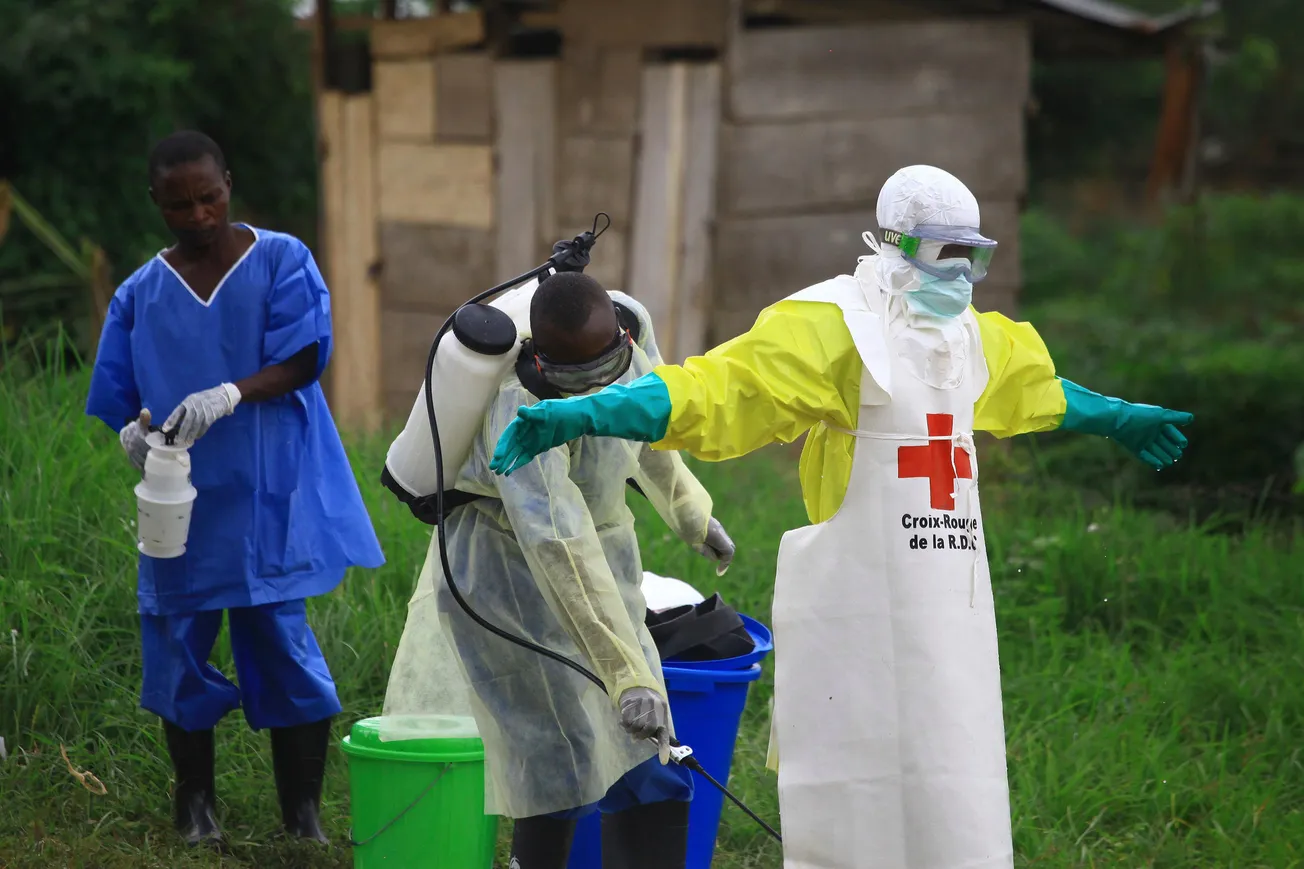
Confirmed Ebola cases in the Democratic Republic of Congo reached 3,075 and have recorded 1,354 deaths, government data revealed yesterday. The death toll rose more than 40 percent in five days and total cases 27 percent in a week, making this the fastest-spreading Ebola epidemic ever documented, reaching 1,000 deaths in under 10 weeks against the eight months the 2013-16 West Africa outbreak took, and a public health consultant told Al Jazeera the virus is "spreading like a wildfire" while medical personnel remain overstretched. Part of the cumulative jump reflects the integration of provincial databases from Ituri and North Kivu into national figures, and the Bundibugyo strain driving the outbreak has no approved vaccine, with five provinces now affected.
Why it matters: The speed is the story, and so is the accounting, since the database reconciliation revealed the state had been undercounting its own epidemic for weeks. A no-vaccine strain moving through five provinces including newly hit Tshopo means containment now depends on the weakest links in Congolese logistics, and Zambia's border screening shows the neighbours have stopped assuming Kinshasa will hold it. Africa CDC's warning that this could become the worst outbreak ever documented is a funding appeal aimed at a world that has stopped answering, which is the subject of the next story.
Source: Reuters / Al Jazeera / Bloomberg
4. New PEPFAR data shows 77,000 children dropped from HIV treatment support
Analysis of newly released PEPFAR data for fiscal year 2025, presented ahead of the AIDS 2026 conference, found 77,163 fewer children living with HIV received PEPFAR-supported treatment than in 2024, a 14.2 percent decline, with all but one of 21 high-burden countries recording drops and South Africa losing 30,880 children from treatment support, a 45 percent fall. A companion survey of implementing organisations found more than one in five permanently discontinued at least one HIV care service, alongside shortages of condoms, laboratory supplies, PrEP and antiretrovirals, and roughly 1,700 service delivery sites have closed, with 44 percent of affected programmes finding alternative financing but nearly all below prior PEPFAR levels.
Why it matters: This is the first hard, multi-country measurement of what the US retreat from global health actually costs, and the finding that children are losing treatment faster than adults demolishes Washington's claim of routine fluctuation. Placed beside Congo's Ebola emergency above, the pattern is one continent-wide stress test of health systems losing their largest external funder at once. The Accra Declaration's domestic-financing pledges now have a number to beat, 77,163, and every finance ministry on the continent should be made to say it aloud.
Source: allAfrica / The Nation / IAS via Scoop
5. RSF fighters kill 15 civilians on the edge of besieged El Obeid
North Kordofan's state government said at least 15 civilians were killed and seven injured in an attack on the Berber area south of El Obeid on Friday, blaming the Rapid Support Forces, as the city that links central Sudan with Darfur remains a key battleground. UN investigators have warned that the RSF is deploying around El Obeid the same tactics it used at El Fasher, encircling the city, attacking critical infrastructure and restricting essential services, and the Fact-Finding Mission is now mandated to investigate violations there after roughly half a million people were left trapped under siege-like conditions.
Why it matters: Every El Obeid killing must be read against El Fasher, where encirclement ended in a massacre the UN says amounted to genocide, and the RSF is running the same playbook in plain sight of investigators who can document but cannot deter. The city is the hinge connecting Darfur to central Sudan, so its fall would consolidate the RSF's territorial project into something resembling a state. The warnings are on record this time, which means whatever happens next happens with the world formally notified.
Source: Xinhua / UN News / Al Jazeera
6. ICC member states fire prosecutor Karim Khan in a first for the court
The ICC's member states voted on Friday to remove chief prosecutor Karim Khan, the first removal of a sitting chief prosecutor in the court's history, with the Assembly of States Parties concluding he committed "serious misconduct and serious breach of duty" over sexual misconduct allegations involving a female aide, which Khan denies. Diplomatic sources put the secret ballot at 82 votes for removal out of 125 members, above the 63-vote threshold, with 13 against, and the court will now begin appointing a new prosecutor while Khan's two deputies continue leading the office, as they have since he stepped aside during the disciplinary process.
Why it matters: The court that dominates Africa's international-justice debates just proved it can hold its own top official to account, which lands directly in the argument this page carried all week, from Namibia's withdrawal motion to Pretoria's complementarity defence. Khan's removal also decapitates the office running the Sudan and Libya files at the exact moment El Obeid, in the previous story, is sliding toward atrocity. The succession fight will be the real African story, since the continent's states hold votes enough to shape who inherits those investigations.
Source: NPR / CNN / Middle East Eye
7. Pretoria and Paris put their dormant defence pact back to work
South Africa and France have agreed to convene their long-overdue 13th Defence Strategic Dialogue to take stock of the Memorandum of Understanding on Defence Cooperation and explore additional areas of cooperation, a commitment Ramaphosa announced alongside Macron, with the dialogue expected to take place in South Africa in October. The rapprochement follows Ramaphosa's official visit to France, which came less than a month after South Africa was dropped from the G7 guest list in Évian, and reporting this week indicates both presidencies are working to deepen the military track ahead of the October session.
Why it matters: France needs a southern anchor for its African security posture after the Sahel expulsions and its pivot to Kenya, and South Africa needs Western defence partners who do not arrive with Washington's conditions attached. A revived dialogue means procurement talk, and Denel's carcass plus the SANDF's maintenance crisis make Pretoria a genuine market for French primes. Watch whether the October session produces contracts or communiqués, because that is the test of whether this is strategy or ceremony.
Source: DefenceWeb / SAnews / DIRCO
8. Paris goes back to Adenuga's chequebook for its Abuja cultural flagship
France is negotiating with Nigerian billionaire Mike Adenuga over financing a new Institut Français in Abuja, Africa Intelligence reported this week, with Macron expected to lay the foundation stone during a coming West Africa visit. The approach repeats the Lagos template, where Adenuga paid for the Alliance Française flagship that Macron inaugurated in 2018, elevating him to Commander of the Legion of Honour after only eight months as a Chevalier, a promotion that ordinarily takes thirteen years.
Why it matters: France's cultural network in Africa now runs partly on African private money, which says as much about Paris's budgets as about Adenuga's affections. For the Glo and Conoil owner, whose empire is financed through BNP Paribas and partnered with French firms, a cultural institute is cheap insurance on billions in commercial relationships. The precedent is the thing to watch, since a great power outsourcing its soft-power infrastructure to local billionaires invites the question of who is influencing whom.
Source: Africa Intelligence via Billionaires.Africa / Sada News
9. Gabon's Paris mansion sale stalls again under a mountain of creditor claims
Negotiations over the sale of the Hôtel Pozzo di Borgo, the Paris mansion Gabon's state bought for 100 million euros under Ali Bongo in 2010, have stalled again, Africa Intelligence reported this week. The property has been on the market since the post-coup authorities relisted it, drawing suitors including LVMH chief Bernard Arnault, who has weighed an acquisition at a valuation around 200 million euros, while creditors circle it, with the heirs of Italian businessman Guido Santullo initiating a seizure procedure over a claimed 120.4 million euro debt that opened the path to a forced auction, a threat Libreville has fought through appeals since the dispute over the January 2024 settlement protocol with Santullo-Sericom emerged.
Why it matters: The mansion has become a proxy balance sheet for the Gabonese state, since every creditor Libreville has stiffed for a decade knows the building is the one seizable asset worth the litigation. Oligui Nguema needs the sale to fund his post-coup promises, yet each judgment against Gabon shrinks the net proceeds and scares the buyers. Whoever finally closes, at whatever discount, will have effectively priced Gabon's sovereign credibility in a single Paris transaction.
Source: Africa Intelligence / Gabonreview / Direct Infos Gabon
10. Sidi Bou Said joins the World Heritage list as Tunisia banks a tourism asset
UNESCO inscribed Tunisia's clifftop village of Sidi Bou Said on the World Heritage List on Saturday during the 48th session of the World Heritage Committee in Busan, South Korea, making it the country's tenth listed site. The blue-and-white village overlooking Carthage, built around the sanctuary of the Sufi scholar Abu Said al-Baji, draws roughly 4.5 million international visitors a year, and the listing arrives as its fabric faces risk from extreme rainfall damage sustained last winter.
Why it matters: For a state whose grid buckled and whose hills burned this same week, a World Heritage badge is one of the few costless assets Tunis can bank, and it converts directly into pricing power for a tourism sector carrying the economy. The inscription also creates obligations, since UNESCO status brings conservation scrutiny to a village already damaged by last winter's rains and squeezed by unregulated development. The listing is the easy part, and the maintenance bill now belongs to a treasury that cannot keep the lights on.
Source: AFP via Arab News / Xinhua / The Peninsula
Africa Today is The African Exponent's daily briefing on the continent as it is. Summaries are written by our editors. Click through to the original sources for full reporting.