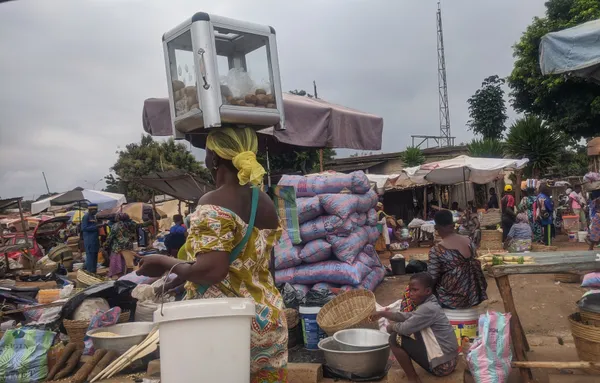
Efforts to alleviate Poverty in Africa often begin with the formulation and adoption of policies and directional documents directed at loosening it’s grip on communities. These policies ,like South Africa’s National Development Plan 2030, are often academically sound and politically empowering but we then discover, time and again, that they have little to no accessible concrete and productive implementation strategies to make their objectives a reality within the most needy communities.
When assessing methodologies for the alleviation of poverty within the Black community, the issue most danced around tends to be the most vital one, the Black Family.
To alleviate Black Poverty the point of departure for said eradication is the identity and structure of the Family, as it is the most vital and most central structure in the lives of those experiencing it.
It is my belief that in order to systematically alleviate poverty in Black families, we have to be well informed about how they operate and how the individuals within them co-exist despite the psychological, emotional, physical and financial stresses they live under.
Any program created to intervene with the core concerns of Black Poverty has to give attention not only to Poverty in general but to Blackness as a factor in particular.
Is there a need to consider Blackness in particular?
Black Poverty shares multiple identifying factors with other races of colour, having sustained multiple generations of colonialism, dispossession, slavery, tribalism and most recently, corruption it might be easier to speak of one type of Colour Poverty, but this would be misleading and would fail on many levels.
In a world where economic frameworks are controlled by past oppressors having one shared goal at understanding the threats facing the quality of life of our people is a smart outlook, academically, but it would fail if it were to be applied universally because though we share common tragedies in our history and share common goals for our futures, just as much as the Igbo and Bantu have different outlooks and ways of life, so do races, and it is a threat on culture and personhood, to ignore these things.
The assumption that one outlook on poverty can be applied universally without considering race is to claim that the notion of colour-blindness is sensible. I would rather be on the extreme opposite of that idea than to stand with it.
Methods of Alleviation and Development, tend to be formulated and applied universally without considering that it is people, like you and I, who have beliefs and certain stances, that they are trying to assist. The quickness to always look at what lacks, before what is already present (either physically, mentally, spiritually in the citizens lives) results in the slow transformation we see within the continent of Africa as a whole.
Another problem creating the need to consider Blackness on its own is that “Development”, tends to be a process that delivers Western ideals and Capitalism with it. If the initial aim of Development is purely to alleviate poverty and improve quality of life, then the notion of developing the systems of wealth of the Bantu (of which a majority of South Africans are) should be the most viable and point of departure when dealing with Bantu in poverty.
Neglecting to consider Blackness because of “Global standards” is a failure on our end as existing global standards shun the value of Black thought as a whole; it needing to first be sensible to Western thought before it is considered viable and teachable.
Dealing with Blackness in relation to Poverty affecting Black people allows us the privilege of assessing Personhood, sense of self, openness to exploitation, safety, capacity building and leadership structures which can result in the implementation of systems which will feel familiar to the people and therefore have better success rates amidst the deadline of 2030.
The United Nations Modernisation theory of the 1960’s continues to be the framework that most Development plans to date adhere, conform and comply to. This Western theory, which was applied to the African Socio-Economic Climate after being applied in African American communities, is assumed to be viable even by some academics today. The Modernisation theory focuses largely on the Nation-state level of operations and I will even go as far as agreeing with those who blame it and theories like it for the high instances of corruption in African Governments.
The one mistake I want to highlight with this theory (which also highlights how Blackness differs from Western standards) is it's view of youth being benefactors of Development, “not having the economical or political power” to fast track development.
Youth, in Africa are the powerhouses, security and workforce of their communities. African youth are not benefactors. Nor are they idle. Even in poverty. Case and point.
Some Points of Impact of Black Poverty
1. At it’s worst degree, Black Poverty threatens the survival of those grappled by it. Though those most affected by this type of Poverty tend to live in the same communities, the degree to which their survival is threatened differs largely based on fluctuating circumstances. The availability of food, water and shelter is not something that can be fixed once on a communal level and be assumed to not resurface again. Health, Job availability and weather patterns are some of the things that have a very direct influence on the survival of the multitudes living in poverty.
2. Another point of impact of Black Poverty is Access; access to money, access to education and access to employment opportunities.
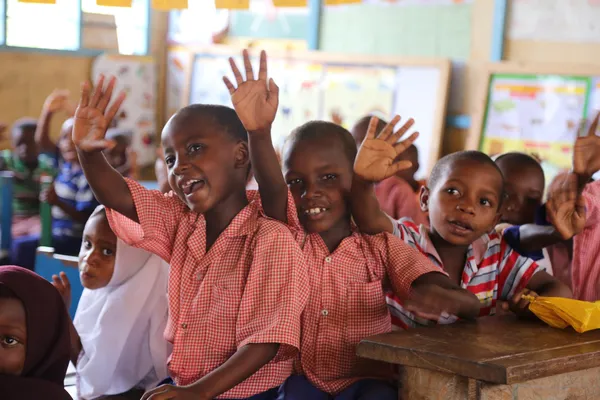
The assumption that by having educational institutions in communities facing poverty, we have created access to education shows itself to be fake and misinformed when we consider the drop out rates, inadequate learning and teaching supplies and shortage of quality educators in these communities.
Access to social grants, like in the South African grant system does make a considerable contribution to the threat of starvation, but hand outs are not a sustainable solution to Poverty especially with a lack of financial education and the mineality of the amount in relation to the needs families have. We hear of situations where the the grant of one child and one grandparent has to feed,clothe and assist the family on its day to day needs. Grants are a means to reducing the effects of poverty and they definitely should be applauded for that, but they also need to be analysed in terms of their effectiveness to achieving the goals in the NDP 2030.
The need to restart efforts to understand Black Poverty is paramount if eradication is to be considered a realistic outcome. I will deal with this in God Of Africa (The Book), and attempt in my own way to educate us all on the concept and further develop what eradication methods would have to specifically focus on in order to be highly effective.
Mayibuye.
Thobeka Nyathikazi.