Published: October 22, 2026
5 Key Facts
- Chad has the worst roads in Africa. It scored 1.9 out of 7 on the World Economic Forum's road-quality scale, the lowest score of any African country. Chad also ranks last of all 141 economies in the world table.
- Three of the five worst road networks in the world are African. Chad (1.9), Mauritania (2.0) and Madagascar (2.0) occupy the bottom three global positions, ahead of only Haiti and Yemen outside Africa.
- The scores are perceptions, not pavement measurements. The 1 to 7 scale comes from the World Economic Forum's Executive Opinion Survey, in which business executives rate their country's roads from 1 (underdeveloped) to 7 (extensive and efficient). The latest complete cross-country survey vintage is 2019, republished in a 2025-26 edition. The year is dated honestly throughout this article.
- Big economies are not spared. Nigeria, Africa's largest economy and most populous country, ranks eighth worst at 2.5. Angola, an oil-rich economy of 37 million people, ranks fifth at 2.2. Money helps, but it does not automatically buy maintained roads.
- The common thread is maintenance capacity, not one geography. The bottom 10 spans desert states (Chad, Mauritania), a rainforest island (Madagascar), conflict-affected giants (DR Congo, Mozambique), oil exporters (Angola, Gabon, Nigeria) and a mountain kingdom (Lesotho). What unites them is limited fiscal room for upkeep, hard terrain, or both.
| # | Country | Road Quality Score (1-7) |
|---|---|---|
| 1 | Chad | 1.9 |
| 2 | Mauritania | 2.0 |
| 3 | Madagascar | 2.0 |
| 4 | Democratic Republic of the Congo | 2.1 |
| 5 | Angola | 2.2 |
| 6 | Mozambique | 2.4 |
| 7 | Cameroon | 2.4 |
| 8 | Nigeria | 2.5 |
| 9 | Gabon | 2.5 |
| 10 | Lesotho | 2.7 |
The big picture: Africa's worst roads are not only in the poorest countries. The bottom of this table includes two of the continent's biggest oil exporters and its largest economy. What loses is maintainability: vast distances, extreme weather, conflict and thin budgets make it hard to keep roads usable year after year. That is why Chad, Mauritania and Madagascar have sat at the bottom of global road-quality tables for years. The gap between worst and tenth is also worth noting: 1.9 versus 2.7 is the difference between "underdeveloped" and merely poor on a 7-point scale. Burkina Faso, Malawi and Zimbabwe all score 2.8 and just miss the list. And the other end of the scale exists too. Our 2026 ranking of Africa's best roads, built from the same survey series, puts Namibia first at 5.3. Length is a separate story: our 2026 ranking of the most extensive road networks covers the quantity side.
Selected Details
1. Chad: 1.9 out of 7, the worst roads in Africa and the world
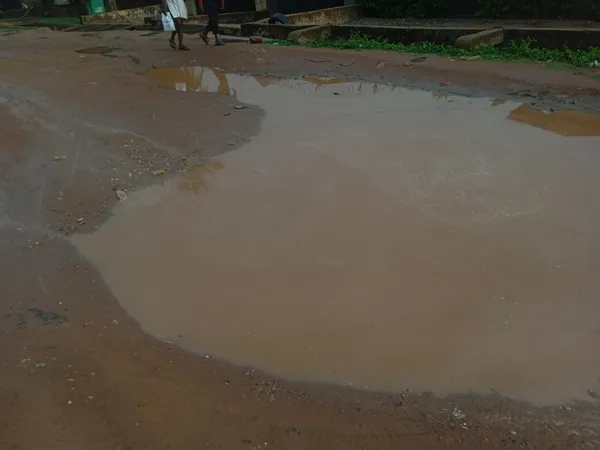
Road-quality score of 1.9 out of 7 (VizAtlas 2025-26 edition). Chad ranks 141st of 141 economies worldwide. This landlocked Central African country covers about 1.28 million square kilometers of mostly desert and rocky terrain. Its road network is largely unpaved, and many routes become unusable in the rainy season. The score reflects roads that are underdeveloped by international standards.
2. Mauritania: 2.0 out of 7, desert distances
Road-quality score of 2.0 out of 7 (VizAtlas 2025-26 edition). Mauritania ranks 140th globally. The country is roughly 90 percent Sahara desert, with a small population spread over more than a million square kilometers. Long distances between settlements make road maintenance expensive, and sand and heat punish pavement. Iron ore and gold exports drive the economy, but the road network serving its people remains thin.
3. Madagascar: 2.0 out of 7, tied with Mauritania
Road-quality score of 2.0 out of 7 (VizAtlas 2025-26 edition). Madagascar ranks 139th globally, just ahead of Mauritania in the source's ordering. The island's hilly terrain and heavy seasonal rains cause washouts and rapid road deterioration, and much of the network outside the main corridors is unpaved. Rural and isolated regions bear the worst of it, which limits trade, health care and school access.
4. Democratic Republic of the Congo: 2.1 out of 7, a giant with few roads
Road-quality score of 2.1 out of 7 (VizAtlas 2025-26 edition). The DRC is Africa's second-largest country at about 2.3 million square kilometers, with roughly 100 million people. Its paved road network is tiny relative to its size, and long-running conflict in the east keeps disrupting corridors and maintenance. Kinshasa's traffic is legendary for congestion, not road quality.
5. Angola: 2.2 out of 7, oil wealth, poor rural roads
Road-quality score of 2.2 out of 7 (VizAtlas 2025-26 edition). Angola is one of Africa's largest oil producers, yet it ranks fifth worst on road quality. The civil war that ended in 2002 destroyed vast stretches of infrastructure. Rebuilding since then has focused on main corridors, while rural roads across this 1.25-million-square-kilometer country remain in poor condition.
6. Mozambique: 2.4 out of 7, storms and conflict
Road-quality score of 2.4 out of 7 (VizAtlas 2025-26 edition). Mozambique's 2,500-kilometer coastline faces some of the world's most destructive cyclones, and repeated flooding washes out roads faster than they can be repaired. Armed conflict in the gas-rich Cabo Delgado province has further strained the network in the north. The country ranks 134th globally.
7. Cameroon: 2.4 out of 7, tied with Mozambique
Road-quality score of 2.4 out of 7 (VizAtlas 2025-26 edition). Cameroon ranks 132nd globally, just behind Mozambique in the source's ordering. The country's rainforest belt and heavy rains batter its highways, and the key Douala-Yaounde corridor has long suffered from potholes and overloaded trucks. Unrest in the anglophone west has added to the maintenance strain.
8. Nigeria: 2.5 out of 7, Africa's biggest economy near the bottom
Road-quality score of 2.5 out of 7 (VizAtlas 2025-26 edition). Nigeria ranks 131st globally. With more than 220 million people and the continent's largest GDP, Nigeria shows that economic size does not buy road quality. A huge maintenance backlog, chronic underfunding, and the split of road responsibilities between federal and state governments leave highways potholed and congested. Lagos, its commercial capital, is one of the world's most congested cities.
9. Gabon: 2.5 out of 7, tied with Nigeria
Road-quality score of 2.5 out of 7 (VizAtlas 2025-26 edition). Gabon ranks 130th globally, just ahead of Nigeria in the source's ordering. This small, oil- and manganese-rich country sits almost entirely in the Congo Basin rainforest. Dense forest, heavy rainfall and a small population make road construction and upkeep costly per kilometer.
10. Lesotho: 2.7 out of 7, the mountain kingdom
Road-quality score of 2.7 out of 7 (VizAtlas 2025-26 edition). Lesotho is entirely above 1,000 meters in elevation, landlocked inside South Africa. Its mountainous terrain makes road building expensive and maintenance a constant battle against landslides and frost. It takes tenth, ahead of Burkina Faso, Malawi and Zimbabwe, which all score 2.8 and just miss the list.
Frequently Asked Questions
Which African country has the worst roads in 2026?
Chad, with a road-quality score of 1.9 out of 7. It ranks last of all 141 economies in the world table. Mauritania (2.0) and Madagascar (2.0) complete the bottom three, and all three rank among the five worst road networks on earth.
Are these scores from a 2026 survey?
No. The scores come from the World Economic Forum's Executive Opinion Survey, whose latest complete cross-country vintage is 2019, republished in the 2025-26 VizAtlas edition. No 2025 or 2026 cross-country road survey with exact per-country scores exists. The article dates this vintage honestly, and the independent TheGlobalEconomy.com series confirms Chad's 1.90 score.
Why is Nigeria, Africa's largest economy, on the worst-roads list?
Because the score measures quality, not the size of the economy or the road network. Nigeria has a large maintenance backlog, chronic underfunding, and roads split between federal and state control, which slows repairs. A big economy with 220 million people puts enormous wear on roads without matching upkeep budgets.
Why are so many of the worst-road countries in the Sahel and Central Africa?
Geography and governance. Desert states like Chad and Mauritania face extreme distances and heat. The DRC and Mozambique face conflict and extreme weather. Across the list, the pattern is limited fiscal room for maintenance, hard terrain, or both. Small, well-funded networks do better, which is why Namibia leads the best-roads ranking.
Where can I find more 2026 African infrastructure data?
VizAtlas's road-quality world table (2025-26 edition) has all 141 economies with exact scores. For more African rankings, see our 2026 ranking of Africa's best roads (the other end of the same survey), our most extensive road networks (quantity, not quality), our top 10 safest countries in Africa in 2026 and our 2026 ranking of Africa's largest economies.
Data Sources
- VizAtlas, "Road Quality Around the World (2025-26)": full 141-country table with exact road-quality scores; the primary source for the ranking table, read first-hand on October 22, 2026. The edition republishes the World Economic Forum survey vintage with the caveat that the ranking year is the edition year, not the survey year.
- TheGlobalEconomy.com, "Chad Roads quality - data, chart": confirms the WEF-series latest value for Chad (1.90, year 2019) and carries the metric definition (Executive Opinion Survey question, 1 = underdeveloped to 7 = extensive and efficient). Accessed October 22, 2026.
- TopAuto, "These are the worst countries to drive in": referenced only to note that driving-safety indexes (road deaths, speed limits, congestion) measure something different from road-quality scores; its South Africa road-quality figure (4.53) is consistent with the WEF series but the index was NOT used for any ranking figure. Accessed October 22, 2026.
Methodology
Road quality is measured on a 1 to 7 scale drawn from the World Economic Forum's Executive Opinion Survey, in which business executives in each country rate their roads from 1 (underdeveloped) to 7 (extensive and efficient by international standards), combining condition and extensiveness. The scores shown are the latest complete cross-country survey vintage available (2019), republished in the 2025-26 VizAtlas edition; this is NOT a 2026 field survey, and the vintage is stated in every use. This is the same series used in our best-roads ranking, so the two articles are directly comparable. Ties (2.0 for Mauritania and Madagascar; 2.4 for Mozambique and Cameroon; 2.5 for Nigeria and Gabon) are ordered as the source's global ranking orders them, and the ties are noted in the Selected Details. Burkina Faso, Malawi and Zimbabwe score 2.8 and just miss the top 10. Because the metric is perception-based rather than sensor-measured, comparisons are approximate. Figures are shown to one decimal place as published by the source.