Published: October 22, 2026
5 Key Facts
- Seychelles leads Africa on the schooling measure in 2026. It scores 0.88 on the UNDP Education Index, the only African country above 0.80. Its adult literacy rate is 95.87%, the highest on the continent.
- South Africa and Mauritius complete the top three. South Africa scores 0.77, with 91.15% adult literacy in 2024 and about 12.7 million learners in its school system. Mauritius scores 0.73, with 94.29% adult literacy and 99.80% youth literacy.
- This 2026 edition uses a stronger metric than the 2025 edition. Our 2025 ranking used a global education ranking from World Population Review (top three: Egypt, Morocco, Kenya). This edition uses the UNDP Education Index from the Human Development Report 2025, which measures years of schooling for every African country on one scale.
- North Africa takes four of the ten spots, but none cracks the top three. Egypt (0.70), Algeria (0.68), Tunisia (0.66) and Morocco (0.63) all rank in the top ten. Southern Africa is the strongest region, with four countries in the top seven.
- The gap between first and tenth is wide. Seychelles (0.88) scores about 40% higher than Morocco (0.63). Only 0.07 points separate fifth-placed Egypt (0.70) from tenth-placed Morocco (0.63), so the middle of the table is tight.
The big picture: education in Africa in 2026 is an islands-and-south story at the top. Seychelles and Mauritius combine near-universal youth literacy with long school careers, while South Africa and Eswatini anchor a strong southern African cluster. North Africa's four entries show depth but not dominance: Egypt, which topped our 2025 edition, falls to fifth on the UNDP's schooling-years measure. The Education Index is simple to read: it blends how long children are expected to stay in school with the average years of schooling adults have actually completed, on a 0-to-1 scale. For the reading side of the story, see our 2026 ranking of Africa's most literate countries; for the universities behind the numbers, see our 2026 QS ranking of Africa's top universities.
| # | Country | Education Index (2023) | Supporting fact |
|---|---|---|---|
| 1 | Seychelles | 0.88 | Adult literacy 95.87% (UNESCO, 2018), the highest in Africa |
| 2 | South Africa | 0.77 | Adult literacy 91.15% (2024); about 12.7 million learners |
| 3 | Mauritius | 0.73 | Adult literacy 94.29%; youth literacy 99.80% (2023) |
| 4 | Eswatini | 0.71 | Adult literacy 90.75%; spends 6.03% of GDP on education |
| 5 | Egypt | 0.70 | 13.1 expected years of schooling; 10.1 average years for adults |
| 6 | Algeria | 0.68 | 68% of women of college age enrolled in tertiary education (2022) |
| 7 | Botswana | 0.67 | Tied with Gabon at 0.67; ranked above on alphabetical order |
| 8 | Gabon | 0.67 | Adult literacy 88.86% (UNESCO) |
| 9 | Tunisia | 0.66 | Adult literacy 79.04% (2014, UNESCO) |
| 10 | Morocco | 0.63 | Tertiary enrollment 40.6%; primary net enrollment 99.1% |
Education Index values are the UNDP's 2023 observations, published in the Human Development Report 2025. The index runs 0 to 1; higher is more educated. Botswana and Gabon tie at 0.67 and are ordered alphabetically, which is disclosed in the Methodology. Literacy figures are each country's latest UNESCO observation and carry their own years. See Methodology for the full ranking basis and the difference from our 2025 edition.
Selected Details
1. Seychelles: Africa's clear education leader
No African country is close to Seychelles on the UN's measure. The Education Index is a 0-to-1 score from the United Nations Development Programme (UNDP). It combines two things: how many years of school a child is expected to complete, and the average years of schooling adults have actually finished. Seychelles scores 0.88, a full 0.11 points ahead of second-placed South Africa. Its adult literacy rate is 95.87%, the highest in Africa on the latest UNESCO observation (2018). The islands are the only African country to clear 0.80, which puts them in a class of their own on the continent. (UNDP Education Index table, Kenya Today / UNESCO literacy data)
2. South Africa: the mainland's strongest system by the numbers
South Africa's score rests on scale and access. It scores 0.77 on the Education Index, second in Africa. Adult literacy reached 91.15% in 2024, with youth literacy at 97.17%, which shows younger cohorts pulling the average up. About 12.7 million learners are in the school system, and the country spends roughly 6.2% of GDP on education. Girls are expected to complete 14.2 years of schooling as of 2023, one of the highest figures in Africa. The well-known weak spot is learning quality: national assessments have found most early-grade learners struggle to read for meaning. But on years in school, the UNDP's chosen measure, South Africa leads the mainland. (UNDP Education Index table, South Africa education statistics)
3. Mauritius: near-universal literacy among the young
Mauritius is Africa's most literate large economy. It scores 0.73 on the Education Index. Adult literacy is 94.29%, and youth literacy hit 99.80% in the 2023 observation, which means reading and writing are now near-universal for young Mauritians. The country pairs strong schooling with Africa's highest human development score among island states. Its expected years of schooling sit near 14 for both boys and girls. The result is a workforce where basic education is essentially complete, a foundation few African economies can claim. (UNDP Education Index table, Kenya Today / UNESCO literacy data)
4. Eswatini: the spending story
Eswatini buys its fourth place with one of Africa's biggest education budgets. It scores 0.71 on the Education Index. Adult literacy is 90.75%, and the country spends 6.03% of GDP on education, among the highest shares on the continent. That spending shows up in access: near-universal primary enrollment has pushed adult literacy steadily upward as older, less-schooled cohorts age out. Eswatini is the smallest mainland economy in the top five, which makes its position the ranking's biggest overachievement relative to income. (UNDP Education Index table, Kenya Today / UNESCO literacy data)
5. Egypt: the 2025 winner falls to fifth
Egypt topped our 2025 edition. On the UNDP's measure, it is fifth. Egypt scores 0.70 on the Education Index. A child entering school today is expected to complete 13.1 years of education, and adults average 10.1 years, both 2023 UNDP figures. Those two numbers combine to exactly the 0.70 index value, which confirms the ranking math. Egypt's HDI rank of 100th in the world (0.754) also puts it in the UN's "high human development" group. The drop from first to fifth between editions is a metric story, not a collapse: the old ranking rewarded Egypt's university scale, while the UNDP index counts years of schooling across the whole population. (UNDP Education Index table, Egypt Ministry of Planning / UNDP HDR 2025)
6. Algeria: North Africa's quiet performer
Algeria's strength is getting young people, especially women, into higher education. It scores 0.68 on the Education Index. In 2022, 68% of Algerian women of college age were enrolled in tertiary education, according to the World Bank, one of the highest rates in Africa. That pipeline feeds the "expected years" half of the index. Algeria's HDI of 0.763 is the third-highest in Africa, and education is the steadiest of its three HDI pillars. With Egypt at fifth and Tunisia at ninth, Algeria anchors the middle of North Africa's four-country bloc. (UNDP Education Index table, World Bank tertiary enrollment data)
7. Botswana: the tie-breaker
Botswana edges Gabon only on alphabetical order. Both countries score 0.67 on the Education Index, a genuine tie in the published UNDP data. This ranking places Botswana seventh and Gabon eighth by alphabetical order, which is stated openly here and in the Methodology. Botswana's adult literacy is 86.82% on its latest UNESCO observation (2013), and its HDI of 0.731 keeps it in the UN's high-development group. The tie is a reminder that the published index rounds to two decimals: the underlying data surely separates them, but the public table does not. (UNDP Education Index table, UNESCO literacy data via IndexMundi)
8. Gabon: literacy-rich, data-thin at the top
Gabon matches Botswana's 0.67 but brings stronger literacy numbers. Adult literacy is 88.86% on the latest UNESCO observation, well above the African average. Its HDI of 0.733 is marginally higher than Botswana's 0.731. Gabon is the smallest country in the top ten by population, and its oil-funded budgets have long supported school access even as quality questions persist. On the UNDP's two-decimal table it is inseparable from Botswana; on literacy it is clearly ahead. Either way, Central Africa's only representative earns its place. (UNDP Education Index table, Kenya Today / UNESCO literacy data)
9. Tunisia: the access veteran
Tunisia has been enrolling children in school at high rates for decades. It scores 0.66 on the Education Index. Adult literacy is 79.04% on the 2014 UNESCO observation, lower than the countries above it, which reflects older cohorts with less schooling rather than today's classrooms. Tunisia's expected years of schooling have long been among North Africa's highest, and its HDI of 0.746 sits fifth on the continent. The literacy figure is the stalest in the top ten, from 2014, so the true current number is almost certainly higher as younger Tunisians replace older ones. (UNDP Education Index table, UNESCO literacy data via IndexMundi)
10. Morocco: the enrollment machine
Morocco rounds out the top ten on the strength of near-universal basic education. It scores 0.63 on the Education Index. Net primary enrollment is about 99.1%, and gross secondary enrollment reached 91.1%. Tertiary enrollment stands at 40.6%, with over 1.2 million students in higher education in the 2022/2023 season. Morocco's HDI of 0.710 keeps it in the high-development group. The 2025 edition had Morocco second; the UNDP index places it tenth, because the index counts average years across the whole adult population, where Morocco's older, less-schooled cohorts still weigh the average down. (UNDP Education Index table, Morocco education statistics)
Frequently Asked Questions
Which African country is the most educated in 2026?
Seychelles. It scores 0.88 on the UNDP Education Index, the highest in Africa and the only country on the continent above 0.80. South Africa (0.77) and Mauritius (0.73) complete the top three. The ranking uses 2023 data from the UNDP Human Development Report 2025, the latest complete country dataset available.
How is the UNDP Education Index calculated?
The index combines two measures, each worth half. The first is expected years of schooling: how many years a child entering school today can expect to complete. The second is mean years of schooling: the average years of education adults aged 25 and over have actually finished. The formula is (expected years / 18 + mean years / 15) / 2, which produces a score from 0 to 1.
How does this 2026 ranking differ from the 2025 edition?
The 2025 edition on African Exponent used a global education ranking from World Population Review, whose African top three were Egypt, Morocco and Kenya. This 2026 edition uses the UNDP Education Index from the Human Development Report 2025 instead. The UNDP measure covers every African country with one consistent method based on years of schooling, which is why the top three changed to Seychelles, South Africa and Mauritius.
Why is Botswana ranked above Gabon if both score 0.67?
It is a genuine tie in the published UNDP data, which rounds the index to two decimals. This ranking orders tied countries alphabetically, so Botswana comes seventh and Gabon eighth. The tie-break rule is disclosed here and in the Methodology. The underlying unrounded data would separate them, but it is not published in the statistical annex.
Which countries just missed the top 10?
Equatorial Guinea and Libya both score 0.62, just below Morocco's 0.63. Kenya and Zimbabwe follow at 0.61. Kenya is the notable faller: it was in the top three of the 2025 edition's ranking but sits 13th on the UNDP's schooling-years measure.
Data Sources
- Wikipedia: Education Index: UNDP Education Index country table, 2023 observations from the Human Development Report 2025 (Seychelles 0.88 through Morocco 0.63; Botswana/Gabon tie; DR Congo and Somalia exclusions). Accessed October 22, 2026.
- UNDP, Human Development Report 2025 technical notes: Education Index formula: EI = ((expected years of schooling / 18) + (mean years of schooling / 15)) / 2. Accessed October 22, 2026.
- UNDP, Human Development Report 2025: "A Matter of Choice: People and Possibilities in the Age of AI", published May 2025. Accessed October 22, 2026.
- Egypt Ministry of Planning and Economic Development: Egypt's HDR 2025 sub-indicators: expected years of schooling 13.1, mean years 10.1 (2023). Accessed October 22, 2026.
- Kenya Today: Africa literacy ranking from UNESCO Institute for Statistics via World Bank: Seychelles 95.87% (2018), Mauritius 94.29% / youth 99.80% (2023), South Africa 91.15% / youth 97.17% (2024), Eswatini 90.75%, Gabon 88.86%; Eswatini 6.03% of GDP on education. Published October 2026. Accessed October 22, 2026.
- IndexMundi / UNESCO Institute for Statistics: adult literacy: Botswana 86.82% (2013), Algeria 81.41% (2018), Tunisia 79.04% (2014), Morocco 73.75% (2018), Egypt 71.17% (2017). Accessed October 22, 2026.
- World Bank Open Data: school enrollment, tertiary, female: Algeria 68% (2022). Accessed October 22, 2026.
- Morocco education statistics: tertiary gross enrollment 40.6%, primary net enrollment 99.1%, secondary gross enrollment 91.1%, 1.2M+ higher-education students (2022/2023). Accessed October 22, 2026.
- South Africa education statistics: 12.7 million learners, ~6.2% of GDP on education. Accessed October 22, 2026.
- World Bank Gender Data Portal: expected years of schooling, female: South Africa 14.2 (2023). Accessed October 22, 2026.
- World Population Review: HDI by Country: 2023 HDI values: Algeria 0.763, Egypt 0.754, Tunisia 0.746, South Africa 0.741, Gabon 0.733, Botswana 0.731, Morocco 0.710. Accessed October 22, 2026.
- World Population Review: Education Index by Country: UNDP Education Index explainer and context. Accessed October 22, 2026.
Methodology
This ranking uses a single metric: the UNDP Education Index from the Human Development Report 2025. The index combines expected years of schooling for children and mean years of schooling for adults aged 25 and over, each worth half, on a 0-to-1 scale. The formula is (expected years / 18 + mean years / 15) / 2. The observations are for 2023, the latest year with a complete published country table at the time of writing. The "2026" in the title marks this as the 2026 edition of African Exponent's annual ranking, published in 2026.
This edition deliberately uses a different metric from our 2025 ranking ("Top 10 African Countries with the Highest Education Global Ranking", July 2025), which drew on World Population Review's global education ranking. The UNDP index covers every African country with one consistent method, and it is the education pillar of the UN's headline Human Development Index, which makes it the more defensible single metric. That change is why the top three differs between editions.
Botswana and Gabon tie at 0.67 in the published two-decimal table. Tied countries are ordered alphabetically here. The Democratic Republic of Congo has no 2023 value in the table (its latest is 2019) and Somalia has none, so both are excluded rather than estimated. Index values are shown rounded to two decimals as published. Literacy figures come from UNESCO's Institute for Statistics and each carries its own observation year, stated in the table notes and country sections. No figures were estimated or invented. Data accessed October 22, 2026.
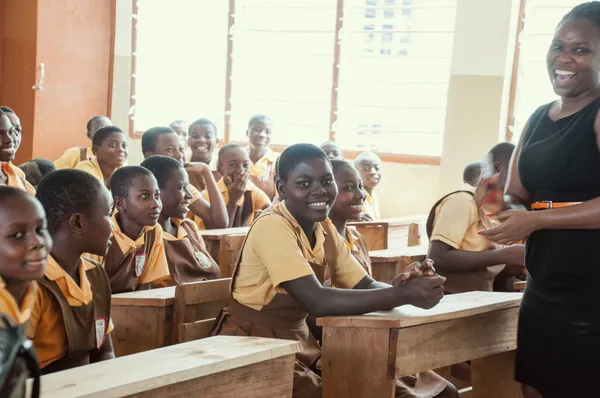
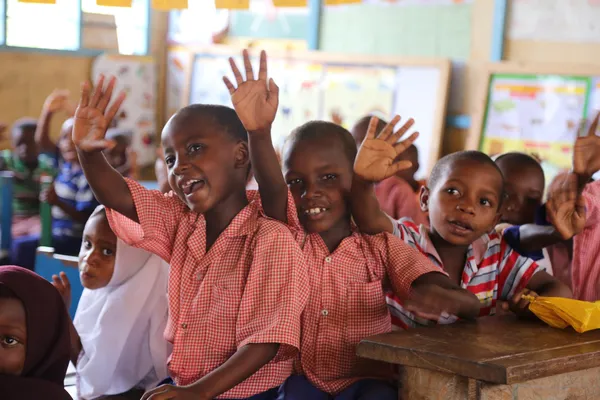
Cover image: African schoolchildren in a classroom. Photograph by Joining Forces for Africa, via joining-forces.org.