Published: September 28, 2026 | Last updated: September 28, 2026
Key Facts
- The Tunisian dinar is Africa's strongest currency at 2.96 per US$1 (Forbes Advisor data via Pulse Ghana, start of August 2026)
- The Libyan dinar ranks second at 6.41 per US$1 despite a devaluation of nearly 15% in January 2026 (Forbes Advisor data via Pulse Ghana, start of August 2026; Central Bank of Libya action reported by Pulse Ghana, January 2026)
- The currencies of 29 African countries had depreciated against the US dollar by the end of March 2026 (Afreximbank African Economic Outlook 2026, via Pulse Ghana, end of March 2026)
- 13 of the 17 major African currencies tracked by African Markets lost value against the dollar in the first half of 2026 (African Markets, via Pulse Ghana, first half of 2026)
- The South African rand, Eswatini's lilangeni and the Namibian dollar hold ranks 8 to 10 at 16.74 to 16.80 per US$1 (Forbes Advisor data via Pulse Ghana, start of August 2026)
| Rank | Country | Currency | Exchange Rate per US$1 | As of |
|---|---|---|---|---|
| 1 | Tunisia | Tunisian Dinar (TND) | 2.96 | Start of August 2026 |
| 2 | Libya | Libyan Dinar (LYD) | 6.41 | Start of August 2026 |
| 3 | Morocco | Moroccan Dirham (MAD) | 9.38 | Start of August 2026 |
| 4 | Ghana | Ghanaian Cedi (GHS) | 11.64 | Start of August 2026 |
| 5 | Seychelles | Seychellois Rupee (SCR) | 13.52 | Start of August 2026 |
| 6 | Botswana | Botswanan Pula (BWP) | 13.77 | Start of August 2026 |
| 7 | Eritrea | Eritrean Nakfa (ERN) | 15.00 | Start of August 2026 |
| 8 | South Africa | South African Rand (ZAR) | 16.74 | Start of August 2026 |
| 9 | Eswatini | Swazi Lilangeni (SZL) | 16.80 | Start of August 2026 |
| 10 | Namibia | Namibian Dollar (NAD) | 16.80 | Start of August 2026 |
Selected Details About Each Country on the List
1. Tunisia
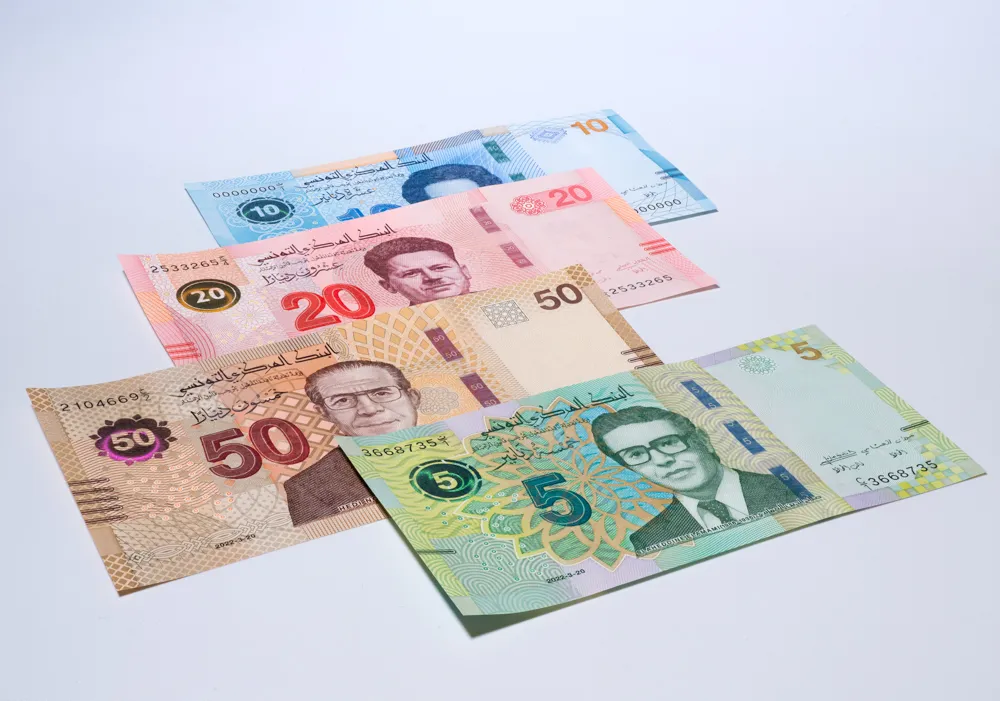
2.96 Tunisian dinars per US$1 (Forbes Advisor data via Pulse Ghana, start of August 2026). The dinar's top spot rests largely on tight foreign exchange controls and central bank intervention. The currency is not freely convertible, which lets authorities manage volatility. The African Development Bank projects Tunisia's economy to grow 2.1% in 2026, supported by tourism and industrial exports, with inflation averaging 5.7%.
2. Libya
6.41 Libyan dinars per US$1 (Forbes Advisor data via Pulse Ghana, start of August 2026). The Central Bank of Libya devalued the dinar by nearly 15% in January 2026, citing lower oil revenues, political divisions and the lack of a unified national budget. Confidence has since improved after the country's first unified national budget in 13 years and a recovery in oil production. The ranking reflects the official rate, and a black market rate often tells a different story.
3. Morocco
9.38 Moroccan dirhams per US$1 (Forbes Advisor data via Pulse Ghana, start of August 2026). The dirham trades under a managed regime pegged to a basket of currencies dominated by the euro and the US dollar. Tourism receipts, remittances and a diversified export base that includes automotive and agriculture give it steady support. Analysts expect it to stay relatively stable over the next year.
4. Ghana
11.64 Ghanaian cedis per US$1 (Forbes Advisor data via Pulse Ghana, start of August 2026). The cedi is the only West African currency in the top 10. It is forecast to edge lower because energy and commerce companies keep buying dollars, though a final US$371 million disbursement under the IMF's Extended Credit Facility is expected to give short-term support.
5. Seychelles
13.52 Seychellois rupees per US$1 (Forbes Advisor data via Pulse Ghana, start of August 2026). The rupee floats freely, and its value follows tourism performance closely. It is the only island economy in the top 10.
6. Botswana
13.77 Botswanan pula per US$1 (Forbes Advisor data via Pulse Ghana, start of August 2026). The pula reflects one of Africa's most disciplined macroeconomic frameworks and a diamond-driven economy. Its name means "rain" in Setswana.
7. Eritrea
15.00 Eritrean nakfa per US$1 (Forbes Advisor data via Pulse Ghana, start of August 2026). Eritrea has no functioning interbank market, so the nakfa's rank reflects official policy rather than open market trading. The rate is a fixed 15.00.
8. South Africa
16.74 South African rand per US$1 (Forbes Advisor data via Pulse Ghana, start of August 2026). The rand's value is shaped by South Africa's diverse economy, including mining, manufacturing and financial services. It is the anchor for the lilangeni and the Namibian dollar, which rank just below it.
9. Eswatini
16.80 Swazi lilangeni per US$1 (Forbes Advisor data via Pulse Ghana, start of August 2026). The lilangeni is pegged at parity to the rand under the Common Monetary Area, which is why it trades within a few hundredths of the rand. It ties with Namibia for this position.
10. Namibia
16.80 Namibian dollars per US$1 (Forbes Advisor data via Pulse Ghana, start of August 2026). The Namibian dollar is also pegged one-to-one to the rand under the Common Monetary Area. Lesotho's loti follows the same peg but does not appear in the source list, so it is not ranked here.
Quick Answers to Commonly Asked Questions About this Topic
Which African country has the strongest currency?
Tunisia. The Tunisian dinar traded at 2.96 to the US dollar at the start of August 2026, according to Forbes Advisor data compiled by Pulse Ghana. Libya's dinar (6.41) and Morocco's dirham (9.38) rank second and third.
Does a strong currency mean a strong economy?
Not necessarily. Tunisia's dinar ranks first partly because it is not freely convertible and authorities intervene heavily to manage it. Eritrea ranks seventh on an official rate rather than an open market price. This ranking measures the nominal exchange rate against the US dollar, not economic size or purchasing power.
How many African currencies lost value against the US dollar in 2026?
Afreximbank found that 29 African currencies had depreciated against the dollar by the end of March 2026, mainly because higher global oil prices raised import costs. African Markets reported that 13 of the 17 major African currencies it tracks lost value in the first half of 2026.
Why is the Libyan dinar still among the strongest after a devaluation?
The Central Bank of Libya cut the dinar's value by nearly 15% in January 2026, but the official rate still sits at 6.41 per dollar, second on the continent. A unified national budget, the first in 13 years, and a recovery in oil production have helped rebuild confidence since then.
Which African currencies gained the most in 2026?
Zambia's kwacha rose more than 7.7% in the first half of 2026, helped by stronger copper export earnings. Nigeria's naira gained more than 3% over the same period, supported by foreign exchange reforms. Neither ranks in the top 10, because this list orders currencies by units per dollar, and both trade at much higher rates.
Data Sources
- Pulse Ghana, "Top 10 strongest currencies in Africa at the start of August 2026," dated August 14, 2026, using exchange rate data from Forbes Advisor's Currency Converter. Pulled September 28, 2026. https://www.pulse.com.gh/story/ghana-cedi-among-africas-10-strongest-currencies-in-august-2026-see-full-list-2026080309131407502
- Forbes Advisor Currency Converter (underlying data provider). https://www.forbes.com/advisor/money-transfer/currency-converter/
Methodology
This ranking orders African currencies by nominal exchange rate against the US dollar, meaning the number of local currency units needed to buy US$1. A lower number ranks higher. It does not measure purchasing power, inflation-adjusted value, convertibility or the size of each economy. The rates are a single snapshot from the start of August 2026 and move daily, so they will differ from live figures. Eswatini and Namibia are tied at 16.80 and appear in the order the source gives. The source also shows a small gap between the rand (16.74) and its one-to-one pegged neighbours (16.80), and this article reports the figures as published. Lesotho's loti is pegged to the rand but is not listed in the source, so it is not ranked here.