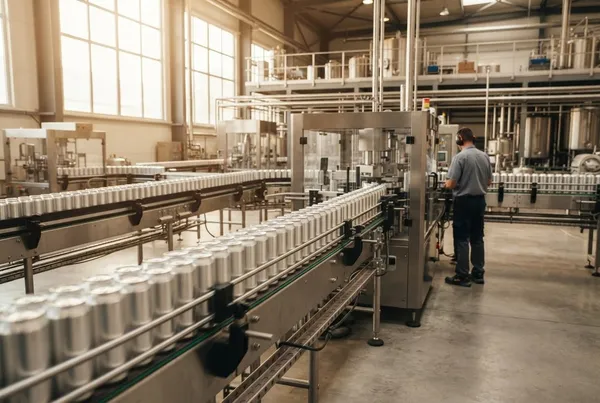
Local Canning Capacity and Africa's Growing Beverage Market – Why Producers Are Investing in Their Own Lines
Across Africa, beverage producers are making a strategic shift: instead of relying on imported finished cans or outsourced filling, they are bringing canning operations in-house. This move is driven by rising consumer demand, supply chain vulnerabilities, and the long-term economics of local production.
Africa's beverage market is expanding across nearly every category. Non-alcoholic drinks, beer, energy drinks, and functional beverages are all seeing sustained growth, driven by rapid urbanization, a predominantly young population, and rising disposable incomes. Canned formats are well positioned to capture a meaningful share of this growth. Cans are lightweight, stackable, and shelf-stable – attributes that align with the needs of modern trade retailers, informal kiosks, and distribution networks operating across varied infrastructure conditions.
The Import Dependency Problem
Beverage producers wanting to use canned formats have generally had two options: import finished cans from overseas suppliers, or rely on a small number of regional can manufacturers. Both approaches carry significant cost and supply risk. Imported cans and aluminium coil are priced in global commodity markets and paid for in hard currency. When local currencies weaken against the dollar or euro – a common occurrence across many African markets – the landed cost of imported packaging rises sharply. Freight costs, port delays, and import duties compound the problem. Industry experience in markets such as South Africa and Angola shows these factors can push the effective cost of aluminium cans above global benchmarks, even before accounting for local logistics. A disruption at an overseas plant or a port bottleneck can also halt production at a filling facility with no alternative source of supply.
Why Producers Are Investing in Their Own Lines
The response from a growing number of producers has been to invest in integrated canning capacity – owning not just the filling line but the seaming, labeling, and packaging equipment that makes a complete operation. Bringing these processes in-house reduces exposure to imported packaging costs, gives producers direct control over scheduling, and allows faster responses to demand changes.
Modern canning machines are available in a range of throughput configurations, meaning producers do not need to commit to large-scale capacity from the outset. Smaller and mid-sized operations can start with lines suited to their current volumes and expand as the market develops. A producer that controls its own line can also experiment with new formats or limited-edition runs without negotiating minimum order quantities with an external supplier – flexibility that has real commercial value where consumer preferences are evolving quickly.
Operational Challenges That Cannot Be Ignored
Unreliable electricity is one of the most consistently cited constraints on manufacturing in Africa. Load-shedding and grid instability disrupt production schedules, damage sensitive equipment, and force producers to run backup generators, adding fuel and maintenance costs. Producers need to budget for backup power infrastructure accordingly.
Running a canning line effectively also requires trained technicians who understand both the mechanical and quality-control aspects of the operation. In many African markets the pool of workers with direct experience on canning equipment is limited, making investment in training and supplier support relationships essential. Long lead times on imported spare parts can turn a minor fault into a prolonged stoppage, so holding strategic spares inventory is a practical necessity. Local canning capacity should be treated as one component of a wider supply chain strategy: poor road infrastructure and cold-chain weaknesses can still limit how effectively finished products reach consumers, particularly in secondary cities and rural areas.
Conclusion
Africa's beverage market is growing across categories and geographies. The shift toward local canning capacity reflects a mature commercial response: producers are reducing vulnerability to imported packaging costs, gaining operational flexibility, and positioning themselves to serve a consumer base that increasingly expects packaged, shelf-stable drinks. The operational challenges require deliberate planning, but they are manageable. For producers serious about competing in African markets over the long term, investing in local canning infrastructure is becoming less of a strategic option and more of a competitive necessity.




.jpg?width=1600)