Published: November 11, 2026
Key Facts
- Sonatrach is Africa's biggest oil and gas producer. It produced about 3,890 thousand barrels of oil equivalent a day in 2025, more than the next three producers combined at 3,085. The figure comes from Sonatrach's reported primary production of 193.7 million tonnes of oil equivalent, converted at the standard rate of 7.33 barrels per tonne.
- Libya's National Oil Corporation is second at about 1,613 thousand barrels of oil equivalent a day, on a marketed gas basis. Its crude oil alone averaged 1.374 million barrels a day in 2025, the highest in a decade. Counting gross gas instead would lift the total to about 1,837.
- Eni is the biggest international producer in Africa, at 871 thousand barrels of oil equivalent a day. Egypt is its largest African country, at 242. Eni produces about 45 percent more in Africa than TotalEnergies, its nearest international rival, at 601.
- Nigeria is still Africa's biggest oil producing country, at roughly 1.6 million barrels of crude and condensate a day in 2025. But its own company, NNPC, ranks only fifth, at about 312 thousand barrels a day of oil from its upstream arm, NEPL. NNPC's joint venture shares are counted under its partners in this ranking.
- The figures overlap and cannot be added together. National oil companies report their country's total output, which includes volumes their international partners also report. The ten reported volumes add to about 8,391 thousand barrels a day, but the same barrels appear in more than one company's total. The Methodology explains the basis for every row.
| Rank | Company | Type and home base | Production in Africa, 2025 (thousand barrels of oil equivalent per day) | Main African countries |
|---|---|---|---|---|
| 1 | Sonatrach | State company, Algeria | ~3,890 | Algeria |
| 2 | National Oil Corporation (NOC) | State company, Libya | ~1,613 | Libya |
| 3 | Eni | Listed, Italy | 871 | Egypt, Libya, Algeria, Angola, Congo, Mozambique, Nigeria, Ghana, Cote d'Ivoire |
| 4 | TotalEnergies | Listed, France | 601 | Nigeria, Angola, Libya, Algeria, Congo, Gabon, Egypt |
| 5 | NNPC | State company, Nigeria | ~312 | Nigeria (oil only, NEPL) |
| 6 | Perenco | Private, France and UK | ~282 | Gabon, Cameroon, Congo, DR Congo, Chad |
| 7 | Chevron | Listed, USA | 229 | Nigeria, Angola, Equatorial Guinea |
| 8 | Sonangol | State company, Angola | 217 | Angola |
| 9 | bp | Listed, UK | ~215 | Egypt, Angola, Mauritania, Senegal |
| 10 | ExxonMobil | Listed, USA | ~161 | Angola, Nigeria, Mozambique |
Sonatrach alone produces more than the next three companies combined, and more than twelve times NNPC. For the same companies ranked by money rather than barrels, see our ranking of Africa's biggest companies by revenue, where Sonatrach also leads. For the country view, see our ranking of Africa's top oil producing countries.
1. Sonatrach
Sonatrach is Algeria's state oil and gas company, and it is Africa's biggest producer by a wide margin. Its primary hydrocarbon production reached 193.7 million tonnes of oil equivalent in 2025, which converts to about 3,890 thousand barrels of oil equivalent a day. Algeria's gas output hit a record 134.3 billion cubic metres in 2025. The Hassi R'Mel field, the largest gas field in Algeria, feeds pipelines and LNG terminals that supply Europe. Sonatrach's figure is effectively Algeria's national total, so it includes volumes produced with international partners.
2. National Oil Corporation (NOC), Libya
Libya's National Oil Corporation ranks second, at about 1,613 thousand barrels of oil equivalent a day on a marketed gas basis. Its crude oil averaged 1.374 million barrels a day in 2025, the highest in a decade, for a yearly total of 501 million barrels. Oil brought in about $21.9 billion in revenue. The NOC aims to reach 1.6 million barrels of crude a day by the end of 2026. The headline figure uses marketed gas of 11.7 billion cubic metres. Counting gross gas of 25.6 billion cubic metres instead would lift the total to about 1,837, but that would not change the rank.
3. Eni
Eni is the biggest international producer in Africa, at 871 thousand barrels of oil equivalent a day. The figure includes Eni's share of joint ventures. Counting only its fully consolidated subsidiaries, the figure is 726, which would still rank third. Egypt is Eni's largest African country at 242, followed by Libya at 162 and Algeria at 117. Eni also produces 106 in Angola through Azule Energy, its joint venture with bp. Africa accounts for just over half of Eni's worldwide production of 1,728 thousand barrels a day.
4. TotalEnergies
TotalEnergies ranks fourth in Africa, at 601 thousand barrels of oil equivalent a day. Nigeria is its largest African country at 188, followed by Angola at 156 and Libya at 113. Its production in sub-Saharan Africa fell from about 471 thousand barrels a day in 2023 to 431 in 2025. Africa accounts for about 24 percent of the group's worldwide production of 2,529 thousand barrels a day. New projects in Uganda and Mozambique should lift the African figure in the years ahead.
5. NNPC
NNPC ranks fifth, at about 312 thousand barrels of oil a day. The figure covers NNPC Exploration and Production Limited, known as NEPL, the company's flagship upstream arm. NEPL averaged 312 thousand barrels a day in 2025, up from 203 thousand in 2023, and hit a record 355 thousand on December 1, 2025, its highest since 1989. The figure is oil only. It does not include gas, and it does not include NNPC's shares in joint ventures, which are counted under its partners in this ranking. No consolidated NNPC equity figure is published. Nigeria as a whole produced roughly 1.6 million barrels of crude and condensate a day in 2025.
6. Perenco
Perenco is a private Franco-British independent, and it ranks sixth at about 282 thousand barrels of oil equivalent a day. It produces 94 in Gabon, 86 in Cameroon, 69 in Congo, 19 in DR Congo and 14 in Chad. Perenco is the leading operator in Cameroon. One company cited figure puts its Cameroon output at 90 thousand barrels a day rather than 86, and another puts its Congo output at 72.5 thousand rather than 69. Using both higher figures would lift the total to about 290. Either way, the rank does not change. A new LNG terminal at Cap Lopez in Gabon is due to start in 2026.
7. Chevron
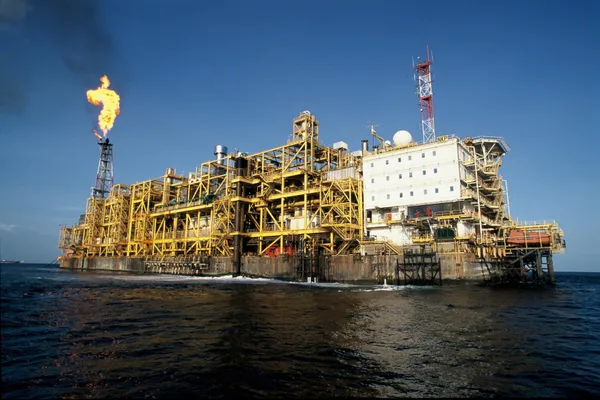
Chevron ranks seventh in Africa, at 229 thousand barrels of oil equivalent a day. Nigeria provides 134, Angola 58 and Equatorial Guinea 37. Chevron operates the Benguela-Belize platform off Angola, one of the largest offshore structures in the world. Africa accounts for about 6 percent of Chevron's worldwide production of 3.7 million barrels a day. Chevron sold its Congo assets, so Congo no longer appears in its African total.
8. Sonangol
Sonangol, Angola's state oil company, ranks eighth at 217 thousand barrels of oil equivalent a day. That is Sonangol's own production from stakes in 35 concessions, not Angola's national total of about 1.04 million barrels a day. Sonangol posted a net profit of $946 million in 2025, its final audited figure. More than half of that profit came from equity stakes outside its core oil business, including Angola LNG, the Portuguese bank Millennium BCP and the energy company Galp.
9. bp
bp ranks ninth at about 215 thousand barrels of oil equivalent a day. The figure is derived from bp's own annual report country tables, because bp does not publish an Africa total. Egypt provides about 101 and Angola about 95, through Azule Energy. Mauritania adds about 10 and Senegal about 8, after gas started flowing from the Greater Tortue Ahmeyim field in 2025. bp's Egypt gas fell sharply after the Arcius joint venture was formed in 2024. Sonangol is only 2 thousand barrels a day ahead of bp, so the two are effectively tied.
10. ExxonMobil
ExxonMobil ranks tenth at about 161 thousand barrels of oil equivalent a day. Its African production is 142 thousand barrels a day of liquids plus about 19 thousand from gas. Most of it comes from deepwater Angola and Nigeria, plus the Coral South floating LNG plant in Mozambique. The figure is down sharply from about 234 in 2024, after ExxonMobil sold its onshore Nigeria business. Equinor is close behind at 150, so the tenth place is not a wide margin.
Frequently Asked Questions
Which company is the largest oil and gas producer in Africa in 2026?
Sonatrach of Algeria, at about 3,890 thousand barrels of oil equivalent a day in 2025. That is more than the next three producers combined. Libya's National Oil Corporation is second at about 1,613.
Why is NNPC only fifth when Nigeria is Africa's biggest oil producer?
Nigeria produced roughly 1.6 million barrels of crude and condensate a day in 2025, but most of that oil is produced by joint ventures between NNPC and international companies. This ranking counts each joint venture share under the partner that reports it. NNPC's own upstream arm, NEPL, averaged 312 thousand barrels a day of oil in 2025. No consolidated NNPC equity figure is published, so the ranking uses the NEPL figure and says so.
Can the top 10 figures be added together to get Africa's total production?
No. The same barrels appear in more than one company's total. National oil companies report their country's total output, which includes volumes produced by international partners in joint ventures. Joint venture partners each report their own share of the same field. Azule Energy's Angolan volumes, for example, are counted by both Eni and bp at 50 percent each. The ranking compares reported company volumes, not distinct barrels.
What is a barrel of oil equivalent?
It is a unit that puts oil and gas on the same scale. One barrel of oil equivalent is the energy in one barrel of oil. Gas is converted at roughly 6,000 cubic feet per barrel, so 6 billion cubic feet of gas a day equals about 1 million barrels of oil equivalent a day. Companies use slightly different conversion factors, and this article states the factor used for each derived figure.
Which big producers just missed the top 10?
Equinor is eleventh at 150 thousand barrels a day, only 11 behind ExxonMobil. Shell is next at about 103, after selling its onshore Nigeria business in March 2025 cut its African volumes. Egypt's EGPC is reported at about 85, but the scope of that figure is unclear. Congo's SNPC publishes no company production total at all, so it cannot be ranked.
Data Sources
- Ecofin Agency, Algeria's gas output hit record high in 2025, November 7, 2026, reporting Sonatrach's annual report. Primary source for Sonatrach's 193.7 million tonnes of oil equivalent and record gas output of 134.3 billion cubic metres.
- Madar, Algeria: record gas output of 134.3 billion cubic metres in 2025, November 7, 2026, reporting Sonatrach's annual report. Second source for the Sonatrach figures.
- National Oil Corporation of Libya, NOC achieves highest average crude oil production in a decade, January 1, 2026. Primary source for Libya's 1.374 million barrels a day of crude and 501 million barrels for 2025.
- MEED, Libyan oil production hits 10-year high, January 6, 2026. Second source for the Libya crude figures and the $21.9 billion revenue.
- Eni Annual Report 2025, Exploration and Production. Primary source for Eni's Africa production by region and country, and group production of 1,728 thousand barrels a day.
- Eni, results for the third quarter and nine months of 2025, October 24, 2025. Corroborates Eni's regional production basis.
- TotalEnergies, Universal Registration Document 2025. Primary source for TotalEnergies' production by country and region, and group production of 2,529 thousand barrels a day.
- Ecofin Agency, Four African countries key to TotalEnergies' production outlook through 2035, September 29, 2026. Confirms TotalEnergies' sub-Saharan Africa production of 431 thousand barrels a day in 2025 from the filed annual report.
- NNPC Limited, NNPC E and P Limited hits record 355,000 bpd production, December 9, 2025. Primary source for NEPL's average of 312 thousand barrels a day in 2025 and the record of 355 thousand.
- Punch, NNPC hits 36-year oil production record at 355,000bpd, December 9, 2025. Second source for the NEPL figures.
- EnergyNews.pro, Perenco boosts Congo oil output by 6,000 barrels per day, May 13, 2026. Primary source for Perenco's country breakdown in 2025.
- Offshore Engineer, Congo offshore drilling campaign lifts Perenco's production, May 6, 2026. Second source for Perenco's Congo figure of 72.5 thousand barrels a day.
- Chevron, Form 10-K 2025. Primary source for Chevron's Africa production by country.
- Chevron, 2025 Annual Report Supplement. Second source for Chevron's Africa production.
- Businessfront, Angola's Sonangol declares $750 million profit in 2025 as oil output rises. Primary source for Sonangol's production of 217 thousand barrels of oil equivalent a day.
- 360 Angola, Sonangol joins Africa's billion-dollar club, citing Mercado. Second source for Sonangol's 217 thousand barrels a day and the final audited profit of $946 million.
- bp, Annual Report and Form 20-F 2025, pages 301 to 396. Primary source for bp's Africa production, derived from the country tables.
- ExxonMobil, Form 10-K 2025. Primary source for ExxonMobil's Africa liquids and gas production.
Methodology
The ranking uses hydrocarbon production in Africa, in thousand barrels of oil equivalent per day, for 2025, the latest full year reported by every company in the table. The as of date is stated in the standfirst, the Key Facts and here. Gas is converted to oil equivalent at 6,000 cubic feet per barrel unless a company's own factor is stated. Sonatrach's figure is a conversion, not a published daily rate: 193.7 million tonnes of oil equivalent times 7.33 barrels per tonne, divided by 365 days, gives about 3,890 thousand barrels a day.
Companies report on different bases, and the article does not hide that. The international majors report net entitlement or sales volumes, including their share of equity accounted joint ventures. The national oil companies report gross national totals. Sonatrach's total is effectively Algeria's national output. Libya's NOC total is Libya's national output. The two totals include volumes that international partners also report. Joint venture partners each report their own share of the same field. Azule Energy in Angola is counted by both Eni and bp at 50 percent each. The figures therefore overlap and cannot be added together, and no market shares should be inferred from them.
Libya's headline figure uses marketed gas of 11.7 billion cubic metres a year, about 189 thousand barrels a day, because that matches the sales basis of the international majors. Counting gross gas of 25.6 billion cubic metres would give about 413 thousand barrels a day of gas and a total of about 1,837. The rank is the same on either basis. Eni's headline figure of 871 includes its share of equity accounted entities. Counting only consolidated subsidiaries gives 726, which would still rank third. bp's figure of about 215 and Shell's figure of about 103 are derived from the companies' own annual report country tables, dividing yearly volumes by 365 days, and both cross check exactly against the companies' reported group totals. ExxonMobil's figure is from its 10-K, corroborated by third quarter press coverage. Perenco's country breakdown sums to 282, but two company cited country figures are higher, which would give about 290. The rank does not change.
NNPC's figure is the average daily oil output of NNPC Exploration and Production Limited, its flagship upstream subsidiary, at 312 thousand barrels a day in 2025. It is oil only. NNPC's joint venture shares are counted under its partners. No consolidated NNPC equity production figure is published. NNPC has claimed national crude and condensate output averaged 1.77 million barrels a day in 2025, but the regulator's data totals 554.4 million barrels for the year, about 1.52 million a day, and Energy Intelligence puts crude and condensate at 1.66 million a day. The article does not use the 1.77 million figure. It states Nigeria's national output as roughly 1.6 million barrels a day.
Sonangol and bp are effectively tied at 217 and about 215 thousand barrels a day, a gap of 2 thousand, or under 1 percent. ExxonMobil leads Equinor by only 11 thousand barrels a day. The article states both gaps. Congo's SNPC is excluded because it publishes no company production total. Egypt's EGPC is excluded from the top 10 because its reported figure of about 85 thousand barrels a day has an unclear scope and could not be verified to the two source standard. All derived claims in this article, including totals, shares, averages and multiples, were recomputed from the final table values before publication.