Published: October 7, 2026
Key Facts
- Sudan has Africa's highest inflation rate in 2026 at a projected 75.1% — more than triple the rate of second-placed Malawi (24.4%), according to the IMF's World Economic Outlook.
- All 2026 figures in this ranking are projections, not final results. The latest full country-level IMF data vintage is the April 2026 WEO; the October 2026 update released on October 6 contains no new country tables.
- Sudan's true rate is highly contested: official statistics put July 2026 annual inflation above 41%, while a foreign-exchange-market-based measure hit 114.2% in September 2026. The IMF's 75.1% sits between the two.
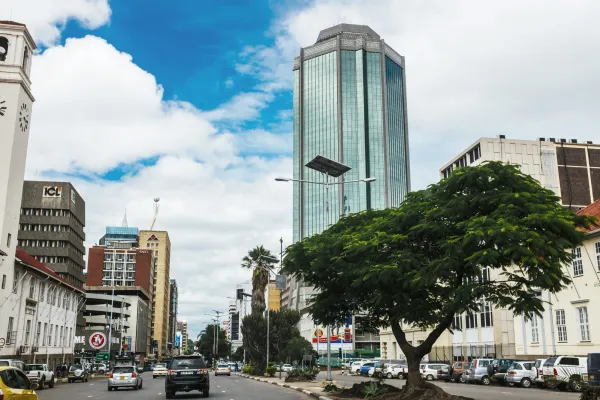
- Zimbabwe — the continent's former hyperinflation poster child — does not make this list. Its rebased ZiG-based inflation is projected at just 8.0% in 2026, with actual inflation at 3.7% in September 2026.
- Two big economies are running against their projections: Angola is disinflating faster than expected (8.8% in August 2026), while Ethiopia is running hotter (15.1% in August on the Middle East oil shock).
| Rank | Country | 2026 inflation (annual %) | Source & date |
|---|---|---|---|
| 1 | Sudan | 75.1 | IMF WEO Apr 2026 (projection) |
| 2 | Malawi | 24.4 | IMF WEO Apr 2026 (projection) |
| 3 | Nigeria | 16.0 | IMF WEO Apr 2026 (projection) |
| 4 | Burundi | 14.5 | IMF WEO Apr 2026 (projection) |
| 5 | South Sudan | 14.0 | IMF WEO Apr 2026 (projection) |
| 6 | Egypt | 13.2 | IMF WEO Apr 2026 (projection) |
| 7 | Angola | 12.9 | IMF WEO Apr 2026 (projection) |
| 8 | Ethiopia | 11.8 | IMF WEO Apr 2026 (projection) |
| 9 | Libya | 10.5 | IMF WEO Apr 2026 (projection) |
| 10 | São Tomé & Príncipe | 9.6 | IMF WEO Apr 2026 (projection) |
The ten countries on this list average nearly 22% projected inflation for 2026 — against a sub-Saharan Africa average of roughly 5.5% — and the top five are all dealing with war, currency collapse, or both.
Selected Details
1. Sudan
75.1% projected (2026 annual average). More than three years of civil war have destroyed Sudan's economy, collapsing the pound and driving the population toward crisis. The government's official measure put annual inflation above 41% in July 2026, down from 51% in June, with a pledge to get it below 60% by year-end — but foreign-exchange-market-based estimates run far higher.
2. Malawi
24.4% projected (2026 annual average). Malawi's kwacha has been under persistent pressure from a chronic foreign-exchange shortage, and imported fuel and food prices keep feeding through to consumers. The Reserve Bank of Malawi's own monetary policy committee projected 22.0% for 2026 in August, with second-quarter actuals at 22.9%.
3. Nigeria
16.0% projected (2026 annual average). Africa's largest economy is finally seeing inflation cool after the naira reforms and fuel-subsidy removal of the past two years: headline inflation fell to 15.39% year-on-year in August 2026 as food-price surges slowed. A January 2025 rebasing of the consumer price index mechanically lowered the measured rate, so year-on-year comparisons now rest on a new base.
4. Burundi
14.5% projected (2026 annual average). Burundi is one of the continent's clearest disinflation stories: annual inflation fell from 45% in April 2025 to 8.6% in April 2026, according to the IMF's 2026 Article IV review. The 14.5% full-year projection reflects the higher readings early in the period, and the 2025 annual average was 34.1%.
5. South Sudan
14.0% projected (2026 annual average). Oil pipeline disruptions and recurring conflict shocks keep South Sudan's economy — and its pound — fragile. The figure should be read with caution: data collection in the country is patchy, and black-market exchange rates often tell a harsher story than official inflation statistics.
6. Egypt
13.2% projected (2026 annual average). Egypt's IMF-backed reform programme has brought inflation down from the mid-30s of 2024: headline inflation eased to 12.7% year-on-year in August 2026, according to the state statistics agency CAPMAS. The path is still hostage to energy-price adjustments under the loan programme.
7. Angola
12.9% projected (2026 annual average). Angola is disinflating faster than the IMF expected: annual inflation fell to 8.78% in August 2026, and the central bank cut its benchmark rate again in September while forecasting 8.6% for year-end. If that pace holds, the full-year average will come in below the 12.9% projection.
8. Ethiopia
11.8% projected (2026 annual average). Ethiopia is running hotter than projected: consumer prices rose 15.1% year-on-year in August 2026, partly on the Middle East oil shock feeding into transport and food costs. If the August pace persists, Ethiopia's full-year average could overtake Egypt's on a realized basis.
9. Libya
10.5% projected (2026 annual average). Libya's divided institutions and heavy reliance on food imports keep price pressures elevated, with recent monthly year-on-year readings ranging roughly from 9% to 12.4%. As ever, the oil-funded dinar regime keeps official inflation far below what the war economy feels like on the street.
10. São Tomé & Príncipe
9.6% projected (2026 annual average). The tiny island nation imports nearly everything it consumes, so global shipping and food prices feed almost directly into the CPI. An IMF staff review in December 2025 put the 2026 projection slightly higher at 11.0%, reflecting that pass-through risk.
Frequently Asked Questions
Which African country has the highest inflation rate in 2026?
Sudan, at a projected 75.1% annual average consumer price inflation, according to the IMF's April 2026 World Economic Outlook — more than triple second-placed Malawi's 24.4%. The true rate is disputed: official statistics say just over 41% in July 2026, while foreign-exchange-market-based estimates exceed 114%.
Are these inflation figures actuals or projections?
All 2026 figures are projections, because full-year 2026 data does not exist yet. They come from the IMF's April 2026 WEO, the latest full country-level vintage available; the October 2026 update released on October 6 contains no new country tables. Where actual monthly data exists for 2026, it is cited alongside the projection.
Why is Zimbabwe not on the list?
Zimbabwe rebased its consumer price index around the gold-backed ZiG currency, and inflation has collapsed by historical standards: the IMF projects 8.0% for 2026, with actual year-on-year inflation at 3.7% in September 2026 and the Reserve Bank expecting below 7% by year-end. It no longer ranks among Africa's worst cases.
Why do Nigeria's and Angola's numbers look better than the headlines suggest?
Nigeria rebased its CPI in January 2025, which mechanically reset measured inflation lower — the 16.0% projection is on the new base. Angola is genuinely disinflating: actual August 2026 inflation was 8.78%, well below the IMF's 12.9% full-year projection, and the central bank expects 8.6% by year-end.
Which countries just missed the top 10?
Zambia was the nearest miss: the IMF projected 9.0% for 2026, but actual August 2026 inflation was only 6.2%. Sierra Leone (7.5% projected), Ghana (5.8%), the Democratic Republic of Congo (3.3%) and the Central African Republic (1.5%) all fell well short of the cut-off.
Data Sources
- IMF World Economic Outlook, April 2026 — "Inflation rate, average consumer prices (annual percent change)", via the IMF DataMapper API — imf.org
- Reserve Bank of Malawi, Monetary Policy Committee statement (August 6, 2026) — 22.0% 2026 projection — rbm.mw
- National Bureau of Statistics (Nigeria), via The Axiom Daily — headline inflation 15.39% y/y, August 2026 — theaxiomdaily.com
- IMF 2026 Article IV consultation on Burundi, via DMarketForces — inflation 8.6% in April 2026, down from 45% a year earlier — dmarketforces.com
- UK Government trade and investment factsheet for South Sudan (IMF-sourced, June 2026) — gov.uk
- CAPMAS via Business Monthly Egypt — headline inflation 12.7% y/y, August 2026 — businessmonthlyeg.com
- Reuters — Angola central bank rate cut, inflation at 8.78% y/y, September 2026 — reuters.com
- Ethiopian Monitor — consumer prices up 15.1% y/y, August 2026 — ethiopianmonitor.com
- Trading Economics via TradingView — Libya year-on-year inflation readings — tradingview.com
- IMF staff report on São Tomé & Príncipe, December 2025 (ECF review) — elibrary.imf.org
- Al-Siasi — Sudan annual inflation above 41% in July 2026 — english.alsiasi.com
- AInvest — Hanke's FX-market-based Sudan measure at 114.2%/yr, September 2026 — ainvest.com
Methodology
The ranking metric is the IMF's "Inflation rate, average consumer prices (annual percent change)" — the standard headline measure — from the April 2026 World Economic Outlook, retrieved via the IMF DataMapper API on October 7, 2026. Every 2026 figure is a projection: the full-year 2026 vintage does not exist yet, and the October 2026 WEO update released on October 6, 2026 contained no new country-level tables, so April 2026 is the latest consistent vintage. Where credible monthly actuals for 2026 exist (Nigeria, Egypt, Angola, Ethiopia), they are cited as context alongside the projection. Sudan's projection carries unusual uncertainty because of the civil war: official statistics and market-implied measures diverge widely, which is flagged in the entry and in Key Facts. Zimbabwe is ranked by the IMF's 2026 projection for its rebased ZiG CPI (8.0%), which excludes it from the top 10. Countries with IMF projections below 9.6% were excluded; near-misses are listed in the FAQ.