Table of Contents
1. Russia's Africa Corps kills eight civilians in strike on Malian village
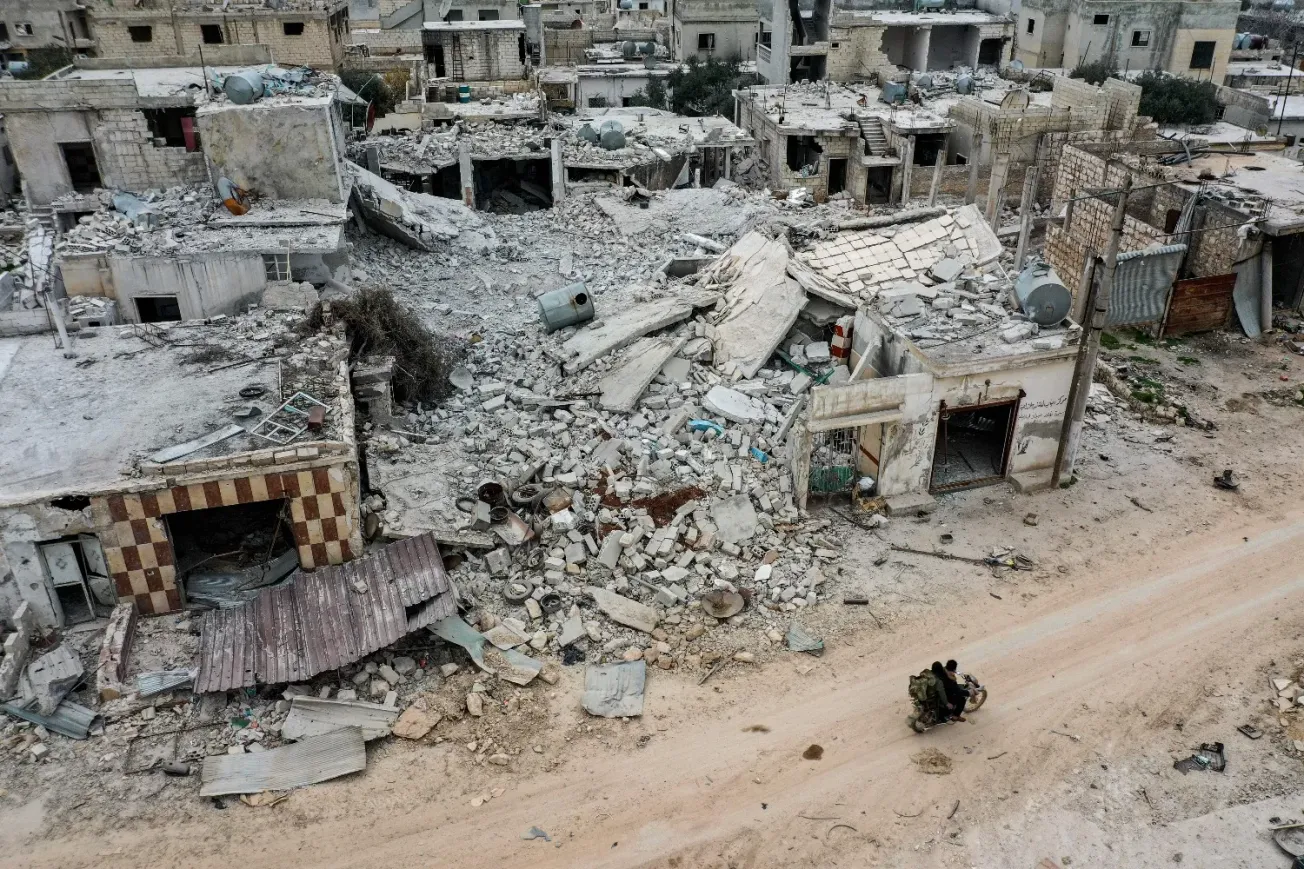
Moscow-controlled Africa Corps aircraft dropped at least two munitions on the central Malian village of Kyrnia, killing eight civilians including three children. Witnesses confirmed a Sukhoi Su-24 fighter jet launched airstrikes hitting near the village chief's compound and a crowded cattle market.
Why it matters: The strike highlights how the Malian military junta’s total reliance on Russian mercenaries is deepening civilian harm without delivering battlefield control. Moscow's Africa Corps operates with near-total impunity across the Sahel, alienating rural populations and providing jihadist recruiters like JNIM with fertile ground for local mobilization.
Source: Human Rights Watch / Africanews
2. Mali faces escalating offensive as JNIM and northern rebels press joint operations
A major coordinated campaign launched across Mali by the Azawad Liberation Front and al-Qaeda affiliate JNIM has brought regional capitals like Kidal, Gao, and Mopti under heavy pressure, forcing Malian state forces and Russian paramilitary units into retreat.
Why it matters: The simultaneous offensives by separatist Tuareg rebels and Islamist militants demonstrate that the Alliance of Sahel States defense pact lacks the structural capacity to secure territory. As central governance collapses in northern and central Mali, the conflict is increasingly bleeding over borders into coastal West Africa.
Source: Africanews / Amnesty International
3. South Sudan president fires central bank governor amid deepening economic collapse
President Salva Kiir dismissed Bank of South Sudan Governor Johnny Ohisa on July 29, abruptly replacing him with former deputy governor Addis Ababa Othow without providing an official explanation. The sudden leadership shakeup occurs as South Sudan battles runaway inflation, severe local currency shortages, and mounting public anger over unpaid civil service wages stretching across several months.
Why it matters: Kiir’s repeated recycling of central bank leadership underscores an administration attempting to shift blame for structural macroeconomic failures. Without transparent management of oil revenues and comprehensive fiscal reforms, monetary policy reshuffles will fail to stem the currency's collapse or stave off election-year unrest.
Source: Radio Tamazuj / Africanews
4. Ghana’s government endorses constitutional amendment extending presidential terms to five years
Ghana’s Attorney-General Dr. Dominic Ayine announced on July 29 that the cabinet officially accepted constitutional review recommendations to lengthen presidential and parliamentary terms from four to five years. The government argues that four-year cycles severely restrict effective governance, as executive transitions and election campaigns consume two full years of every administration.
Why it matters: While extended terms offer administrative continuity for long-term infrastructure and macroeconomic policy, altering constitutional term boundaries creates significant political friction. Securing the high thresholds needed for a successful referendum will test bipartisan consensus in one of West Africa's most resilient democracies.
Source: ConstitutionNet / Africanews
5. Spain deploys military to Ceuta after thousands breach Moroccan enclave border
Spain ordered army units to its North African exclave of Ceuta on July 30 after thousands of migrants, primarily Moroccans and Algerians, breached coastal border infrastructure by swimming around breakwaters. Local officials declared a state of absolute chaos and demanded a national emergency declaration as reception centers collapsed under the influx, which resulted in at least nine drowned fatalities.
Why it matters: The sudden migration surge exposes the fragility of European border enforcement agreements that rely on transit nations like Morocco. Madrid’s reliance on military deployment underlines how North African migration corridors are increasingly politicized leverage points in Euro-African bilateral relations.
Source: Africanews / Associated Press via Manila Times
6. WFP warns food crisis severely sabotages eastern DRC Ebola response
The World Food Programme issued an urgent funding appeal, warning that severe food insecurity is directly weakening efforts to control the fastest-growing Ebola outbreak on record in the Democratic Republic of Congo. Over 3,200 confirmed cases of the Bundibugyo Ebola species have spread across five eastern provinces, with nearly 60 percent of deaths occurring unmonitored in local communities.
Why it matters: Containment strategies that ignore basic humanitarian survival needs inevitably fail. The convergence of acute hunger and viral epidemics in conflict zones demonstrates that global public health security depends directly on emergency food infrastructure, not just medical interventions.
Source: UN News / Global Issues
7. Ugandan opposition leader Kizza Besigye in intensive care after court collapse
Veteran Ugandan opposition politician Kizza Besigye was rushed to Mulago National Referral Hospital's intensive care unit after collapsing unconscious in a Kampala courtroom during his ongoing treason trial. His wife, UNAIDS Executive Director Winnie Byanyima, stated that the 70-year-old leader remains completely unresponsive following months of detention since November 2024.
Why it matters: The deteriorating health of Uganda’s longest-standing opposition icon heightens domestic political instability as President Yoweri Museveni cements his four-decade rule. Besigye’s critical state in custody puts immense international pressure on Kampala over its legal treatment of political dissidents.
Source: The Star Kenya / The Namibian
8. AI-generated map blunder mislabels African nations at U.S. presentation during global AIDS summit
A U.S. State Department presentation delivered by PEPFAR officials at the AIDS 2026 Conference in Rio de Janeiro caused international embarrassment when an AI-generated map severely mislabeled multiple African nations. The graphic, which bore an OpenAI watermark, depicted Nigeria as a landlocked Saharan state and misplaced Mozambique to the Horn of Africa.
Why it matters: Beyond basic diplomatic embarrassment, the incident illustrates diplomatic carelessness and the uncritical reliance of Western institutions on generative AI tools for official communications. In global health governance, such basic geographic ignorance damages institutional trust among key African partner states.
Source: Africanews / Reuters via Nasha Niva
9. Burkina Faso media watchdog hits French broadcaster Canal+ with $350,000 fine
Burkina Faso's Higher Council for Communication levied a 200 million CFA franc ($350,000) fine on French pay-TV operator Canal+ on July 29, accusing it of refusing to grant free access to state television channels.
Why it matters: The financial penalty reflects the junta's broader strategy of asserting total sovereignty over national information spaces. By squeezing foreign satellite operators, the Burkinabe regime aims to ensure unhindered public consumption of state narrative, even as Western news operations are progressively banned.
Source: Vanguard Nigeria / Broadcast Media Africa
10. Scientists uncover 210-million-year-old dinosaur species in northern Zimbabwe
Paleontologists announced on July 29 the discovery of Musango matusadonaensis, a newly identified 210-million-year-old dinosaur excavated along Lake Kariba in northern Zimbabwe. Weighing roughly 222 kilograms, the Late Triassic sauropodomorph provides critical insights into early dinosaur diversification and territorial expansion across distinct southern African ecosystems.
Why it matters: Beyond its paleontological significance, the discovery highlights the expanding research capacity and strategic value of southern African fossil beds. It underscores the region's pivotal evolutionary role during the Late Triassic period, boosting domestic institutional heritage and scientific tourism potential.
Source: AFP via Dawn / Africanews
Africa Today is The African Exponent's daily briefing on the continent as it is. Summaries are written by our editors. Click through to the original sources for full reporting.