Table of Contents
1. ECOWAS keeps the eco currency on course for 2027
The ECOWAS Authority of Heads of State and Government committed again to launching the single currency in 2027, in a communiqué issued after the 69th ordinary session held at Lungi in Sierra Leone on July 19. Leaders abandoned the requirement that all member states meet the convergence criteria at once, so the eco will start with countries that qualify while the rest get support to join later. The bloc also registered the name with the African Intellectual Property Organisation and told its commission to secure trademark protection elsewhere. Officials say the future central bank, voting rules and the first cohort remain unsettled, with a task force meeting due before the December summit.
Why it matters: A phased launch is how ECOWAS keeps a 2027 date it has already missed twice, and trademarking the name before agreeing who issues the money says something about where the work has actually been done. Any first wave built around Nigeria and Ghana ties smaller economies to the naira and the cedi, both of which have moved violently in recent years. The awkward fact nobody at Lungi resolved is that Mali, Burkina Faso and Niger left the bloc yet still share the CFA franc through UEMOA, which makes a clean West African monetary map impossible.
Source: Vanguard / Leadership / Financial Afrik
2. Global Witness says First Quantum bankrolled Zambia's ruling party
The London-based watchdog published an investigation alleging that First Quantum Minerals and its associates ran a covert influence campaign over Zambian politics for close to two decades, became the largest funder of President Hakainde Hichilema's United Party for National Development, and offered up to $50 million toward the 2026 campaign. The report puts tax breaks the company received since 2021 at $771 million and links the operation to the Oppenheimer-funded Brenthurst Foundation. First Quantum denies funding the party in the past or promising money now, and Global Witness makes no allegation of corruption. Zambia votes on August 13.
Why it matters: Copper pays Zambia's bills, and a report claiming the country's biggest miner also picks its president lands three weeks before a vote the ruling party is already accused of engineering through Bill No. 7. The state-owned Daily Mail attacked the report before anyone could read it, which is its own kind of evidence about how much the findings sting. For every African government courting critical-minerals capital, the uncomfortable question is what the investor expects in return once the mine is built.
Source: Global Witness / Billionaires Africa / Lusaka Times
3. A Luanda court jails two Russians for espionage and terrorism
An Angolan court sentenced political consultant Igor Ratchin to 11 years and translator Lev Lakshtanov to eight years on charges running from espionage to terrorism, in a verdict delivered this week. Prosecutors said the pair worked for Africa Politology, a network they trace to the remains of the Wagner Group, and paid Angolans more than $24,000 to spread pro-Russian material and stage protests. The two said they came to open a Russian cultural centre. Angolan journalist Amor Carlos Tomé received a two-year suspended sentence, and activist Francisco Oliveira was acquitted.
Why it matters: Angola has spent years drifting from Moscow toward Washington, and a criminal conviction for Russian operatives is the sharpest signal yet of where Luanda now sits. Rival African governments have absorbed the same influence playbook without prosecuting anyone, so this verdict gives them a template if they want one. The acquittal of one Angolan defendant and the suspended sentence for the other suggest the court aimed at the foreign network rather than the local opposition, which is the detail Angolan critics of the trial dispute.
Source: Kyiv Post / Africanews / Xtra Africa
4. Washington weighs military strikes against JNIM in Mali
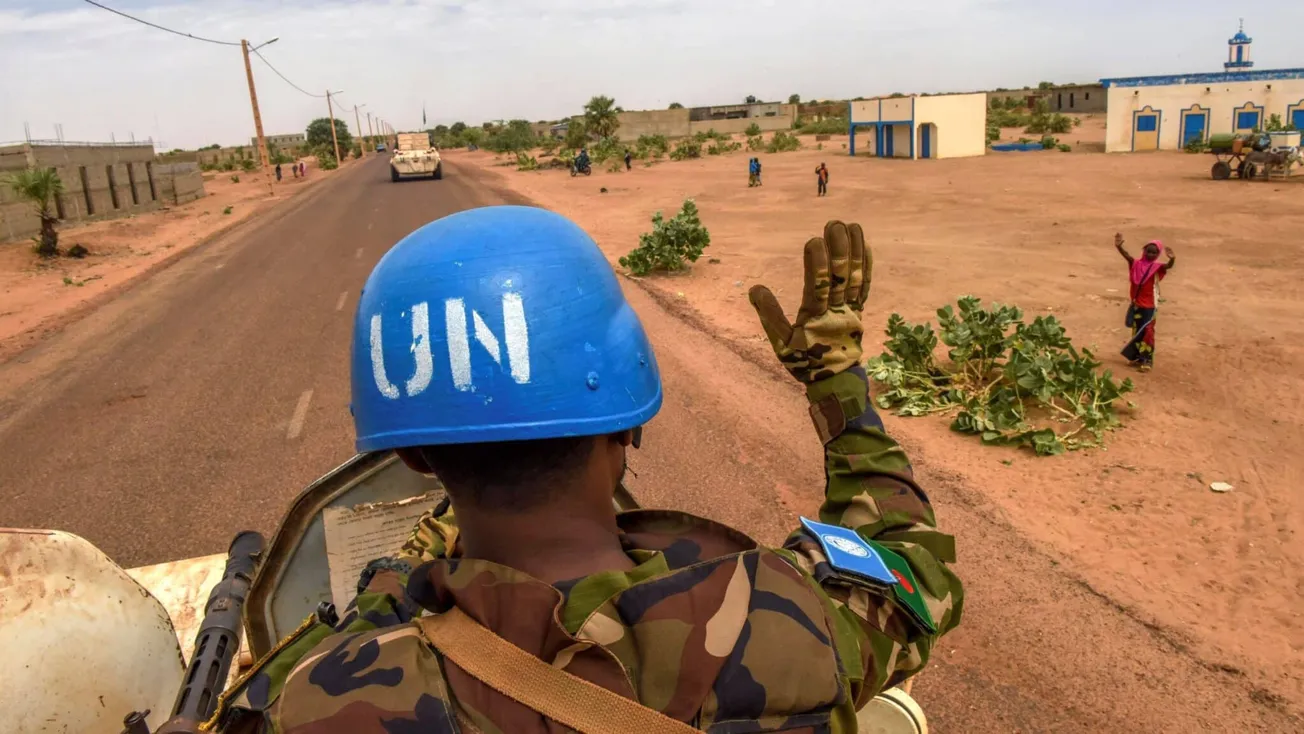
Current and former United States officials told the Washington Post on July 22 that the Trump administration is considering military action in Mali against the al-Qaeda-linked group Jama'at Nusrat al-Islam wal-Muslimin. Officials are divided, with National Security Council counterterrorism director Sebastian Gorka pushing for force. Mali would become the eighth country where Trump has ordered strikes this term, after Yemen, Somalia, Syria, Iran, Iraq, Nigeria and Venezuela. One former official said Washington has spent the past year seeking overflight rights over Malian territory.
Why it matters: Bamako threw out the French and hired Russians, so American strikes would mean flying combat missions over a country whose government Washington does not deal with and whose skies Russian Africa Corps fighters already use. That raises the same deconfliction problem the United States faced in Syria, only without a friendly host to smooth it over. Sahel analysts warn that hitting JNIM invites retaliation against Americans and Western interests across coastal West Africa, which is exactly where the group has been expanding.
Source: Washington Post / The Hill / NewsNation
5. Traoré warns rivals inside his own junta
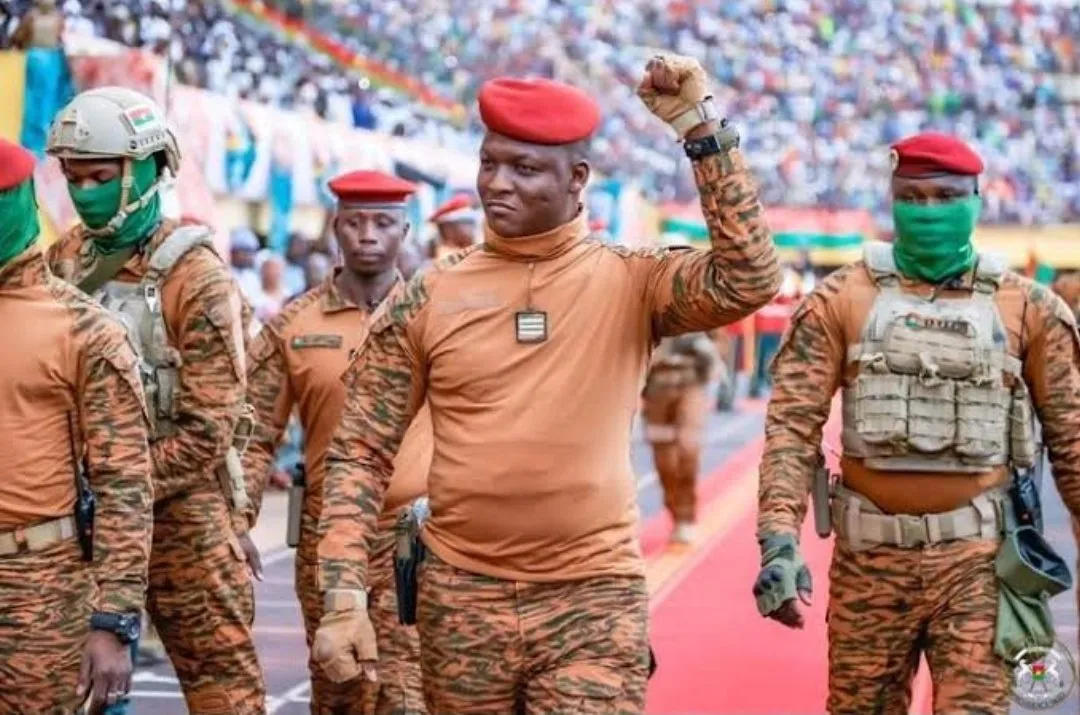
Burkina Faso's military leader Ibrahim Traoré told community leaders in Ouahigouya that there cannot be two captains on one ship, warning that he would take down anyone who crossed him. The 38-year-old captain spoke as rumours of infighting spread, driven by the disappearance from public view since May of his second-in-command Oumarou Yabré, who runs the National Intelligence Agency, and third-in-command Farouk Azaria Sorgho. Security officials say Yabré stopped going to his office and lost most of his home security detail, while Sorgho's associates allege he was seized by people close to Traoré. Ouagadougou has reopened long-closed roads to divert traffic away from the presidential palace and set up new checkpoints.
Why it matters: Traoré has survived a run of alleged plots since 2022, and the checkpoints going up around his palace tell you he expects the next threat from inside the building rather than the bush. A junta consumed by its own succession fights fewer insurgents, which is the opening JNIM has exploited across the Sahel. Watch Yabré, since an intelligence chief who has vanished from official ceremonies either resurfaces with a title or does not resurface at all.
Source: Vanguard / Taipei Times / West Africa Weekly
6. African leaders adopt a health declaration in Accra as donor money dries up
The African Union Assembly of Heads of State and Government met in Accra yesterday, the second day of an extraordinary session hosted by President John Mahama, to adopt a declaration accelerating the AU Roadmap to 2030 on universal health coverage, AIDS, tuberculosis and maternal mortality. AU health commissioner Amma Twum-Amoah told delegates that Africa cannot build durable health systems on external assistance that keeps shrinking, and pressed governments to protect health budgets and raise domestic revenue. Tanzania's Samia Suluhu Hassan led a side event on maternal and child survival.
Why it matters: Calling an extraordinary summit on health financing is what happens when the American and European money that funded African clinics for two decades disappears at once. Declarations are cheap, so the test is whether finance ministers, who attended this one, actually move the line items when budgets are drafted. Local pharmaceutical manufacturing is the piece worth tracking, because a continent that imports nearly all its medicines cannot ration its way out of the next outbreak.
Source: Graphic Online / Ghanaian Times / African Union
7. Ebola deaths pass 1,000 across Congo and Uganda
The World Health Organization said on July 22 that the outbreak declared in May has now killed more than 1,000 people, with 2,473 confirmed cases and 999 deaths in the Democratic Republic of Congo and 20 cases including two deaths in Uganda. Congo's health ministry reported 737 patients in isolation, and Ituri province accounts for 2,202 cases and 838 deaths. Uganda discharged its last patient on July 16 and began the 42-day countdown to declaring itself free of the virus. The Bundibugyo strain driving the outbreak has no approved vaccine or treatment, and WHO incident manager Thierno Balde said the response is still catching up.
Why it matters: This outbreak passed 1,000 cases in 40 days against 235 days for the 2018 North Kivu epidemic, a pace that has less to do with the virus than with fighting armed groups, unpaid medics and a health system that cannot pay its own staff. Trials for two antivirals and a vaccine are the only real hope, and they are starting after the deaths rather than before. Uganda's clean run of three weeks shows containment works where the state functions, which is precisely what eastern Congo lacks.
Source: Channels Television / Al Jazeera / ECDC
8. Kenya's lawyers boycott the courts over judicial corruption
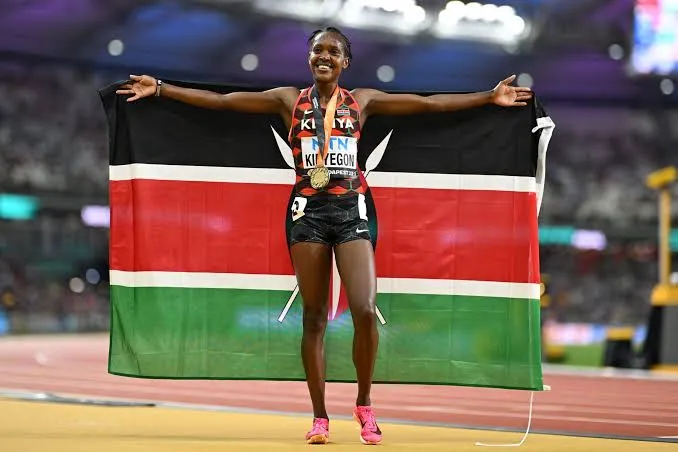
Advocates across Kenya stayed out of hearings on July 22 in a one-day boycott called by the Law Society of Kenya, which accuses the judiciary of failing to act on corruption, misconduct and chronic delays. Society president Charles Kanjama said the tipping point came when judges obtained court orders blocking the Judicial Service Commission and the Ethics and Anti-Corruption Commission from investigating them. The society is now pursuing an indefinite boycott of specific judges, with Chief Justice Martha Koome among those named. The judiciary rejected the action and kept courts open, and the anti-corruption commission arrested a magistrate over an alleged bribe on the same day.
Why it matters: Judges using court orders to shield themselves from investigation is a neat trick that works exactly once, because it converts a complaint about individuals into a case against the institution. Kenya votes next year, and every disputed election since 2013 has landed at the Supreme Court, so a bar association declaring the bench compromised is laying groundwork nobody will be able to ignore in 2027. The arrest of a magistrate on boycott day gave the lawyers their argument in a single news cycle.
Source: The Star / Daily Nation / Capital FM
9. Mauritius criminalizes marital rape
Mauritian lawmakers voted on July 21 to make marital rape a crime, ending a colonial-era exemption, with sentences of 10 to 45 years for those convicted. The law states that marriage, civil or religious, provides no defence to a rape charge, and it sets sentences of 10 years to life for murder or attempted murder of a spouse. Attorney General Gavin Glover told parliament the government treats domestic violence as a serious offence rather than a private matter. Official records show women make up 86.6 percent of victims, and the vote follows the Domestic Abuse Bill passed on July 10.
Why it matters: Only 21 of Africa's 55 states explicitly criminalize marital rape, so Mauritius has just moved the continental benchmark and given campaigners elsewhere a statute to point at. The wording matters as much as the sentence, because closing the marriage defence removes the argument prosecutors across the region keep losing on. Enforcement is where these laws usually die, and Mauritian advocates are already saying the police and courts need training more than parliament needed another vote.
10. Kenyan men who carry their mothers' names push back on the mockery
A growing number of Kenyan men, particularly among the Kikuyu, use their mothers' names as surnames, and several have gone public about the ridicule that follows. Broadcaster Evans Kibe Waceke says people assume a man raised by a single mother lacks discipline, and TV personality Fred Mũitĩrĩri dropped his mother's name after years of embarrassment, saying he became depressed at 23. Musician Peter Kĩgia, now in his sixties, built a career as Kĩgia wa Esther and registered his label as Wa Esther Productions, and MP John Njũgũna Wanjikũ campaigns as Ka-Wanjikũ. The late novelist Ngũgĩ wa Thiong'o was known in childhood as Ngũgĩ wa Wanjikũ.
Why it matters: A naming convention is a ledger of who actually raised the children, and the stigma attaches to the son rather than the absent father, which tells you who the culture still protects. Politicians now campaign on these names, so what began as a mark of shame has become a claim to authenticity with voters who recognise the arrangement from their own families. Nothing in Kenyan law compels a father's surname, which means this shift needs no legislation, only enough men willing to absorb the jokes.
Source: Capital FM / The Star / MyJoyOnline
Africa Today is The African Exponent's daily briefing on the continent as it is. Summaries are written by our editors. Click through to the original sources for full reporting.