Table of Contents
In Summary
- Military power in Africa in 2026 reflects long-term investment, not short-term spending.
- Strategic geography and defense policy consistency shape real strength more than size alone.
- Global rankings reveal a widening structural gap between top-tier and mid-tier forces.
Lagos, Nigeria, Tuesday, January 28, 2026 - Military power is not defined only by the number of soldiers a country has or the weapons it owns. It is a combination of structure, organization, funding systems, training standards, technological capacity, logistics, geographic positioning, and long-term defense planning. In global assessments, military strength is measured through layered indicators that include air power, land forces, naval capacity, manpower availability, industrial support, defense budgets, and strategic mobility. These elements together determine how effectively a country can defend itself, project influence, and respond to internal and external security threats.
In Africa, military strength in 2026 reflects decades of policy decisions, security priorities, and geopolitical positioning rather than sudden expansions. Some states have built power through structured modernization programs, while others have strengthened their forces through strategic alliances, counterterrorism demands, internal stability operations, and regional security leadership roles. Global military rankings and power indexes now provide standardized methods for comparing these forces using consistent metrics, allowing clearer comparisons across countries and continents.
This ranking presents the Top 10 African countries with the most powerful militaries in 2026, based on their official power index scores and global positions. The analysis moves from the lowest-ranked to the highest-ranked country, explaining what structurally supports each military’s strength, how their defense systems function, and what observable trends shape their future capacity. Each country is examined individually, with focus on policy direction, institutional structure, strategic relevance, and long-term defense positioning within Africa and the global security system.
10. Tunisia
Tunisia’s placement at the lower end of Africa’s top ten military powers in 2026 is not a reflection of weakness, but of strategic orientation and defense doctrine. With a power index score of 1.7823 and a 79th global ranking, Tunisia’s armed forces are structured primarily around internal security, counterterrorism, and territorial stability, rather than regional dominance or external military projection. Its military model is defensive by design, prioritizing control, intelligence, and stability over force size and heavy weapon accumulation.
A major driver of Tunisia’s military development has been border security pressure, especially following prolonged instability in neighboring Libya and persistent security risks along the Algerian frontier. Since the mid-2010s, Tunisia has expanded border surveillance systems, ground troop deployment density, and counter-infiltration infrastructure, including fortified border zones, electronic monitoring systems, and joint military–security task coordination. These reforms shifted Tunisia’s defense posture toward permanent operational readiness rather than episodic mobilization.
Institutionally, Tunisia’s armed forces are built around professional training systems, centralized command control, and inter-agency security integration. The military operates in close coordination with national security agencies, intelligence services, and internal policing structures. This creates a layered defense model where military power functions as part of a broader state security architecture. While this limits external projection capability, it significantly strengthens internal operational efficiency and territorial control capacity.
From a structural standpoint, Tunisia’s force composition is deliberately balanced rather than expansive. Investment has focused on logistics systems, troop mobility, intelligence processing, and tactical ground operations instead of large-scale naval fleets or long-range air power platforms. This explains its lower power index score relative to larger African militaries while still maintaining a position within the continental top ten.
Looking forward, Tunisia’s military trajectory remains defensive and stability-focused. Observable trends point toward continued upgrades in surveillance technology, border monitoring systems, cyber defense coordination, and intelligence infrastructure rather than heavy weapons expansion. Its position in Africa’s 2026 military hierarchy reflects a country that has built power through institutional stability, security integration, and operational efficiency, not force volume placing it firmly within the top tier structurally, but lower in continental ranking due to limited force projection capacity.
9. Sudan
Sudan’s military ranking in 2026 is the result of historical force accumulation, prolonged internal security operations, and state-centered militarization, rather than structured modernization alone. With a power index score of 1.3563 and a 66th global ranking, Sudan’s armed forces derive their strength from long-standing institutional presence in governance, territorial control operations, and sustained military deployment across multiple regions. Unlike countries that build power through modernization programs, Sudan’s military strength has been shaped by continuous operational engagement.
A key factor behind Sudan’s position is the scale and permanence of its armed forces within national governance structures. For decades, the military has functioned not only as a defense institution but as a central political and security authority. This has led to sustained state investment in troop capacity, internal deployment infrastructure, and logistics networks. Government security frameworks historically prioritized territorial control, regime stability, and internal order, resulting in consistent funding flows to military institutions even during economic instability.
Operationally, Sudan’s military strength has been built through constant domestic deployments, which have expanded command experience, logistics coordination, and battlefield management capacity. Continuous internal security operations across different regions forced the development of transport networks, supply chain systems, and field coordination mechanisms that strengthened structural military capability. This operational depth contributes significantly to Sudan’s power index score, as sustained deployment builds institutional military capacity beyond equipment counts.
Government policy has played a central role in shaping this structure. Defense planning frameworks in Sudan have traditionally prioritized security dominance over civilian institutional development, embedding the military deeply into national power systems. Military institutions have controlled strategic infrastructure, security administration, and territorial governance functions, giving the armed forces structural authority and logistical reach that many African militaries do not possess.
From a force composition perspective, Sudan’s military emphasizes land-based operational strength, troop deployment density, and territorial coverage rather than air or naval dominance. Investment has historically focused on manpower systems, ground force sustainability, and internal logistics rather than advanced air platforms or naval expansion. This explains its moderate global ranking while maintaining a strong continental position.
Looking ahead, Sudan’s military trajectory remains shaped by state security centralization and institutional continuity. Observable patterns indicate continued prioritization of territorial control, internal security infrastructure, and military logistics capacity rather than modernization through high-tech systems. Its 2026 ranking reflects a power structure built through state militarization, continuous deployment, and institutional authority, rather than modernization-led defense development.
8. Democratic Republic of Congo (DRC)
The Democratic Republic of Congo’s military position in 2026 is shaped by territorial scale, sustained security operations, and structural militarization of internal governance rather than advanced modernization. With a power index score of 1.3051 and a 64th global ranking, the DRC’s armed forces derive strength primarily from force size, geographic coverage, and continuous operational deployment across one of Africa’s largest and most complex territorial environments.
Geography is a central driver of the DRC’s military structure. As one of the largest countries in Africa by landmass, the state faces permanent security pressure across multiple borders and internal regions. This has required the government to maintain extensive troop deployment systems, regional command structures, and decentralized military administration. Defense policy has therefore focused on territorial presence rather than centralized force concentration, producing a military built for coverage and endurance rather than high-tech precision warfare.
Government implementation has centered on security-sector reform programs aimed at restructuring military command, improving internal coordination, and strengthening operational discipline. While modernization remains uneven, state policy has consistently prioritized force stabilization, command integration, and regional deployment capacity. Military reforms have focused on improving unit organization, logistics flow, and chain-of-command reliability rather than large-scale weapons acquisition.
Operational experience plays a major role in the DRC’s ranking. Continuous internal security operations across eastern and central regions have created a military force with deep field experience, logistics adaptation systems, and sustained mobilization capacity. These deployments have forced the development of transport networks, supply systems, and field command structures that increase institutional military capacity, even in the absence of advanced equipment.
Structurally, the DRC’s military power is manpower-driven, not technology-driven. Investment has emphasized troop sustainability, ground operations, and territorial security management. Air and naval capabilities remain secondary to land-force dominance, reflecting the country’s internal security priorities and geographic realities.
Looking forward, the DRC’s military trajectory points toward continued focus on territorial control systems, internal stabilization frameworks, and structural consolidation rather than rapid modernization. Observable policy patterns indicate that defense planning will remain centered on internal security governance, logistics strengthening, and command integration. Its 2026 ranking reflects a military built through scale, endurance, and institutional deployment depth, not technological superiority.
7. Angola
Angola’s military position in 2026 is the product of post-war institutional rebuilding, long-term defense restructuring, and sustained government investment in force modernization. With a power index score of 1.1045 and a 59th global ranking, Angola’s armed forces have evolved from a war-based structure into a centralized, state-controlled military institution with growing regional security relevance. Its strength comes not from constant active conflict, but from deliberate reconstruction and modernization policies implemented over two decades.
A defining factor in Angola’s military development has been post–civil war defense reform. Following the end of its civil war, the Angolan government initiated structured programs to professionalize the armed forces, reduce irregular formations, and consolidate command structures. These reforms focused on force integration, standardized training systems, centralized logistics management, and institutional discipline, transforming fragmented wartime units into a unified national military system. This transition created a stable defense structure capable of long-term planning rather than emergency mobilization.
Government implementation has included consistent state investment in military infrastructure and equipment acquisition, particularly in air power, armored capabilities, and naval presence along the Atlantic coast. Angola has developed one of Southern Africa’s more structured air force systems, with emphasis on airlift capacity, surveillance aircraft, and transport logistics, allowing rapid troop movement and territorial monitoring. Its naval development has focused on coastal security, maritime patrol, and offshore infrastructure protection, especially linked to oil installations and shipping routes.
Angola’s military role has also expanded through regional security engagement and defense diplomacy. The country has participated in regional peacekeeping frameworks and security stabilization efforts, reinforcing its role as a security anchor in Central and Southern Africa. These engagements have strengthened command coordination, multinational operations capacity, and strategic planning depth, contributing directly to its continental ranking.
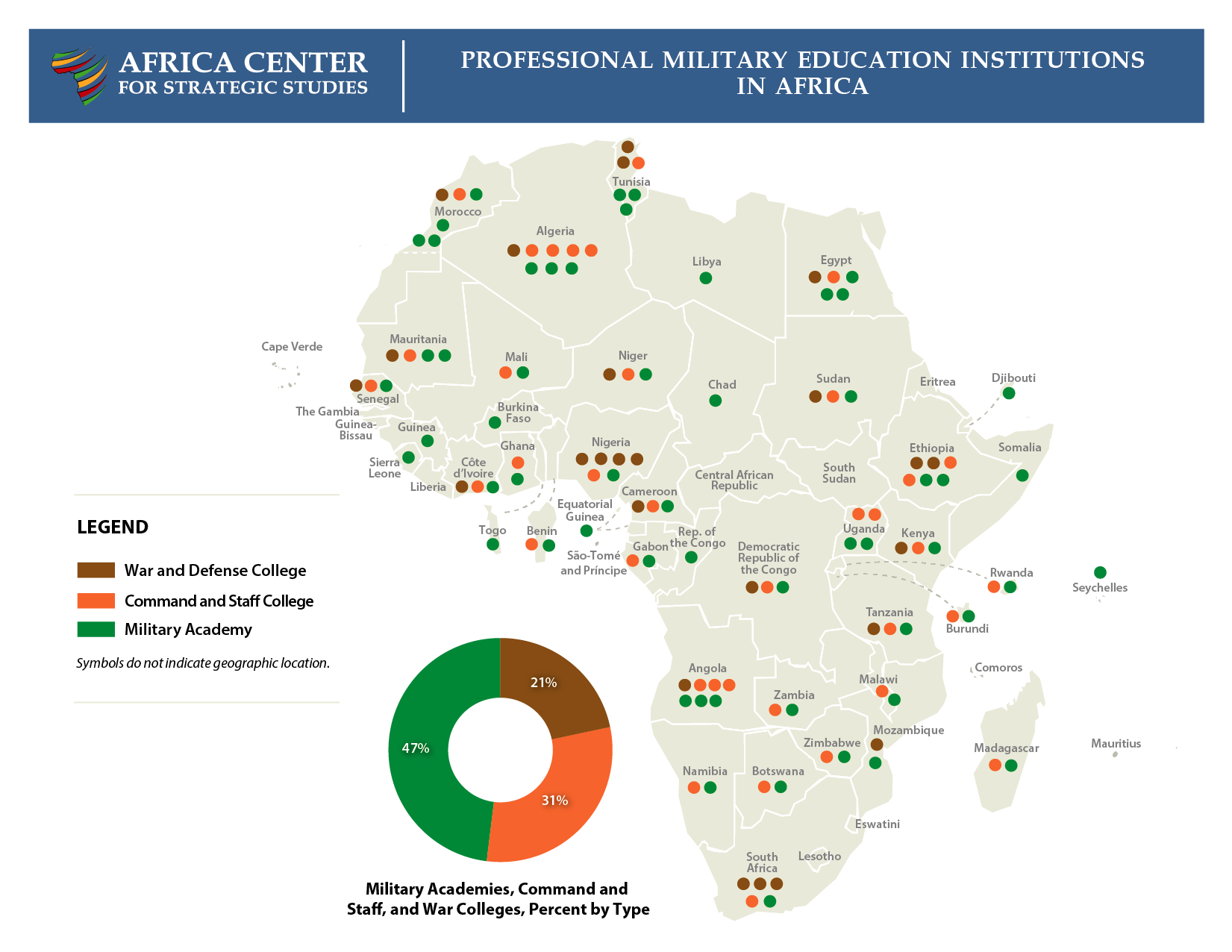
Structurally, Angola’s defense model is institution-driven rather than threat-reactive. Policy documents and defense planning frameworks emphasize force sustainability, infrastructure development, and long-term capacity building rather than short-term mobilization. Investment in military academies, officer training systems, and centralized logistics bases has strengthened institutional continuity and operational coherence.
Looking forward, Angola’s military trajectory shows continued emphasis on naval development, air mobility expansion, and regional security leadership. Observable government actions point to further investment in coastal security infrastructure, transport aviation, and defense logistics systems. Its 2026 ranking reflects a military power built through state reconstruction policy, modernization programs, and institutional consolidation, rather than reactive militarization.
6. Morocco
Morocco’s military ranking in 2026 is driven by long-term defense planning, structured modernization programs, and consistent government implementation of security policy rather than reactive militarization. With a power index score of 1.0368 and a 56th global ranking, Morocco’s armed forces represent one of Africa’s most institutionally organized and strategically managed military systems, built through deliberate policy continuity rather than crisis-driven expansion.
A central factor behind Morocco’s strength is its multi-decade modernization strategy. The Moroccan government has pursued phased military upgrades across land, air, and naval forces, focusing on force balance rather than dominance in a single domain. This includes structured investment in air force modernization, armored ground units, and naval expansion along both the Atlantic and Mediterranean coasts. Defense spending has been policy-guided, not episodic, creating steady institutional growth rather than irregular capacity spikes.
Government implementation has also prioritized military education and professional training systems. Morocco operates structured military academies and training institutions that produce standardized officer corps development and technical specialization. These systems support command discipline, operational coherence, and strategic planning capacity, which significantly strengthen institutional military effectiveness beyond equipment levels alone.
Strategically, Morocco’s geography has shaped its force development. Control of long coastlines, maritime trade routes, and strategic sea access points has driven naval investment in coastal patrol, maritime surveillance, and port security infrastructure. At the same time, land force development has focused on mobility, desert operations capability, and border security, reflecting long-term territorial defense planning rather than short-term threat response.
Morocco has also strengthened its military capacity through regional security cooperation and multinational military exercises, improving interoperability, command coordination, and joint operations capability. These engagements increase operational professionalism and technical competence across branches of the armed forces, reinforcing structural military strength.
Looking forward, Morocco’s defense trajectory points toward continued institutional modernization, digital systems integration, and strategic force balancing. Government defense frameworks show sustained commitment to structured upgrades rather than force expansion. Its 2026 ranking reflects a military built through policy continuity, professionalization, and long-term strategic planning, positioning Morocco as one of Africa’s most structurally advanced defense systems.
5. Ethiopia
Ethiopia’s military strength in 2026 is rooted in state-driven militarization, large-scale force mobilization, and long-standing integration of the armed forces into national governance structures. With a power index score of 0.8525 and a 47th global ranking, Ethiopia’s position is not the result of elite technological dominance, but of force size, mobilization capacity, and deep institutional embedding of the military within the state system. Its power comes from scale, organization, and state authority rather than modernization alone.
One of the most decisive factors behind Ethiopia’s ranking is its large standing force and reserve mobilization structure. Ethiopia maintains one of Africa’s largest active and reserve military populations, supported by compulsory service systems, regional command structures, and centralized federal defense coordination. This allows the government to rapidly expand operational capacity during periods of security pressure, giving Ethiopia a structural advantage in manpower-driven military power metrics used in global indexes.
Government policy has actively reinforced this structure. Defense frameworks have consistently treated the military as a core pillar of state stability and national unity, not just a defense institution. This has led to sustained public investment in military infrastructure, including training camps, regional command bases, logistics depots, transport corridors, and centralized supply systems. These are not symbolic investments they form the physical backbone of Ethiopia’s military operations and long-term deployment capacity.
Operational experience is another key driver. Ethiopia’s armed forces have engaged in long-term internal security operations and regional security missions, building deep field command experience, logistics coordination skills, and large-scale deployment management. These operations have required the development of supply chain systems, troop rotation frameworks, and command integration mechanisms, which strengthen institutional military capacity even without high-end equipment dominance.
Ethiopia has also invested heavily in military education and command training systems. Officer development programs, structured military academies, and centralized training institutions ensure leadership continuity and operational discipline. This professionalization supports long-term force sustainability and strategic coordination across different regions and command zones.
From a structural perspective, Ethiopia’s military power is land-force dominant. Defense investment prioritizes ground operations, troop sustainability, transport logistics, and territorial control rather than naval or advanced air projection. This reflects Ethiopia’s geography and security priorities, reinforcing a military model based on territorial authority and internal security management.
Looking forward, Ethiopia’s defense trajectory points toward continued emphasis on force sustainability, institutional consolidation, and mobilization infrastructure, rather than rapid high-tech modernization. Observable government actions show priority in logistics development, training systems, and command integration. Its 2026 ranking reflects a military built through scale, state policy alignment, and institutional continuity, making Ethiopia one of Africa’s most structurally powerful land-based military systems.
4. South Africa
South Africa’s military strength in 2026 reflects advanced technological investment, professionalized forces, and strategic regional influence, giving it a top-tier position in Africa despite a relatively smaller force size compared to Ethiopia or Nigeria. With a power index score of 0.6843 and a 40th global ranking, South Africa’s military is recognized for its balanced combination of well-trained personnel, modern equipment, and operational capability, making it one of the most technically capable militaries on the continent.
A key reason for South Africa’s ranking is its investment in modern military technology. Over the past two decades, government defense policy has prioritized upgrading air force combat aircraft, armored vehicles, naval vessels, and missile systems. Programs such as the acquisition of Gripen fighter jets, mechanized infantry vehicles, and advanced naval patrol vessels have given South Africa technological advantages that allow rapid, precise response and operational readiness beyond raw manpower size.
The South African government has also focused on professionalizing its military through structured education and training. Defense policies have established robust officer training programs, specialized technical schools, and leadership academies. These initiatives enhance command and control efficiency, operational discipline, and joint force coordination, ensuring that South Africa’s military power is amplified by skill and expertise rather than sheer numbers.
Operational engagement and regional influence are additional drivers. South Africa maintains a significant presence in regional peacekeeping operations, participates actively in African Union security initiatives, and conducts multinational exercises. These activities reinforce operational experience, logistics capacity, and multinational interoperability practical applications of military strength that contribute directly to its power index score.
Furthermore, South Africa benefits from defense industry integration. Government-backed military production facilities, including arms manufacturing, vehicle production, and maintenance infrastructure, create self-sufficiency and strategic readiness. This reduces reliance on external suppliers and ensures that equipment and logistical needs are met efficiently, reinforcing long-term military stability.
Looking ahead, South Africa’s military trajectory indicates continued technology-driven modernization, regional leadership roles, and professional force maintenance. Observable government policies show ongoing investment in air, naval, and mechanized capabilities, combined with officer development and strategic defense planning. Its 2026 ranking reflects a well-balanced, technologically advanced, and regionally influential military, making South Africa one of Africa’s most powerful and capable forces.
3. Nigeria
Nigeria’s military ranking in 2026 is driven by its large manpower, continuous internal security operations, and government-led modernization initiatives. With a power index score of 0.6097 and a 33rd global ranking, Nigeria’s armed forces are among the continent’s largest and most operationally active, reflecting decades of structural buildup, counterinsurgency experience, and strategic defense investment.
A major reason Nigeria ranks highly is its sheer size and manpower capacity. Nigeria maintains one of Africa’s largest active military forces, supplemented by reserve and paramilitary units. This large force allows for extensive internal and regional deployments, particularly in response to persistent security challenges such as insurgency in the northeast, militancy in the Niger Delta, and cross-border smuggling in the northwest. Government policies have supported troop expansion, structured training, and integration of specialized units to meet these security demands.
The Nigerian government has implemented targeted modernization programs in recent years. Investment has been made in armored vehicles, fighter aircraft, naval patrol vessels, and communication systems, improving operational effectiveness across land, air, and sea domains. These initiatives, combined with increasing defense budgets and local manufacturing partnerships, have strengthened Nigeria’s capacity to sustain large-scale operations and maintain force readiness.
Operational experience is another key factor. The Nigerian military has been engaged in continuous counterterrorism campaigns, peacekeeping missions, and anti-smuggling operations, providing real-world operational expertise that enhances command efficiency, logistics coordination, and strategic planning. These practical applications of military power directly contribute to Nigeria’s power index score, reflecting not just force size, but capability and deployment effectiveness.
Additionally, government policies have emphasized defense sector reforms and regional collaboration. Nigeria participates in multinational exercises and supports West African regional security initiatives, improving interoperability, intelligence sharing, and rapid response capacity. These strategic moves demonstrate a forward-looking approach to military development, enhancing structural power while maintaining large-scale operational capacity.
Looking forward, Nigeria’s military trajectory is expected to focus on sustaining modernization programs, enhancing rapid deployment logistics, and professionalizing specialized units. Its 2026 ranking reflects a military built through size, operational experience, targeted modernization, and government policy implementation, making Nigeria one of Africa’s most powerful militaries in both capacity and influence.
2. Algeria
Algeria’s military ranking in 2026 is the result of consistent government investment, long-term modernization programs, and strategic defense planning, positioning it as one of Africa’s most capable forces. With a power index score of 0.4849 and a 27th global ranking, Algeria combines advanced technological assets, large manpower, and extensive operational experience to maintain continental influence and secure its strategic borders.
A key factor behind Algeria’s rank is the government’s sustained defense budget allocation and modernization strategy. Since the 2000s, Algeria has systematically upgraded its military hardware, acquiring advanced fighter jets, missile systems, armored vehicles, and naval platforms. These investments reflect government policy focused on self-reliance, technological parity with regional powers, and readiness for both internal and external contingencies. Structured procurement plans ensure modernization is phased, sustainable, and integrated into existing force structures.
Government initiatives have also prioritized force professionalization and officer training. Algeria maintains several military academies and technical schools, producing a steady stream of trained officers, engineers, and technical specialists. These policies strengthen operational efficiency, improve command and control capabilities, and enhance joint-force coordination, which are critical to the military’s structural effectiveness and its high power index score.
Operationally, Algeria has leveraged its geography and internal security context to build combat experience and strategic depth. Longstanding challenges in the Sahel and border regions have driven continuous deployment, counterterrorism operations, and logistical exercises. These practical applications reinforce Algeria’s organizational capacity, rapid response capability, and territorial control, adding tangible strength beyond equipment numbers.
Furthermore, Algeria’s military benefits from regional security engagement and industrial support programs. Domestic arms production, defense industry development, and partnerships for maintenance and technical support have reduced dependence on foreign suppliers, enabling faster deployment cycles and sustainable operations. Policy-driven initiatives also emphasize strategic air and naval readiness, securing key trade routes, coastlines, and airspace.
Looking ahead, Algeria’s trajectory points toward continued modernization, regional leadership, and strategic operational readiness. Observable policies indicate further investment in high-tech systems, joint training exercises, and domestic industrial support. Its 2026 ranking reflects a military built through government-led modernization, structured defense policy, and operational efficiency, positioning Algeria as Africa’s second most powerful military.
1. Egypt
Egypt holds the top position in Africa’s military ranking for 2026 due to a combination of advanced modernization programs, sustained government policy implementation, strategic geographic positioning, and operational depth. With a power index score of 0.3651 and a 19th global ranking, Egypt’s armed forces are not only the largest on the continent in terms of equipment and personnel but also the most structured and technologically capable, reflecting decades of deliberate planning and state-backed defense investment.
A key reason for Egypt’s dominance is the government’s long-term modernization and procurement strategy. Since the early 2000s, Egypt has systematically upgraded its military across all branches. This includes modern fighter aircraft such as F-16s and Rafales, advanced tanks like the M1A1 Abrams, air defense systems, naval frigates and submarines, and precision missile capabilities. The government has combined direct purchases with local manufacturing partnerships, enabling domestic assembly, maintenance, and technical training. These efforts reflect a deliberate policy of self-reliance and technological parity with global military powers, giving Egypt both qualitative and quantitative advantages over other African nations.
Government policy has also heavily emphasized force professionalization and institutional efficiency. Military academies, specialized officer schools, and technical training institutes ensure that Egypt maintains a highly skilled officer corps, advanced technical specialists, and well-trained personnel across all branches. Programs for joint-force coordination, logistics integration, and command structure efficiency are routinely implemented, producing a military capable of complex operations across air, land, and sea simultaneously.
Operational experience reinforces Egypt’s ranking. The military has been actively involved in regional security operations, counterterrorism campaigns in Sinai, and multinational training exercises. These operations enhance real-world capacity, logistics efficiency, rapid deployment ability, and strategic readiness. The Egyptian Navy, in particular, has focused on Red Sea security, Suez Canal defense, and Mediterranean maritime operations, giving the country leverage over critical regional trade routes. On land, the army maintains highly mobile units capable of rapid border defense and internal stabilization missions.
Additionally, Egypt has invested in defense infrastructure and industrial self-sufficiency. Government-backed initiatives include arms production facilities, munitions factories, and maintenance depots that reduce reliance on external suppliers. Combined with centralized logistics systems, modern military bases, and strategic command centers, these policies allow Egypt to sustain long-term operations while maintaining readiness across multiple theaters.
Looking forward, Egypt’s military trajectory emphasizes continued modernization, regional strategic leadership, and technological self-reliance. Current government plans indicate further upgrades in drone technology, cyber defense, missile systems, and joint operational training. Its 2026 ranking reflects a military built through state-backed modernization programs, structured policy implementation, advanced technical capability, and operational depth, making Egypt Africa’s most powerful military by a significant margin.
Across Africa, military power in 2026 reflects a combination of force size, modernization, strategic policy, and operational experience rather than manpower alone. Countries like Egypt and Algeria lead due to decades of structured defense investment, advanced equipment acquisition, and professionalized forces, while Nigeria, South Africa, and Morocco pair large troop numbers with modernization programs and operational readiness. This aligns with the Top 10 African Countries by Active Military Manpower 2025, where manpower levels supported sustained operations, territorial control, and strategic depth. Looking forward, African militaries that continue to integrate manpower, technology, training, and logistical systems will maintain dominance, enhance regional stability, and shape the continent’s security architecture into 2026 and beyond.