

How the DRC is turning a $900 million education deficit into a major investment opportunity
The Kinshasa Declaration priced the shortfall. A $500m World Bank package is funding the first customers. Here's who gets paid.
Get deep market insights, data trends, and sector-specific analysis across African economies. From consumer behavior to macroeconomic forecasts, explore what drives growth across the continent.
The Kinshasa Declaration priced the shortfall. A $500m World Bank package is funding the first customers. Here's who gets paid.

Subscriber growth is no longer the key revenue driver for telecoms in Ethiopia. Mobile data is. Over 35 million voice-only users, a 15,000-tower deficit, and a regulator forcing infrastructure sharing, signal clear entry points.

Uganda cybersecurity is no longer a box-ticking exercise, so who captures the upside? As mobile money surges and internet banking users retreat over cyber fears, managed security, fraud analytics and mobile endpoint protection are the market to watch.

Uganda exported 8.78 million bags of coffee worth $2.38 billion in the year to April 2026. But the next chapter isn't about growing more beans — it's about roasting, branding, and processing at origin. Here's where the value, and the investable opportunities, now sit.

With 21.5% electrification and over 1,500 MW of unmet mining demand, DRC power investment is moving to mini-grids, provincial hydro and captive solar. A single-permit regime and a $37 billion Compact funding are redrawing where bankable returns sit.

Who is winning Kenya's fixed broadband race? Safaricom leads a market growing more than 40% a year, but challengers like Ahadi and Vilcom are taking a rising share of new growth. We break down the regulator's data on where durable value sits for investors.

Uganda's oil investment hit $1.96 billion in 2023 and oil projects now drive most FDI. As first oil nears in 2026, the real returns sit in logistics, insurance and supplier finance, not the crude. Here is where the money flows in the EACOP era.

Half of Kenya's banks already use AI — for credit, fraud and compliance, not chatbots. Here's why banking is the country's first scaled AI buyer, and why the next winners will sell governance, clean data and compute rather than flashy models.

Kenya imports about 70% of its medicines despite a presidential target to make half locally by 2026. A look at the trade gap, why local drug manufacturing lags, and where the real investment opportunities lie.

Stanford's 2026 AI Index reveals South Africa is one of just three countries where AI engineering skills are outpacing literacy. African investors should take note. (159 characters)
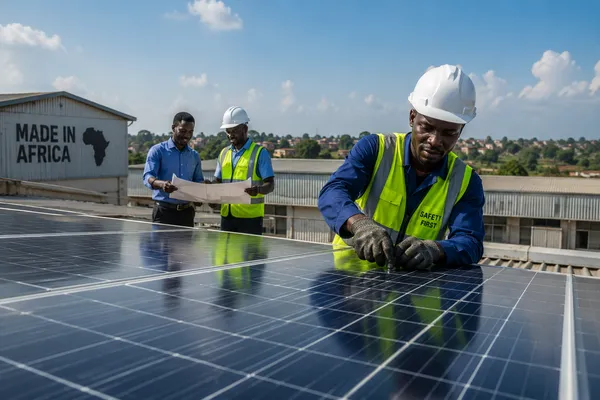
Africa imported 18.8 GW of solar panels in 2025, but only a fraction shows up in official data. The gap is a booming private C&I market where platform companies are quietly consolidating before investors catch on.

A small but maturing tribe of African companies has discovered who will pay for their dataset. The rest are still looking.

Kenya has proved that the daily payments of low-income solar customers can be securitised, underwritten by commercial banks, and repaid ahead of schedule. Nigeria, with the bigger market and the weaker currency, is the next test.

African digital publishing is fragmenting, not consolidating. As advertising wanes, publishers shrink or pivot, while capital drifts to data, events and niche services. Scale offers little refuge; survival now depends on specialisation.

Africa’s AI push is narrower than it appears. Deployment is concentrated in fintech and telecoms, where profits and data drive adoption. Healthcare lags, constrained by fragile funding. AI scales where it boosts revenue and where firms control the data needed to make it work.

Africa bears 26% of the global disease burden, yet produces just 3% of the world's medicines. With 95% of APIs imported, the $27.65B market is a mirage unless pharma manufacturers secure guaranteed demand and local chemical production.