Table of Contents
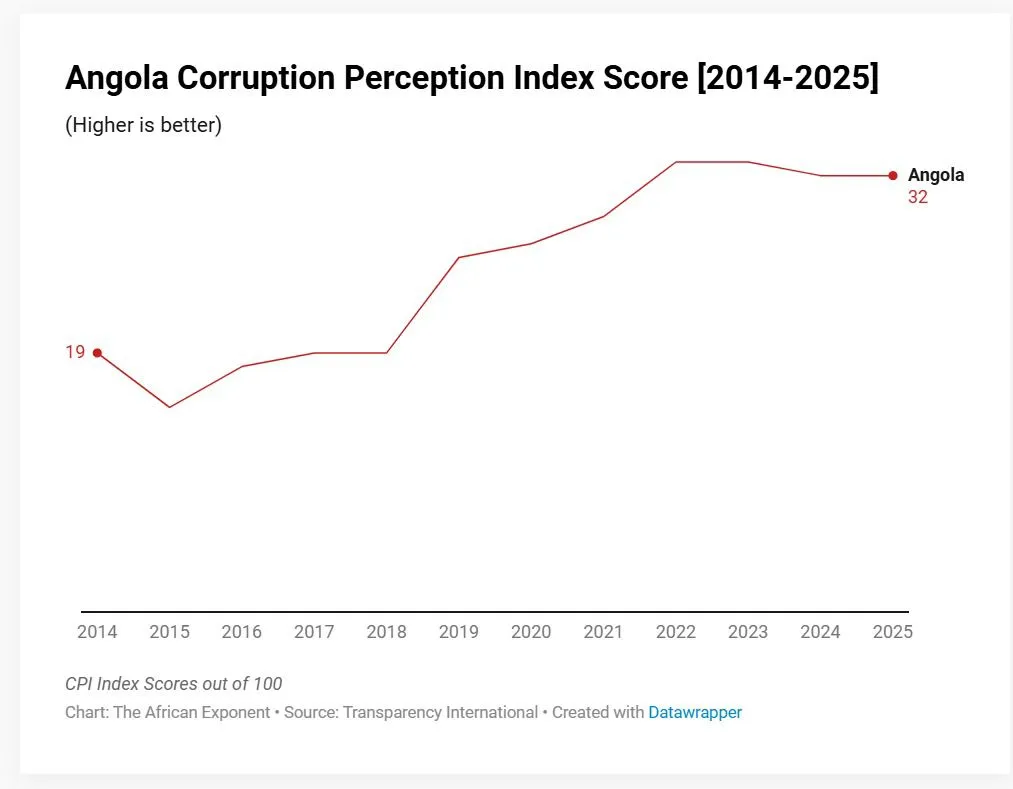
While sudden policy spikes often capture the headlines, Angola’s 2025 corruption perception index (CPI) score reveals a far more valuable commodity for the long-term investor: steady and sustained improvement. In resource-dependent economies, a "quick fix" is usually a political illusion. What the data shows in Luanda, however, is a steady, eleven-year grind that has seen the nation move from a basement-level score of 19 in 2014 to 32 today.
This slow but steady climb tracks almost exactly with the anti-corruption program launched by João Lourenço after he took office in 2017. For investors, Angola’s 13-point jump is a credible signal that the compliance environment is genuinely improving. It suggests that the old, hidden costs of starting a business—like bribes and confusing red tape—are slowly being replaced by clear rules.
Which Systemic Catalysts are Driving this 11-year Directional Shift?
This wasn't a lucky spike; the trajectory reflects the impact of three specific "green flags" for international capital:
- The dismantling of judicial immunity. The most visible signal to investors has been the end of absolute impunity. With over $5 billion in stolen assets recovered and prosecutions reaching formerly untouchable figures, the administration has demonstrated a legal system that can act independently of political connections. This directly translates to more reliable contract enforcement and a lower risk of losing assets to the state.
- Sanitizing the financial plumbing. A major barrier for global capital has historically been the lack of transparency in the Angolan banking sector. Recent years have seen the National Bank of Angola (BNA) gain significant independence, leading to the closure of banks that didn't follow the rules and the alignment of local standards with international anti-money laundering norms. This "cleaning of the pipes" is a requirement for any firm relying on international banking to move capital.
- Digitizing the extractive gateway. In an economy built on oil, the buying and selling process is the primary site of risk. Angola’s move toward global transparency standards Extractive Industries Transparency Initiative (EITI) and the digitization of oil block bidding has systematically removed the "human middleman" from the equation. By making the primary source of national wealth subject to international audit, the state has significantly lowered the opportunity for corruption in its most lucrative sector.
How Does this Trajectory Reshape the Regional Map for Institutional Risk?
The true value of Angola’s CPI score is found in its velocity rather than its absolute rank. While several established regional hubs have seen their scores plateau or even decline, Angola is one of the few large African economies with a consistent, decade-long upward trend.
This doesn't mean the market is without risk—a score of 32/100 still requires high-level due diligence. However, the persistence of the climb suggests that reforms are becoming the norm rather than being tied to a single election cycle.