Table of Contents
Here's what's happening, and why it matters way beyond Nigeria.
The biggest share sale in African history just went live
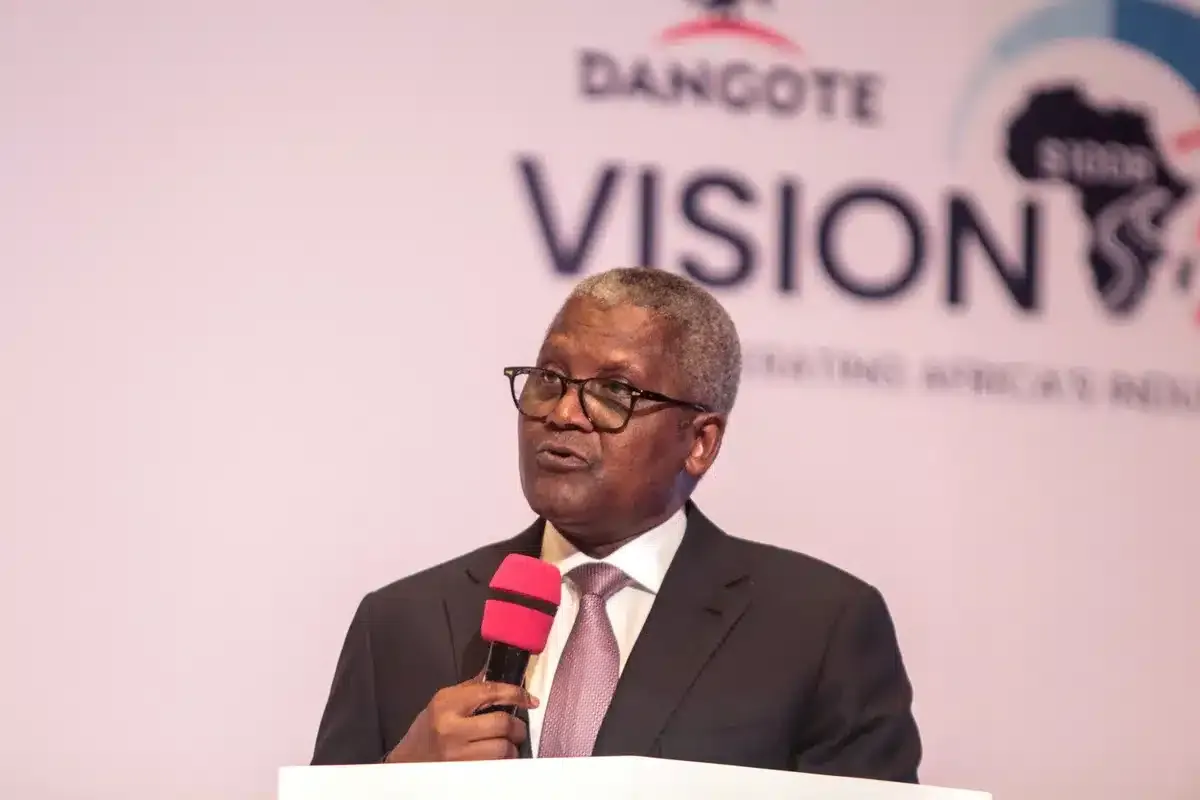
Aliko Dangote launched the initial public offering of his Dangote Petroleum Refinery and Petrochemicals on Monday, and the numbers are hard to wrap your head around. The company is selling 4.1 billion shares at 525 naira each, about 38 US cents a share. If every share sells, Dangote raises 2.15 trillion naira, roughly $1.6 billion, and that figure could climb to $2.1 billion if demand pushes the offer past its target.
The math values the entire refinery at somewhere between $47 billion and $49 billion. For context, that's more than the GDP of several African countries combined.
Anyone can buy in with as few as 10 shares, so technically you could own a piece of Africa's largest refinery for under 4 dollars. Dangote has leaned hard into that accessibility angle, telling reporters in Lagos that the goal is for every person living on the continent to be part of this. He's compared early investors to the people who bought Amazon or Microsoft stock decades before those companies became household names, and he's floated the idea that share prices could eventually climb nineteen times higher.
Why this refinery matters way beyond Nigeria
The Dangote refinery isn't just a Nigerian story. Built at a cost of roughly $20 billion outside Lagos, it started operations in 2024 and now processes 700,000 barrels of crude a day, more than Nigeria's own domestic fuel demand. It has become one of the largest suppliers of jet fuel to Europe, and it picked up extra business when the war triggered by the US and Israeli strikes on Iran disrupted fuel supply routes earlier this year.
The IPO money is meant to fund an expansion that would push capacity to 1.4 million barrels a day within the next few years, a jump that would make it the largest single refinery on earth, bigger than India's Jamnagar plant. That kind of scale gives one company, and effectively one man, enormous influence over fuel prices and supply not just in Nigeria but across the West African region that depends on it.
Real people are already buying in, with real hesitation
Within minutes of the offer opening Monday, investors had already poured more than 10 billion naira into the IPO. A journalist in Lagos told reporters he planned to buy around 2,850 shares because he considers the refinery too big to fail. A business owner in the same city said he'd buy 2,000 shares based on Dangote's track record, but admitted he was uneasy about the price given how tight household budgets already are.
That tension sits at the center of this whole story. Dangote is framing 38 cents a share as pocket change anyone can afford. For someone getting by on a few dollars a day across large parts of the continent, even a small investment competes directly with food, transport, and rent money, and it comes with real risk attached, since share prices can fall as easily as Dangote predicts they'll rise.
The question nobody's forcing him to answer
If an asset this size can raise $1.6 billion by selling shares for less than the price of a bag of rice, the real test isn't whether ordinary Africans can afford to buy in. It's whether they'll actually see meaningful returns once they do, or whether "ownership" ends up being symbolic while the real decision-making power, and the real windfall from an eventual world-record-setting refinery, stays exactly where it's always been.
Dangote built something Nigeria and the wider region genuinely needed, a refinery cutting Africa's dependence on imported fuel. Whether spreading a few million dollars of shares across ten million people actually redistributes wealth, or just hands one of the world's richest men cheap new capital while letting him keep the label of a man of the people, is the conversation this IPO should be starting.
Why It matters
Dangote is selling access, not control, and the difference matters enormously once the excitement fades. A shareholder with ten shares has no say in how the refinery is run, no board seat, and no guarantee the nineteenfold return ever materializes, while Dangote raises the capital he needs on favorable terms either way. Africa doesn't just need more IPOs open to small investors, it needs a public conversation about whether "ordinary people can buy in" is a genuine wealth-sharing model or a marketing line dressed up as one.