Table of Contents
Deep Dive!!
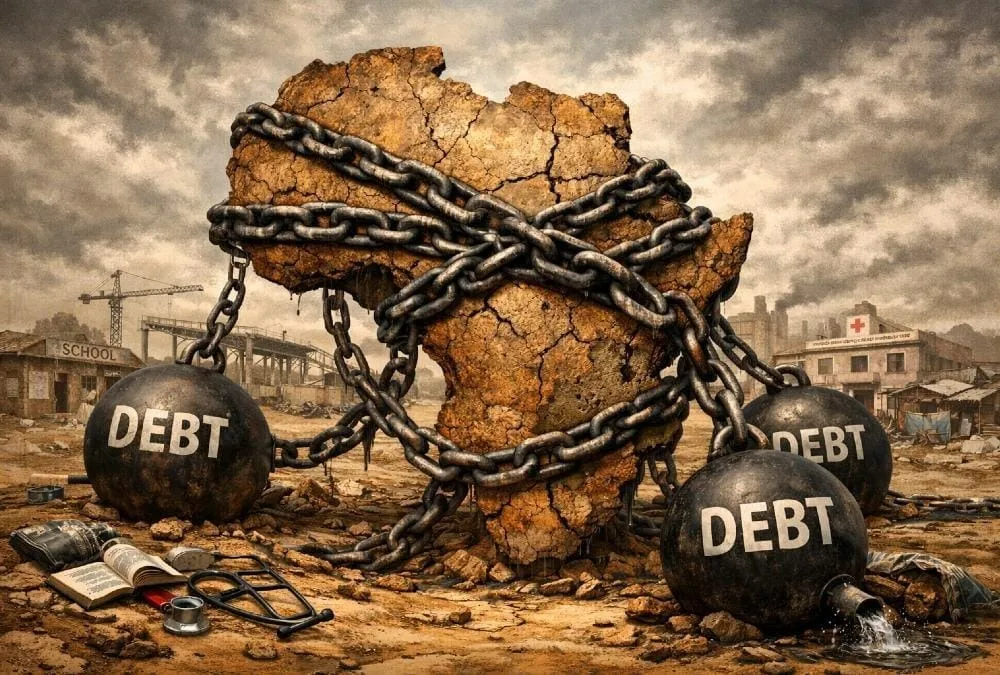
Africa’s sovereign debt landscape is both complex and consequential. External debt, money that African governments owe to foreign lenders influences national budgets, shapes public policy, and affects social investment. By the mid-2020s, Africa’s external debt had climbed above $1.2 trillion, with the top ten countries alone accounting for more than 80 % of this total.
Understanding who Africa owes money to and why these debts were contracted reveals as much about global finance and development strategy as it does about Africa’s economic priorities and vulnerabilities today. External creditors broadly fall into three categories: multilateral lenders (World Bank, IMF), bilateral creditors (nation states like China, France, Japan), and private creditors (international banks and bondholders).
This article examines the top ten creditor countries and institutions to which African governments owe money, exploring not just the amounts but the context, statutes and implications of those debts.
10. Japan
Japan may not be the first country people think of when discussing African debt, but its role has been enduring and strategic.
For decades, Japan has lent to African nations mainly through its development arm, the Japan International Cooperation Agency (JICA), funding infrastructure projects such as roads, ports, and energy grids. Japanese loans tend to be concessional, with lower interest rates and long maturities. This contrasts with costlier private market borrowing.
Countries like Ethiopia, Kenya, and Ghana have significant Japanese bilateral loans for transport and utility infrastructure. Because these loans are often packaged with technology transfer and human capital development programs, they are counted as part of Africa’s external obligations owed not just in money but in project deliverables and tied procurement. Japan’s lending footprint is sizable enough that it appears consistently in national creditor profiles.
9. France
France features prominently among Africa’s creditors, especially in Francophone Africa. While the direct volume of French loans has declined since the 1990s and early 2000s, it remains a key creditor to multiple governments through concessional state loans and export credits.
Countries like Côte d’Ivoire, Senegal, Cameroon, and Mali have borrowed from French institutions for infrastructure power plants, transport networks, and telecommunications. These loans were often negotiated alongside technical partnerships with French companies. Though some loans are now managed or refinanced through other lenders, the historical influence of French capital lingers in balance sheets and debt service requirements.
France also maintains influence through Paris Club arrangements, shaping debt restructuring and relief terms. This legacy position means that France’s role as a creditor is both financial and institutional.
8. Saudi Arabia
Saudi Arabia’s footprint as a creditor in Africa has grown with its ambitions to diversify oil wealth and expand geopolitical influence. Bilateral loans from Saudi institutions have financed energy infrastructure, agriculture projects, and balance-of-payments support in countries such as Sudan, Egypt, and Somalia. Saudi borrowing is not among the largest, but it is increasingly important in nations where energy security and fiscal stability are priorities.
Saudi bilateral support often comes tied to energy sector financing or petrochemical cooperation blurring the line between concessional development support and strategic investment. Africa’s exposure to Saudi loans reflects the intertwining of energy geopolitics and continental development strategies.
Africa’s debt landscape: The top countries Africa owes the most, the sectors driving borrowing, and how infrastructure, energy, and development projects shaped today’s obligations.
7. United States
The United States appears on Africa’s creditor list mainly through multilateral channels and export credit agencies like the U.S. International Development Finance Corporation (DFC) rather than direct government loans.
Historically, the U.S. has provided budget support and project loans through the World Bank and concessional financing for sectors like health, education, and agriculture. While the absolute value of direct U.S. lending to African governments is not as high as China’s or France’s, the influence of U.S. backed institutions are significant in shaping debt agendas through policy conditions tied to fiscal transparency, governance, and economic reform.
6. European Union & Other European Nations - Mixed Creditors
Beyond France, other European creditors Germany, Belgium, Italy, and the United Kingdom lend to Africa through a mixture of development finance institutions and bilateral government loans. Germany’s KfW and the UK’s CDC are examples of institutions extending loans for energy and industrial projects in East and West Africa.
These loans are usually concessional or mixed finance, blending grants with below-market rates, and often come with environmental and governance safeguards. They are significant, particularly in countries such as Kenya, Ghana, and Tanzania, where European involvement in renewable energy and infrastructure is high.
5. International Monetary Fund (IMF) - The Balance-of-Payments Backstop
The IMF is not a country, but it acts as a creditor to many African governments, making it one of the most important entities owed money by African states. In 2025, statistics from Statista show that Egypt had over $7.4 billion outstanding in IMF credit, the highest in Africa, with Côte d’Ivoire and Kenya also owing multiple billions.
IMF loans are fundamentally different from project financing; they are designed to stabilize economies during balance-of-payments crises, often tied to structural reforms. Countries like Ghana, Zambia, and Tunisia have turned to the IMF repeatedly to manage fiscal pressures and currency weaknesses. While IMF repayment terms are comparatively favorable, these loans come with policy conditions that shape domestic budgets and reform agendas.
4. Private International Lenders - A Growing Burden
One of the most striking findings in recent debt analyses is the dominant role of private creditors- international banks and foreign bondholders in Africa’s external debt. According to research, private lenders account for approximately 35 % of Africa’s external debt, more than double the share owed to China.
This category includes:
● Eurobond holders● Commercial bank loans● International financial markets
Private creditors charge higher interest rates and often demand faster repayment than multilateral lenders. Countries such as South Africa, Egypt, and Morocco have large private debt burdens because they accessed international bond markets to finance infrastructure and stabilize currencies. In South Africa’s case, private debt accounted for over $153 billion of its external obligations in 2024.
The dominance of private lenders complicates restructuring efforts, because unlike multilateral and bilateral lenders, they do not coordinate under frameworks like the Paris Club.
3. World Bank Group - Institutional Anchor and Major Creditor
The World Bank Group, particularly the International Development Association (IDA) and International Bank for Reconstruction and Development (IBRD) stands as one of Africa’s largest multilateral creditors. According to data, IDA alone accounts for around 40 % of Africa’s external public debt held by multilateral institutions.
World Bank financing supports long-term development projects:
● Roads and transport corridors● Water and sanitation systems● Education and health facilities● Urban infrastructure
Countries like Ethiopia, Kenya, Ghana, and Tanzania have substantial World Bank loans that span decades with concessional interest and long maturities. These loans are designed to be sustainable, yet rising global rates and currency depreciation have increased repayment burdens.
2. China
China is Africa’s most significant bilateral creditor, holding over 42 % of all bilateral external public debt in Africa as of 2022. Its lending expanded rapidly in the 2000s and 2010s under initiatives like the Forum on China-Africa Cooperation (FOCAC) and the Belt and Road Initiative.
As of 2023, African governments owed China roughly $86 billion, distributed unevenly across countries. Angola, Ethiopia, Zambia, Kenya, and Nigeria together accounted for about 55 % of that total.
Chinese loans often finance large infrastructure projects such as:
● Railways (e.g., Ethiopia’s Addis Ababa–Djibouti railway)
● Standard Gauge Railway in Kenya
● Hydropower plants and ports
● Urban infrastructure
These loans have facilitated major infrastructure but also raised concerns about currency exposure and repayment capacity. Unlike some multilateral loans, Chinese credit can be less transparent, leading to public scrutiny and debate around long-term debt sustainability.
1. United States & Other Traditional Western Creditors via Multilateral Role
While the United States may not be Africa’s leading bilateral lender in volume, its role is significant through multilateral institutions like the World Bank and IMF, where it is a leading shareholder and agenda-setter. U.S. influence shapes repayment terms, reform conditions, and development priorities. Similarly, other Western creditors (Germany, United Kingdom, France and others) extend loans and guarantees that appear on African countries’ external debt books, often for energy, health, and infrastructure.
Because these lenders operate through institutions with strict governance standards, Africa’s obligations to them often carry policy conditions, fiscal reform requirements, and oversight mechanisms that directly affect national budgets, social spending, and economic policy choices.
What This Means for Africa’s Future
By 2025-26, African countries are projected to spend more than $90 billion in external debt repayments alone, approximately three times what they spent a decade ago. These payments flow to a mix of private lenders, China, multilateral institutions, and Western bilateral creditors each with a different impact on development and sovereignty.
Key trends shaping Africa’s creditor relationships:
● Shift to private lenders: More expensive debt, harder to restructure.
● China remains the largest bilateral creditor: Big loans, often infrastructure-linked.
● Multilateral debt rising: Post-pandemic support boosting World Bank/IMF exposures.
● Policy influence matters as much as capital: IMF and World Bank conditions shape reforms and spending.
Conclusion: Not Just Who Africa Owes- But What It Owes For
Africa’s external debt is not only about how much is owed, butwhat it was borrowed for, and who holds the strings. From economic stabilization to highways, railways, energy grids, hospitals, and budget support, every loan has a story of need, negotiation, and long-term risk.
Understanding these creditor relationships helps explain why African policymakers face challenging trade-offs between infrastructure investment and debt servicing, between revenue reforms and social spending, and between sovereignty and conditional finance.
In 2026, debt isn’t just a number, it’s a force shaping Africa’s economic future.