Table of Contents
In Summary:
- Africa’s impact-investment ecosystems channel capital to social, environmental, and economic projects, driving measurable positive outcomes.
- South Africa, Kenya, and Nigeria lead with mature financial infrastructure, regulatory clarity, and strong investor networks.
- Emerging markets like Senegal, Côte d’Ivoire, and Ghana show rapid growth through innovative funds and entrepreneurial activity.
- Key sectors attracting investments include renewable energy, healthcare, education, and sustainable agriculture, shaping Africa’s development trajectory.
Deep Dive!!
Thursday, 11 December 2025 – Impact investing has emerged as a transformative force across Africa, channeling capital not just for financial returns but to create measurable social and environmental value. Over the past decade, African countries have seen a surge in impact-focused funds, venture capital, and blended finance initiatives, all aimed at addressing critical challenges such as renewable energy, climate resilience, education, healthcare, and sustainable agriculture.
By 2025, the continent hosts a dynamic ecosystem where private investors, development finance institutions, and social enterprises converge to drive both economic growth and positive societal outcomes. The countries leading in this movement combine regulatory clarity, stable governance, and a thriving entrepreneurial culture, creating fertile ground for impact capital to thrive.
This article ranks the top ten African nations with the most active impact-investment ecosystems in 2025, highlighting the scale, diversity, and innovation within each country’s market. From well-established hubs like South Africa, with its deep financial infrastructure, to emerging powerhouses such as Senegal and Côte d’Ivoire, these nations illustrate how strategic investment can simultaneously address social challenges and unlock economic potential. By exploring the sectors attracting the most capital and the mechanisms that support these ecosystems, the article provides insight into how Africa is reshaping the impact-investment landscape and positioning itself as a leader in socially responsible finance globally.

10. Senegal
Senegal has become a rising destination for impact investors looking to support sustainable development in West Africa. According to recent fund tracking data, it ranks among the top ten countries on the continent for number of active impact investment vehicles in 2025, supported by growing interest in agriculture, renewable energy and small enterprise financing. This growing ecosystem reflects Senegal’s improving economic stability and regulatory openness to blended finance, making it increasingly attractive to social impact capital.
Despite being smaller than several peers, Senegal’s steady institutional reforms and growing startup culture have helped it punch above its weight. Impact funds targeting climate resilience, agritech and financial inclusion have reported early successes, particularly in rural solar energy and smallholder farmer financing, signaling that the country’s ecosystem is maturing and evolving beyond donor driven initiatives into sustainable private sector participation.
9. Côte d’Ivoire
Côte d’Ivoire has emerged as one of West Africa’s fastest growing economies, and that momentum is mirrored in its impact investment environment. The country ranks among the top ten African nations in 2025 for active impact investment funds, fueled by reforms under its National Development Plan (2021–2025) which emphasizes agricultural modernization, rural development, infrastructure and industrialization, all sectors aligned with impact driven capital.
Investors have recently supported projects in sustainable agriculture, agro processing, renewable energy and social infrastructure. Urban centers such as Abidjan have also become hubs for tech enabled startups in logistics, education, and digital health, sectors that increasingly attract impact capital. While regulatory frameworks for blended finance remain a work in progress, the rising flow of capital and growing interest mark Côte d’Ivoire’s transition toward a deeper, impact ready market.

8. Tunisia
In North Africa, Tunisia stands out for its growing interest from impact investors, particularly in sectors led by youth driven innovation such as renewable energy, fintech and social entrepreneurship. According to 2025 data from regional venture capital trackers cited in fund mapping reports, Tunisia is among the top ten countries attracting impact finance this year.
Government efforts to support startups through favourable policies and incentives have helped accelerate private-sector participation. A combination of social enterprises, green tech ventures, and early stage impact funds builds a foundation for a maturing ecosystem, offering not just capital inflows, but a growing network of incubators and institutional support. As regulatory clarity improves and success stories emerge, Tunisia’s ecosystem is becoming increasingly viable for long term impact investment.
7. Mauritius
Mauritius plays a distinctive role as a green finance gateway and regional impact hub. Its strategic position, stable legal and regulatory framework, and reputation as a financial centre make it attractive for investors looking to channel capital into African impact markets. In 2025, ESG and impact oriented reporting ranked Mauritius among leading countries for sustainable finance activity, including green bonds and blended finance vehicles.
Many funds domiciled in Mauritius direct capital toward projects across Africa rather than the island itself, enabling pan African deployment in renewable energy, climate resilience infrastructure, and social impact enterprises. This makes the country a key node in Africa’s impact capital network, functioning as a conduit that connects global capital with regional opportunities.
6. Nigeria
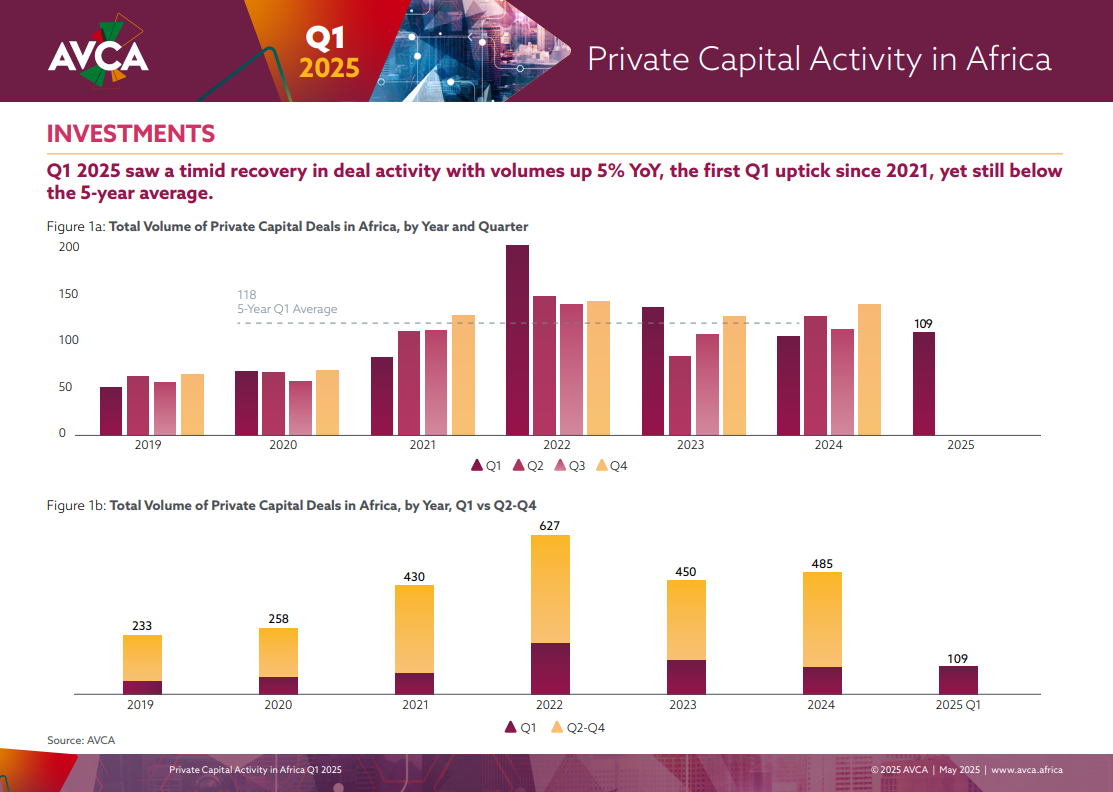
Nigeria’s impact-investment ecosystem has surged in 2025, a recent market report estimates it as a roughly US$3 billion impact capital market, with over 400 transactions recorded in private equity, fintech, energy, agriculture and education. That breadth of activity places Nigeria among the continent’s most active and diversified impact investment economies.
Major investment flows currently target fintech solutions for financial inclusion, renewable and off-grid energy, agricultural value chains, and education infrastructure, aligning with pressing development needs. Despite macroeconomic and governance challenges, Nigeria’s size, demographic potential, and entrepreneurial energy continue to draw both domestic and international impact investors seeking high return social value opportunities.
5. Kenya
Kenya leads Africa in dedicated impact capital vehicles: in 2025 it hosts around 136 impact fundsmanaging roughly$240 millionin committed capital, representing nearly half of East Africa’s impact investment activity. That density of capital and diversity of funds makes Kenya a continental flagship for impact investing.
Key sectors drawing capital include renewable energy, agribusiness, education, fintech and health, all areas where innovative firms and social enterprises are flourishing. A robust startup ecosystem, supportive regulation, and strong institutional infrastructure (incubators, impact networks, blended finance platforms) all combine to sustain Kenya’s vibrant impact investment ecosystem.
4. Rwanda
Rwanda has made strong gains in 2025 as a favourable destination for impact investors, thanks to its governance reforms, ease of doing business, and strategic focus on sustainable development. The country was recently highlighted among the rising ESG and impact investment destinations in Africa, attracting capital for green infrastructure, urban development and social enterprises.
Impact funds and development investors have increased exposure in sectors such as clean energy, affordable housing, and climate resilient infrastructure, aligning with national goals for economic transformation and sustainability. Rwanda’s growing reputation for transparent governance and regulatory clarity gives investors confidence, supporting increased inflows and expanding the country’s impact investment footprint.
3. Egypt
Among North Africa’s largest economies, Egypt shows strong momentum toward impact and ESG investment activity in 2025. Reports on ESG positioning rank Egypt highly, citing its large-scale transition projects, renewable energy expansion and gradually improving regulatory environment as key factors attracting sustainable finance capital.
The breadth of Egypt’s economy, from manufacturing and infrastructure to energy and climate resilience, offers diverse opportunities for impact investors. Its existing financial markets and growing pool of local funds help channel capital toward socially beneficial projects, which supports Egypt’s dual goals of economic growth and sustainable development.
2. Morocco
Morocco stands out in 2025 for combining strong climate finance ambition with structural stability. ESG positioning reports rank it among the top North African destinations for green and impact investment, driven by robust renewable energy programmes, green industrialisation and expanding infrastructure financing.
Its investment ecosystem benefits from investor-friendly regulation, a diversified economy and a growing network of funds and financial institutions oriented to impact. As climate and sustainability become global priorities, Morocco’s stability, strategic location and proactive policy framework make it a magnet for cross-border impact capital, positioning it as a leading hub for sustainable investment in Africa.
1. South Africa
South Africa leads the continent in impact investment assets under management (AUM). A 2025 report estimated that South African based funds hold about 43 percent of total Africa focused impact investment AUM. That dominance reflects both the depth of its capital markets and its role as the primary domicile for impact funds active across the continent.
The country’s robust financial infrastructure, legal frameworks and relatively stable economy support diverse investment sectors, from renewable energy and social housing to fintech and climate adaptation. Institutional investors, local funds and private sector actors all contribute to a mature and vibrant impact ecosystem. For these reasons, South Africa remains by far Africa’s most active and influential centre for impact investing in 2025.
We welcome your feedback. Kindly direct any comments or observations regarding this article to our Editor-in-Chief at [email protected], with a copy to [email protected].