Table of Contents
In Summary
- Southern Africa dominates stability in 2025, accounting for half of the continent’s ten lowest-risk countries, despite rising instability elsewhere.
- West Africa’s stability divide has deepened, with coastal democracies ranking among the safest while Sahel states cluster at the highest risk end of the index.
- Institutional strength, not regime type alone, remains the strongest predictor of low instability risk, outweighing short-term economic or security shocks.
Deep Dive!!
Lagos, Nigeria, Monday, December 15 –
Political instability in Africa is increasingly uneven, with sharp contrasts emerging not only between regions but within them. While coups, armed conflict, and institutional breakdowns continue to dominate headlines in parts of the Sahel, East Africa, and Central Africa, other countries are quietly consolidating political resilience. The 2025 Africa Country Instability Risk Index (ACIRI) captures this divergence with unusual clarity, revealing where governance systems are absorbing pressure and where they are fracturing under it.
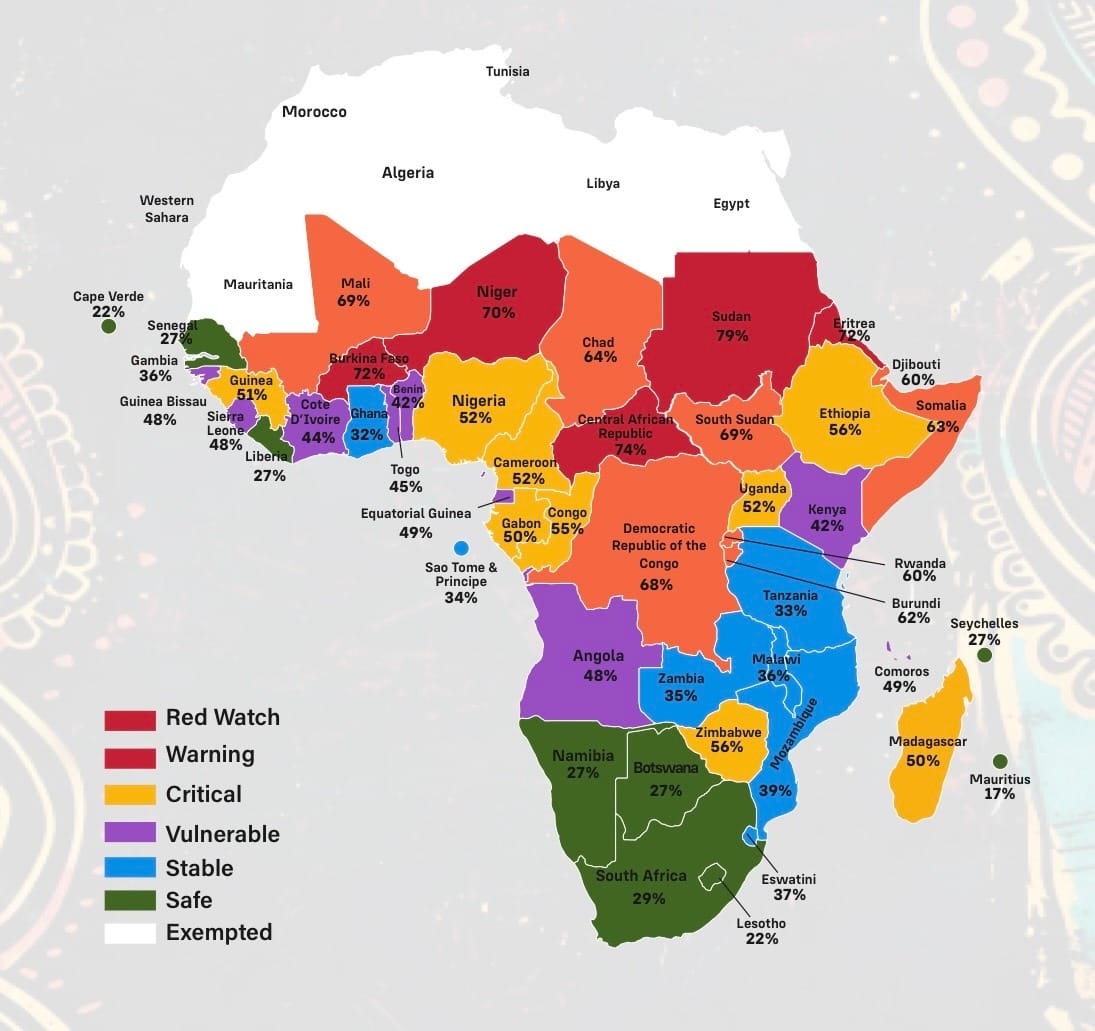
The ACIRI is a composite risk assessment tool that measures political instability through a combination of governance effectiveness, institutional capacity, security conditions, economic stress, and social cohesion indicators. Scores reflect the likelihood of instability rather than the presence of conflict alone, meaning countries with no active war can still rank high risk if institutions are weak or democratic norms are eroding.
Lower scores indicate stronger buffers against shocks, including functional public institutions, predictable political transitions, and relatively stable civil–military relations. In 2025, Sub-Saharan Africa recorded an average risk score of 47.46 percent, an increase from the previous year, underscoring a continent-wide rise in pressure despite improvements in individual countries.
This article focuses on the ten African countries with the lowest instability risk scores in 2025, based strictly on ACIRI data. Rather than celebrating surface-level calm, the ranking examines why these states remain comparatively stable at a time when regional volatility is rising.
By looking closely at institutional design, governance trajectories, and political context, the analysis highlights the structural factors that continue to shield these countries from the cycles of disruption affecting much of the continent.
The sections that follow rank these countries from 10 to 1, offering a critical, country-by-country assessment of how stability is being sustained and what it implies for Africa’s political future.
10. Ghana
Ghana enters the 2025 Africa Country Instability Risk Index with a risk score of 32, placing it at the lower end of the continent’s instability spectrum despite a difficult economic cycle. This score reflects a country under visible pressure but still operating within predictable political and institutional limits. Unlike several West African peers where economic stress has translated into regime rupture, Ghana’s risk profile shows containment rather than escalation, with tensions managed through formal institutions rather than extra-constitutional intervention.
A major stabilising factor behind Ghana’s score is the continued functionality of its constitutional architecture, particularly the interaction between the executive, judiciary, and electoral institutions. Even amid fiscal restructuring and IMF-led adjustment measures, the judiciary has remained active in adjudicating politically sensitive cases, while the Electoral Commission continues to command procedural legitimacy. Political actors have largely complied with institutional outcomes, reinforcing a long-standing norm that disputes are resolved through courts and commissions rather than security actors. This institutional discipline materially lowers instability risk in ACIRI’s governance and political legitimacy components.
Economic distress has nonetheless been Ghana’s most significant vulnerability driver in the index. Debt restructuring, currency depreciation, and subsidy rollbacks have strained public confidence and heightened protest potential, especially in urban centres. However, the government’s management of these pressures has been characterised by policy signalling rather than coercion, including negotiated labour engagements, parliamentary oversight of fiscal reforms, and sustained engagement with international financial institutions. These choices reduced the likelihood of sudden political shocks, helping Ghana avoid the sharp risk spikes seen in states where austerity coincided with elite fragmentation.
Crucially, Ghana’s civil–military relations continue to act as a stabilising anchor. The armed forces have remained professionally insulated from partisan politics, with no indications of factionalisation or political ambition within the officer corps. In a West African environment where militaries have increasingly positioned themselves as political arbiters, Ghana’s security institutions have maintained a narrow, constitutional role. This restraint, combined with institutional continuity and managed economic adjustment, explains why Ghana, despite its challenges, sustains a relatively low instability risk score of 32 in 2025.
9. South Africa
South Africa’s 2025 ACIRI score of 27 places it among the continent’s most stable countries, reflecting a governance system capable of weathering both economic strain and complex social dynamics. While the country contends with persistent inequality, high unemployment, and sporadic local unrest, institutional structures and political management continue to limit the potential for widespread instability. This score shows that South Africa’s government, though not perfect, is structured in a way that helps prevent sudden political crises.
The country’s parliamentary democracy, characterized by strong legislative oversight and a relatively independent judiciary, remains the backbone of its stability. In 2025, key decisions ranging from budgetary allocations to law enforcement responses to urban unrest were executed within established frameworks. The African National Congress (ANC), while facing internal factionalism, has avoided high-stakes executive confrontations that could trigger political crises. Meanwhile, the opposition, though vocally critical, has largely adhered to constitutional channels, further mitigating systemic risk.
Economic developments have played a subtle but notable role in South Africa’s low instability score. Growth in the second quarter of 2025 rose to 0.4% from 0.1% in the first quarter, a minor uptick that, combined with targeted social support programs, alleviated some immediate social pressure. Additionally, the government’s ongoing reform in public-sector administration, particularly in areas like municipal service delivery and state-owned enterprise oversight, has helped reduce public frustration that could otherwise escalate into more significant unrest.
Civil–military relations continue to strengthen South Africa’s political resilience. The military remains constitutionally subordinate to civilian authority, while internal security forces have maintained a focus on public order without overreach or politicization. Coupled with a judiciary willing to hold both public officials and security agencies accountable, these factors reinforce the state’s capacity to absorb shocks. South Africa’s ACIRI score of 27 is thus not merely a reflection of relative calm but an outcome of sustained institutional management, measured economic adjustments, and disciplined civil–military dynamics that together secure its place among Africa’s most stable states.
8. Botswana
Botswana’s 2025 ACIRI score of 27 underscores a continuation of its longstanding political stability, which has consistently set the country apart in Southern Africa. Despite regional pressures and economic fluctuations, the state’s institutions continue to function predictably, enabling policy continuity and minimizing political shocks. This score reflects a system where governance frameworks, civil service professionalism, and political norms combine to create a durable buffer against instability.
A key factor behind Botswana’s resilience is the dominance of institutionalized governance over personalistic politics. The Botswana Democratic Party (BDP) has maintained coherent internal structures that manage succession and mediate elite disputes, reducing the likelihood of factional collapse. The judiciary and legislature operate independently, ensuring that conflicts between branches of government are resolved procedurally. In 2025, this was evident when parliamentary oversight successfully mediated disagreements over public expenditure allocations without provoking public unrest, demonstrating the strength of the country’s checks and balances.
Economic performance also contributes to the country’s low-risk score. While diamond revenue fluctuations and global commodity shifts present challenges, Botswana’s fiscal discipline and prudent management of sovereign wealth resources help stabilize public expectations. Targeted social programs, particularly in education and health, mitigate potential unrest from marginalized populations, and government communication around resource allocation has been transparent enough to prevent perceptions of favoritism or corruption from escalating into broader instability.
Civil–military relations remain a subtle but critical stabilizing factor. Botswana’s defense forces continue to maintain a non-political posture, strictly subordinate to civilian control. Combined with strong local governance systems that handle community disputes efficiently, this institutional layering ensures that the ACIRI score of 27 reflects a genuinely low probability of systemic disruption. Botswana’s model demonstrates that stability in Africa is often sustained less by the absence of challenges and more by the disciplined and predictable operation of governance structures under pressure.
7. Namibia
Namibia records a 2025 ACIRI score of 27, placing it among the continent’s most stable states. This score reflects a combination of institutional strength, predictable political processes, and a relatively controlled security environment. Namibia’s stability is the product of carefully nurtured governance structures and a political culture that prioritizes consensus and measured dispute resolution, even amid economic and social pressures.
Central to Namibia’s resilience is the dominance of the South West Africa People’s Organization (SWAPO) within a constitutional framework that allows for effective checks and balances. In 2025, the party managed internal debates over budget priorities and local governance reforms without fracturing, demonstrating an elite cohesion that directly reduces instability risk. The judiciary continues to act independently, resolving politically sensitive cases such as land disputes and regulatory challenges in ways that reinforce public trust. Legislative oversight of executive actions, particularly in resource allocation and civil service appointments, further strengthens institutional predictability.
Economically, Namibia faces challenges from global commodity cycles and domestic fiscal constraints. However, targeted interventions in public welfare, mining sector regulation, and education funding have reduced immediate social pressures that often trigger unrest in countries with weaker governance. The Ministry of Finance, in coordination with regional development agencies, has implemented mid-year policy adjustments in 2025 that stabilized inflationary pressures and reassured local communities about the continuity of social services. These measures contributed materially to Namibia’s ACIRI score of 27.
Finally, civil–military relations in Namibia remain disciplined, with security forces strictly adhering to civilian oversight and avoiding political entanglement. Community policing initiatives and localized conflict mediation mechanisms further reduce the risk of protests escalating into national instability. Namibia’s score is therefore less a reflection of passive calm and more a product of systemic institutional management, elite cohesion, and the strategic integration of economic and social policies that consistently buffer against political shocks.
6. Seychelles
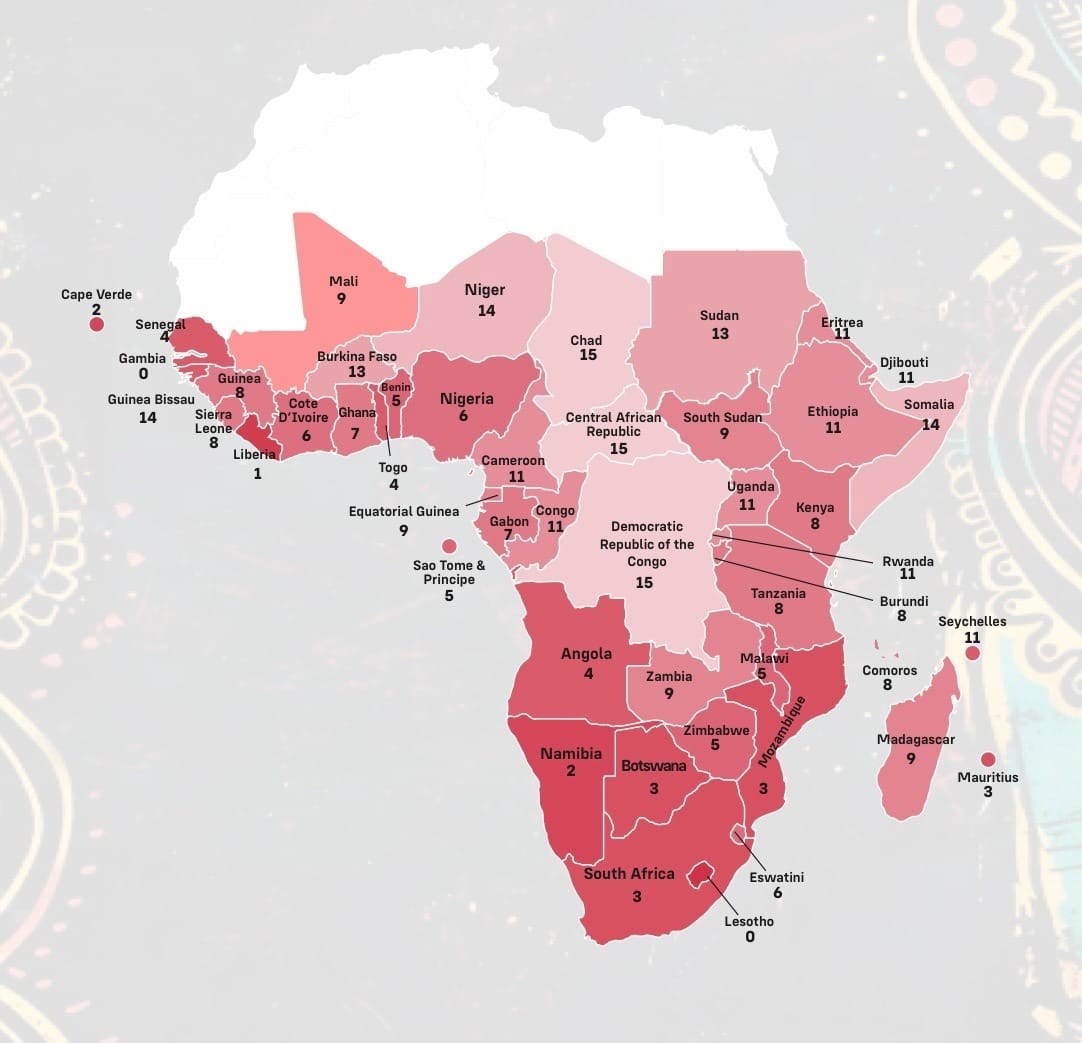
Seychelles achieves a 2025 ACIRI score of 27, reinforcing its position as one of Africa’s most politically stable states. This score reflects the country’s consistent ability to manage governance, economic, and social pressures despite its small size and high dependence on tourism and fisheries. The ranking highlights how institutional coherence, political culture, and strategic policy interventions combine to limit systemic instability.
A defining factor in Seychelles’ stability is the relative maturity of its political institutions. The multi-party system, though dominated by a few key actors, operates within constitutional boundaries that ensure predictable power transitions and dispute resolution. In 2025, political contention over budget allocations and public project prioritization was effectively managed through parliamentary debate and executive negotiation, avoiding any resort to street-level protest or elite confrontation. The judiciary maintained a visible role in arbitrating policy disagreements, particularly regarding public procurement and environmental regulations critical to the tourism sector.
Economically, Seychelles has navigated external shocks with targeted fiscal and social interventions. The government’s 2025 adjustments to tourism taxation and fisheries management policies mitigated potential economic discontent, while social support programs helped cushion vulnerable populations from inflationary pressures. The careful balancing of international partnerships with domestic policy priorities demonstrates how economic governance directly influences political stability, a factor explicitly captured in the ACIRI score of 27.
Finally, Seychelles’ security sector continues to reinforce institutional stability. Civil–military relations remain disciplined, with the small but professional defense and police forces focused on maritime security and public order without political interference. This professional restraint, combined with active community engagement in governance and policy monitoring, ensures that the country maintains low vulnerability to unrest. Seychelles’ position in the ACIRI ranking thus reflects not merely the absence of conflict but the presence of proactive governance, institutional discipline, and economic foresight that collectively sustain its stability.
5. Senegal
Senegal has a 2025 ACIRI score of 27, positioning it firmly among Africa’s least unstable countries. This score signals a nation that, while navigating economic and social pressures, continues to benefit from resilient institutions and a political culture grounded in dialogue and procedural adherence. Senegal’s stability is a product of both historical political continuity and active management of contemporary risks, setting it apart in a West African context where volatility is rising.
A key stabilizer is Senegal’s carefully maintained democratic framework. The presidency, parliament, and judiciary operate in a dynamic equilibrium, with frequent consultations between branches smoothing policy implementation. In 2025, debates over local elections, decentralization, and security sector oversight were resolved largely through negotiation and legislative channels rather than confrontational tactics. The political elite’s willingness to engage in dialogue, coupled with an independent judiciary adjudicating sensitive electoral disputes, has reinforced both public confidence and elite cohesion a combination directly reflected in the ACIRI score of 27.
Economic management plays a subtle but significant role in Senegal’s stability. The government’s 2025 adjustments to infrastructure spending and public-sector wage policy helped prevent localized unrest, particularly in urban areas where youth unemployment remains high. Strategic partnerships with international financial institutions and regional economic bodies provided fiscal buffers that insulated vulnerable communities from sudden shocks. By signaling predictability and accountability in economic governance, Senegal reduces the likelihood that financial stress translates into political instability.
Civil–military dynamics further strengthen Senegal’s resilience. The armed forces maintain a strictly apolitical posture, while community policing initiatives and local conflict-resolution frameworks ensure that disputes rarely escalate into national crises. In combination, these structural and policy measures allow Senegal to navigate socio-economic pressures while maintaining a low risk of systemic disruption, demonstrating that stability in West Africa relies as much on institutional foresight and elite discipline as on surface-level calm.
4. Liberia
Liberia has a 2025 ACIRI score of 27, signaling a country that has made incremental gains in stability following decades of civil unrest. While historical legacies of conflict and fragile institutions still shape political calculations, recent governance reforms and disciplined crisis management have created a more predictable environment. This score reflects the country’s capacity to absorb social and economic pressures without tipping into large-scale instability, distinguishing it from several of its West African neighbors still grappling with recurrent coups and insurgencies.
Institutional consolidation underpins Liberia’s low-risk rating. The presidency, legislature, and judiciary, though occasionally constrained by limited capacity, have demonstrated greater functional cohesion in 2025. Notably, the government successfully implemented electoral reforms ahead of local elections, streamlining voter registration and dispute resolution mechanisms. These changes reduced the risk of contested results sparking unrest a common source of instability in the region. Additionally, the judiciary has continued to assert independence in adjudicating politically sensitive cases, including land disputes in Monrovia and border-related conflicts in Lofa County, reinforcing both elite and public confidence.
Economic and social measures have also played a stabilizing role. In 2025, Liberia’s government leveraged donor partnerships and domestic policy adjustments to address fiscal shortfalls and mitigate inflationary pressures. Social interventions ranging from conditional cash transfers in rural counties to urban youth employment initiatives helped limit the potential for unrest in historically volatile areas. The coordinated approach between finance, social development, and security ministries reflects a growing capacity for integrated governance, which directly contributed to Liberia’s ACIRI score of 27.
Security and civil–military relations further strengthen Liberia’s position. The Armed Forces of Liberia and national police continue to maintain disciplined, non-partisan roles, even amid localized disputes over resource access and political representation. Coupled with the expansion of community-based conflict mediation programs, these structures help absorb shocks before they escalate nationally. Liberia’s 2025 score of 27 is therefore not merely a reflection of comparative calm but a testament to sustained institutional reform, targeted economic and social interventions, and disciplined management of historically sensitive security dynamics.
3. Lesotho
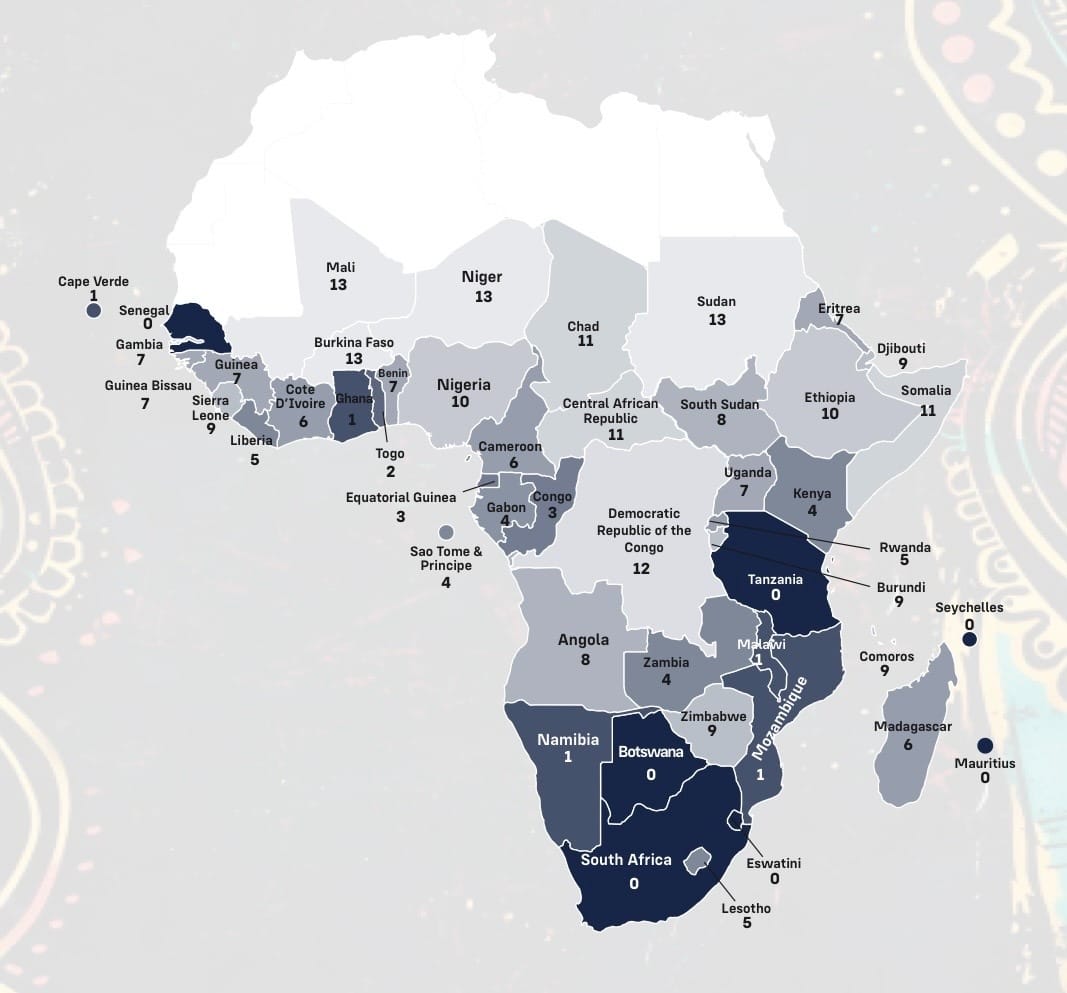
Lesotho achieves a 2025 ACIRI score of 22, positioning it as one of Africa’s most stable countries despite its history of political turbulence. This score reflects the country’s gradual consolidation of governance structures, enhanced institutional coordination, and careful management of both domestic and regional pressures. While Lesotho faces economic constraints and social challenges, its low instability risk demonstrates a capacity to navigate crises with predictability, distinguishing it from other Southern African states historically prone to political disruption.
Central to Lesotho’s stability is the functionality of its parliamentary and judicial systems. In 2025, coalition management and parliamentary negotiation mechanisms successfully prevented executive-legislative standoffs that had previously triggered unrest. The judiciary has continued to exercise independence in politically sensitive areas, including land adjudication and oversight of electoral disputes, reinforcing both elite and public confidence in legal recourse. These institutional features are reflected in the ACIRI score of 22, highlighting how procedural adherence and dispute mediation reduce the likelihood of sudden political shocks.
Economic and social governance also support Lesotho’s low-risk profile. Targeted fiscal policies, including subsidies for rural agriculture and infrastructure investments in water and energy, help stabilize livelihoods in a country where economic vulnerabilities could otherwise translate into political tension. The 2025 implementation of local development initiatives, coordinated across ministries and district councils, exemplifies how institutional coordination mitigates risk while fostering community trust in the state apparatus.
Civil–military relations in Lesotho have been carefully managed to prevent the historic pattern of intervention in politics. The Lesotho Defence Force remains firmly subordinate to civilian oversight, and security sector reforms, supported by regional monitoring from the Southern African Development Community (SADC), have strengthened compliance and professionalism. Combined with proactive social and economic policies, these factors explain Lesotho’s 2025 ACIRI score of 22, demonstrating that institutional coherence and disciplined governance are decisive in maintaining stability in contexts historically marked by volatility.
2. Cape Verde
Cape Verde records a 2025 ACIRI score of 22, highlighting its sustained position as one of Africa’s most stable states. The score reflects a nation where political continuity, institutional robustness, and disciplined crisis management converge, creating resilience in a region marked by volatility. Despite economic dependency on tourism and remittances, Cape Verde’s governance framework mitigates risks associated with external shocks and social pressures, ensuring predictable political outcomes.
The strength of Cape Verde’s parliamentary democracy is a central factor in its low-risk ranking. In 2025, the government effectively navigated budgetary and policy debates, maintaining coalition cohesion while implementing key fiscal reforms. Political disputes, including those over public procurement and local governance appointments, were managed through formal channels, avoiding street-level confrontation or elite fragmentation. The judiciary’s independence further reinforced stability, as courts adjudicated electoral and civil disputes transparently, a critical mechanism reflected in the ACIRI score of 22.
Economic management has also been instrumental in containing instability. Cape Verde’s government carefully balanced fiscal austerity with social welfare programs, ensuring that essential services such as healthcare, education, and infrastructure development continued uninterrupted. In 2025, targeted initiatives to support tourism recovery post-pandemic and remittance-dependent households helped reduce social tension, particularly in urban centers, and reinforced public confidence in state responsiveness.
Finally, civil–military relations provide an additional layer of stability. The armed forces remain small, professional, and apolitical, while the police maintain effective community engagement programs that prevent localized disputes from escalating nationally. This disciplined security posture, combined with strong institutions and responsive economic governance, explains why Cape Verde maintains a 2025 ACIRI score of 22, illustrating how consistent procedural governance and strategic policy choices anchor one of Africa’s most stable political environments.
1. Mauritius
Mauritius tops the 2025 Africa Country Instability Risk Index with a remarkable score of 17, reflecting a rare combination of institutional robustness, economic management, and political foresight that firmly anchors its low-risk status. In a continent where instability is frequently driven by fragile governance, coups, and socio-economic shocks, Mauritius demonstrates how sustained investment in institutions, transparent governance, and proactive crisis mitigation can yield enduring political stability. The score encapsulates both the country’s historical trajectory and its ongoing capacity to manage emerging challenges before they escalate.
At the heart of Mauritius’ low-risk profile is the resilience of its democratic institutions. The parliamentary system, the judiciary, and the independent electoral commission operate with high levels of procedural integrity, ensuring that political disputes are resolved predictably. In 2025, contentious debates over national budgets, energy policy, and public infrastructure projects were conducted through parliamentary negotiation and public consultation processes, preventing escalation into public unrest. The judiciary actively adjudicated disputes over land development and regulatory oversight, signaling to both elites and citizens that institutional recourse is reliable, a factor directly influencing the ACIRI score of 17.
Economic stability also underpins Mauritius’ exceptional rating. Despite regional pressures, including fluctuations in global sugar and textile markets, the government implemented adaptive fiscal policies and sector-specific stimulus programs in 2025. Investments in technology, financial services, and renewable energy were complemented by social measures targeting urban youth and rural communities, limiting economic grievances from translating into political risk. The proactive coordination between ministries, regulatory agencies, and local authorities reflects a governance culture that anticipates challenges and neutralizes instability before it manifests, reinforcing Mauritius’ institutional credibility.
Civil–military and security sector dynamics provide a final stabilizing layer. The Mauritius Police Force and other security agencies maintain strict apolitical mandates, focusing on law enforcement and maritime security without interference in governance. Combined with community engagement initiatives, these measures reduce the likelihood of localized disputes spiraling into national crises. Mauritius’ 2025 ACIRI score of 17 is therefore not merely a reflection of the absence of conflict; it is the outcome of sustained institutional foresight, disciplined civil–military relations, and integrated economic and social governance. In a continent where volatility remains pervasive, Mauritius exemplifies how layered, proactive, and well-resourced governance can secure enduring political stability.
The 2025 ACIRI ranking illustrates that Africa’s political stability is increasingly shaped by strategic governance choices rather than luck or circumstance. Across the ten lowest-risk countries, stability emerges from the integration of forward-looking policy, institutionalized conflict management, and proactive engagement with economic and social pressures. These states demonstrate that predictable political processes, disciplined elite negotiation, and anticipatory social programs can contain risks even in regions exposed to broader continental volatility. Collectively, the ranking highlights a blueprint for resilience. Countries that continuously reinforce institutional capacity, uphold procedural norms, and address underlying social tensions are best positioned to maintain stability amid a continent of growing complexity.