Table of Contents
Deep Dive!!
Chinese Manufacturing Footprint in Africa
China’s industrial expansion in Africa has gone beyond investment in infrastructure and natural resources to include manufacturing, a sector increasingly central to the continent’s industrialization ambitions. Over the past decade, Chinese companies have established operations in automotive assembly, electronics, construction materials, textiles, and chemicals. This presence is driven by a combination of FOCAC agreements, bilateral trade incentives, and access to local markets.
According to UNCTAD, the African Union, and China’s Ministry of Commerce, Chinese manufacturing in Africa now represents a multi-billion-dollar footprint, providing thousands of direct and indirect jobs while supplying regional markets with affordable goods. Major countries in East, West, and Southern Africa have attracted factories due to market size, industrial parks, and trade logistics, with some nations hosting clusters of Chinese firms in special economic zones or government-backed industrial parks.
10.Algeria
Algeria has emerged as a key node in China’s industrial strategy in North Africa, particularly in appliance manufacturing, fiberglass production, and light industrial goods. The story begins in the late 2000s, when the Algerian government, seeking to diversify its economy beyond hydrocarbons, actively courted foreign investors to establish industrial zones and special economic corridors. These zones offered Chinese investors tax incentives, customs exemptions, and access to strategic ports like Oran and Algiers, which provide direct access to Mediterranean markets.
Chinese companies such as China Jushi,a global leader in fiberglass manufacturing were among the first to establish facilities in Algeria. Their investments often exceeded $50–70 million per plant, producing high-quality fiberglass and construction materials for both local consumption and export to southern Europe. These early entrants were attracted by Algeria’s combination of government-backed incentives, relatively low labor costs (around $150 per month in 2010 for industrial workers, higher than sub-Saharan Africa but lower than Europe), and the promise of a large consumer market in North Africa.
By 2015, Chinese firms had created over 10,000 direct jobs, while indirectly supporting an additional 5,000 roles in logistics, supply chains, and local services. The presence of these factories also encouraged the growth of Algerian supplier networks, integrating local raw material providers into global value chains and creating vocational training opportunities for workers in production management, machine operation, and quality control.
Investment in Algeria has been significant not only in monetary terms but also strategically. For example, China Jushi’s facility alone can produce over 200,000 tons of fiberglass annually, supporting both domestic construction and export markets. Other Chinese firms have invested in home appliance assembly, producing washing machines, refrigerators, and small electronics under local joint ventures. These operations often tie into FOCAC agreements and Belt and Road initiatives, which emphasize industrial cooperation, technology transfer, and regional trade integration.
Despite these successes, challenges persist. Chinese firms initially encountered bureaucratic delays, energy supply inconsistencies, and occasional labor disputes, which slowed production ramp-up. Over time, stronger collaboration between Chinese investors and the Algerian government including upgrades to industrial infrastructure, streamlined customs procedures, and training programs has mitigated these early obstacles.
Algeria’s experience demonstrates the strategic reasoning behind China’s North African manufacturing push: it offers a politically stable environment, proximity to European markets, and a growing industrial workforce. For Algeria, the benefits are clear: job creation, industrial capacity building, foreign exchange inflows, and technology transfer. For China, Algeria serves as both a gateway to the Mediterranean and a strategic partner in scaling manufacturing capacity outside East Africa, complementing industrial investments in Ethiopia, Morocco, and Egypt.
9.Tanzania
Tanzania has become a growing hub for Chinese manufacturing in East Africa, particularly in textiles, steel production, plastics, and agro-processing. The story begins in the early 2010s, when the Tanzanian government launched initiatives to promote industrialization, creating special economic zones (SEZs) and industrial parks in Dar es Salaam and Mwanza. These zones offered Chinese investors tax incentives, streamlined licensing, and access to key transport infrastructure, including port facilities on the Indian Ocean, which facilitated regional exports.
Chinese firms such as Sichuan Hongda Steel Ltd and Jiangsu Jiangnan Textile were among the first to establish operations, investing between $30 million and $60 million per facility. Their production focuses on steel for construction, plastics for packaging, and textiles for both domestic markets and neighboring East African countries. Investors were attracted by Tanzania’s relatively low labor costs (around $120–$140 per month for industrial workers in 2012), political stability, and access to the East African Community (EAC) market of over 170 million consumers.
By 2018, Chinese manufacturing operations in Tanzania had created over 8,000 direct jobs and supported 5,000 additional roles in logistics, supply chains, and support services. Local suppliers were integrated into production, particularly for packaging materials, steel processing, and chemical inputs. Vocational training programs offered by Chinese firms also improved technical skills, particularly in machine operation and quality control.
Investment in Tanzania is strategically significant. Steel and plastic production facilities contribute to domestic industrial capacity, reducing reliance on imports, while textile factories enable export-oriented production for the EAC and beyond. These projects also tie into FOCAC (Forum on China-Africa Cooperation) initiatives and Belt and Road partnerships, strengthening diplomatic and trade ties.
Challenges have included energy supply inconsistencies, bureaucratic hurdles, and occasional labor unrest, which initially delayed production ramp-up. However, increased government collaboration, improved infrastructure, and technical training programs have gradually mitigated these issues.
Tanzania’s experience illustrates why China continues to expand manufacturing in East Africa: it provides low-cost production, regional market access, and long-term trade integration, while Tanzania benefits from job creation, industrial capacity, and technology transfer.
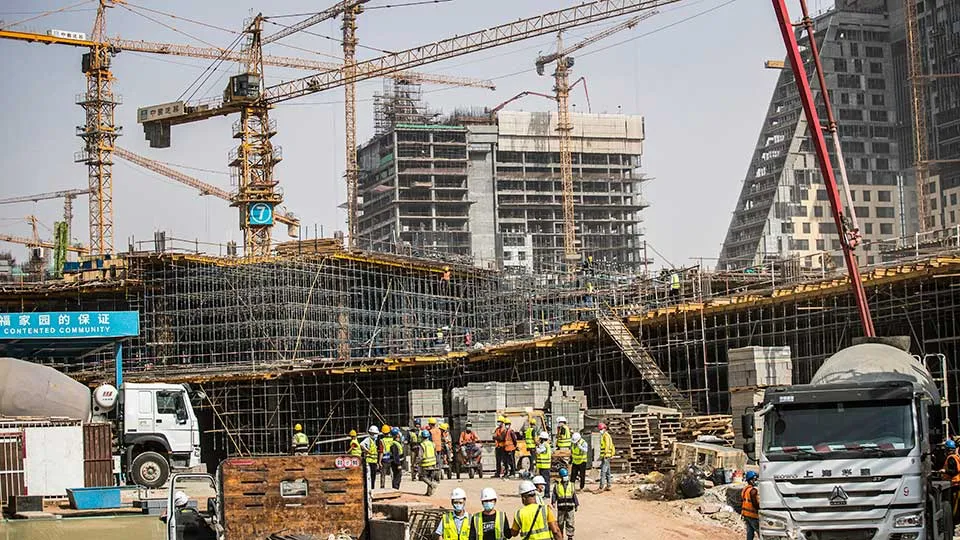
China’s Manufacturing Footprint in Africa (2026): Key sectors including automotive, electronics, textiles, construction materials, and agro-processing driving industrial growth and job creation across the continent
8.Ghana
Ghana has emerged as a key target for Chinese manufacturing in West Africa, particularly in agro-processing, construction materials, and light consumer goods. Chinese investment in the country accelerated in 2012, coinciding with the establishment of industrial parks such as the Tema Free Zone and Kasoa Industrial Park. These parks offered tax holidays, simplified customs procedures, and reliable access to electricity and transport networks, which were major incentives for foreign investors.
Chinese firms such as Sinopec Ghana, Shandong Yujin Textiles, and Kingfa Plastics have invested between $20 million and $50 million per facility, producing fertilizers, packaged consumer goods, textiles, and plastics for both domestic consumption and regional export. Ghana’s political stability, business-friendly policies, and growing middle class created an attractive environment for these investments.
By 2019, Chinese manufacturing operations in Ghana had generated over 6,000 direct jobs and an additional 4,000 indirect jobs across supply chains and logistics. Local companies benefited from technology transfer and skills development programs, particularly in machine operation, quality assurance, and industrial management.
Strategically, Chinese firms see Ghana as a gateway to the West African market of over 400 million people, leveraging its port infrastructure in Tema and regional trade agreements like ECOWAS. Projects are also aligned with FOCAC industrial cooperation frameworks, which aim to strengthen African production capabilities and regional trade integration.
Challenges included occasional regulatory bottlenecks, electricity supply fluctuations, and initial workforce skill gaps, but government support and private sector collaboration helped overcome these obstacles.
Ghana’s experience demonstrates why China targets West Africa: it offers market access, stable investment conditions, and potential for long-term industrial growth, while Ghana gains jobs, industrial know-how, and increased exports.
7.Kenya
Kenya has become a strategic manufacturing hub for Chinese firms in East Africa, focusing on construction materials, automotive components, electronics, and consumer goods. Chinese engagement intensified in 2011–2013, aligned with Kenya’s establishment of industrial parks in Nairobi, Mombasa, and Thika, offering tax incentives, reduced tariffs, and enhanced access to port facilities.
Companies such as Keda Industrial Group, Sichuan Machinery Co., and Hisense Electronics have invested between $25 million and $60 million per facility, producing steel, automotive parts, home appliances, and electronics. The choice of Kenya is strategic: it provides regional logistics hubs, a skilled labor force, and a gateway to East Africa and the COMESA market.
By 2020, Chinese manufacturing operations had created over 10,000 direct jobs and supported 7,000 indirect roles in logistics, supply chain management, and local suppliers. Workers have been trained in modern manufacturing practices, quality control, and industrial operations, enabling long-term skills transfer.
Investment in Kenya is not only monetary but strategic. Chinese firms leverage Kenya’s position on the Northern Corridor trade route to distribute goods regionally, while the government benefits from industrial diversification, job creation, and integration of local suppliers into global value chains.
Challenges have included regulatory inconsistencies, electricity supply issues, and occasional labor disputes, but government initiatives to improve industrial infrastructure and regulatory clarity have helped mitigate these issues.
Kenya’s experience demonstrates the mutual benefits of Chinese manufacturing engagement: China gains low-cost production and regional distribution hubs, while Kenya strengthens industrial capacity, creates employment, and builds technological capabilities.
6.Zambia
Zambia has become a focal point for Chinese manufacturing in Southern Africa, largely linked to its mining sector, construction materials, and agro-processing industries. Chinese industrial engagement accelerated in 2012–2013, coinciding with the Zambian government’s industrialization push, particularly the creation of industrial parks in Lusaka and Chambishi, designed to attract foreign investors with tax incentives, reliable power access, and streamlined licensing procedures.
Companies such as China Nonferrous Metal Mining Group (CNMC) and Sichuan Hongda Industrial Ltd established facilities producing mining equipment, construction materials, steel products, and processed agricultural goods. Individual investment packages ranged from $30 million to $65 million per plant, with production often supporting both domestic demand and regional exports.
By 2018, Chinese manufacturing operations in Zambia had created over 7,500 direct jobs, with an additional 4,000 indirect jobs in logistics, supply chains, and local service sectors. Local suppliers have been integrated into operations, especially in construction material inputs and agricultural processing, which has enhanced skill transfer and operational capacity among Zambian firms.
Strategically, Chinese firms benefit from Zambia’s abundant mineral resources and strategic positioning in Southern Africa, allowing integration with regional supply chains. Zambian authorities gain industrial diversification, technology transfer, and foreign exchange inflows.
Challenges have included electricity supply limitations, bureaucratic delays, and occasional labor disputes, particularly in areas outside Lusaka. However, joint initiatives with government agencies to improve industrial infrastructure and vocational training programs have mitigated these risks.
5.South Africa
South Africa represents one of the most advanced Chinese manufacturing hubs on the continent, with operations spanning automotive assembly, electronics production, and heavy industrial machinery. The entry of Chinese firms into South Africa began in the early 2010s, targeting both domestic consumption and Southern African Development Community (SADC) markets.
Chinese companies such as FAW Automotive, Hisense Electronics, and Sany Heavy Industry have invested in facilities ranging from $40 million to over $100 million per plant, producing vehicles, consumer electronics, and construction machinery. Key manufacturing clusters include Gauteng Province for automotive and industrial production, and Eastern Cape for electronics assembly, leveraging South Africa’s established industrial infrastructure and skilled labor force.
By 2020, these operations had created over 15,000 direct jobs, with another 10,000 indirect roles in logistics, maintenance, and supply chain management. Training programs provided by Chinese firms have facilitated skills transfer in precision manufacturing, assembly line optimization, and electronics production.
Strategically, South Africa offers stable industrial policy, advanced infrastructure, and regional market access, making it a cornerstone of China’s Southern African manufacturing strategy. Chinese firms also benefit from integration with local suppliers, reducing operational costs and fostering long-term industrial partnerships.
Challenges include labor strikes, regulatory shifts, and energy constraints, but consistent government collaboration and industrial policy support have mitigated these obstacles. South Africa’s experience underscores why China targets industrially mature African economies: high-quality production, market reach, and technology transfer opportunities.
4.Egypt
Egypt has emerged as a strategic manufacturing hub for Chinese firms, focusing on fiberglass, home appliances, electronics, and construction materials. Chinese engagement dates back to 2008, when Egypt, aiming to diversify its economy beyond hydrocarbons, partnered with Chinese investors to establish special economic zones (SEZs) like the Suez Economic and Trade Cooperation Zones. These zones offered tax incentives, customs exemptions, access to the Suez Canal, and proximity to European markets, creating highly favorable investment conditions.
Key companies such as China Jushi, Haier, and Changhong Electronics invested between $50 million and $80 million per facility, producing fiberglass, refrigerators, washing machines, and consumer electronics for both domestic and export markets. By 2016, Chinese manufacturing operations in Egypt had generated over 12,000 direct jobs and approximately 6,000 indirect roles in logistics, supplier networks, and service sectors. Local suppliers have been integrated into production chains, particularly in raw materials for fiberglass, appliance components, and packaging, contributing to skills development and industrial know-how.
Strategically, Egypt’s Mediterranean location offers access to European export markets, while FOCAC and Belt and Road initiatives provide diplomatic and financial support for these projects. Investment also strengthens Egypt’s industrial base, promotes technology transfer, and creates substantial employment.
Challenges include regulatory inconsistencies, occasional infrastructure bottlenecks, and initial labor training gaps, but ongoing government collaboration has significantly improved operational efficiency and local integration. Egypt’s experience demonstrates China’s strategic rationale: proximity to global markets, political stability, and scalable manufacturing potential.
3.Nigeria
Nigeria represents one of the largest manufacturing footholds for Chinese firms in Africa, particularly in automotive assembly, electronics, and industrial machinery. Chinese engagement intensified in 2010–2015, driven by Nigeria’s massive domestic market of over 200 million people, growing urban population, and government efforts to diversify the economy beyond oil.
Key Chinese firms such as FAW Automotive, Hisense Electronics, and XCMG Construction Machinery established production facilities primarily in Lagos, Abuja, and Ogun State. Investment amounts vary, with automotive assembly plants exceeding $70 million and electronics assembly operations ranging from $25–$50 million per facility.
By 2020, Chinese manufacturing operations in Nigeria had generated over 20,000 direct jobs and 15,000 indirect roles in logistics, maintenance, and local supplier networks. These operations also introduced skills training programs for technicians, assembly line managers, and quality control personnel. Local suppliers, particularly in packaging, electrical components, and raw materials, were integrated into production chains.
Strategically, Nigeria offers China market scale, regional distribution hubs, and alignment with Belt and Road initiatives. Nigerian authorities benefit from industrial diversification, employment creation, and technology transfer.
Challenges include regulatory bottlenecks, energy supply inconsistencies, and labor unrest, but proactive government engagement and investor-government dialogues have gradually reduced operational barriers.
2.Ethiopia
Ethiopia has become a flagship of Chinese industrial ambition in Africa, particularly in textiles, garments, and leather goods. The story begins in 2010, when the Ethiopian government, seeking to industrialize rapidly, partnered with Chinese investors to establish special economic zones (SEZs) like the Eastern Industrial Zone near Dukem. These zones offered tax holidays, customs benefits, and access to reliable electricity — conditions that were otherwise scarce in Africa at the time.
Chinese companies such as Huajian Shoes and Jiangsu Changlong Textile were among the first to set up operations, attracted by Ethiopia’s low labor costs (averaging $50 per month in 2012) and political commitment to export-oriented manufacturing. By 2015, these firms had created over 25,000 direct jobs, mostly employing local labor, and indirectly supported another 10,000 jobs in logistics, raw materials, and services.
Investment numbers are staggering: Huajian Shoes alone invested $70 million to build a modern factory, capable of producing 1.5 million pairs of shoes annually, exported primarily to Europe and North America. The impact was transformative: local leather suppliers were integrated into global value chains, vocational skills increased, and foreign exchange inflows rose.
Yet challenges remain. Chinese firms initially struggled with bureaucratic bottlenecks, inconsistent electricity supply, and occasional labor unrest. Over time, cooperation between investors and the Ethiopian government has improved, with infrastructure upgrades and training programs mitigating early setbacks.
Ethiopia’s experience illustrates why China focuses on African manufacturing: it is strategically positioned for low-cost production, scalable exports, and long-term market development, while African governments gain jobs, infrastructure, and industrial know-how.
1.Morocco
Morocco has become a strategic hub for Chinese industrial expansion, focusing on automotive components, electronics, textiles, and high-value manufacturing. Entry accelerated after 2012, following government initiatives to promote export-oriented industrial parks, such as Tangier Automotive City and Kenitra Industrial Park, offering tax incentives, customs facilitation, and access to European markets.
Chinese firms such as BAIC Automotive, Hisense Electronics, and Hengtong Group invested between $40 million and $90 million per facility, producing vehicles, home appliances, and electronics for both domestic consumption and export. Morocco’s proximity to Europe and its trade agreements with the EU make it a particularly attractive hub for export-oriented manufacturing.
By 2020, Chinese operations had created over 18,000 direct jobs and 12,000 indirect roles, including positions in logistics, assembly, and supplier networks. Local suppliers benefited from technology transfer and integration into industrial value chains, particularly in automotive parts, packaging, and electronics components.
Challenges included regulatory adjustments, labor skills gaps, and infrastructure scaling, but proactive industrial policies and collaboration with Chinese investors have fostered a stable and efficient manufacturing ecosystem.
Morocco’s experience underscores the strategic rationale behind Chinese investment in North Africa: access to global markets, skilled labor, industrial diversification, and integration into regional trade networks. The country serves as both a manufacturing hub and export gateway, complementing Chinese industrial investments in Algeria, Egypt, and Tunisia.
Ripples Across the Continent: Broader Impacts
China’s manufacturing presence in Africa is more than factories and jobs. Chinese companies employ a high share of local workers, with over 80% of employees in some zones being African, and many offer training programs that transfer skills.
Industrial parks and economic cooperation zones, often co‑built with African governments, make it easier for Chinese manufacturers to start operations by providing infrastructure, customs facilitation, and tax incentives.
However, this presence also raises questions about reliance on imports for key inputs, the balance between local firms and Chinese competitors, and how to deepen technology transfer beyond assembly roles- discussions that are now part of many African industrial policy debates.
Conclusion
Chinese manufacturing companies now play a central role in Africa’s industrial landscape in 2026, spanning east to west, north to south. From automotive assembly in South Africa to textiles in Ethiopia, and from constructed industrial parks in Egypt to consumer goods hubs in Nigeria, China’s footprint illustrates a complex, evolving partnership rooted in market demand, policy incentives, and strategic economic cooperation.
This presence has created jobs, improved industrial capacity, and diversified production on the continent, while also reshaping conversations about economic ownership, technology transfer, and long‑term industrial strategy.