Table of Contents
In Summary
· Africa’s import relationship with China has evolved from consumer-driven trade to capital-intensive industrial dependence, particularly in machinery, electrical systems, steel, and transport equipment.
· A small group of economies dominates import volumes, shaped by port infrastructure, public investment cycles, and industrial scale rather than population alone.
· Coastal access and logistics capacity remain decisive, with port-based economies acting as both direct consumers and regional gateways for Chinese goods entering inland markets.
Deep Dive!!!
Sunday, 11 January, 2026—China has been Africa’s largest trading partner for more than two decades, but the nature of that relationship has shifted profoundly. In the early 2000s, trade growth was largely driven by low-cost consumer goods—textiles, electronics, household items—that filled retail markets across African cities. By 2024, however, customs data shows a clear transition toward industrial-scale imports that now underpin infrastructure development, energy expansion, transport networks, and manufacturing activity across the continent.
This evolution reflects Africa’s changing economic priorities. Large-scale public infrastructure programmes, urban housing demand, energy deficits, and industrialisation strategies have significantly increased demand for machinery, electrical equipment, vehicles, steel products, and industrial inputs—sectors where Chinese manufacturers hold strong cost and scale advantages. As a result, China has increasingly displaced traditional suppliers from Europe, Japan, and North America in Africa’s import markets.
This ranking is based strictly on customs-recorded import values, measured in U.S. dollars, using data from UN Comtrade, Chinese customs authorities, and official African revenue agencies, covering goods cleared through customs in 2024. Countries are ranked by total import value from China, not by financing arrangements, project lending, or trade balances.
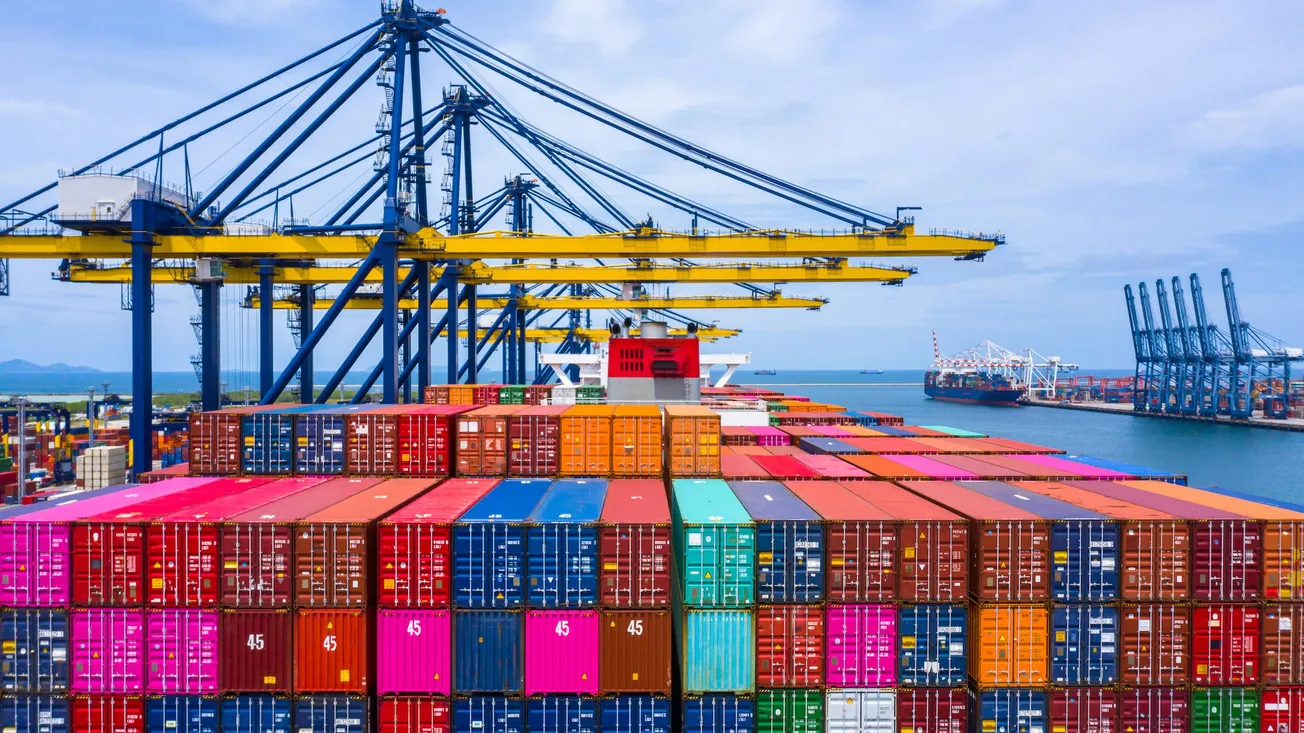
A clear structural pattern emerges across the data. Coastal economies dominate Africa’s China import rankings, benefiting from deep-water ports, container terminals, and established maritime logistics that reduce landed costs for high-volume shipments from Asia. Inland economies remain heavily dependent on these coastal states as entry points, reinforcing the role of port economies as both national importers and regional distribution hubs within Africa–China trade.
10.Senegal
Senegal imported approximately US$5 billion worth of goods from China in 2024, demonstrating sustained momentum in urban development, housing, and public infrastructure investment. While consumer goods remain present, customs records show that the bulk of imports now consist of construction-grade steel, including reinforcement bars, roofing sheets, pipes, and structural components used in residential and commercial building projects.
Electrical imports form another major category, with inflows of low-voltage cables, transformers, lighting systems, meters, and control panels supporting power distribution, commercial construction, and municipal infrastructure. Chinese construction machinery—such as concrete mixers, compact excavators, forklifts, and diesel generators—has become increasingly common on building sites, reflecting affordability and availability advantages.
Textiles and finished garments continue to supply domestic markets, but Senegal’s import profile clearly signals a transition toward industrial and infrastructure-oriented demand. As Dakar consolidates its role as a regional logistics hub, China remains a central supplier of the manufactured inputs underpinning Senegal’s urban and economic expansion.
9.Liberia
Liberia’s imports from China reached roughly US$2.9 billion in 2024, driven primarily by infrastructure rehabilitation, port upgrades, and extractive sector activity. Heavy machinery dominates the import basket, including bulldozers, excavators, graders, and wheel loaders used in road construction, mining, and land development projects.
Steel structures and prefabricated building materials are widely used in warehouses, industrial facilities, and port-related developments, reflecting the North African country’s reliance on imported construction systems. Heavy-duty trucks, trailers, and spare parts support logistics and haulage, while industrial components—such as pumps, bearings, hydraulic systems, and mechanical fittings—are essential for maintaining infrastructure and mining operations.
Liberia’s exports to China remain largely limited to raw materials, reinforcing a structurally imbalanced trade relationship. Imports are closely tied to externally financed projects and reconstruction needs, positioning China as Liberia’s dominant source of industrial goods.
8.Kenya
Kenya imported an estimated US$4.31 billion worth of goods from China in 2024, strengthening its position as East Africa’s primary entry point for Chinese manufactured products. Construction machinery—including cranes, excavators, asphalt pavers, batching plants, and road rollers—supports large-scale infrastructure and real estate development across the country.
Electrical imports are extensive and increasingly strategic. Transformers, solar panels, inverters, industrial batteries, and transmission cables are central to Kenya’s energy expansion and electrification programmes. Telecommunications equipment—such as smartphones, fibre-optic cables, routers, and network hardware—continues to flow through Kenyan ports, serving both domestic demand and regional distribution.
Synthetic textiles, footwear, and household appliances round out the import profile, meeting rising consumer demand. Despite growing exports of tea and horticultural products, Kenya’s trade with China remains heavily import-skewed, reflecting its dual role as a consumer market and regional logistics hub.
7.Tanzania
Through the ports of Tanga and Dar es salaam, Tanzania, the largest East African nation, imported approximately US$7.5 billion worth of goods from China in 2024, driven by major investments in transport corridors, housing, mining, and energy infrastructure. Railway equipment—including rails, wagons, signaling systems, and locomotives—features prominently, reflecting ongoing rail modernisation projects.
Construction machinery such as cranes, drilling rigs, excavators, and road-building equipment supports urban expansion and industrial development. Electrical imports—including substations, transformers, switchgear, and transmission cables—play a critical role in power generation and distribution upgrades, while steel plates, pipes, and beams are widely used in public works.
Industrial chemicals imported from China also serve mining and manufacturing operations. Although Tanzania exports agricultural products and minerals to China, the value gap between exports and imports remains substantial, showing China’s central role as an industrial supplier.
6.Ghana
Ghana imported roughly US$8.2 billion worth of Chinese goods in 2024, reflecting expanding industrial capacity, urban growth, and infrastructure investment. Machinery imports include milling equipment, compressors, industrial motors, and packaging systems used in food processing and light manufacturing.
Vehicles—particularly buses and commercial trucks—support transport networks and logistics, while electrical imports such as power meters, transformers, cables, and control panels are widely used in construction and energy distribution. Iron and steel products dominate inputs for housing, roads, and public infrastructure projects.
Synthetic fabrics and finished garments continue to supply domestic textile markets, highlighting Ghana’s reliance on imported manufactured inputs. Exports to China remain concentrated in gold, cocoa, and timber, reinforcing the commodity-based nature of Ghana’s outward trade.
5.Morocco
Morocco’s imports from China reached approximately US$9.8 billion in 2024, increasingly focused on industrial inputs for manufacturing and export-oriented production. Automotive components—including wiring harnesses, electronic modules, batteries, and sensors—feed directly into vehicle assembly plants serving European and regional markets.
Industrial machinery supports processing, assembly, and packaging across multiple sectors, while textile imports—synthetic fibres, yarns, and woven fabrics—are integrated into Morocco’s garment manufacturing ecosystem. Electrical components such as motors, automation systems, and control equipment enhance productivity and industrial efficiency.
These imports underpin Morocco’s broader industrial strategy, positioning the country as a manufacturing bridge between Africa, Europe, and Asia, even as exports to China remain concentrated in phosphates and agricultural products.
4.Algeria
Algeria imported approximately US$11.7 billion worth of goods from China in 2024, driven by large-scale public investment in infrastructure, housing, and energy. Heavy construction and industrial machinery dominates the import profile, alongside steel pipes, sheets, and fittings used extensively in oil, gas, and public works projects.
Vehicles—particularly buses and commercial trucks—support transport networks, while plastics and industrial chemicals serve manufacturing and construction needs. Power-generation equipment imported from China has contributed to expanding domestic energy capacity and modernising generation infrastructure.
Exports to China remain overwhelmingly concentrated in hydrocarbons, reinforcing Algeria’s position as a resource exporter and industrial importer within the bilateral trade relationship.
3.Egypt
Egypt’s imports from China totaled approximately US$15.55 billion in 2024, reflecting the scale and complexity of its industrial and infrastructure expansion. Textile machinery—spinning, weaving, and dyeing equipment—supports domestic garment manufacturing, while finished textiles and apparel continue to enter the market.
Electrical and electronic imports range from consumer devices to advanced industrial automation systems, while iron and steel products are extensively used in housing, transport, and industrial zone development. Chemicals and pharmaceutical inputs support manufacturing and healthcare production.
Chinese construction machinery underpins large-scale housing projects, industrial parks, and transport infrastructure, reinforcing China’s role as a key supplier in Egypt’s economic transformation.
2.Nigeria
Nigeria imported over US$19 billion worth of Chinese goods in 2024, making it one of Africa’s largest importers. Machinery imports alone were valued at approximately US$3.01 billion, covering power generators, compressors, pumps, industrial motors, and manufacturing equipment across energy, construction, and industrial sectors.
Electrical and electronic imports—transformers, cables, smartphones, and household appliances—dominate both industrial and consumer markets. Vehicles, iron and steel products, plastics, chemicals, and medical equipment play critical roles in infrastructure delivery, manufacturing, agriculture, and healthcare.
Despite the scale of imports, Nigeria’s exports to China remain largely limited to crude oil and raw materials, highlighting persistent structural imbalances in the trade relationship.
1.South Africa
South Africa remained Africa’s largest importer of Chinese goods in 2024, with imports totaling approximately US$21.8 billion. The import profile includes advanced industrial machinery, electrical equipment, automotive components, vehicles, and steel products that support mining, manufacturing, energy, and construction.
While consumer electronics remain significant, customs data shows China has increasingly displaced traditional suppliers in industrial inputs and capital equipment. These imports are closely integrated into South Africa’s industrial value chains, supporting both domestic production and regional exports.
Exports to China, however, remain concentrated in minerals and primary commodities, reinforcing South Africa’s role as a resource exporter and industrial importer within the broader Africa–China trade framework.
Conclusion
Taken together, the rankings reveal that Africa’s import relationship with China is no longer driven primarily by household consumption, but by structural economic demand. Across all ten countries, the dominant imports—machinery, electrical systems, steel products, vehicles, and industrial inputs—are directly tied to infrastructure delivery, industrialisation efforts, and urban expansion.
A second defining feature is logistics geography. With the exception of a few large inland markets that import through neighbouring ports, coastal economies overwhelmingly dominate China–Africa import flows. Deep-water ports, container handling capacity, and established shipping routes significantly reduce landed costs, giving port-based economies a persistent advantage in sourcing high-volume industrial goods from Asia. This reinforces the role of countries such as South Africa, Nigeria, Egypt, Morocco, Kenya, and Tanzania as both national importers and regional distribution gateways.
The data also highlights a recurring imbalance. While imports from China are increasingly diversified and industrial in nature, exports back to China remain narrowly concentrated in raw materials—minerals, hydrocarbons, and agricultural commodities. Even Africa’s most industrialised economies have yet to close this structural gap, leaving bilateral trade relationships heavily tilted toward manufactured imports and commodity exports.
At the policy level, this raises critical questions for African governments. Continued reliance on imported industrial inputs accelerates infrastructure delivery in the short term, but also exposes economies to currency pressures, external supply shocks, and persistent trade deficits. Countries that are pairing large-scale imports with domestic manufacturing strategies—such as Morocco, Egypt, and South Africa—are better positioned to extract long-term value from this relationship by embedding Chinese inputs into export-oriented value chains.
Looking ahead, Africa’s China import rankings are likely to remain concentrated among the same economies unless industrial localisation, logistics investment, and regional manufacturing integration accelerate across the continent. As infrastructure cycles mature and industrial policy deepens, the key shift to watch will not be who imports the most from China—but who converts those imports into competitive domestic production and export capacity.