Table of Contents
In Summary
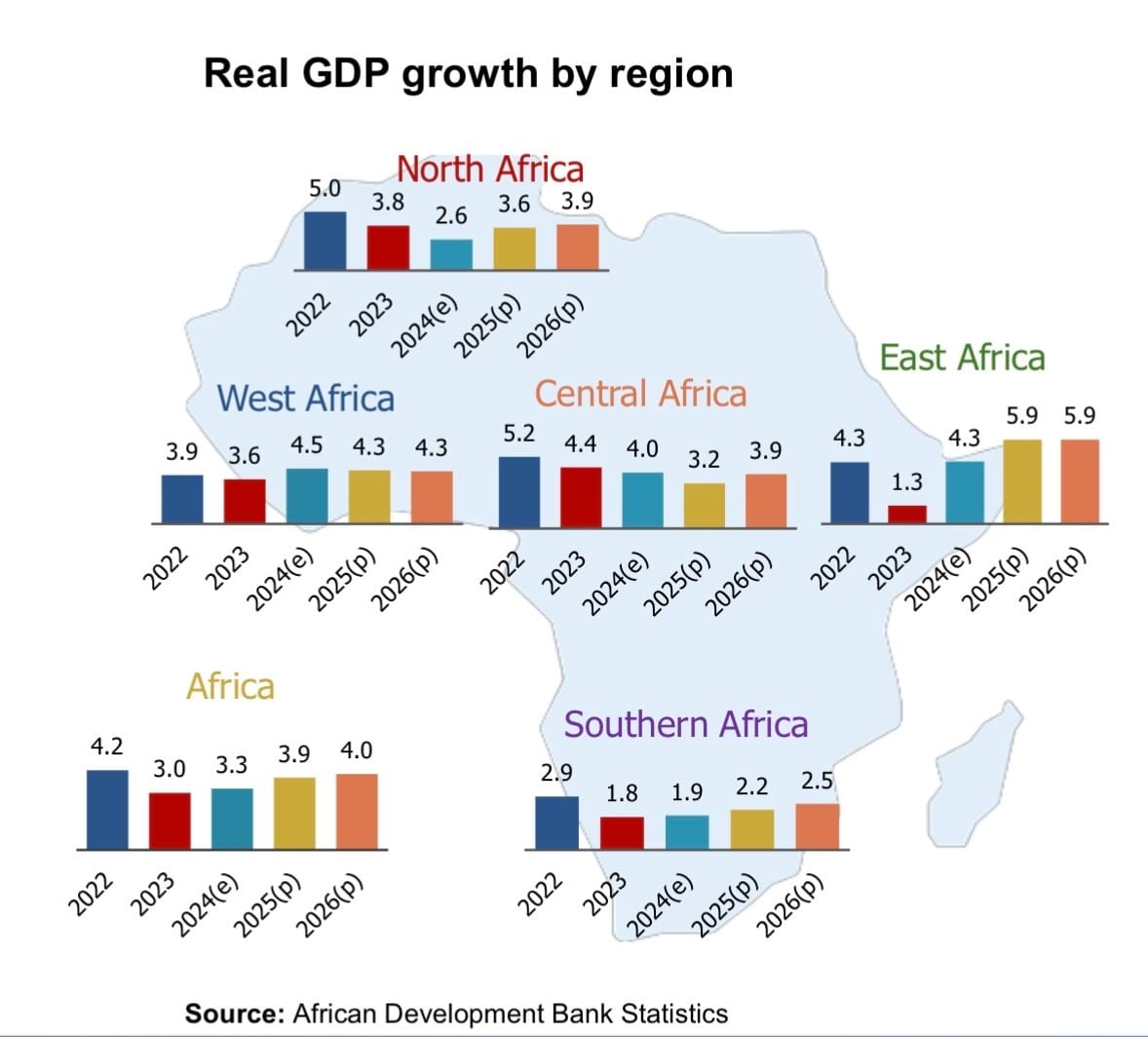
- GDP in Africa is projected to grow unevenly across regions in 2026.
- North, West, and East Africa account for the largest share of output.
- Energy, manufacturing, and population trends shape long-term expansion.
Deep Dive!!
Lagos, Nigeria, Monday, January 19, 2026 - Gross Domestic Product (often shortened to GDP) is the total value of goods and services produced within a country over a specific period. It is widely used to compare economic strength, measure activity, and determine the scale of national output. When presented in nominal terms, GDP is expressed at current market prices, meaning the figures convey economic size without adjusting for inflation, currency changes, or purchasing power factors. This approach makes it useful for ranking economies on pure market value.
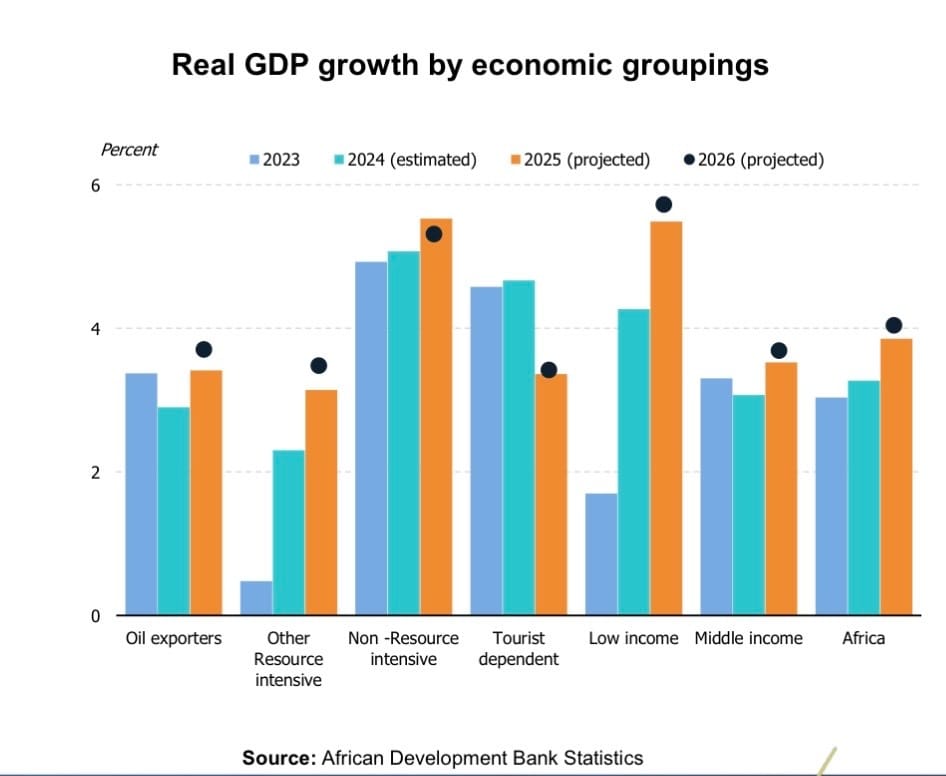
Understanding GDP in Africa provides a clearer picture of how regional economies are evolving as investment patterns shift, new industries develop, and governments pursue policy reforms. Growth on the continent varies based on sector composition, exposure to volatility in global trade, domestic consumption, and access to international capital. Countries with diversified output tend to record more stable figures, while those dependent on extractive resources experience larger swings linked to external commodity cycles.
This ranking arranges the continent’s ten largest economies by projected 2026 nominal output using multilateral economic data. The list reveals how demographic momentum, policy direction, infrastructure supply, and external market engagement influence economic performance. Readers can expect a structured breakdown of each nation’s position, factors supporting its score, and signals of where GDP in Africa may trend next based on visible developments rather than speculation.
10. Angola
Projected to reach $109.86 billion in nominal GDP in 2026, Angola stands as the tenth-largest economy in Africa, reflecting both the size and complexity of its current economic landscape. Comparatively, Angola’s GDP in 2025 was estimated to be slightly lower, indicating modest expansion driven by incremental improvements in oil production and nascent non‑oil sectors. While the absolute growth between 2025 and 2026 is not large in numerical terms, it signals a continuation of stability after a decade marked by fluctuating output due to volatile global oil prices. This persistence at the lower end of the continent’s top ten highlights structural constraints unique to Angola, especially its heavy reliance on hydrocarbons.
Oil remains Angola’s economic backbone. Crude exports account for roughly 90% of government revenue and a significant portion of foreign exchange inflows. When global oil prices rose in the early 2020s, Angola’s GDP growth rates briefly recovered, but slower oil demand and competition from other producers restrained gains. The projected 2026 GDP reflects not only oil output stabilization but also government efforts to increase refining capacity and secure longer‑term supply contracts. Nonetheless, the economy’s sensitivity to price swings means Angola’s growth is still largely bound to external energy market conditions, a key consideration when comparing its expansion trajectory to peers like Côte d’Ivoire and Ghana, whose outputs are less oil‑dependent.
Recognizing the limits of a mono‑product economy, Angola has pursued diversification policies over the past several years. The government’s National Development Plan emphasizes agriculture, mining (particularly diamonds and phosphates), and construction as supplemental growth engines. Investment in transport infrastructure, including upgrades to the Port of Luanda and highway networks, is aimed at lowering logistics costs and supporting internal commerce. These initiatives contributed to slightly higher GDP growth rates in 2025, and they are expected to underpin the incremental rise seen in 2026. However, the pace of diversification has been slower than planned due to fiscal pressures and lingering currency volatility, making Angola’s comparative growth performance more muted than in faster‑expanding competitors like Ethiopia.
On the social and labor front, Angola’s youthful population offers a potentially expansive domestic market. Rising urbanization and a growing middle class have supported sectors such as retail and telecommunications. Yet unemployment remains high, and a skills mismatch constrains productivity gains. When contrasted with 2025 figures, the 2026 projection suggests that while demographic momentum supports consumer demand, it has not yet translated into the kind of rapid GDP acceleration seen in some East African economies. For Angola to move beyond its position near the bottom of the top ten, further structural reforms, including improvements in business regulation, enhanced private‑sector financing, and more predictable fiscal policy, will be crucial in unlocking broader economic dynamism.
9. Côte d’Ivoire
Côte d’Ivoire is projected to achieve a nominal GDP of $111.45 billion in 2026, securing the ninth spot in Africa’s largest economies by output. This figure reflects continued strength and resilience in economic activity compared with its 2025 estimated GDP of about $99.21 billion, underscoring robust expansion as the country grows faster than many regional peers. Growth in nominal GDP is supported by one of the continent’s highest real expansion rates (around 6.3% in both 2025 and 2026), which consistently exceeds sub‑Saharan and continental averages thanks to dynamic investment and broad‑based production.
A key driver of Côte d’Ivoire’s economic performance has been the diversification of its production base. While agriculture remains vital, with cocoa and cashew exports central to export earnings, the services and industrial sectors have expanded significantly, attracting private investment and boosting domestic demand. Tax reforms and improved revenue mobilization have increased the government’s fiscal space, allowing higher budget allocations to infrastructure and human capital development without drastically increasing debt. IMF assessments indicate that reforms under ongoing program arrangements have strengthened macroeconomic resilience, contributing to rising tax revenues and a narrowing fiscal deficit as a share of GDP.
Compared to 2025, the 2026 projection shows both continuity and gradual maturation of Côte d’Ivoire’s growth model. Real GDP growth rates near 6.3% stem from sustained activity in manufacturing, construction, and services, sectors benefiting from improvements in business climate, governance, and investment inflows. Foreign direct investment has risen, bolstering new industrial ventures and deepening integration into global value chains. Furthermore, the country’s inflation rate is projected to remain moderate into 2026, supporting consumer purchasing power and domestic consumption. These factors combine to create a virtuous cycle where stronger output feedback sustains investment and employment growth, making the Côte d’Ivoire story about more than just headline GDP numbers.
Despite these positive trends, challenges remain. While the current account deficit has narrowed thanks to improved trade balances, vulnerability to external shocks, especially in commodity prices and global demand shifts, persists. Structural improvements in financial inclusion, labor skills development, and climate resilience will be critical in sustaining long‑term productivity gains and preventing growth volatility. When viewed against the broader landscape of GDP in Africa, Côte d’Ivoire’s 2026 position reflects both its strategic policy choices and its potential to climb further as reforms deepen and diversification continues.
8. Ghana
Ghana is projected to reach a nominal GDP of $113.49 billion in 2026, placing it eighth among Africa’s largest economies. This represents a moderate increase from its 2025 estimate of approximately $108.1 billion, reflecting a projected GDP growth rate of 4.8%. The growth trajectory demonstrates steady performance despite challenges in public debt management and external vulnerabilities. Ghana’s position highlights its resilience in combining natural resource wealth with expanding services and industrial sectors, maintaining one of the continent’s most stable macroeconomic frameworks.
Ghana’s economic composition is diversified relative to its West African peers. While gold and cocoa exports remain significant, the oil and gas sector has increasingly contributed to both GDP and fiscal revenue, stabilizing earnings amid commodity price fluctuations. Infrastructure investment, particularly in roads, ports, and energy projects, has improved logistics and reduced operational costs for businesses. In comparison with 2025, these initiatives are contributing to incremental gains in output, while ongoing reforms in public sector efficiency and tax collection are expected to enhance fiscal sustainability and indirectly support nominal GDP growth.
The country’s demographic dynamics also support economic expansion. A young and urbanizing population fuels domestic consumption, creating demand in retail, telecommunications, and housing. This consumer-driven element, combined with a growing middle class, underpins service sector growth, which has contributed increasingly to overall GDP. When contrasted with 2025 figures, 2026 projections show that although Ghana’s growth is not the fastest on the continent, it remains steady and resilient, particularly in the face of regional shocks or global economic slowdowns.
Looking forward, Ghana’s challenge lies in sustaining growth while managing debt and diversifying revenue sources further. Strategic initiatives targeting industrialization, digital economy expansion, and agribusiness could elevate its nominal GDP beyond $120 billion in the medium term. Compared with other African nations, Ghana’s balance of resource wealth, policy stability, and demographic advantage positions it well to maintain a competitive ranking in Africa’s 2026 GDP landscape.
7. Ethiopia
Ethiopia is projected to achieve a nominal GDP of $125.74 billion in 2026, placing it seventh on Africa’s list of largest economies by output. Compared with its 2025 nominal GDP of approximately $109.49 billion, this represents a substantial expansion and marks one of the largest year‑on‑year gains among the top ten. Ethiopia’s continued growth reflects strong momentum from its historically high growth rates. Real GDP growth is projected to remain around 7.1% in 2026, only slightly below the robust pace seen in 2025, underscoring the country’s rapid economic development trajectory relative to its peers.
A major driver of Ethiopia’s economic trajectory is its emphasis on infrastructure, industrialisation, and export expansion. Over the past decade, the country has invested heavily in power generation, transport networks, and manufacturing zones. Projects such as the Grand Ethiopian Renaissance Dam (GERD) have significantly expanded electricity capacity, reducing power shortages and supporting energy‑intensive industries. With increased grid reliability, industrial parks and export‑oriented sectors have attracted both domestic and limited foreign investment, contributing to rising output and facilitating a steeper growth curve from 2025 into 2026.
Ethiopia’s demographic profile also plays a role in its growth story. With one of Africa’s largest and youngest populations, domestic demand, particularly in services and consumer goods, continues to rise. Agricultural productivity improvements, including mechanisation and input access, bolster both food security and export potential. When contrasted with 2025, 2026’s GDP projection reflects the compounding effects of strong real growth, rising consumption, and a broader base of production activities. However, the expansion is not without challenges; managing inflation, stabilising the foreign exchange market, and completing ongoing structural reforms remain essential to translate high real growth into sustained nominal gains without external imbalances.
Looking ahead, Ethiopia’s economic outlook depends on its ability to continue reform momentum, deepen industrial capabilities, and improve fiscal and monetary stability. Progress under IMF‑supported programs and debt restructuring efforts, including agreements under the G20 Common Framework, has helped improve macroeconomic confidence, but risks tied to external financing and global demand persist. If Ethiopia can maintain its reform trajectory while leveraging infrastructure investments and demographic advantages, its GDP growth between 2026 and beyond could outpace many African counterparts, further solidifying its role as a key growth engine in the region’s evolving economic landscape.
6. Kenya
Kenya is projected to reach a nominal GDP of $140.87 billion in 2026, moving up as the sixth-largest economy in Africa. This is a moderate increase from its 2025 GDP of approximately $134.3 billion, reflecting steady growth driven by a diverse mix of agriculture, services, and emerging manufacturing sectors. The projected real GDP growth of 4.9% in 2026, slightly below 2025’s 5.0%, indicates continued expansion, albeit at a modestly slower pace, highlighting both resilience and structural constraints in sustaining rapid growth.
A key factor in Kenya’s performance is its service sector, particularly financial services, ICT, and tourism. Nairobi has established itself as an East African financial hub, with digital payments and fintech innovation contributing significantly to GDP. Agricultural exports, including tea, coffee, and horticultural products, remain vital, supporting rural incomes and foreign exchange. Compared with 2025, 2026 reflects slight gains in industrial output, driven by investments in manufacturing parks and special economic zones that aim to diversify the economy and reduce overreliance on traditional sectors.
Infrastructure development continues to underpin Kenya’s GDP expansion. Major projects, including the Standard Gauge Railway connecting Mombasa to Nairobi and energy grid enhancements, improve logistics efficiency and support trade. Compared to 2025, these investments have contributed to higher domestic productivity and attracted foreign direct investment, enabling Kenya to consolidate its position within the top six African economies. Additionally, policy reforms around taxation and business licensing have enhanced private sector activity, further bolstering nominal GDP growth.
Looking forward, Kenya faces the challenge of balancing rapid urbanization with sustainable growth. While demographic trends and rising consumer demand support expansion, fiscal pressures, public debt management, and regional security risks may constrain growth if unaddressed. Nevertheless, with continued investment in infrastructure, digital economy expansion, and sectoral diversification, Kenya is well-positioned to maintain steady GDP gains, reinforcing its role as a key driver of GDP in Africa for 2026 and beyond.
5. Morocco
Morocco is projected to record a nominal GDP of $196.12 billion in 2026, placing it fifth among Africa’s largest economies by output. This marks a sizable increase from its 2025 nominal GDP of about $179.61 billion, reflecting an expansion of roughly 9.2% in market value terms. The projected GDP growth is anchored in relatively resilient performance across sectors, with real GDP growth rates estimated near 4.4% in 2025 and remaining solid into 2026, even amid global uncertainties.
Morocco’s economic structure blends traditional sectors with dynamic services and manufacturing. Agriculture, while vulnerable to climatic stress such as drought, rebounded in 2025 due to improved rainfall and continued to support rural incomes. At the same time, non‑agricultural sectors, especially automotive and aerospace manufacturing, tourism, and construction, contributed increasingly to overall output. The country’s strategic integration into global value chains has helped offset volatility in external demand, supporting a stable rise in nominal GDP from 2025 into 2026. Continued investment in transport and energy infrastructure, including ports and renewable energy, has also enhanced productivity and trade competitiveness.
Comparing growth dynamics between 2025 and 2026, Morocco’s expansion reflects both cyclical and structural forces. Real GDP growth in 2025 was reported at around 4.4%, underpinned by stronger domestic demand and recovery in key sectors, while forecasts for 2026 suggest a continuation at similar levels, with some analysts projecting around 4.5% real growth. This relative stability despite external headwinds such as global trade uncertainties indicates that Morocco’s diversification efforts and policy reforms are helping sustain momentum. Continued structural reforms under IMF‑supported frameworks, including tax modernization and private sector development, have bolstered resilience and supported investor confidence.
Looking ahead, Morocco’s economic trajectory between 2025 and 2026 suggests a country balancing traditional economic foundations with forward‑looking strategies. Enhancements in digital infrastructure, expansion of renewable energy capacity, and deeper financial sector development contribute to a more resilient growth base. However, challenges remain, including labor market rigidity and exposure to climate risks affecting agriculture. If Morocco continues implementing structural reforms and deepening economic diversification, its nominal GDP could grow at a sustained pace beyond 2026, reinforcing its position among Africa’s top economies and shaping broader trends in GDP in Africa.
4. Algeria
Algeria is projected to record a nominal GDP of $284.98 billion in 2026, a modest rise from its 2025 estimate of about $288.01 billion, reflecting a relatively stable output as measured in current prices. While the headline figure may suggest only incremental growth, the context behind Algeria’s economic performance reveals deeper structural nuances. Between 2024 and 2025, Algeria’s economy witnessed moderate expansion, with nominal GDP increasing by around 7.2% in local currency terms, although dollar‑equivalent figures fluctuated due to currency and price changes. Real growth has moderated relative to earlier years, but ongoing diversification beyond hydrocarbons has started to influence the pattern of output.
A defining feature of Algeria’s economic landscape is the continued dominance of the hydrocarbon sector, which historically accounts for the bulk of export revenues and fiscal receipts. However, in 2025, hydrocarbon output experienced contraction due to OPEC+ production adjustments, even as non‑hydrocarbon sectors like agriculture, manufacturing, trade, and services expanded at respectable rates. Non‑hydrocarbon GDP growth, often between 4.8% and 5.4%, helped cushion the overall economy and supported domestic demand. Compared with 2025, the projected 2026 growth profile reflects this shift: hydrocarbons are expected to contribute less to expansion while services and agriculture remain relatively dynamic.
The comparative picture between 2025 and 2026 highlights a transition phase. Algeria’s real GDP growth was around 3.8% in 2025, supported by public investment and consumption, even as hydrocarbon revenues softened and external trade balances shifted. For 2026, growth projections forecast slightly lower rates near 3.5%–3.8%, indicating a modest slowdown as global energy demand evolves and diversification efforts take time to translate into broader industrial growth. Persistent inflation pressures have eased, and a stable exchange rate has supported household purchasing power, factors that enhance internal market robustness but do not radically alter Algeria’s ranking among Africa’s largest economies.
Looking ahead, Algeria’s ability to sustain and potentially accelerate growth will depend on deepening structural reforms, strengthening private‑sector investment, and enhancing competitiveness outside the energy sector. The government’s focus on reducing the fiscal deficit, expanding agricultural output, and encouraging manufacturing is aimed at creating a more balanced economic profile. Nonetheless, external factors such as energy price volatility and regional competition will shape Algeria’s growth trajectory. If diversification strategies bear fruit, Algeria’s nominal GDP in subsequent years could grow more strongly, but the 2026 projection suggests steady relative performance within the broader landscape of GDP in Africa rather than dramatic repositioning.
3. Nigeria
Nigeria is projected to achieve a nominal GDP of $334.34 billion in 2026, securing the third spot among Africa’s largest economies by output. This figure marks a notable increase from its 2025 nominal GDP of approximately $285.00 billion, reflecting substantial growth in raw economic output year on year. The expansion in nominal terms captures both real economic activity and the effects of price and exchange rate movements, positioning Nigeria as a resilient engine of economic scale on the continent.
A comparative analysis between 2025 and 2026 shows that Nigeria’s economy is recovering from transitional pressures tied to major policy shifts implemented under recent administrations. Structural reforms, including the removal of fuel subsidies, foreign‑exchange market liberalization, and tax system overhauls, have improved macroeconomic stability, strengthened investor confidence, and helped contain inflationary pressures. According to official data, inflation in late 2025 eased significantly from double‑digit spikes seen in prior years, while the naira stabilized against major foreign currencies. This macro stability, coupled with stronger foreign reserves, underpins Nigeria’s larger nominal GDP projection in 2026.
In terms of real growth dynamics, 2025 delivered moderate expansion amid mixed performance across sectors. IMF forecasts from mid‑2025 projected Nigeria’s real GDP growth at about 3.4% in 2025, and while some revisions suggest variations, this reflects a meaningful rebound from slower years earlier in the decade. Continued reforms, including investment in non‑oil sectors such as telecommunications, agribusiness, and manufacturing, sustained more balanced growth. The services sector, by many accounts, remained the dominant driver of output growth, supported by financial services expansion and improving business sentiment.
Looking forward to 2026, growth is expected to remain positive though moderate, with projections from international institutions anticipating rates in the low‑to‑mid 3% range. While oil production and exports will continue to contribute to national income, non‑oil sectors are increasingly shaping the expansion profile. Agriculture, services, and emerging industrial segments supported by public infrastructure projects and digital economy assets are gradually broadening the production base. However, persistent challenges such as inflation volatility, infrastructure deficits (especially in power and logistics), and socio‑economic pressures underscore the complexity of converting nominal GDP increases into widespread prosperity. In the context of GDP in Africa, Nigeria’s growth between 2025 and 2026 reflects a combination of scale and transition, where policy reform underpins output expansion even as structural constraints temper the pace of real economic acceleration.
2. Egypt
Egypt is projected to record a nominal GDP of $399.51 billion in 2026, securing the second‑largest economy position in Africa. This projection represents a notable increase from its 2025 nominal GDP of approximately $349.26 billion, indicating an expansion of roughly 14.4% in current‑price terms from 2025 to 2026. This growth reflects both real economic expansion and adjustments in price levels and exchange rates that influence the value of total output when expressed in U.S. dollars.
Comparatively, Egypt’s real GDP growth has rebounded in recent periods following a challenging phase of currency volatility, inflationary pressures, and external shocks. In the 2024–25 fiscal year, real GDP expanded by about 4.4% to 4.5%, driven by improvements in manufacturing, services, and structural reforms under IMF‑supported programs. Fiscal policy tightening, inflation moderation, and a more flexible exchange rate regime helped stabilize macroeconomic conditions in 2025, supporting a firmer foundation for growth into 2026. These reforms, including tax administration improvements and public finance consolidation, contributed to stronger investor confidence and domestic economic activity.
Egypt’s growth dynamics between 2025 and 2026 reflect both cyclical recovery and structural adjustment. Real GDP growth is projected to remain solid in the mid‑4% range, with multiple forecasts suggesting acceleration toward 4.5%–4.7% in 2026 as domestic demand, investment, and exports strengthen. Export sectors, particularly in manufacturing and tourism, have rebounded as global conditions improved, while domestic consumption has been supported by wage adjustments and employment growth. Continued public investment in housing, transport, and digital infrastructure also supports broad‑based expansion. These factors helped lift Egypt’s nominal GDP from 2025 into 2026 more robustly than many regional peers, reflecting both increased output and price effects on total economic value.
Despite these positive trends, challenges persist. Inflation, though significantly lower than peaks seen in prior years, remains comparatively high, affecting household consumption and cost structures for businesses. External vulnerabilities, including reliance on imported energy and food, expose the economy to global price shocks. Currency volatility and current account deficits, although narrowing, still require careful management to sustain growth momentum. If Egypt can maintain reform momentum, deepen private sector participation, and expand export capacity, it could further consolidate its position not only in Africa’s economic rankings but also in broader global value chains beyond 2026.
1. South Africa
South Africa is projected to maintain its position as Africa’s largest economy with a nominal GDP of $443.64 billion in 2026, building on its long‑standing role as the continent’s industrial and financial hub. This projection reflects an increase from its 2025 nominal GDP of approximately $426.38 billion, indicating steady expansion in current‑price terms. The nominal growth from 2025 to 2026 captures not only modest increases in real economic activity but also the influences of price dynamics and exchange‑rate effects that impact the U.S.‑dollar value of output.
A detailed comparison of 2025 and 2026 growth dynamics reveals that South Africa’s economy has been navigating structural constraints while registering modest progress. According to key multilateral estimates, real GDP growth in 2025 is expected to be around 1.1%–1.3%, up slightly from earlier expansions, and is projected to edge toward 1.3%–1.4% in 2026 as reform measures take firmer root. This trajectory represents a cautious but meaningful shift from slower growth years earlier in the decade, reflecting improvements in electricity supply, logistics, and business confidence. Enhanced private‑sector activity and more reliable energy delivery have been cited in official assessments as contributors to this gradual upturn in output.
Despite these positive signs, South Africa’s growth pattern remains subdued relative to many emerging markets, largely because structural impediments such as persistent power shortages, rigid labor markets, and inadequate investment rates continue to constrain expansion. Real growth rates near 1.3% belie deeper challenges; investment levels have remained low, and productivity gains are uneven across sectors. Nonetheless, compared with 2025, the 2026 outlook suggests that policy reforms coupled with ongoing fiscal consolidation and targeted infrastructure investment are slowly lifting potential growth, particularly in services, finance, and manufacturing segments that contribute significantly to nominal GDP.
Looking ahead, South Africa’s ability to sustain and strengthen its lead in GDP in Africa hinges on deepening structural reforms and boosting investment in energy, transport, and technology. Continued improvements in macroeconomic stability, combined with efforts to expand private‑sector participation and enhance productivity, could incrementally raise potential growth beyond the current projections. If successful, these structural changes would not only support nominal GDP increases from 2025 to 2026 but also lay the groundwork for more robust, inclusive expansion in the medium term.
The 2026 GDP projections highlight a continent in transition, where both established and emerging economies are leveraging reforms to strengthen output and resilience. Across Africa, governments are increasingly implementing structural reforms targeting diversification, investment facilitation, and fiscal stability, with programs ranging from public‑sector efficiency upgrades to infrastructure expansion and digital economy initiatives. Energy, industrial, and agricultural modernization are gaining momentum, while monetary and trade policy adjustments aim to stabilize macroeconomic conditions. As these initiatives take root in 2026, we can expect gradual shifts in growth patterns, with nations like Ethiopia, Côte d’Ivoire, and Nigeria expanding their production bases, Morocco and Egypt solidifying industrial gains, and South Africa and Algeria implementing structural measures to overcome long-standing constraints collectively shaping the trajectory of GDP in Africa toward more sustainable and balanced growth.