Table of Contents
In Summary:
- The African banking sector is defined by three dominant models: pan-African expansion, domestic state-backed scale, and global banks like QNB and Standard Chartered.
- Strategic differentiation is critical for growth, with leading banks focusing on digital innovation, sustainability-driven finance, and deep regional integration through alliances or acquisitions to build resilient, diversified portfolios.
- The asset size and stability of these top banks are deeply intertwined with national economies and sovereign risk.
- The ranking underscores a trend of increasing consolidation and cross-border influence, highlighted by QNB's top position via its Egyptian acquisition.
Deep Dive!!
Friday, 12 December 2025 – The African banking landscape in 2025 is a dynamic tapestry woven from legacy, innovation, and strategic ambition. Beyond the headline figures of total assets lies a fiercely competitive arena where institutions vie for dominance not only through scale but through distinct models of growth—from deep-rooted pan-African expansion and state-backed economic stewardship to the commanding influence of global capital. This year's ranking reveals a sector in transformative flux, where digital acceleration, regional integration, and macroeconomic resilience are critical determinants of success. Understanding the composition and strategy behind these asset portfolios is essential for investors, policymakers, and corporate leaders seeking to navigate the continent's complex financial ecosystems.
Our analysis, grounded in the latest verified annual reports (FY 2024) and data from authoritative sources including The Banker and S&P Global, profiles the ten institutions that define this pivotal moment. We move beyond mere valuation to explore the historical origins, portfolio composition, and profound economic impact of each bank. From Moroccan giants bridging continents to South Africa's innovative federations and Egypt's sovereign pillars, these profiles elucidate how Africa's largest banks are shaping, and are shaped by, the continent's ambitious growth trajectory in an interconnected global economy.

10. Attijariwafa Bank (Morocco)
Founded in 1904 as the Banque Commerciale du Maroc, Attijariwafa Bank's modern form emerged from the 2003 merger of Banque Commerciale du Maroc and Wafabank, later absorbing Crédit du Maroc. This consolidation created a national champion, which then embarked on a deliberate southward expansion. As of its 2024 financial report, the bank holds approximately $70 billion in assets, with a significant and growing portion derived from its international operations, which now contribute nearly 25% of its net banking income. Its portfolio is strategically balanced between robust retail banking in Morocco, where it serves over 8 million customers, and a dominant corporate and commercial footprint in Francophone Africa, including market-leading positions in Tunisia, Senegal, and Côte d'Ivoire.
The bank's impact is that of a regional economic integrator. By deploying a standardized yet locally-adapted banking model, it has increased financial inclusion and facilitated intra-regional trade and investment for Moroccan and European corporates venturing into West Africa. Its digital platform, WafaCash, has become a critical remittance corridor between the Moroccan diaspora and the homeland. However, its asset concentration in specific Francophone markets also exposes it to regional political and currency risks, a factor closely watched by analysts. Attijariwafa’s strategy demonstrates how a historically domestic bank can successfully transform itself into a pan-regional pillar of financial stability and development.
9. Banque Misr (Egypt)
Established in 1920 by the economist Talaat Harb Pasha as Egypt's first wholly indigenous bank, Banque Misr was born from a national renaissance movement to foster economic independence. Today, it stands as one of the two colossal state-owned pillars of the Egyptian financial system, with reported assets of $75 billion for FY 2024. Its asset portfolio is uniquely shaped by its public policy role: a vast portion is allocated to treasury bonds, subsidized lending schemes for strategic industries (like agriculture and manufacturing), and financing for massive state-led infrastructure projects, including the new administrative capital. It operates the largest branch network in Egypt, with over 830 branches, capturing a dominant share of public sector payroll accounts and retail deposits.
The bank's impact on the Egyptian economy is profound and multifaceted. It acts as a direct conduit for implementing the government's industrial and social policies, channeling credit to priority sectors and providing essential banking services to millions. This deep integration makes Banque Misr a critical tool for macroeconomic management, but it also intertwines its asset quality and performance with the sovereign's fiscal health. During periods of economic reform, such as the recent currency floatation, the bank plays a stabilizing role, though it must manage the associated volatility in its foreign currency holdings. For investors, Banque Misr represents a direct, albeit complex, proxy for the trajectory of the Egyptian state itself.
8. ABSA Group (South Africa)
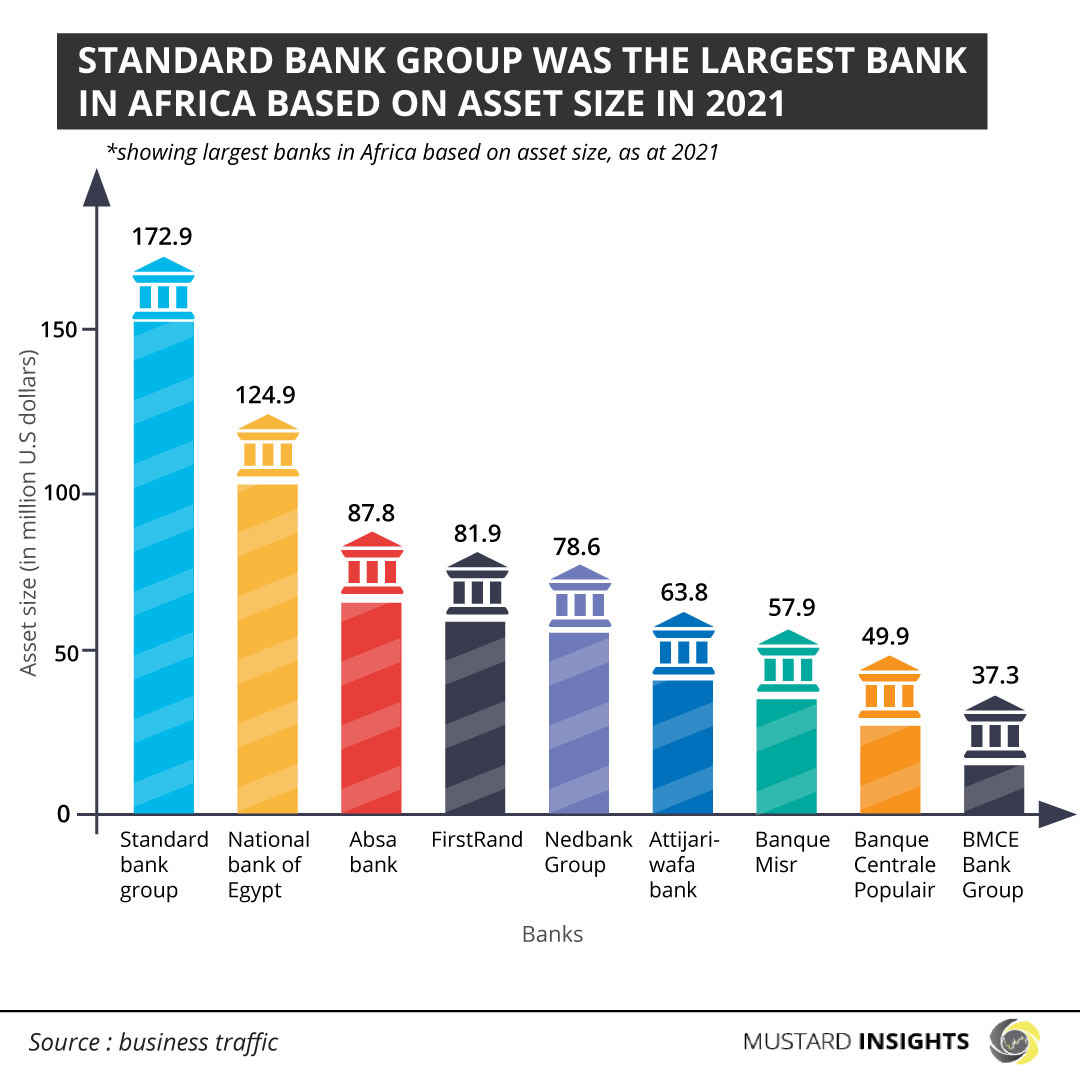
ABSA’s origins trace back to the 1991 merger of a group of building societies, culminating in the 1998 formation of the Amalgamated Banks of South Africa (ABSA). Its international profile was shaped by Barclays PLC's 2005 majority acquisition, a relationship that was fully unwound by 2021. Liberated from its UK parent, ABSA has aggressively pursued its own "Africanacity" strategy. As per its 2024 integrated report, the group’s assets stand at $95 billion, supported by a diversified portfolio across its home market and a focused presence in 12 other African countries. Its operations are segmented into Retail and Business Banking (RBB), Corporate and Investment Banking (CIB), and Wealth and Investment Management, with RBB in South Africa remaining the largest profit contributor, while its African regional operations are its fastest-growing segment.
ABSA’s impact is defined by technological empowerment and strategic market depth. In South Africa, its award-winning digital banking app and ecosystem (including services like Apple Pay integration) have set industry standards, driving financial inclusion and reducing servicing costs. Across the continent, particularly in Kenya and Ghana, it has moved beyond a corporate banking foothold to build meaningful retail and SME franchises, offering tailored products for local markets. This dual focus, defending and innovating at home while growing thoughtfully abroad, has allowed ABSA to shed its former subsidiary status and emerge as a confident, continentally-minded competitor whose asset growth is increasingly tied to pan-African consumer and business dynamism.
7. BMCE Bank of Africa (Morocco)
The Bank of Africa (BOA) Group's story is one of visionary pan-Africanism. Founded in 1959 as the Banque Marocaine du Commerce Extérieur (BMCE), its transformative shift began under the leadership of Othman Benjelloun in 1995, who initiated an ambitious expansion into sub-Saharan Africa. Today, its flagship entity, BMCE Bank of Africa, reports assets of $100 billion. Its portfolio is a testament to its unique "hub-and-spoke" model: a strong, profitable core in Morocco funding expansion, and a vast, diversified network of 20 subsidiary banks across Sub-Saharan Africa and a representative office in Dubai. This network is particularly dominant in West African Economic and Monetary Union (WAEMU) countries, where it often ranks among the top three banks.
The group’s impact lies in its deep, long-term commitment to financializing real economies across the continent. Unlike institutions that focus solely on corporate trade finance, BOA has invested heavily in serving SMEs, agricultural cooperatives, and the nascent middle class in its host countries. It has also been instrumental in financing major infrastructure projects, such as ports and renewable energy plants, through its investment banking arm, Casablanca Finance Group. This approach has made it a trusted partner for international development finance institutions (DFIs). The bank’s success demonstrates that a truly integrated, on-the-ground presence, built over decades, can create a resilient and systemically important pan-African financial institution whose risk is mitigated by geographic and sectoral diversification.
6. FirstRand Bank (South Africa)
FirstRand’s structure is the product of a unique 1998 "corporate unbundling" that created a holding company for a federation of leading financial brands: First National Bank (FNB), Rand Merchant Bank (RMB), WesBank, and Ashburton Investments. This decentralized model empowers each brand with entrepreneurial autonomy. For FY 2024, the group reported assets of $110 billion. Its portfolio is exceptionally well-balanced: FNB contributes a massive retail and commercial deposit base and pioneering digital revenue; RMB is a powerhouse in investment banking, structured finance, and international deal-making; and WesBank leads in vehicle and asset finance. This internal synergy allows capital and client referrals to flow efficiently across the group.
FirstRand’s impact is characterized by relentless innovation and high-return capital deployment. FNB is arguably the continent's most digitally advanced retail bank, having successfully monetized a platform offering telecommunications, insurance, and stock trading alongside traditional banking, creating unparalleled customer stickiness. RMB, meanwhile, has shaped South Africa’s corporate landscape, advising on the largest mergers and acquisitions and funding complex infrastructure projects across Africa, often in partnership with global investors. The group’s consistent delivery of industry-leading return on equity (ROE) demonstrates the efficacy of its federated model. FirstRand is less a monolithic bank and more a dynamic financial ecosystem that consistently identifies and capitalizes on high-growth opportunities ahead of its peers.
5. Nedbank Group (South Africa)
Nedbank's origins date to 1888 with the establishment of the Nederlandsche Bank voor Zuid-Afrika. After a period as a subsidiary of the UK’s Old Mutual, it became fully independent in a 2018 demerger. It now charts a distinct course with assets of $115 billion (FY 2024). Its portfolio strength is dual-faceted: a high-performing, sustainability-focused franchise in South Africa, and its landmark Strategic Alliance Agreement with Ecobank Transnational Incorporated (ETI). This alliance, rather than outright acquisition, grants Nedbank exclusive access to serve its corporate clients across Ecobank’s 33-country network, a capital-light model for pan-African growth. Domestically, its cluster structure excels in Corporate and Investment Banking (CIB) and Retail and Business Banking (RBB).
Nedbank’s impact is defined by its leadership in sustainable finance and its innovative partnership model. It is the undisputed South African leader in green bonds and ESG-linked lending, directing capital towards renewable energy, water security, and social housing projects. This has positioned it as the bank of choice for multinationals and DFIs with strong sustainability mandates. The Ecobank alliance, meanwhile, has allowed it to punch far above its weight in pan-African corporate banking without the associated balance sheet burden, creating a powerful and unique competitive advantage. Nedbank’s strategy proves that in a capital-intensive industry, strategic ingenuity and niche leadership can be as valuable as sheer scale in driving profitable growth and influence.
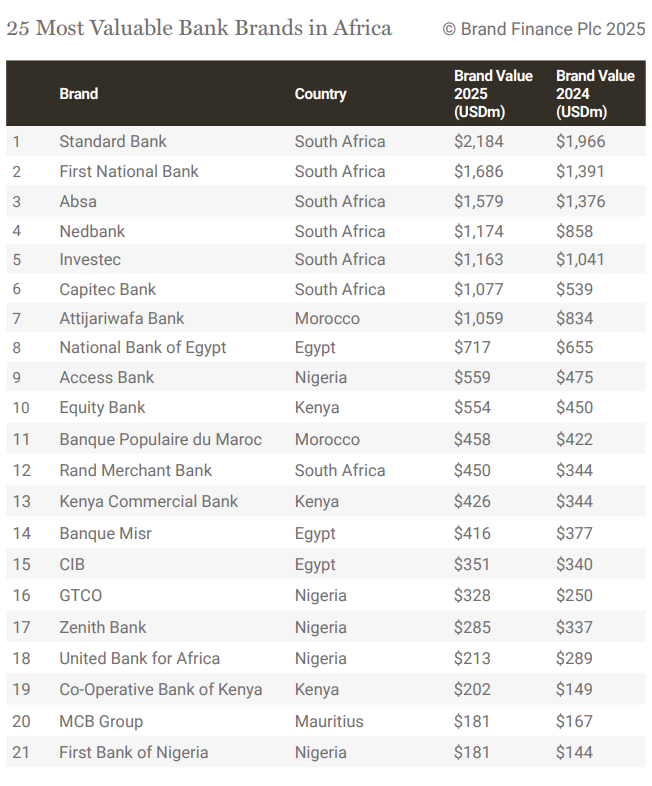
4. Standard Bank Group (South Africa)
Founded in 1862 as the Standard Bank of British South Africa, the group's history is inextricably linked with the development of the continent itself. With a contemporary footprint in 20 African countries and key global centers, it rightfully claims the title of Africa's largest bank by assets, reporting $160 billion for FY 2024. Its portfolio is built on an unmatched corporate and institutional banking franchise, which contributes the lion's share of earnings. It is the primary banker to most major mining houses, energy companies, and governments across its footprint, and a dominant player in custody services and debt capital markets. Its personal and business banking units provide a stable, broad-based deposit foundation, particularly in South Africa.
Standard Bank’s impact is one of sheer systemic importance. It is the essential financial intermediary for Africa's trade with the world, particularly in commodities. Its physical presence and deep local knowledge in complex markets like Angola, Nigeria, and Ghana make it an indispensable partner for any multinational corporation operating on the continent. The bank’s "One Africa" strategy ensures its vast network operates in a coordinated manner to serve cross-border clients. While it faces challenges in digital retail innovation compared to more agile competitors, its unparalleled distribution, risk management expertise in frontier markets, and role as the continent's financial gateway cement its position as the bedrock of African finance, whose fortunes are a direct reflection of continental GDP growth and global commodity cycles.
3. National Bank of Egypt (NBE)
The National Bank of Egypt holds the distinguished title of the country's first bank, founded in 1898 with initial capital provided by the Egyptian government. It was conceived to free the national economy from foreign financial control. Over a century later, it is the cornerstone of the Egyptian financial system, with FY 2024 assets of $165 billion. Its portfolio is uniquely sovereign-centric: it acts as the primary banker to the Egyptian government, holding a dominant share of public sector deposits and government debt securities. It also manages key national projects, subsidy disbursements, and foreign exchange allocation programs. This relationship creates an immense, low-cost funding base but also mandates significant holdings of sovereign paper.
NBE’s impact is that of a macroeconomic stabilizer and development financier. It is the engine for executing the state's economic vision, from financing megaprojects like the Suez Canal expansion to implementing micro-lending initiatives for farmers. During economic crises, it is routinely called upon to launch dollar-saving deposit schemes for citizens and to provide forex for essential imports. This critical role, however, means its asset quality and profitability are highly sensitive to changes in sovereign credit ratings, interest rate policies, and the stability of the Egyptian pound. For the international financial community, NBE is the most significant barometer of Egyptian sovereign risk and a crucial counterparty for any entity engaging with the state.

2. Standard Chartered South Africa
Standard Chartered’s African story began in 1862 with the opening of its first branch in Cape Town, predating even its presence in Hong Kong. While globally headquartered in London, its African operations, concentrated in its South Africa subsidiary, represent a massive and autonomous pillar of the group, with dedicated African assets of $170 billion as of 2024. Its portfolio is deliberately focused on the premium segment of the market: multinational corporations, large domestic corporates, financial institutions, and affluent individuals. It dominates in cash management, trade finance (where it is a top-three player in Africa), and foreign exchange, leveraging its unique network that connects Africa, Asia, and the Middle East.
The bank’s impact is that of Africa’s premier financial connective tissue to the global economy. It facilitates over $50 billion in annual Africa-Asia trade flows and is a leading arranger of Eurobonds for African sovereigns and corporates. Its "Here for good" slogan is operationalized through its massive sustainable finance portfolio, funding climate-resilient infrastructure across the continent. By focusing on wholesale and affluent banking, it avoids the high costs of mass retail distribution, achieving superior returns on capital. Standard Chartered’s presence proves that a global bank with deep historical roots can maintain a leading, profitable, and critically important role by specializing in the complex cross-border financial needs that underpin Africa’s global integration.
1. Qatar National Bank (QNB) - Egypt
QNB's ascent to the top of this list is a direct result of one of the most significant cross-border acquisitions in African financial history: the 2012-2013 full acquisition of Egypt's NSGB (National Société Générale Bank) for $2.5 billion, followed by its complete integration. While Doha-based QNB Group boasts global assets of $300+ billion, its Egyptian subsidiary alone, now branded QNB ALAHLI, constitutes the largest asset pool on the African continent. As of 2024, the Egyptian operation's assets are estimated to exceed $60 billion, making it larger than many standalone pan-African banks. Its portfolio mirrors a full-service universal bank but with the backing of one of the world's strongest (AA- rated) and most liquid banking groups.
QNB’s impact in Africa, through Egypt, is transformative. It injected immense capital strength and stability into the Egyptian banking sector, especially during the economic turbulence following the 2011 revolution. The subsidiary benefits from QNB Group's low-cost funding, allowing it to offer competitive lending rates and fund large-scale infrastructure and energy projects that require substantial, long-term capital. Furthermore, it acts as QNB's strategic hub for North and East Africa, facilitating trade and investment flows between the Gulf and the continent. The bank's position highlights a pivotal shift: the growing dominance of Gulf capital in African strategic sectors and the reality that the continent's largest financial pools may increasingly be controlled by globally powerful, regionally-focused institutions.
We welcome your feedback. Kindly direct any comments or observations regarding this article to our Editor-in-Chief at [email protected], with a copy to [email protected].