Table of Contents
In Summary
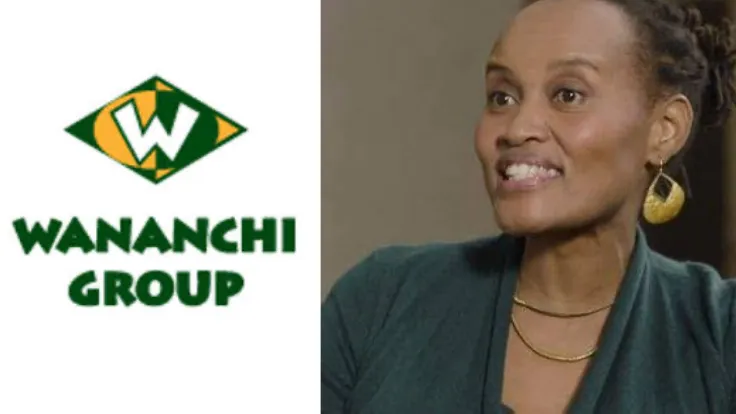
- Njeri Rionge is a Kenyan entrepreneur and co-founder of Wananchi Group, the company behind Zuku, a leading East African internet and cable provider.
- She was one of the first women in Kenya to build a technology business that scaled across East Africa.
- Her work expanded digital access and inspired a generation of African tech entrepreneurs.
Deep Dive!!
Lagos, Nigeria, Tuesday, January 28, 2026 - In the late 1990s, Kenya’s digital landscape was still in its infancy. Internet access was rare, expensive, and mostly limited to government institutions and universities. Into this environment stepped Njeri Rionge, a Kenyan entrepreneur who would become one of the region’s first tech pioneers. As a co-founder of Wananchi Group, the company behind Zuku, she helped bring broadband, cable, and satellite services to households and businesses across East Africa.
Rionge’s work went beyond providing internet access. She proved that technology-driven businesses could succeed in Africa and attract both local and international investment. By building one of the first mass-market tech ventures in the region, she inspired a generation of entrepreneurs to explore digital solutions tailored for African markets.
Her journey is intertwined with the story of Africa’s digital emergence, highlighting the challenges of limited infrastructure, market innovation, and the creation of new opportunities for growth. This profile will trace her early life, career beginnings, key achievements, global influence, and the legacy she continues to shape in Africa’s technology ecosystem.
Early Life, Education, and Experience
Njeri Rionge was born and raised in Kenya, though the exact year of her birth is not widely documented. She grew up during a period of economic and educational reform, which likely influenced her awareness of emerging opportunities in business and technology.
Rionge pursued higher education in the United Kingdom, studying business and management. During this time, she gained exposure to global business practices, entrepreneurship models, and emerging digital technologies. This international experience equipped her with strategic thinking and operational skills that would later shape her ventures in Kenya.
Before founding her first major technology business, Rionge gained early professional experience in consulting and business development, working in roles that allowed her to understand market gaps, customer needs, and how technology could solve real problems in Africa. These experiences combined with her education laid the foundation for her later work as a tech entrepreneur.
Inspiration to Start Wanachi Group
Njeri Rionge’s drive to build technology ventures in Kenya was shaped by a mix of personal ambition, market gaps, and global exposure. In the 1990s, Kenya’s digital and telecommunications sector was extremely limited. Internet penetration was estimated at less than 1%, and most services were concentrated in government offices, universities, and multinational corporations. Mobile phones were just beginning to enter the market, and private investment in technology was minimal. Growing up in this environment, Rionge observed the disparity between what was available in developed markets and the potential for digital solutions in Africa.
Her studies in the United Kingdom gave her a firsthand view of how technology could transform business and everyday life. She saw internet cafes, home broadband connections, and media services that were affordable and accessible. These experiences made her realize that East African consumers could benefit from similar solutions, but only if they were adapted to the local infrastructure, pricing constraints, and cultural context.
Rionge was also inspired by the challenge of being a woman in a male-dominated business and tech environment. At a time when few women were founding tech companies in Africa, she saw an opportunity to break barriers while creating services that addressed real market needs. She was motivated to build ventures that not only generated profits but also solved practical problems such as connecting households to reliable internet, providing business owners with digital tools, and expanding access to information and media.
Her early vision was clear. To create scalable, technology-driven businesses that were tailored to African realities. This combination of personal ambition, market insight, and global exposure became the foundation for her first ventures, including Wananchi Group, which would eventually revolutionize broadband and cable services in Kenya and across East Africa.
What Problem Wanachi Group Solves
When Njeri Rionge co-founded Wananchi Group, she stepped into a market facing multiple technological and social challenges. Kenya in the late 1990s and early 2000s had extremely low internet penetration, unreliable infrastructure, and limited access to digital content for both households and businesses. The country’s telecommunications and media services were concentrated in major cities and were expensive, leaving a large portion of the population disconnected from emerging opportunities. Through her ventures, Rionge targeted these gaps, aiming to make technology practical, accessible, and affordable for everyday users.
Key problems addressed by her ventures include:
- Limited Internet Access and Connectivity: Internet penetration in Kenya was under 1% when she started. Wananchi Group introduced broadband to residential neighborhoods and businesses, expanding reliable connectivity beyond Nairobi and other urban centers.
- High Cost of Digital and Media Services: Most households could not afford cable or internet individually. By bundling broadband and cable services, Rionge created affordable packages that opened digital access to the middle class.
- Fragmented Telecommunications Market: The sector was dominated by few large providers with slow service and minimal customer support. Wananchi’s customer-focused model increased competition, improved service quality, and introduced faster installation and responsive support.
- Limited Access to Global Content: Before mass broadband, international news, entertainment, and educational content were scarce. Zuku’s offerings connected households to global media, helping bridge informational and cultural gaps.
- Digital Skills and Awareness Gap: Many users lacked understanding of internet and media technologies. Rionge’s team invested in customer education, awareness campaigns, and localized support to empower users to leverage technology effectively.
Through these interventions, Rionge not only built a profitable business but also contributed to the broader digital ecosystem in Kenya. Her solutions addressed structural gaps in infrastructure, affordability, and education, creating a foundation that allowed more East Africans to participate in the digital economy.
Milestones Achieved to Date
Njeri Rionge’s journey as a tech entrepreneur formally began in 1999, when she co-founded Wananchi Group alongside a small team of partners. The company’s mission was to provide integrated broadband, cable, and satellite services in East Africa, targeting residential areas and businesses that were underserved by existing providers. This marked one of the first attempts to create a mass-market technology service in Kenya, at a time when internet penetration was below 1% and most services were limited to elite institutions.
In 2003, Wananchi Group launched the Zuku brand, offering bundled cable television and broadband internet packages. This model was a first for East Africa, combining affordability with convenience for middle-class households. Zuku’s packages quickly attracted customers by providing reliable internet access alongside international and local media content, setting a precedent for modern digital services in the region.
By the mid-2000s, Zuku expanded beyond Nairobi to other major urban centers such as Mombasa, addressing the gap in connectivity for towns that were previously neglected by telecom providers. This expansion reflected a strategic understanding of market needs and positioned Zuku as one of the few companies offering consistent digital services across multiple cities. During this period, Rionge and her team emphasized customer education, promoting digital literacy and helping households and businesses maximize the value of broadband and media services.
Through the 2010s, Rionge’s influence extended beyond Wananchi Group operations. She began advising and mentoring smaller startups across Kenya and East Africa, particularly in e-commerce, fintech, and digital media. Her guidance provided emerging entrepreneurs with practical insights on scaling businesses in Africa, attracting investment, and navigating infrastructure challenges. In 2015, a private equity investor acquired a minority stake in Wananchi Group, demonstrating international confidence in the business model and highlighting the company’s growth potential.
In the late 2010s, Zuku continued to upgrade its infrastructure, introducing fiber-to-the-home broadband, faster speeds, and more reliable connections. The company diversified its offerings to include packages for businesses, schools, and institutions, further expanding digital access in East Africa. Njeri Rionge’s work during this period helped solidify her reputation as a pioneer of technology-led solutions in Kenya, showing that locally built companies could compete with global players while addressing African market realities.
Her milestones also include recognition on international platforms, where she has been invited to speak about women in tech, African entrepreneurship, and scaling digital services in emerging markets. Across her career, Rionge’s milestones illustrate a consistent pattern: identifying market gaps, building scalable solutions, attracting investment, and empowering a generation of entrepreneurs through mentorship and advisory work.
Lessons for Other Entrepreneurs
Njeri Rionge’s journey offers important lessons for aspiring entrepreneurs, particularly in Africa’s emerging markets. Her experience highlights how vision, resilience, and strategic thinking can turn local challenges into scalable business opportunities. By examining her career, startups and business leaders can identify practical strategies for building successful ventures in environments with limited infrastructure, high competition, and evolving consumer needs.
Key lessons from her journey include:
- Identify Market Gaps Early: Rionge recognized the lack of affordable internet and media services in Kenya and East Africa. By targeting underserved neighborhoods and towns, she created a business that solved a clear problem while establishing a first-mover advantage.
- Adapt Global Ideas to Local Contexts: Her exposure to technology abroad inspired her vision, but she adapted solutions to local pricing, infrastructure, and cultural realities. This localization ensured that her services were practical, affordable, and widely adopted.
- Focus on Customer Education: Many households and businesses were unfamiliar with digital technology. By investing in awareness campaigns and training, she helped users understand and fully leverage her services, increasing adoption and loyalty.
- Bundle Services for Value: Rionge innovated by combining broadband and cable in one package, making digital services more accessible. Bundling addressed affordability challenges and simplified the customer experience, a strategy still relevant for modern startups.
- Scale Strategically: Expansion beyond Nairobi was deliberate, targeting towns with demand but limited competition. Rionge’s approach shows the importance of scaling in phases based on research, capacity, and market readiness.
- Mentorship and Ecosystem Building: Beyond her ventures, she mentored startups and advised entrepreneurs. Building ecosystems benefits both the wider community and your own business by creating partnerships, talent pipelines, and a supportive market environment.
- Resilience in a Male-Dominated Industry: As one of the first women leading a tech company in East Africa, Rionge faced gender-based challenges. Her persistence demonstrates the importance of confidence, perseverance, and navigating bias strategically.
- Attract Investment Through Credibility: By building a scalable, transparent business with measurable impact, she attracted private equity investors to Wananchi Group. Demonstrating reliability and potential is key to gaining financial backing in emerging markets.
- Leverage Technology to Solve Real Problems: Her ventures were never tech for tech’s sake. Each solution addressed a concrete gap showing that meaningful innovation is problem-driven.
Njeri Rionge’s career emphasizes that successful entrepreneurship in Africa combines vision, adaptability, and social awareness. Entrepreneurs can learn from her example that solving real problems, understanding local contexts, scaling thoughtfully, and building supportive ecosystems are critical to creating sustainable and impactful ventures.