Table of Contents
In Summary
- Aliko Dangote launched the Dangote Group in 1981, which today operates in over 17 African countries and dominates key industrial sectors including cement and refining.
- Dangote Cement is Africa’s largest cement producer, and the Dangote Refinery commissioned in 2023 is the continent’s biggest oil refining complex, driving local fuel production and reducing import dependence.
- Dangote consistently ranks as Africa’s wealthiest individual, with net worth estimates in early 2026 of over $26 billion, reflecting the conglomerate’s industrial footprint across multiple sectors.
Lagos, Nigeria, Tuesday, January 28, 2026 - Aliko Dangote stands as one of Africa’s most influential industrialists. As founder, president, and chief executive of the Dangote Group, Dangote spearheaded the growth of what is now West Africa’s largest industrial conglomerate. His company’s reach spans cement manufacturing, food processing, sugar refining, salt production, petrochemicals, and one of the largest oil refineries in the world.
The Dangote Group’s evolution mirrors the broader story of Africa’s industrial development over the past four decades. Beginning as a commodity trading firm in the early 1980s, the group expanded into manufacturing and infrastructure at a time when many African economies were still heavily reliant on imports and foreign supply chains. Through strategic investments and targeted diversification, Dangote built companies that now not only serve local markets but also compete continent‑wide.
Today, the Dangote Group’s flagship subsidiary Dangote Cement dominates the continent’s building materials sector, operating plants across multiple countries and producing tens of millions of tonnes of cement annually. Meanwhile, the Dangote Refinery, commissioned in May 2023 after years of planning and construction, represents one of Africa’s largest single‑site industrial facilities, with refining capacity that enables Nigeria to reduce its reliance on imported fuels.
Beyond industrial production, Dangote himself has become a global business figure, regularly listed among the world’s wealthiest individuals. His role extends into philanthropic work through the Aliko Dangote Foundation, investing in health, education, and economic empowerment across Africa. Despite economic fluctuations and competitive challenges, Dangote’s continued expansion underscores his commitment to industrialization and self‑sufficiency across the continent.
Early Life, Education, and Experience
Aliko Mohammad Dangote was born on 10 April 1957 in Kano, Kano State, Nigeria. He is of Hausa ethnic origin and was raised in a Muslim family. His maternal family, the Dantata family, was notably prominent in trade and commerce in West Africa. His maternal great‑grandfather, Alhassan Dantata, was one of the richest individuals in West Africa in his time, trading commodities such as kola nuts and groundnuts. Dangote’s early exposure to this business environment through family influence shaped his interest in entrepreneurship from a young age.
Dangote grew up with his siblings in Kano State. His father, Mohammed Dangote, was a businessman with interests in transport and commerce, and after his father died in 1965, Dangote was further influenced by his maternal grandfather, Sanusi Dantata, who played a significant role in nurturing his early interest in business.
Aliko Dangote’s formal education began in Kano. He attended Sheikh Ali Kumasi Madrasa for primary school and later continued at Capital High School in Kano. For his secondary education, he studied at Government College, Birnin Kudu, graduating in 1978.
After completing secondary school, Dangote traveled to Cairo, Egypt, where he studied business at Al‑Azhar University. He obtained a bachelor’s degree in business studies and administration before returning to Nigeria.
From a young age, Dangote showed entrepreneurial instincts. Accounts from reputable biographical sources note that as a child he began engaging in basic trade for example, buying small items like sweets and selling them for profit which reflected an early interest in commerce and business operations.
Upon returning to Nigeria after his university education in the late 1970s, Dangote entered the business world. He received financial support from family including loans from his uncle to start trading commodities such as cement, sugar, and rice. This initial trading business served as the foundation for what would become the Dangote Group.
Early operations focused on importing and trading essential goods, after which Dangote gradually expanded into manufacturing and larger industrial ventures. His business ventures in the late 1970s and early 1980s laid the groundwork for establishing the Dangote Group as a formal business entity.
Inspiration to Start the Dangote Group
Aliko Dangote’s inspiration to start the Dangote Group stemmed from a combination of early exposure to commerce through family influences and his recognition of market opportunities in Nigeria’s demand for essential goods. Growing up in Kano, Dangote was surrounded by commercial activity. His maternal grandfather, Alhaji Sanusi Dantata, was a major trader in West Africa, and he encouraged Dangote’s entrepreneurial instincts from a young age. Even as a child, Dangote engaged in small trading activities, such as buying and selling sweets, which gave him an early understanding of supply, demand, and profit.
After completing his business studies at Al‑Azhar University in Cairo, Egypt, Dangote returned to Nigeria and launched his first business venture in 1978, trading in rice, sugar, and cement with financial support from a loan provided by his uncle. These early successes showed him that there was significant domestic demand for essential commodities, particularly in sectors heavily reliant on imports. He realized that by supplying goods that were in constant demand, he could build a sustainable business while addressing critical supply gaps in the Nigerian market.
In 1981, Dangote formalized his operations into what became the Dangote Group, initially focused on trading and importing bagged cement, rice, sugar, flour, and salt. The company’s creation reflected his understanding that there was a persistent need for locally available goods and that he could scale his business by reliably supplying products that were essential to everyday life. Over time, Dangote recognized the limitations of relying solely on importation and developed a strategic vision to move into manufacturing and import substitution, allowing the company to produce locally what had previously been imported. This shift toward local production became a defining theme of the conglomerate’s expansion, enabling the Dangote Group to create jobs, reduce import dependence, and strengthen Africa’s industrial base.
The Dangote Group’s official mission emphasizes providing essential goods and services reliably and at scale to Sub-Saharan African markets, reflecting Dangote’s guiding philosophy: build businesses that meet fundamental needs and support local economic growth. His inspiration was therefore both personal and strategic, shaped by family influence, early trading experience, and a vision to create a lasting industrial presence that would address real market needs across Nigeria and beyond.
Problems the Dangote Group Helps Solve
The Dangote Group was founded with the mission of addressing structural economic gaps in Africa by building local industrial capacity. Over the decades, it has focused on producing essential goods, improving infrastructure, and creating opportunities that were previously constrained by reliance on imports, underdeveloped industrial systems, and fragmented markets.
The key problems the Dangote Group tackles include:
- Import Dependence for Basic Commodities: Before Dangote began manufacturing locally, Nigeria and other African countries relied heavily on imported cement, sugar, salt, and other essentials. Producing these goods locally reduces foreign exchange outflow and ensures more stable supply chains.
- Limited Industrial Capacity: By investing in large-scale facilities, the Dangote Group provides industrial output in sectors such as cement, sugar, flour, and salt, supporting infrastructure development and domestic consumption.
- Energy Security Challenges: The Dangote Petroleum Refinery, one of the largest single-site refineries in the world, produces refined fuels locally, helping Nigeria reduce reliance on imported petroleum products and improve energy security.
- Job Creation and Economic Empowerment: Industrial operations across multiple sectors generate employment, both directly and indirectly, building skills and stimulating growth in related sectors such as logistics, packaging, and distribution.
- Market Access for Essential Products: By producing at scale, the Dangote Group ensures that basic goods like cement, sugar, and flour are widely available, reducing scarcity and stabilizing prices for local markets.
- Social Development Challenges: Through the Aliko Dangote Foundation, the group indirectly addresses social problems by supporting health, education, and economic empowerment initiatives across Africa.
- Reliability in Industrial Supply Chains: The group has built vertically integrated operations from production to distribution which addresses the inefficiencies and fragmentation historically common in African supply chains.
Through these interventions, the Dangote Group strengthens Africa’s industrial base, improves access to essential goods, and supports socioeconomic development. By solving both economic and social structural challenges, the conglomerate plays a pivotal role in fostering self-reliance, job creation, and market stability across the continent.
Milestones Achieved to Date
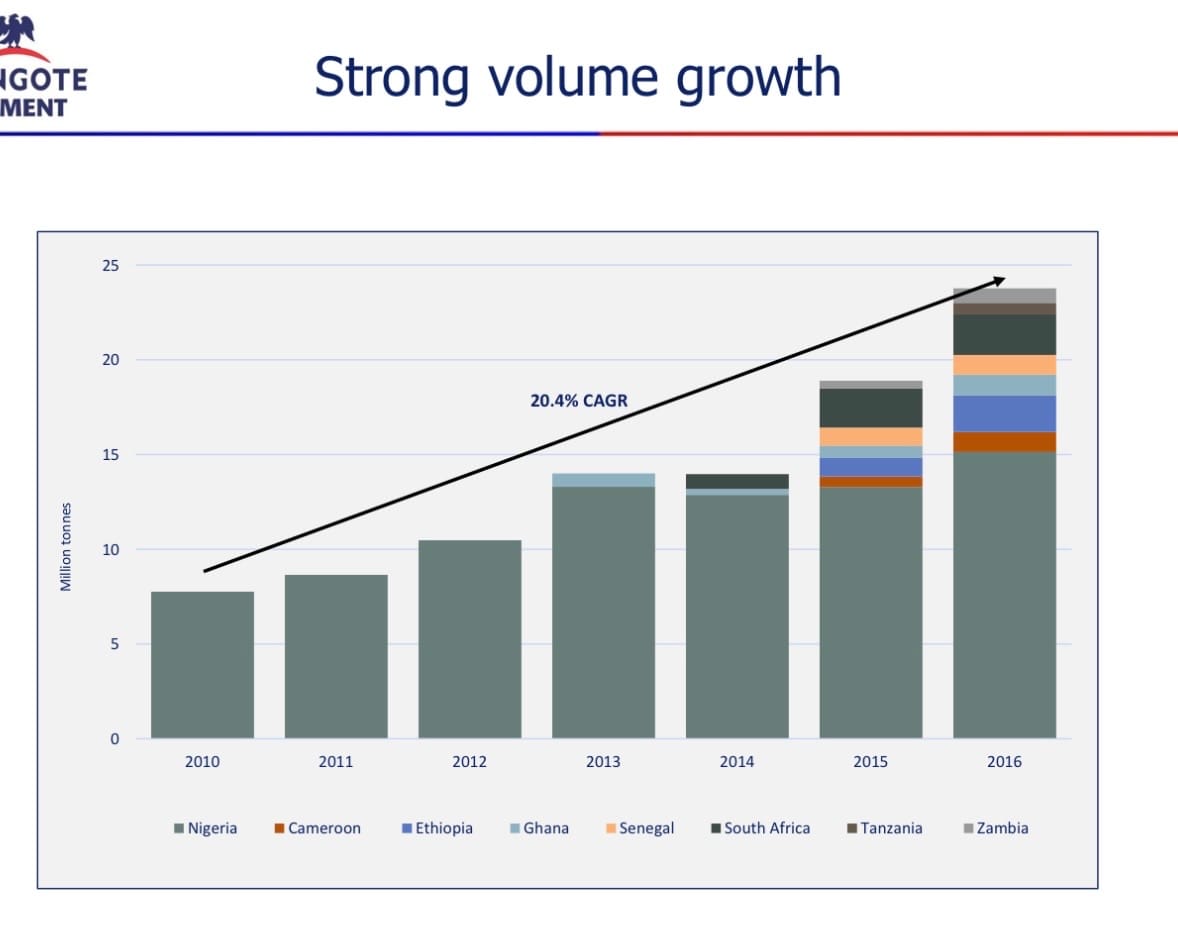
Since its founding in 1981 as a trading business importing essential commodities, the Dangote Group has evolved into one of Africa’s largest industrial conglomerates, shaping local production and industrial capacity across multiple sectors. The company now has a presence in 17 African countries and is a market leader in cement production, while also expanding into sugar refining, oil refining, fertilizer, and other key industries.
A cornerstone of the group’s industrial footprint is Dangote Cement Plc, which transitioned from importing bagged cement in the early years to becoming Sub‑Saharan Africa’s largest cement producer. The company’s integrated operations span ten African countries, with a total annual production capacity of 52.0 million tonnes across multiple plants, including Obajana in Kogi State, Nigeria one of Africa’s largest cement facilities.
Through its manufacturing expansion, Dangote Cement helped transform Nigeria from a net importer into a leading exporter of cement and clinker to neighbouring markets, eliminating dependence on imported building materials.
In 2024–2025, Dangote Cement achieved historic performance milestones. Group revenue in 2024 increased significantly, supported by strong sales across its African markets, as the company continued to consolidate its regional leadership.
For the first half of 2025, the company reported a 17.7 percent increase in revenue to N2.07 trillion (about US$1.35 billion), marking one of the strongest financial periods in its history driven by higher cement and clinker sales despite volume fluctuations.
Additionally, for the first quarter of 2025, Dangote Cement posted a profit of approximately $130 million, with revenue rising over 21 percent compared with the same period in the previous year.
The Dangote Sugar Refinery Plc stands as one of Nigeria’s major sugar producers. The refinery was originally commissioned in 2000 at the Apapa Wharf Complex, marking one of the first large‑scale local sugar refining operations in the country.
In the 2024 financial year, Dangote Sugar reported a turnover increase of 51 percent, reaching N665.6 billion compared with N441.5 billion in 2023. The company outlined its outlook to scale production toward 1.5 million metric tonnes of refined sugar annually and support over 75,000 jobs within its value chain.
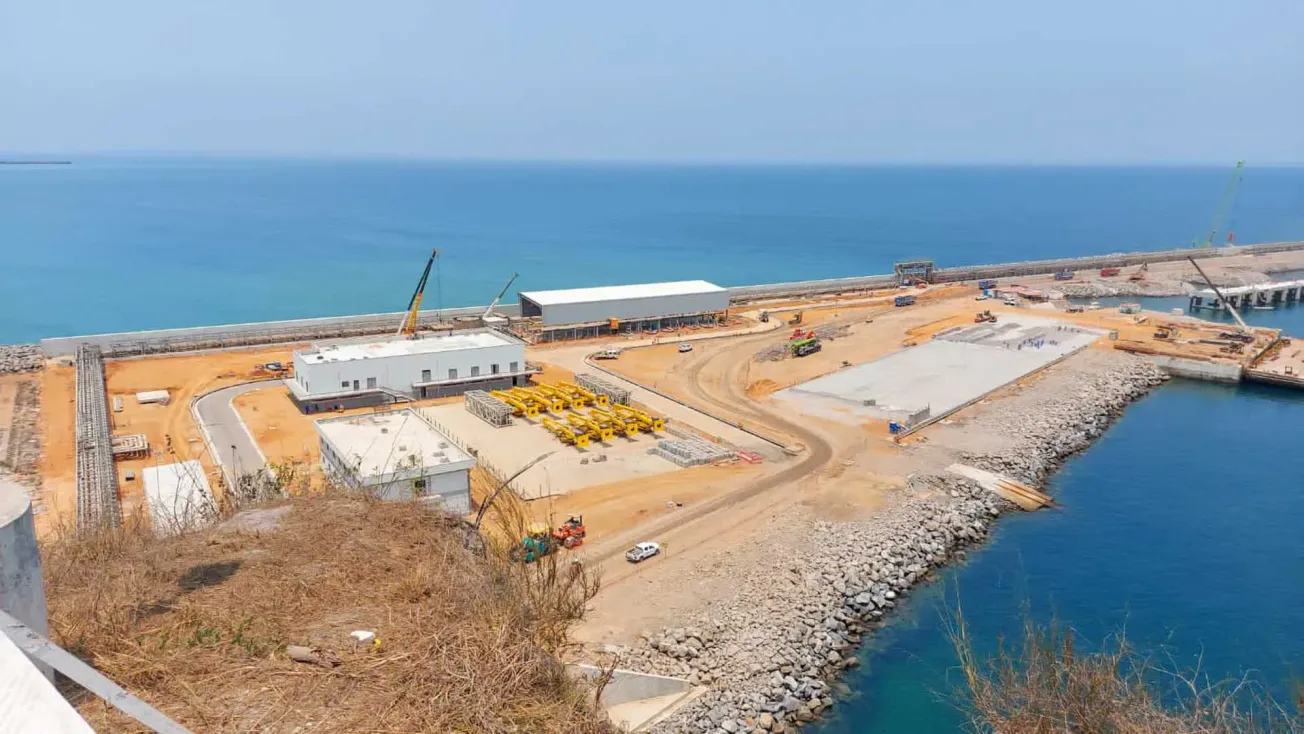
One of the group’s most transformative milestones was the commissioning of the Dangote Petroleum Refinery, Africa’s largest oil refinery and the world’s largest single‑train facility. Located in the Lekki Free Zone, Lagos, the refinery has a capacity of 650,000 barrels per day, designed to meet the full refined product needs of Nigeria and produce surplus for export.
The refinery officially opened on 22 May 2023, representing a major shift in Nigeria’s energy landscape by reducing dependence on imported refined petroleum and laying a foundation for further industrial infrastructure.
Official company material notes the refinery’s extensive infrastructure, including pipeline networks and power generation facilities, structured to support high‑volume processing and downstream petrochemical activity.
As of late 2025, the Dangote Group has announced plans to expand the refinery’s capacity from 650,000 barrels per day to 1.4 million barrels per day, which would make it one of the largest refining complexes globally once completed enhancing output scale and regional fuel self‑sufficiency.
The company has also pursued fertilizer production and export initiatives, including announcements about fertilizer capacity growth that aim to reduce imports of agricultural inputs across Africa, reflecting ongoing diversification in heavy industrial segments (though specific company capacity targets remain in planning phases).
Overall, the Dangote Group’s milestones trace a trajectory from a modest commodity trading firm in the early 1980s to a multisector industrial conglomerate driving local production of essential commodities across Africa. The group’s subsidiaries now operate manufacturing and refining facilities that produce key inputs for construction, food processing, energy, and industrial chemicals, while supporting employment and value‑chain development across the continent.
If you’re ready, I can now prepare the Lessons for Other Entrepreneurs section fact‑based and clearly tied to verified public statements and company outcomes.
Lessons for Other Entrepreneurs
Aliko Dangote’s journey from a small trading business to building Africa’s largest industrial conglomerate holds practical lessons for aspiring and established entrepreneurs alike. His public remarks and speeches emphasise the importance of long‑term commitment, understanding the business deeply, hard work, and building a strong foundation before scaling. These lessons are drawn directly from Dangote’s own words and verified quotes he has shared in interviews and official engagements.
- Start Small but Dream Big: Dangote has repeatedly stated that building a successful business takes time and enduring commitment. He notes that his own journey to build a conglomerate did not happen quickly and affirms that “to build a successful business, you must start small and dream big” and that “in the journey of entrepreneurship, tenacity of purpose is supreme.” This underscores the need for persistence over overnight success.
- Be Tenacious and Purpose‑Driven: Dangote emphasises that tenacity of purpose is essential to overcome challenges and succeed. According to his own description, sustained effort and perseverance are what differentiate successful ventures from temporary undertakings.
- Understand the Business You Enter: In remarks to visiting scholars, Dangote cautioned that he personally does not engage in businesses he does not fully understand, advising entrepreneurs to be knowledgeable about their chosen industries before committing capital or energy.
- Hard Work and Daily Commitment: Dangote’s public statements emphasise hard work. He speaks of waking up each day with the mindset of solving problems and working until meaningful progress is made, reflecting his belief that daily commitment drives long‑term results.
- Passion and Ambition Matter: Dangote has said that life without ambition is not worth living, and encourages entrepreneurs to pursue their goals with passion and a bold mindset. This ambition is part of what drives him to undertake large, transformative projects like the Dangote Refinery.
- Build a Brand and Protect It: He has highlighted the importance of brand reputation, advising that entrepreneurs should build a brand and never destroy it. For Dangote, his brand became a competitive advantage as he moved from trading into manufacturing and industrial markets.
- Give Back and Strengthen the Ecosystem: Dangote’s philosophy includes contributing to society beyond profit; he stresses that once success is achieved, one should give back to those who helped along the way and invest in broader community development. This outlook has been reflected in his public addresses.
Together, these lessons reflect Dangote’s belief that successful entrepreneurship is built on patience, deep business understanding, consistent hard work, ambition, and responsible stewardship of brand and community. His public commentary and official addresses articulate a model of business that is deliberate, grounded in purpose, and oriented toward long‑term value rather than short‑term gains principles that aspiring entrepreneurs can use as foundational guidelines in their own journeys.
As of early 2026, the Dangote Group has evolved from a small trading business into Africa’s largest industrial conglomerate, with achievements in cement, sugar, and the Dangote Petroleum Refinery, which currently processes 650,000 barrels per day. Looking forward, the group plans to expand refinery capacity to 1.4 million barrels per day, scale fertiliser production toward 12 million metric tonnes annually, and deepen sugar production through a $700 million expansion, all aligned with its Vision 2030 strategy. These initiatives aim to strengthen local industrial capacity, reduce import dependence, support energy and food security, and create jobs across the continent, reflecting a deliberate approach to long-term African industrialisation. By continuing to leverage scale, strategic investment, and local market insight, the Dangote Group’s 2026 trajectory underscores how African enterprises can transform structural economic challenges into sustained growth and regional impact.