Table of Contents
In Summary
- Strive Masiyiwa founded Liquid Intelligent Technologies to address the "connectivity gap," building a cross-border fiber network spanning 15 countries and connecting over 100 million people.
- By bypassing traditional satellite reliance, Masiyiwa created the "One Africa Network," the first terrestrial fiber rail to link East and West Africa directly.
- Through Africa Data Centres, he built the continent's largest network of interconnected, carrier-neutral data storage facilities, ensuring African data stays on African soil.
- After a decade-long legal battle to launch Econet in Zimbabwe, Masiyiwa built Liquid into a multibillion-dollar enterprise with backing from global giants such as Google and Microsoft.
- As of 2025, Liquid serves as the primary backbone for Africa’s cloud revolution, facilitating the high-speed data needs of every major tech "Unicorn" on the continent.
Deep Dive!!
Lagos, Nigeria, Tuesday, December 30, 2025 - In the late 1990s, the "Digital Divide" was a physical reality in Africa. If a person in Rwanda wanted to send an email to someone in neighboring Uganda, the data often had to travel via satellite to a server in Europe before coming back down to Africa. This "satellite lag" made high-speed internet prohibitively expensive and technically unreliable. Africa was a continent of islands, disconnected not just from the world, but from itself.
Strive Masiyiwa saw that the future of African sovereignty depended on "Terrestrial Fiber." While the world was focused on mobile phones, Masiyiwa began a decades-long project to dig trenches across the continent. He envisioned a "Cape to Cairo" digital highway that would treat African borders as gateways rather than barriers.
Today, Liquid Intelligent Technologies is the invisible force behind Africa’s tech boom. Masiyiwa’s network is the "sovereign rail" of the 21st century. This is the story of how a founder fought legal and physical mountains to ensure that Africa would not just consume the internet, but own the pipes through which it flows.
Early Life, Education, and Experience
Strive Masiyiwa was born on January 29, 1961, in Zimbabwe (then Rhodesia). His path to becoming an infrastructure mogul began with displacement. When he was seven years old, his family fled the political unrest of the Smith regime, eventually settling in Kitwe, Zambia. His mother was a successful entrepreneur who sold everything from clothes to building materials, providing Masiyiwa with a front-row seat to the grit required to build a business in a volatile environment. At the age of 12, he was sent to school in the United Kingdom, where he completed his secondary education before enrolling at the University of Wales (Cardiff). In 1983, he graduated with a Bachelor of Science in Electrical and Electronic Engineering, a degree that would define his "systems-first" approach to African development.
After a brief stint working as an engineer in the UK, Masiyiwa returned to a newly independent Zimbabwe in 1984. He initially joined the state-owned Zimbabwe Posts and Telecommunications Corporation (ZPTC) as a Senior Engineer. It was here that he witnessed the systemic decay of state-run monopolies; at the time, there were over 100,000 people on the waiting list for a landline telephone, and the wait time was often ten years. Frustrated by the inefficiency, he resigned in 1988 to launch his own engineering firm, Retrofit Engineering, which specialized in electrical contracting for large-scale construction projects. By the age of 30, he was one of Zimbabwe’s most successful young businessmen, but his technical background kept him focused on a bigger problem: the "telecoms blackout" holding back African commerce.
The most defining period of his professional life was the "Legal War" for Econet. In 1993, Masiyiwa attempted to launch Zimbabwe’s first mobile phone network, only to be blocked by the government, which claimed a monopoly on all telecommunications. This triggered a five-year constitutional battle that went all the way to the Supreme Court of Zimbabwe. Living on the brink of bankruptcy and facing constant political threats, Masiyiwa argued that the "Right to Communicate" was a fundamental human right. In 1998, he won the case, a landmark ruling that effectively dismantled state monopolies across much of English-speaking Africa. This experience transformed him from a technical engineer into a "legal and regulatory architect," teaching him that in Africa, building infrastructure requires as much work in the courtroom as it does in the field.
Inspiration to start Liquid Intelligent Technologies
The inspiration for Liquid Intelligent Technologies was born from a realization that Africa’s "Mobile Revolution" was hit by a "Bandwidth Ceiling." In the early 2000s, as Masiyiwa expanded Econet, he noticed that while millions had mobile phones, the data backhaul the "invisible pipes" connecting towers was reliant on expensive, high-latency satellite links. It costs more to send data from Harare to London than from London to New York. Masiyiwa realized that Africa could never have a digital economy if its data had to travel to Europe and back just to reach a neighbor. He was inspired by the "Cape to Cairo" railway dream of the 19th century, but he reimagined it as a 21st-century Terrestrial Fiber Rail.
In 2004, Masiyiwa recognized that the greatest barrier to African connectivity wasn't the "Last Mile" (the phone in the hand), but the "Middle Mile" (the high-capacity cables between cities). He saw that landlocked countries like Zambia, Zimbabwe, and Rwanda were being "taxed" by their geography, paying exorbitant fees for transit through coastal nations. His inspiration was to create a sovereign, borderless network that treated the African continent as a single digital block. He pivoted his focus from just being a "Telco operator" to becoming an "Infrastructure wholesaler," deciding to dig the trenches that every other mobile operator, bank, and government would eventually have to use.
What problem Liquid Intelligent Technologies solves
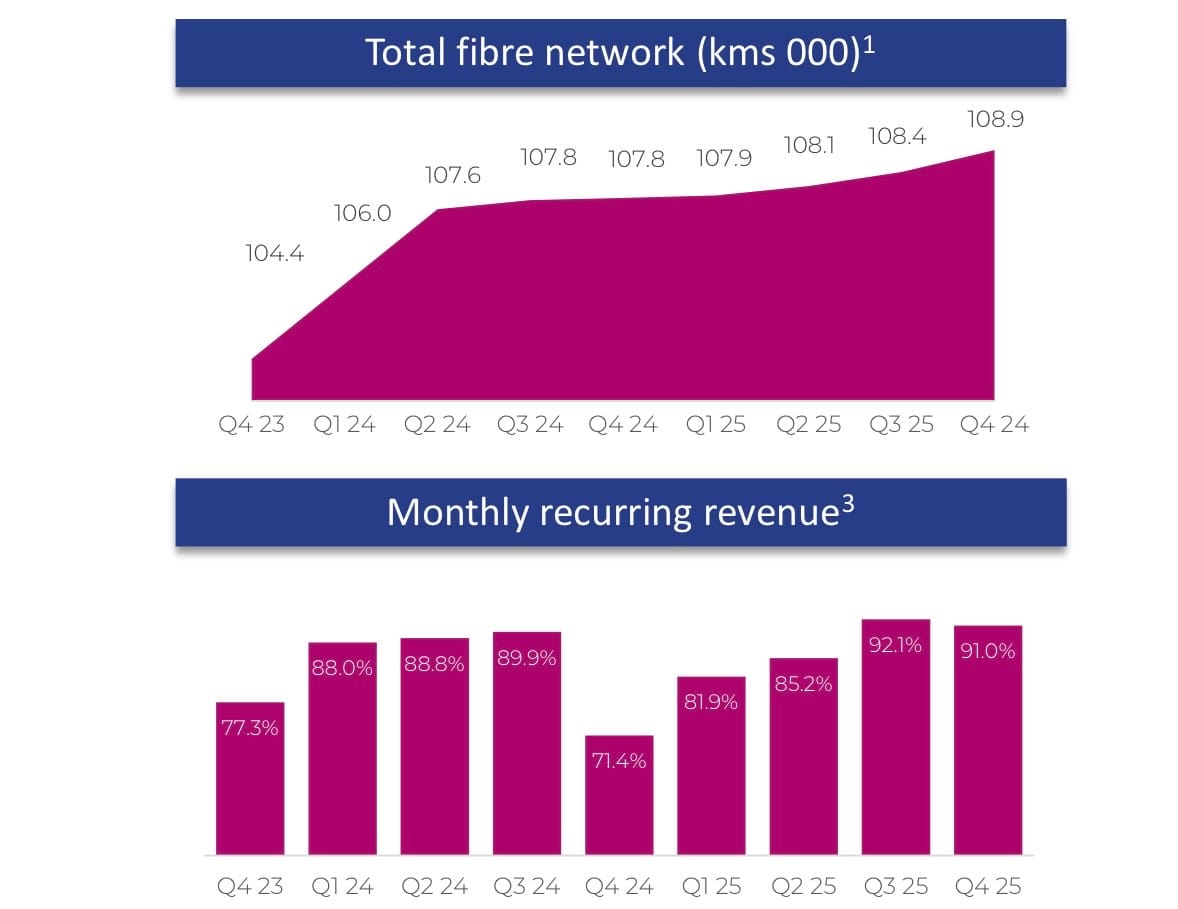
Liquid was engineered to solve the "Islands of Connectivity" problem. Before Masiyiwa’s intervention, Africa’s internet architecture was "extractive" cables ran from the coast to the sea, but rarely across the interior. Liquid’s 110,000km network fundamentally re-engineered the continent's data flow.
1. Latency and the "Satellite Tax": Before Liquid’s terrestrial fiber, data packets had to travel 36,000km to a satellite and back, causing 600ms delays. Liquid’s fiber reduced this to under 50ms, making real-time fintech and video conferencing viable for the first time.
2. Landlocked Isolation: For countries like Rwanda, Uganda, and Zambia, getting internet meant paying multiple coastal "transit fees." Liquid solved this by building a unified cross-border network, providing landlocked nations with direct, high-speed access to international undersea cables.
3. The "Single Point of Failure" Risk: Historically, if an undersea cable snapped, entire countries went offline. Liquid solved this by building a redundant, "ring" architecture across Africa, ensuring that if one cable fails, data is automatically rerouted through another path.
4. Data Sovereignty: Most African data was stored on servers in the US or Europe. Through Africa Data Centres (ADC), Masiyiwa solved the "storage gap," building the continent’s largest network of carrier-neutral data centers so African data stays in Africa.
5. High Cost of Intra-African Trade: By providing the "One Africa Network," Liquid eliminated roaming charges and lowered the cost of digital communication between African businesses, facilitating the goals of the AfCFTA (African Continental Free Trade Area).
6. Cloud Access for SMEs: Small businesses in Africa lacked the infrastructure to use tools like Microsoft Azure or Google Cloud. Liquid became the official partner for these giants, providing the "fiber-to-the-business" (FTTB) rails that allow SMEs to compete globally.
7. Digital Skills Gap: Infrastructure is useless without users. Liquid solved the "human capital" problem by launching Liquid Labs, providing digital skills training and high-speed hubs for developers across its network footprint.
Milestones achieved to-date
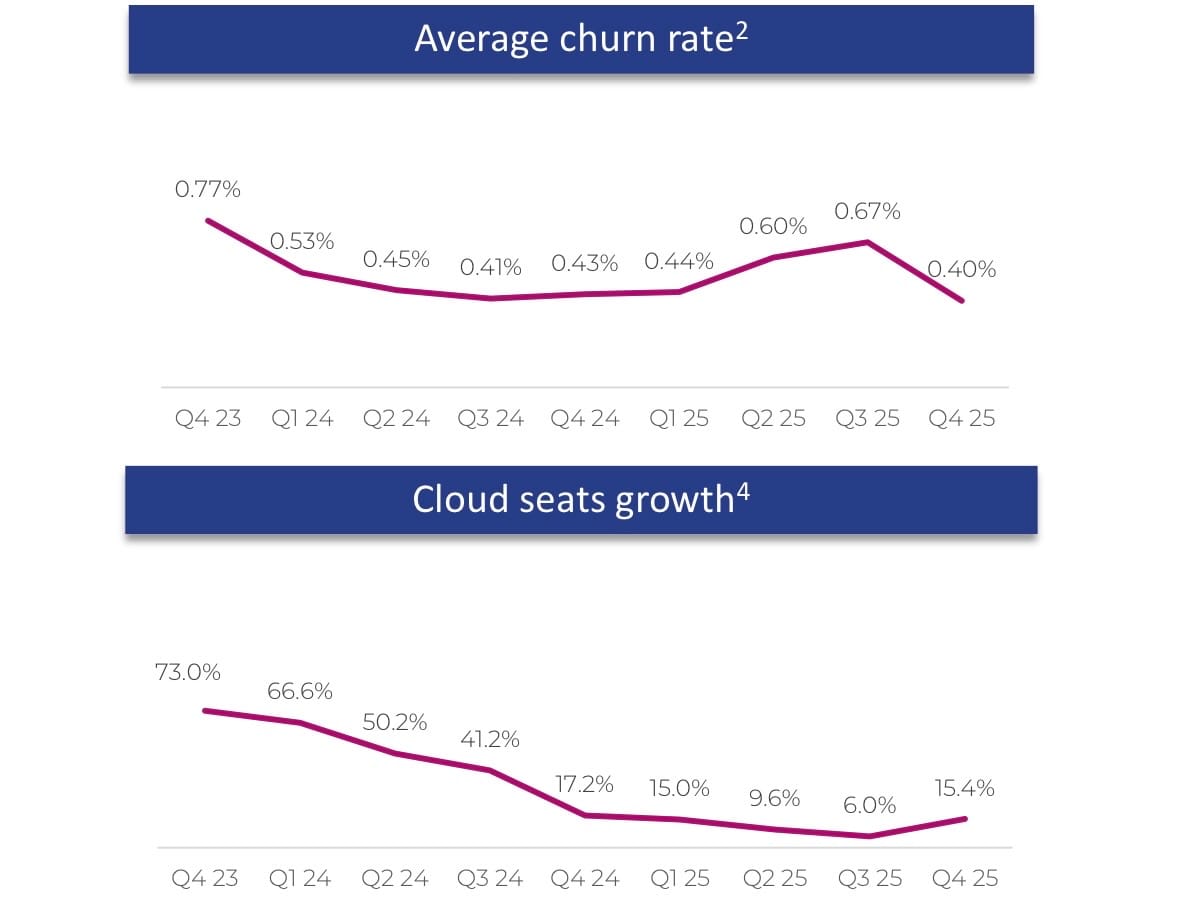
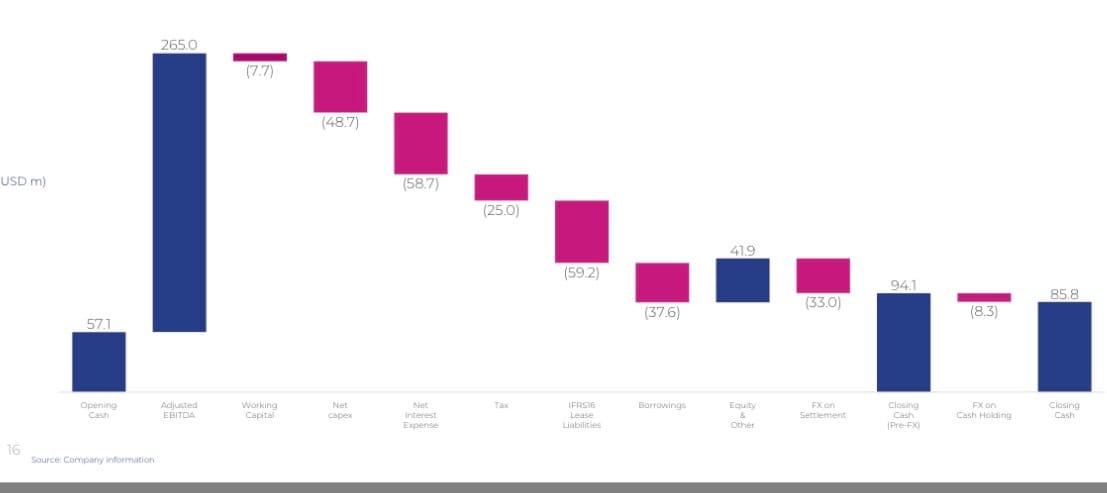
The evolution of Liquid Intelligent Technologies is a narrative of relentless expansion across Africa’s most difficult terrains, culminating in the creation of a unified digital "railway." For the fiscal year ending February 28, 2025, the group reported a total revenue of $693.5 million, a performance that reflects the mission-critical nature of its infrastructure. Despite significant currency headwinds in key markets, Liquid achieved a landmark profit after tax of $18.4 million, representing a 247% year-on-year increase from the $5.3 million recorded in 2024. This financial recovery was driven by a strategic pivot from being a pure "telecoms company" to becoming a diversified technology powerhouse under the Cassava Technologies umbrella.
The most physically significant milestone remains the completion of the "One Africa" network. By December 2025, Liquid’s independent fiber network officially reached 110,000 kilometers, establishing the first-ever direct terrestrial communication link between the two ends of the continent. This infrastructure has been augmented by the launch of Africa Data Centres (ADC), which now operates the continent’s most extensive network of carrier-neutral facilities in Johannesburg, Nairobi, Harare, Lagos, and Kigali. These data centers provide the physical "housing" for the cloud services used by 50 global wholesale carriers and thousands of African enterprises, ensuring that digital workloads are processed locally to reduce latency and maintain data sovereignty.
In a pivotal shift toward the future of intelligence, October 2025 marked a defining moment for Masiyiwa’s vision as Cassava Technologies secured a strategic investment from NVIDIA. This partnership is the cornerstone of a $720 million "Sovereign AI Cloud" strategy, aimed at bringing GPU-as-a-Service to the continent. Through this initiative, Liquid is deploying high-performance computing infrastructure to create "AI Factories" in South Africa, Nigeria, and Kenya. Furthermore, through Liquid C2, the group solidified its role as a premier Managed Security Service Provider (MSSP), winning the 2025 Microsoft Egypt Partner of the Year Award and collaborating with Google Cloud and Anthropic to deliver generative AI and advanced cybersecurity tools to businesses across the continent. These milestones collectively confirm that Liquid is now the foundational engine for Africa's Fourth Industrial Revolution.
Lessons for other entrepreneurs
Strive Masiyiwa’s journey offers a masterclass in "Enterprise Building" the art of creating businesses that solve structural deficiencies rather than merely trading goods. His philosophy, often shared through his extensive mentorship of young Africans, emphasizes that the scale of an entrepreneur's success is directly proportional to the size of the problem they solve for their community.
- The Problem is the Opportunity: Masiyiwa famously teaches that "the moment I see a problem, I immediately begin to think about the opportunities that can be created by trying to solve it." Liquid was not built to sell fiber; it was built to solve the "satellite tax" that made African internet expensive.
- Invest in Technical Skills over Trading: He urges the next generation to be "enterprise builders" rather than "traders." He believes that arming oneself with a specific skill creates a growth potential that simple buying and selling cannot match.
- Relentless Integrity in Business: Masiyiwa’s five-year legal battle for Econet was a stand against corruption. He proved that it is possible to build a multi-billion dollar empire in Africa without paying a single bribe, a mantra he calls being "unapologetically relentless on what you believe is right.
- Institutional Stewardship over Ownership: Like other infrastructure giants, Masiyiwa professionalized Liquid early, bringing in global institutional partners like the IFC and Google. He believes that to build at a continental scale, a founder must be willing to be a steward within a robust corporate governance framework.
- Continuous Self-Education: Despite being a billionaire, Masiyiwa emphasizes the need to "invest constantly and continually in yourself." He recounts buying books and attending courses even when he was a struggling engineer, asserting that you cannot leave your destiny in the hands of an employer.
- Philanthropy as Part of the Business Model: Through the Higherlife Foundation, Masiyiwa and his wife, Tsitsi, have supported the education of over 40,000 children. He views philanthropy not as an afterthought, but as a core responsibility of the African business leader to secure the future talent pool of the continent.
- Push Out Fear with Wisdom and Prayer: A devout Christian, Masiyiwa teaches that fear and doubt should be replaced with wisdom and prayer. He encourages entrepreneurs to be "the lion" in their industry, treading bravely into difficult markets with a faith-driven confidence that rejects compromise.
Strive Masiyiwa’s legacy is the physical unification of a fragmented continent. By digging the trenches and laying the fiber that connects Cape Town to Cairo, he has provided the "sovereign rail" upon which the rest of Africa’s digital future is being built. As we move into 2026, Liquid Intelligent Technologies is transitioning from a connectivity provider to an AI-first infrastructure group. The integration of NVIDIA’s GPU technology into African data centers ensures that the continent will not just be a consumer of Artificial Intelligence, but a producer. Masiyiwa’s journey from a lone engineer fighting a state monopoly to the architect of Africa’s digital backbone proves that with technical precision and moral resilience, a single vision can rewire the destiny of an entire continent.