Table of Contents
In Summary
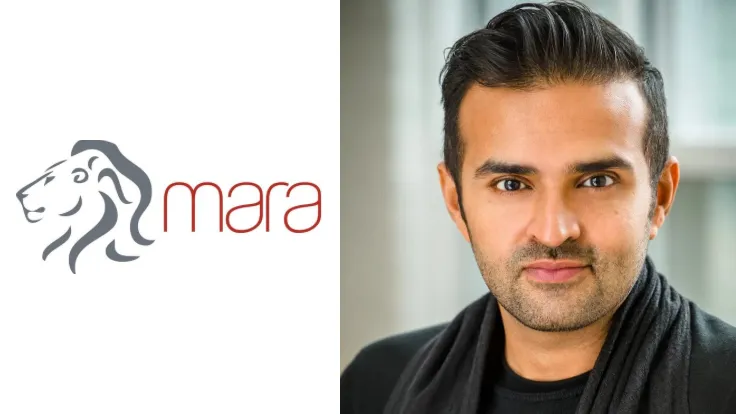
- Ashish J. Thakkar founded the Mara Group in 1996 at age 15 after borrowing $5,000 to start an IT business in Uganda.
- Mara Group today operates across more than 20 African countries in sectors including technology, financial services, real estate, and manufacturing.
- Thakkar established the Mara Foundation in 2009 to mentor and support African entrepreneurs through initiatives like Mara Mentor.
- His work has earned global recognition, including being named a World Economic Forum Young Global Leader and a member of Fortune’s “40 Under 40.”
- Under his leadership, Mara launched Mara Phones, establishing the continent’s first high‑tech smartphone manufacturing plant in Rwanda.
Deep Dive!!
Lagos, Nigeria, Thursday, January 8, 2026 - In the mid‑1990s, African business narratives were dominated by extractive industries and informal commerce rather than scalable, pan‑continental enterprises built by African founders. Against this backdrop, Ashish J. Thakkar’s entrepreneurial journey stands apart. At 15 years old, with a $5,000 loan, he began importing and selling computer parts in Kampala, Uganda, marking the modest beginning of what would become the Mara Group, a pan‑African conglomerate spanning technology, financial services, manufacturing, real estate, and infrastructure across more than 20 African countries.
The foundation of Thakkar’s ambition was shaped not by inherited wealth but by lived experience. Born in the United Kingdom to Indian‑Ugandan parents and later relocating to East Africa, he witnessed firsthand the challenges and opportunities that characterized emerging markets. Starting in information technology, he expanded the business into diverse sectors by identifying systemic gaps in African enterprise infrastructure and pursuing solutions that combined local insight with strategic partnerships.
Thakkar’s vision has always encompassed more than commercial success. In 2009, he established the Mara Foundation to cultivate entrepreneurship across the continent, leveraging mentorship, digital platforms, and incubation resources to support early‑stage founders.
Under Thakkar’s leadership, the Mara Group has pursued initiatives that underscore Pan‑African economic contribution, including launching Mara Phones, one of the continent’s first high‑tech smartphone manufacturing facilities located in Rwanda, with further expansion planned in South Africa.
This article examines Thakkar’s journey in depth, tracing how his early experiences, strategic decisions, and infrastructure‑focused mindset helped build one of Africa’s most recognised multi‑sector business empires and how his work continues to influence the next generation of African entrepreneurs.
Early Life, Education, and Experience
Ashish J. Thakkar was born on August 5, 1981, in Leicester, United Kingdom, to parents Jagdish and Sarla Thakkar who were of Indian descent and whose families had lived in East Africa before being forced into exile during political upheaval in the 1970s. His family initially relocated to the United Kingdom after the Ugandan government expelled people of Asian origin under Idi Amin’s regime, where they rebuilt their lives and worked in factories and small businesses before returning to Africa in the early 1990s.
In the early 1990s, the family moved to Rwanda, but the outbreak of the Rwandan genocide in 1994 forced them to flee once more. They eventually settled in Uganda, living as refugees before Thakkar entered his teenage years. These early experiences exposed him to the realities of displacement, economic uncertainty, and resilience amid conflict, shaping his worldview and sense of purpose.
Thakkar’s formal schooling took place in East Africa, he attended Rushey Mead School in the United Kingdom before moving to Africa, and later spent time in schools in Kenya and Uganda. However, he did not complete secondary education, choosing instead to focus on building his business. At 15, he dropped out of school after securing a $5,000 loan to start his first company, marking the beginning of his entrepreneurial career.
His first venture involved importing and selling computer parts and IT hardware, which he sourced from Dubai and sold in Kampala, Uganda. This early business not only provided foundational commercial experience but also served as the seed for what would become the Mara Group, a multi‑sector pan‑African enterprise.
Thakkar’s educational journey, therefore, is unconventional in terms of formal degrees but deeply rooted in practical business learning, market exposure, and early immersion in cross‑border trade. These formative years laid the groundwork for his ability to understand diverse markets, manage complex supply chains, and lead a multinational enterprise.
Inspiration to Start Mara Group
Ashish J. Thakkar’s inspiration to start the Mara Group in 1996 was rooted in both personal experience and the economic context of East Africa. Having grown up amid political displacement and the challenges of refugee life, he was acutely aware of the lack of accessible technology and reliable business infrastructure in Uganda and surrounding countries.
At 15 years old, Thakkar recognized an emerging opportunity in the IT sector, which at the time was underdeveloped across much of Africa. Computers and IT hardware were scarce, expensive, and difficult for local businesses to source. Seeing this gap, he borrowed $5,000 from family to import and sell computer parts, laying the foundation for a business that would eventually evolve into a pan-African conglomerate.
Thakkar has frequently cited the combination of personal resilience, exposure to adversity, and a desire to create opportunities for African youth as motivating factors. He wanted to build a company that could not only generate wealth but also strengthen Africa’s technological and entrepreneurial infrastructure, bridging the gap between global enterprise standards and local market realities.
From the outset, Thakkar approached business with a long-term vision for Pan-African impact, seeing entrepreneurship as a vehicle to create jobs, transfer skills, and establish systems capable of supporting cross-border commerce. This dual focus on profit and societal impact became a core principle guiding Mara Group’s strategy and later initiatives like Mara Foundation and Mara Phones.
What Problem Mara Group Solves
1. Limited Access to Technology Across Africa
When Thakkar started, IT hardware and enterprise software were scarce and expensive in most African markets. Mara Group bridged this gap by importing and distributing computers and software, enabling businesses, schools, and governments to access technology that was previously out of reach.
2. Lack of Pan-African Business Infrastructure
Many African businesses struggled with cross-border trade, logistics, and financial systems. Mara Group created an integrated operational infrastructure across multiple countries, allowing goods, services, and capital to move more efficiently between markets in East, Central, and Southern Africa.
3. Youth Unemployment and Entrepreneurial Barriers
High youth unemployment and limited access to mentorship or capital made entrepreneurship difficult. Through Mara Foundation and initiatives like Mara Mentor, Thakkar provided training, funding, and guidance to thousands of young African entrepreneurs, addressing structural gaps in skills and opportunities.
4. Dependence on Imported Electronics and Manufacturing
Africa relied heavily on imported consumer electronics. Mara Phones, launched under Mara Group, became one of the first locally manufactured smartphones, reducing dependence on imports, creating local jobs, and promoting technology production within Africa.
5. Limited Global Recognition for African Enterprises
African companies often lacked visibility and credibility in international markets. Mara Group’s expansion into multiple countries, combined with participation in global tech forums and partnerships, demonstrated that African enterprises could compete on an international scale, attracting investment and building continental influence.
Milestones Achieved to Date
Ashish J. Thakkar founded the Mara Group in 1996 at the age of 15 after borrowing a $5,000 loan to start an IT business in Kampala, Uganda, importing and selling computer parts. Within a year, he transitioned from a student to a full‑time entrepreneur, setting the foundation for what would become a pan‑African conglomerate. The early focus on technology distribution reflected the continent’s unmet demand for IT hardware and services at the time.
Throughout the 2000s, the Mara Group expanded beyond IT into sectors including packaging, business process outsourcing (BPO), and real estate. The company diversified geographically and operationally, growing its ecosystem across multiple African countries and forming strategic international partnerships to scale its footprint. Mara Ison (IT solutions) and Ison BPO became core components of the group’s service offerings in the region.
In 2009, Thakkar launched the Mara Foundation, a social enterprise focused on empowering African entrepreneurs through mentorship, digital tools, and incubation support. Its flagship initiative, Mara Mentor, is a mobile and web platform that connects emerging founders with experienced business leaders and has been deployed in several African countries to support youth entrepreneurship.
By 2013, the Mara Group had broadened its commercial impact through co‑founding Atlas Mara with Bob Diamond, former CEO of Barclays. Atlas Mara was capitalised through an initial London Stock Exchange listing, raising substantial funds to invest in commercial banking institutions across Africa. This strategic venture marked Mara’s entry into financial services and represented a notable milestone in cross‑continental investment partnerships.
Mara’s growth continued into the mid‑2010s, with the conglomerate operating in over 20 African countries and employing thousands within its diversified businesses. By 2014, the group’s workforce was reported at approximately 11,000 employees, reflecting its expansion across technology, manufacturing, real estate, and services.
A significant milestone in the company’s industrial strategy occurred in 2019 with the launch of Mara Phones, a smartphone manufacturing initiative based in Rwanda with additional facilities planned for South Africa. This marked one of the first attempts to manufacture high‑tech devices on the African continent, with an annual capacity projected at more than 1.5 million units, symbolising a shift toward local technology production rather than import dependence.
In 2024, the group announced a $250 million investment vehicle in partnership with Startupbootcamp and Blend Financial Services to fund growth-stage African technology startups. This initiative aims to channel capital into high‑potential ventures in key markets including South Africa, Nigeria, Kenya, Côte d’Ivoire, and Egypt, reinforcing Mara’s evolving role in shaping the continent’s innovation ecosystem.
Lessons for Other African Entrepreneurs
1. Start Early, Learn Fast
Thakkar’s journey demonstrates the advantage of starting young. Launching his first business at 15, he gained hands-on experience navigating supply chains, imports, and customer relations, showing that early exposure to practical challenges can accelerate entrepreneurial maturity.
2. Build for Pan-African Scale
From the outset, Mara Group was designed to operate across multiple countries rather than focus on a single market. Thakkar emphasizes that African entrepreneurs should consider cross-border scalability, adapting business models to diverse regulatory, cultural, and infrastructural contexts.
3. Diversify Thoughtfully
Mara Group expanded into technology, manufacturing, financial services, and real estate. Thakkar stresses that diversification should align with systemic gaps and opportunities, rather than pursuing unrelated ventures. Strategic diversification strengthens resilience and maximizes impact.
4. Empower Others Through Mentorship
Through the Mara Foundation and Mara Mentor platform, Thakkar has shown that successful entrepreneurs can multiply impact by enabling other founders. Investing in mentorship, knowledge transfer, and networks helps build sustainable ecosystems.
5. Combine Profit with Purpose
Thakkar’s ventures integrate commercial objectives with social impact, from creating jobs through Mara Phones to supporting startups continent-wide. He emphasizesthat African entrepreneurs can generate wealth while addressing structural challenges, such as unemployment, access to technology, and local manufacturing.
6. Leverage Global Networks
Thakkar’s engagements with the World Economic Forum, UN, and African Union illustrate the value of connecting African ventures to international ecosystems. Global partnerships can provide funding, visibility, and knowledge that accelerate local impact.
Ashish J. Thakkar’s journey demonstrates how vision, resilience, and strategic execution can transform local challenges into continent-wide opportunities. By addressing gaps in technology access, cross-border business infrastructure, youth entrepreneurship, and local manufacturing, he has created a scalable impact while fostering an ecosystem for future African founders. Looking forward, Mara Group’s ongoing initiatives such as Mara Phones, cross-border investments, and the Mara Foundation signal a continued commitment to building Africa’s entrepreneurial and industrial capacity, offering a blueprint for emerging founders to combine innovation, purpose, and Pan-African scale.