Table of Contents
1. Egypt's parliament puts a military-built economic empire under direct presidential control
Egypt's House of Representatives gave final approval on July 14 to a law granting the Future of Egypt Authority full administrative and financial independence and transferring it from the Defence Ministry to direct presidential oversight. The authority began as a land reclamation project in 2017 and now runs strategic commodity imports, agriculture, fisheries, real estate and investments, with consolidated powers over planning, licensing, land allocation and revenue collection.
Why it matters: An arrangement that ran on informal power now has a legal architecture. The state has become Egypt's dominant economic actor at the very moment the IMF is pressing Cairo to give private firms room to compete. The Fund's next programme review will show whether that pressure still carries any weight.
Source: Mada Masr / Middle East Online / Egyptian Streets
2. Dangote stops selling fuel in naira and ties Nigeria's pump prices to the dollar
Dangote Petroleum Refinery, Africa's largest at 700,000 barrels per day, switched to pricing petrol, diesel and jet fuel for the domestic market in US dollars on July 13. The company says the government's naira-for-crude programme delivers far less feedstock than the 13 to 15 monthly cargoes it needs, forcing it to import most of its crude at international prices while it absorbed a currency mismatch on naira sales.
Why it matters: Africa's biggest industrial asset has decided it will no longer carry Nigeria's currency risk. Marketers must now find dollars to buy fuel, which links pump prices, transport costs and inflation directly to every move in the naira. It is the strongest vote of no confidence in the FX regime since the 2023 float.
Source: Reuters via CNBC Africa / The Guardian Nigeria
3. Sudan's RSF accepts a truce but refuses to give up captured territory
The Rapid Support Forces responded to the US peace plan presented by envoy Massad Boulos by accepting a ceasefire framework and setting out conditions for a political settlement, while rejecting demands to withdraw from territory it holds. The army-chaired Security and Defence Council filed its own response, days after a court in army-controlled Port Sudan sentenced RSF leader Mohamed Hamdan Dagalo and 15 others to death in absentia.
Why it matters: A ceasefire that freezes the current front lines would partition Sudan in everything but name. Both camps continue to negotiate and fight at the same time, treating each battlefield gain and each courtroom verdict as leverage at the table.
Source: Africa Center for Strategic Studies / Sudan Tribune
4. Africa's central banks split as Angola cuts deep and Ethiopia hikes
Angola's central bank delivered a 125 basis point rate cut on Tuesday and said it expects the country's long inflation slowdown to continue. Ethiopia's central bank moved the other way the same week, raising its policy rate in response to the shock from higher oil prices.
Why it matters: There is no single African macro story this cycle. Oil exporters and importers now sit on opposite monetary paths, and investors who buy continent-level exposure instead of picking countries will feel the difference in their returns.
Source: TRT Afrika (Reuters reporting)
5. DRC's Ebola outbreak passes 2,000 cases and reaches Europe as health workers strike
Confirmed cases of Bundibugyo Ebola in DR Congo have topped 2,000 while health workers strike over unpaid salaries, and the WHO estimates the true count is at least double the official figures. Médecins Sans Frontières warns the epidemic is outpacing containment, a response worker who traveled to France became the first case detected outside Africa, and researchers have begun a trial of Gilead's experimental antiviral obeldesivir.
Why it matters: The salaries strike sits at the heart of this story, because containment depends on the very health workers walking off the job. The case exported to France turns a regional emergency into a global one, with consequences for travel, trade and the politics of health financing.
Source: OkayAfrica / MSF / CNN
6. US pulls most troops from northeastern Nigeria and signals a new Africa security doctrine
The United States has withdrawn most of its forces from northeastern Nigeria after a joint operation killed a senior ISWAP leader and more than 170 fighters. US officials framed the drawdown as a pivot toward supporting African-led counterterrorism through intelligence, training and logistics, and analysts say the approach could become the template for American security partnerships across the continent.
Why it matters: The era of large American deployments on African soil is winding down. The security map of West Africa over the next decade depends on whether African militaries, and the governments behind them, can fill the space that opens up.
Source: AllAfrica
7. UN warns terror groups are breaking out of the Sahel toward the coast
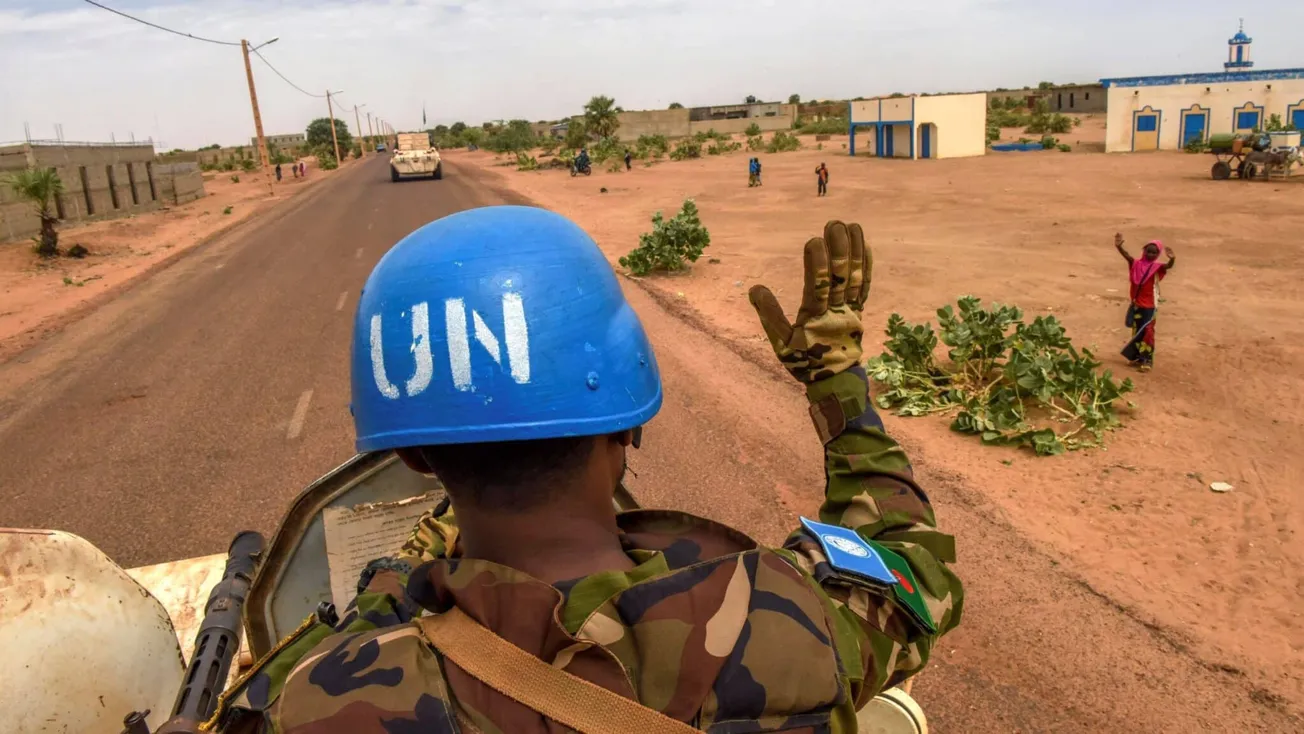
The United Nations has warned that terrorist groups are expanding across West Africa and the Sahel with increasingly sophisticated methods, threatening coastal states that had previously been insulated from the insurgencies.
Why it matters: Read next to the US drawdown in Nigeria, the direction of travel is stark. The threat is spreading just as external security guarantees recede, and coastal West Africa, from Ghana and Côte d'Ivoire to Benin and Togo, is the new frontier.
Source: Africa Center for Strategic Studies
8. Macky Sall returns to Senegal to campaign for UN Secretary-General under a $13 billion cloud
Former Senegalese President Macky Sall travels to Senegal on Friday for his first public visit since leaving office, as he campaigns for UN Secretary-General. Senegal's Court of Auditors found his government understated debt and deficit figures, implying roughly $7 billion in hidden borrowing, a number S&P Global later put at about $13 billion, a quarter of the economy.
Why it matters: An African bid for the UN's top job is colliding with an unresolved sovereign accounting scandal. How Dakar receives him on Friday will say a great deal about accountability norms on the continent.
Source: Africanews via Africa Center
9. Canva's founders put $150 million into the world's largest no-strings cash transfer, in Malawi
The founders of design platform Canva are funding a $150 million unconditional cash transfer programme in Malawi, the largest ever attempted in a low-income country. Early results show measurable gains in health, education and household incomes.
Why it matters: Development economists have argued for decades about whether direct cash beats programme spending. Malawi has just become the biggest live test of that question, and if the early gains hold at scale, aid design across Africa will have to answer to the results.
Source: OkayAfrica
10. Besigye rejects state-appointed lawyers as his treason trial stalls in Kampala
Ugandan opposition veteran Kizza Besigye refused on Wednesday to accept lawyers chosen for him by the state, after his own advocates were jailed or barred from the country. His lead counsel Erias Lukwago is in military custody and Kenyan lawyer Martha Karua was denied entry when she arrived to represent him. The High Court adjourned the case to July 29. The trial comes six months after President Museveni won a seventh term in January, with army chief General Muhoozi Kainerugaba, the president's son, driving a widening crackdown on opposition figures, lawyers and media.
Why it matters: A capital trial in which the defendant's chosen lawyers have been jailed or deported tests whether Uganda's courts retain any independence from the military. The post-election consolidation under Muhoozi is the deeper story regional partners should be reading, well beyond whatever verdict eventually comes.
Source: Africanews / AFP
Africa Today is The African Exponent's daily briefing on the continent as it is. Summaries are written by our editors. Click through to the original sources for full reporting.